How to Choose and Customize Display Earring Cards for Makers
Learn how to choose, size, and customize display earring cards for your jewelry business. Expert tips on cardstock weight, hole sizes, and materials.

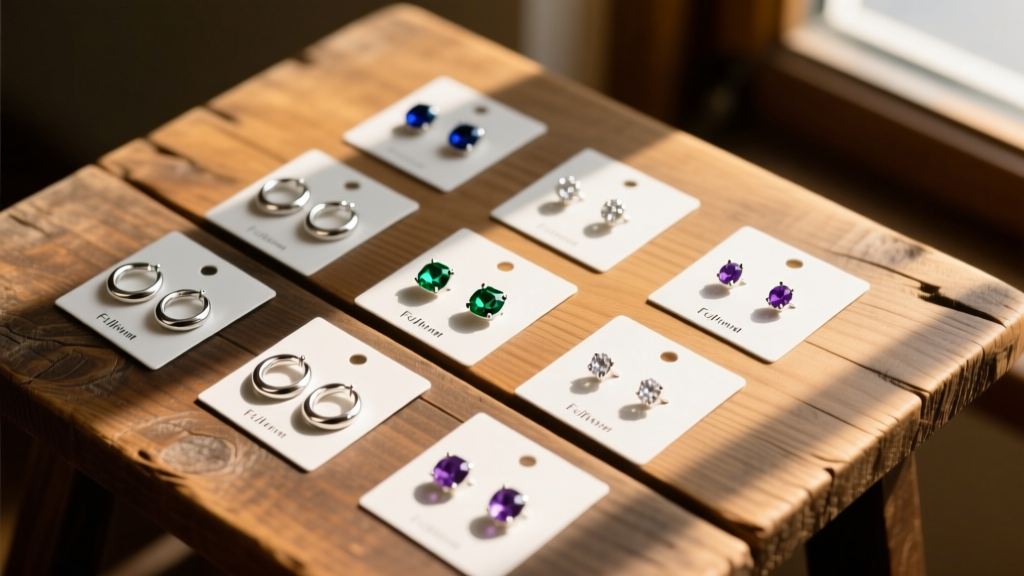
Why Your Choice of Display Earring Cards Matters
When you are selling handmade or curated jewelry, your product is only half of the equation; the presentation is the other. For jewelry makers and small business owners, selecting the right display earring cards is a critical operational decision that directly impacts perceived value, brand recognition, and product safety. A flimsy card that bends in a customer's hand instantly cheapens a $60 pair of artisan hoops. Conversely, a heavy, well-designed card elevates a simple pair of studs into a premium gift.
In this comprehensive guide, we will move beyond generic advice and dive into the specific material grades, structural dimensions, and hidden failure modes you need to understand to choose the perfect backing for your earrings.
Standard Sizes and Dimensions for Every Earring Type
Not all earrings require the same canvas. Using a massive 3x5 inch card for tiny 4mm studs looks awkward and wastes valuable display space at craft fairs, while cramming 3-inch chandelier earrings onto a 2x2 inch card leads to tangling and damage. Here is a structural breakdown of standard dimensions:
| Card Size | Best Earring Types | Recommended Hole Spacing | Top Margin Minimum |
|---|---|---|---|
| 2" x 2" (Square) | Studs, small huggies, minimalist sleepers | 0.75" to 1" | 0.5" |
| 2" x 3" (Portrait) | Standard hooks, small drops, medium hoops | 1" to 1.25" | 0.6" |
| 3" x 4" (Landscape/Portrait) | Statement dangles, large hoops, ear cuffs | 1.5" to 2" | 0.75" |
| 3.5" x 5" (Jumbo) | Bridal sets, multi-piece bundles, chandeliers | 2"+ | 1" |
According to the Etsy Seller Handbook, optimizing your packaging dimensions not only improves the unboxing experience but also reduces shipping weight and material costs, which is vital for maintaining healthy profit margins in 2026.
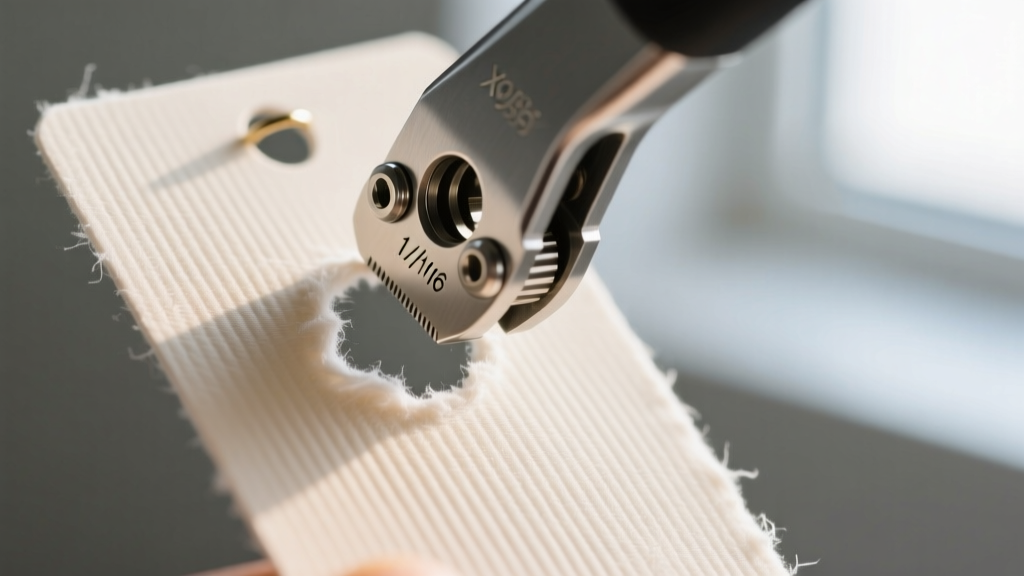
Cardstock Weight, Material Grades, and the Tarnish Trap
The physical makeup of your card dictates its lifespan and how it protects your jewelry. Most beginners make the mistake of buying standard 80lb cover stock (roughly 8pt to 10pt thickness) from office supply stores. This is a critical error.
The Weight Requirement
For professional jewelry display, you need a minimum of 14pt cardstock (approx. 110lb cover), with 16pt (130lb cover) being the industry gold standard. Anything thinner will suffer from "the droop"—where the weight of a heavy brass or gemstone earring pulls the top edge of the card downward, creating an unappealing presentation and increasing the risk of the earring slipping out.
The Tarnish Trap: Acid and Sulfur
If you work with sterling silver, copper, or brass, the chemical composition of your paper is paramount. Standard brown kraft paper and cheap recycled cardstocks often contain high levels of sulfur, lignin, and acidic compounds. When enclosed in a cellophane bag or shipping box, these compounds off-gas and accelerate the oxidation (tarnishing) of your metals.
- 100% Cotton Rag: Naturally acid-free and lignin-free. The absolute best choice for sterling silver and fine jewelry. It has a soft, premium feel but is more expensive.
- Buffered Kraft: If you love the rustic look of brown kraft, you must source "buffered" or "archival" kraft paper, which has been treated with calcium carbonate to neutralize acids.
- Velvet-Flocked: Features a micro-suede surface that prevents micro-scratches on high-polish gold and silver. Ideal for luxury price points ($80+).
The Science of the Hole Punch and Slit Design
The mechanism by which the earring attaches to the card requires precision. Using the wrong punch size leads to torn paper or lost inventory.
Matching Punch Size to Wire Gauge
Your hole punch diameter must accommodate the thickest part of your ear wire, including the loop or clasp, without forcing it. Forcing a 20-gauge wire through a hole meant for 22-gauge wire creates micro-tears in the cardstock that will eventually rip open.
- 1/16" (1.5mm) Punch: Ideal for 22g to 24g standard ear wires, stud posts, and thin French hooks.
- 3/32" (2.4mm) Punch: Best for 20g to 18g heavy-gauge ear wires, leverbacks, and thicker wire-wrapped loops.
- 1/8" (3.2mm) Punch: Necessary for hoop tubing, heavy continuous hoops, and large-gauge cartilage jewelry.
The Slit Alternative for Hoops
For continuous hoops and huggies, a standard round hole is frustrating for customers. Instead, use a card template that features a narrow slit or a V-notch cut into the top edge. This allows the customer to simply slide the hoop wire into the slot without having to thread it blindly through a tiny hole.
Understanding Paper Grain: The Hidden Failure Mode
This is a detail that 90% of new jewelry makers miss. Paper has a "grain direction" determined by the alignment of fibers during the manufacturing process. If you are cutting your own display earring cards from large sheets, you must pay attention to this grain.
Expert Tip: The paper grain must always run vertically (perpendicular to the top edge of the card). If the grain runs horizontally (parallel to the top edge), the card's structural integrity is compromised. When a customer pulls an earring out, the card will easily snap, crease, or tear right along the grain line, ruining the presentation and potentially dropping the earring.
Suppliers like Rio Grande and specialized packaging wholesalers often specify grain direction on their bulk paper reams. Always test a sheet by folding it both ways; the fold that is smooth and crisp is parallel to the grain. Cut your cards so that smooth fold aligns vertically.
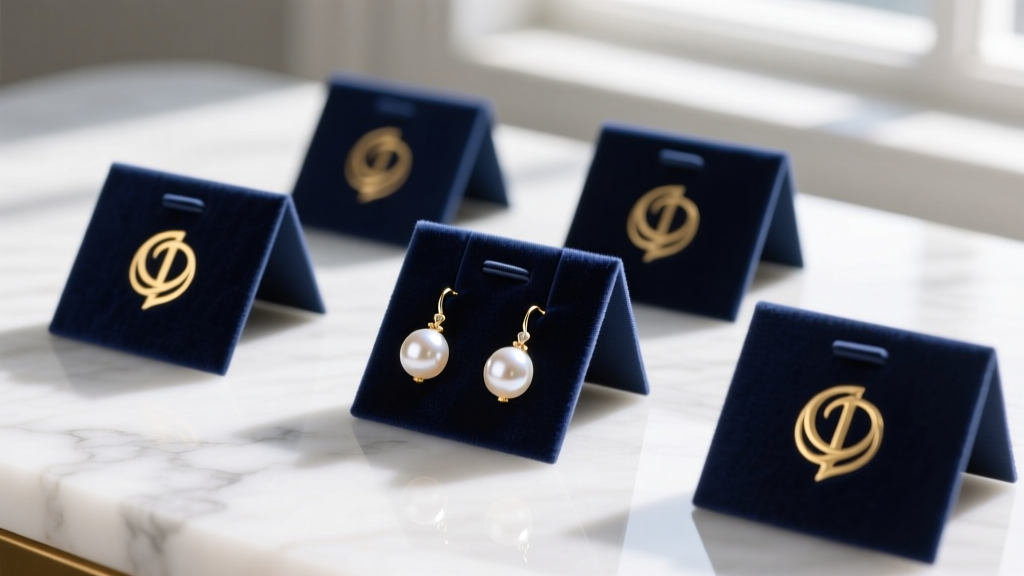
Customization, Branding, and 2026 Pricing Trends
Branding your display earring cards transforms them from simple packaging into a marketing tool. However, the method you choose should align with your current production volume and budget.
Branding Methods Compared
1. Custom Rubber Stamps (Low Volume / High Margin)
Cost: $25-$40 one-time for the stamp; $0.02 per impression in ink.
Best for: Makers producing under 100 units a month. Buy blank, pre-punched 16pt cotton cards and stamp them by hand. It provides an artisanal, handmade aesthetic that buyers love.
2. Digital Printing with Foil Accents (Medium Volume)
Cost: $0.10 to $0.15 per unit (minimum order usually 250-500).
Best for: Established Etsy shops and weekend craft fair vendors. Digital printing allows for full-color artwork on the back (like care instructions or a brand story) while keeping the front minimalist with a single-color logo.
3. Letterpress and Debossing (High Volume / Luxury)
Cost: $0.20 to $0.35+ per unit (minimum order 500+).
Best for: Fine jewelers and high-end boutiques. Pressing the logo into thick 18pt or 20pt cotton paper creates a tactile, luxury experience that justifies premium pricing.
Final Checklist Before Your Next Craft Fair or Launch
Before you finalize your packaging order or cut your next batch of cardstock, run through this operational checklist to ensure your display earring cards are optimized for sales and safety:
- Check the Margin: Are the holes at least 0.5 inches from the top edge to prevent tear-outs?
- Verify the Weight: Is the cardstock at least 14pt (110lb) to support the weight of your heaviest piece?
- Test for Tarnish: If selling silver, is the paper certified acid-free and lignin-free?
- Confirm the Grain: Does the paper grain run vertically to prevent horizontal snapping?
- Validate the Punch: Does your thickest ear wire slide through the hole without catching or tearing the fibers?
- Include Care Info: Does the back of the card feature basic metal care instructions or your website URL?
By treating your display earring cards as a vital component of your jewelry's architecture rather than an afterthought, you protect your inventory, elevate your brand, and provide a seamless experience that turns first-time buyers into lifelong collectors.


