Biocompatible Nurse Earrings: Materials, Gauges & Safety
Discover the technical specs for safe nurse earrings, including implant-grade metals, snag-free backings, and infection control for 12-hour shifts.


The Clinical Reality: Why Standard Earrings Fail on Shift
For healthcare professionals, jewelry is not merely an aesthetic choice; it is an infection control variable and an occupational safety hazard. Standard commercial earrings are engineered for casual wear, completely failing to account for the rigorous physical and chemical environment of a 12-hour clinical shift. The most prevalent failure mode in standard earrings is the butterfly clutch backing. These backings create a 4mm to 6mm posterior protrusion featuring sharp metal prongs and complex geometric crevices. When a nurse adjusts an N95 respirator, removes a non-woven polypropylene isolation gown, or leans against a bedrail, these prongs easily snag on fabrics and equipment. This snagging frequently results in earlobe avulsion injuries or torn fistulas.
Furthermore, the microscopic gaps between the butterfly clutch and the earring post act as biological harborage points. According to the CDC Standard Precautions, minimizing surface areas where pathogens can accumulate is critical in patient care environments. Bacteria such as MRSA and Clostridioides difficile spores can lodge in the threading and clutch mechanisms of standard earrings, surviving standard hand-hygiene protocols and posing a cross-contamination risk during sterile procedures or wound care.
Metallurgical Biocompatibility vs. Hospital Sanitizers
The metallurgy of nurse earrings must withstand constant exposure to harsh hospital-grade disinfectants. Surfaces in clinical settings are routinely wiped down with accelerated hydrogen peroxide (AHP), quaternary ammonium compounds, and sodium hypochlorite (bleach) solutions. Standard 'surgical steel' (316L stainless steel) contains 8% to 10.5% nickel. When exposed repeatedly to chemical disinfectants or the natural acidic pH of sweat under PPE, the passive chromium oxide layer on 316L steel can degrade, leading to nickel ion leaching. This causes severe allergic contact dermatitis, presenting as erythema, scaling, and weeping fistulas—conditions that compromise the skin barrier and increase infection susceptibility.
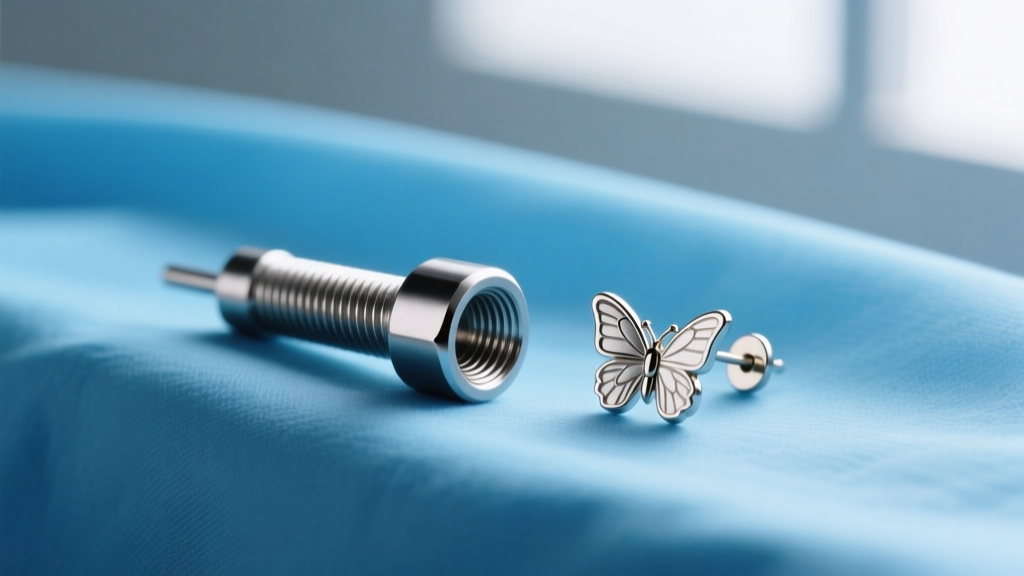
The undisputed gold standard for clinical environments is ASTM F136 compliant Ti-6Al-4V ELI (Extra Low Interstitial) implant-grade titanium. As outlined by the Association of Professional Piercers (APP), this specific alloy contains zero nickel, exhibits exceptional corrosion resistance against hospital sanitizers, and is entirely biocompatible. Niobium is a secondary acceptable option due to its similar inert properties, though it lacks the tensile strength required for ultra-thin posts. 14k or 18k gold can be worn only if it is strictly nickel-free and alloyed with palladium or silver; however, gold is softer and more prone to micro-scratching, which can trap microbial biofilms over time.
Mechanical Engineering: Threadless vs. Externally Threaded
The mechanical connection between the decorative end and the post is a critical vector for bacterial colonization. Externally threaded earrings feature screw threads cut directly into the post that passes through the tissue. These threads act as a rasp, causing micro-tears in the fistula upon insertion, while the deep grooves trap dead skin cells, sebum, and pathogens. Internally threaded jewelry reverses this, placing the threads inside the decorative end, leaving the post smooth. However, for nurses, threadless (press-fit) systems are the superior engineering choice.
Threadless nurse earrings utilize a precision-machined hollow titanium shaft and a solid pin on the decorative end. The pin is bent slightly (typically 10 to 15 degrees) before insertion, creating continuous spring tension against the inner wall of the shaft. This results in a seamless, flush connection with zero microscopic grooves. The absence of threading eliminates bacterial harborage entirely and allows the earring to be cleaned flush with the skin using standard alcohol prep pads or chlorhexidine gluconate (CHG) wipes without snagging cotton fibers.
Gauge, Post Length, and Protrusion Metrics
Selecting the correct gauge and post profile is essential to prevent pressure necrosis and physical snagging. A post that is too long will protrude past the earlobe, catching on stethoscope tubing or scrub caps. A post that is too short will compress the tissue, restricting lymphatic drainage and causing localized edema.
| Component | Optimal Specification | Clinical Rationale | Failure Mode if Ignored |
|---|---|---|---|
| Post Gauge (Lobe) | 18g (1.0mm) or 16g (1.2mm) | Provides structural rigidity to resist bending when snagged on PPE. | 20g+ posts can slice through tissue (cheese-cutter effect) under tension. |
| Post Gauge (Cartilage) | 16g (1.2mm) | Accommodates standard cartilage fistulas while minimizing migration risks. | Cartilage rejection or severe migration due to pressure points. |
| Backing Profile | Flat-back Labret (0.9mm - 1.2mm disc) | Sits completely flush against the posterior earlobe. | Butterfly backs cause pressure ulcers during sleep or snag on N95 straps. |
| Post Length (Standard) | 5.5mm to 6.5mm (Standard Lobe) | Accommodates average lobe thickness without posterior protrusion. | Protruding posts catch on isolation gowns, leading to avulsion injuries. |
| Decorative End | 2.5mm to 4mm bezel-set gem | Low-profile dome prevents impact trauma from bumped equipment. | High-profile prongs scratch patients or tear sterile gloves. |
Infection Control and Sanitization Protocols
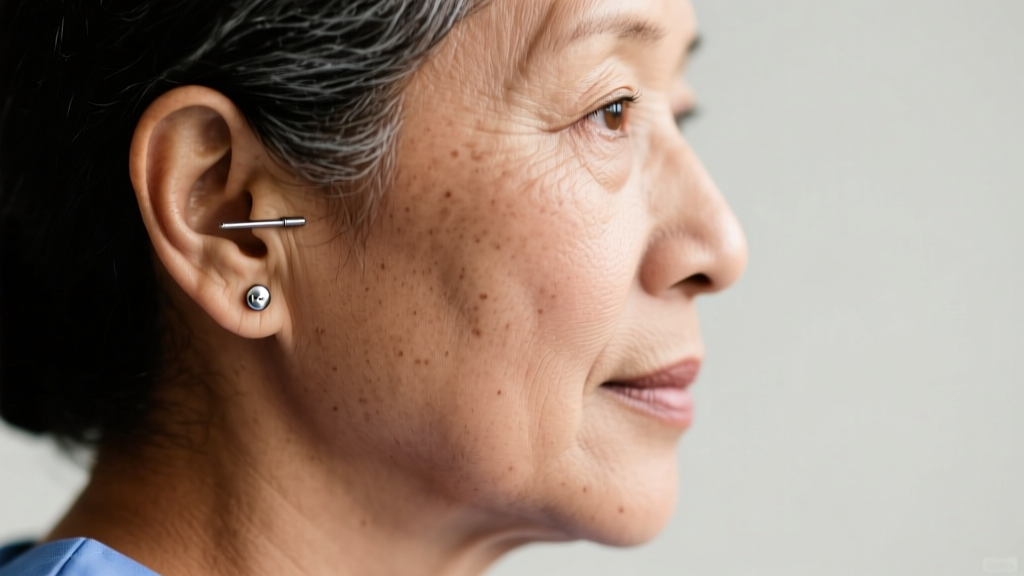
Even with biocompatible, threadless titanium nurse earrings, strict sanitization protocols must be followed. Because press-fit jewelry can be easily removed without tools, nurses should incorporate their earrings into their daily decontamination routine. At the end of a shift, the decorative ends should be popped off using a sterilized hemostat or specialized removal tool. The components should then be submerged in an ultrasonic cleaner filled with a mild enzymatic detergent to dislodge microscopic biofilms, sebum, and dried sanitizers.
Following ultrasonic cleaning, the titanium components can be fully submerged in 70% isopropyl alcohol for 10 minutes or placed in a countertop steam sterilizer (autoclave) at 121°C (250°F) for 20 minutes. Unlike plated jewelry or organic gemstones, solid implant-grade titanium and synthetic gems (like cubic zirconia or lab-created sapphires) will not degrade, warp, or lose their finish under high heat and pressure. By treating nurse earrings as reusable clinical instruments rather than disposable fashion accessories, healthcare workers can maintain professional grooming standards without compromising patient safety or personal health.


