How to Recreate the Girl With a Pearl Earring Painting Look
Learn how to safely wear heavy teardrop pearl drops inspired by the Girl with a Pearl Earring painting. Step-by-step lobe support and styling guide.

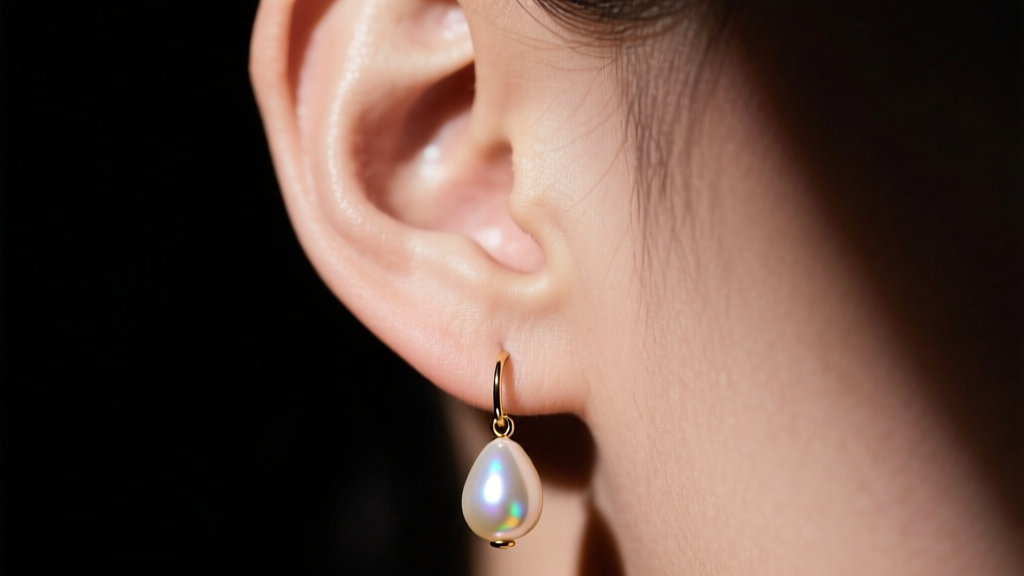
The Physics of Vermeer's Masterpiece: Why Size and Weight Matter
Johannes Vermeer’s 1665 masterpiece, Girl with a Pearl Earring, captivates viewers not just through its enigmatic subject, but through the striking, oversized teardrop pearl that anchors the composition. Art historians and gemologists have long debated the nature of this jewel. Given the extreme rarity and astronomical cost of natural saltwater pearls exceeding 15mm in the 17th century, experts at the Mauritshuis Museum suggest the earring was likely a glass or tin drop varnished with a pearl essence to mimic the luster of nacre.
For modern jewelry enthusiasts looking to recreate the girl with pearl earring painting aesthetic, the primary challenge is not just the size—it is the physics of weight. An 18mm to 20mm solid natural pearl can weigh between 18 and 25 grams. The human earlobe, composed of delicate collagen and elastin fibers without structural cartilage, is generally only comfortable supporting 3 to 5 grams of continuous weight. Exceeding this threshold leads to lobe ptosis (sagging), micro-tears, and eventual piercing migration. To achieve this iconic look safely in 2026, you must master material selection, hardware upgrades, and lobe support mechanics.
Step 1: Selecting the Right Lightweight Pearl Material
To mimic the voluminous, light-catching teardrop of Vermeer's painting without destroying your earlobe, you must opt for engineered or lightweight alternatives. The goal is to achieve an 18mm-20mm teardrop silhouette while keeping the total earring weight under 6 grams.
| Material Type | Est. Weight (18mm) | Price Range | Durability & Luster |
|---|---|---|---|
| Solid Nacre Pearl | 18-25g | $5,000+ | High, but causes severe lobe strain |
| Vintage Glass Pearl | 5-7g | $30-$80 | Excellent chiaroscuro light reflection |
| Hollow Resin Composite | 1-2g | $15-$40 | Low; prone to scratching and dulling |
| Mother-of-Pearl Shell | 4-6g | $45-$90 | High; natural iridescence, lightweight |
According to the Gemological Institute of America (GIA), high-quality glass pearls coated with crystalline guanine (derived from fish scales or modern synthetic equivalents) offer the most authentic optical replication of Vermeer's painted highlights. The glass core provides enough weight to make the earring swing elegantly when turning the head, while remaining well within the safe load-bearing limit of the earlobe.
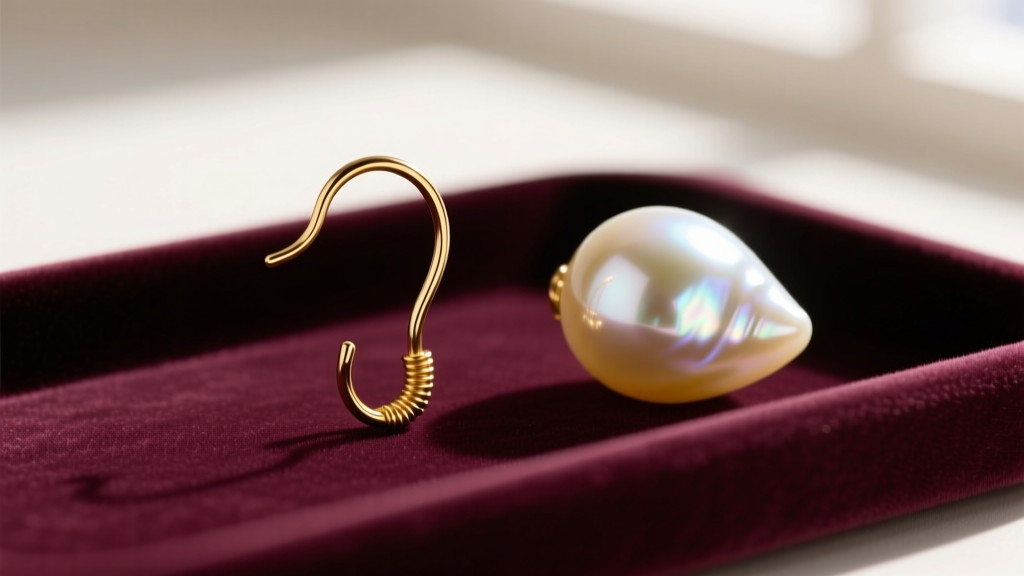
Step 2: Upgrading Your Piercing Hardware for Heavy Drops
The most common failure mode when wearing oversized drop earrings is the 'cheese-cutter effect.' This occurs when a thin wire rests under the weight of a heavy drop, gradually slicing through the tissue of the piercing fistula. Standard fashion earrings are typically strung on 20-gauge (0.81mm) or 22-gauge (0.64mm) wires. For an 18mm teardrop pearl, this is structurally inadequate.
The 18-Gauge Minimum Rule
To safely wear a Vermeer-inspired drop, you must upgrade your earring findings to an 18-gauge (1.02mm) or 16-gauge (1.29mm) wire. The Association of Professional Piercers (APP) notes that thicker wire gauges distribute downward gravitational forces across a wider surface area of the fistula, drastically reducing localized tissue pressure. When shopping for custom settings or commissioning a jeweler, specifically request an 18-gauge 14k gold or surgical steel French wire hook. Ensure the hook has a deep enough 'belly' to prevent the earring from slipping forward off the lobe when you lean over.
Step 3: Securing and Supporting the Earlobe
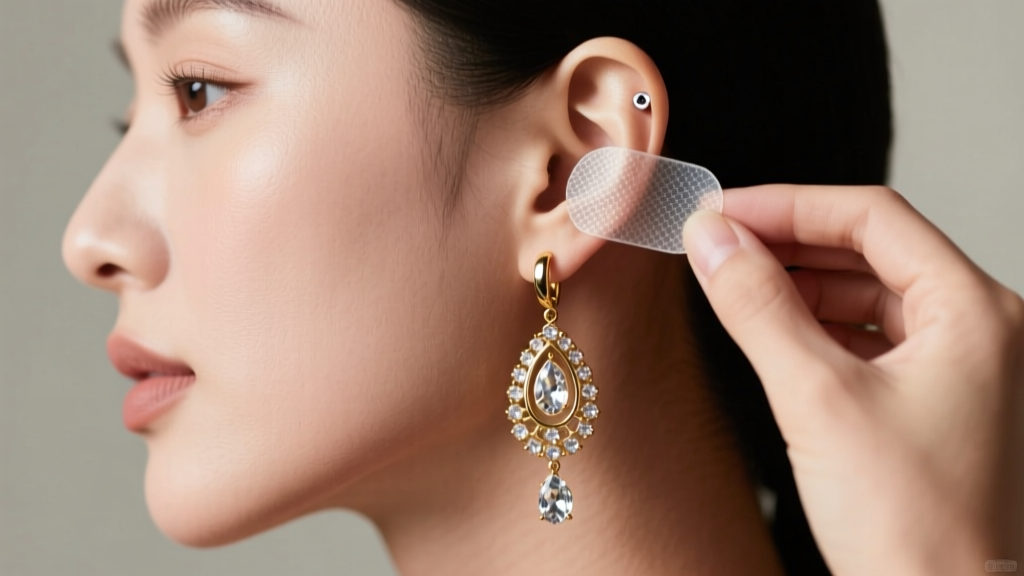
Even with optimized weight and thicker wire, an 18mm pearl creates a visual and physical drag on the lobe. To maintain the perky, elevated placement seen in the painting, you must use invisible lobe support patches.
- Cleanse the Area: Wipe the back of your earlobe with an alcohol prep pad to remove natural sebum and skincare residues. Allow it to dry completely.
- Apply the Support Patch: Use a medical-grade, hypoallergenic adhesive patch (such as BlingDots or LobeWonder). Peel the backing and align the slit precisely over your piercing hole.
- Press and Set: Press firmly for 10 seconds to activate the pressure-sensitive adhesive. The patch acts as a secondary dermal anchor, distributing the 6-gram load across a 15mm surface area rather than a 1mm puncture point.
- Insert the Earring: Gently guide the 18-gauge French wire through the piercing and the patch. Secure the back with a silicone bullet clutch or a specialized locking earring back to prevent the heavy drop from pulling the wire out of the slit.
Step 4: Styling the Drop for the Classic Over-the-Shoulder Pose
Recreating the girl with pearl earring painting look extends beyond the jewelry itself; it requires an understanding of Vermeer's mastery of light and shadow (chiaroscuro). The pearl in the painting is not just an accessory; it is a secondary light source that illuminates the subject's jawline and collarbone.
- Hair Placement: Sweep your hair up into a loose, low chignon or wrap it in a silk turban. The earlobe and the entire length of the teardrop must be completely exposed to catch ambient light.
- Neckline Selection: Wear a garment with a deep, unadorned neckline in muted earth tones (ochre, ultramarine, or terracotta). High collars or busy patterns will visually swallow the drop earring, destroying the focal hierarchy of the portrait.
- Lighting Angles: Position yourself so that your primary light source hits from a 45-degree angle above and to the side. This mimics the soft, directional window light Vermeer used, ensuring the apex of the pearl catches a sharp, brilliant highlight while the bottom curves into a soft, luminous gradient.
Troubleshooting Common Heavy Earring Issues
Issue: The earring constantly swings forward, facing the floor instead of hanging flush against the neck.
Solution: This indicates your piercing angle is slightly tilted or the French wire is too thin. Switch to a leverback closure with a wider base, or use a small piece of clear silicone tubing on the back of the post to wedge it securely against the back of the lobe, forcing the drop to hang plumb.
Issue: The earlobe feels warm, throbs, or appears red after two hours of wear.
Solution: You have exceeded your tissue's load-bearing capacity. Remove the earrings immediately and massage the lobe with a drop of jojoba oil to stimulate blood flow. Switch to a hollow resin pearl for future wear, as micro-trauma to the fistula can lead to permanent stretching and require surgical lobe reconstruction.
'Vermeer painted the pearl with just a few masterful strokes of white lead and soft grey shadow. To replicate this in reality, your earring must possess a high-luster, mirror-like coating that interacts dynamically with your environment, rather than a flat, matte finish.' — Historical Jewelry Analysis Journal
By respecting the anatomy of the earlobe and leveraging modern materials and support systems, you can confidently channel one of art history's most iconic aesthetics. The girl with pearl earring painting remains a testament to the power of a single, perfectly placed jewel—and with these precise technical steps, you can wear that legacy safely and elegantly.


