Cross Earring Male Troubleshooting: Fix Fit, Weight & Allergies
Solve common cross earring male issues. Expert fixes for heavy lobes, nickel allergies, gauge mismatches, and forward-tilting dangles.

The Biomechanics of Men's Ear Jewelry
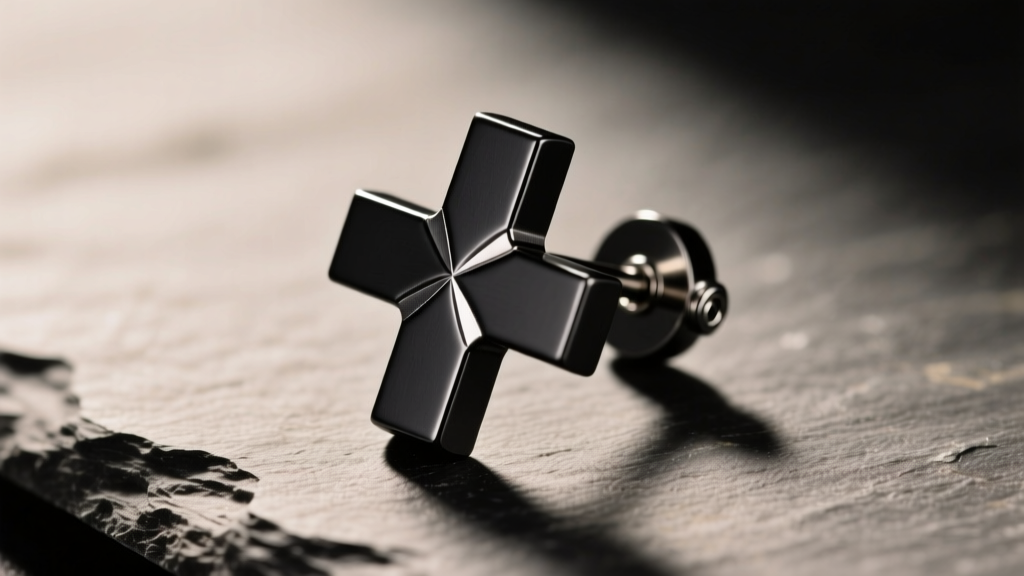
The search for the perfect cross earring male accessory often ends in frustration. While aesthetics usually drive the initial purchase, the reality of wearing a dangling or heavy stud cross involves complex biomechanics and metallurgy. Many men experience chronic lobe pain, contact dermatitis, or awkward forward-tilting dangles that ruin the intended silhouette. In 2026, men's jewelry has evolved beyond cheap mall kiosks, demanding a more technical approach to fit and material science. Whether you are wearing a subtle 10mm stud or a 40mm Gothic dangle, troubleshooting these physical pain points requires understanding gauge thickness, alloy composition, and center-of-gravity placement. Below is a comprehensive troubleshooting guide to solving the most common structural and dermatological issues associated with men's cross earrings.
The 'Cheese Cutter' Effect: Solving Weight and Lobe Tearing
One of the most frequent complaints regarding a dangling cross earring male design is the gradual stretching and thinning of the earlobe tissue. This phenomenon, known in the piercing community as the 'cheese cutter' effect, occurs when a heavy piece of jewelry rests on a thin wire post. A solid 316L stainless steel cross measuring 30mm by 20mm can easily weigh between 8 and 12 grams. The average male earlobe can comfortably support only 4 to 6 grams before chronic gravitational stress leads to micro-tears and permanent tissue elongation.
Actionable Weight Solutions
- Switch to Grade 23 Titanium (Ti-6Al-4V): Also known as ASTM F-136 titanium, this aerospace-grade metal is roughly 45% lighter than surgical steel while maintaining superior tensile strength. A solid titanium cross will drastically reduce lobe fatigue.
- Opt for Hollow-Cast or Inlay Designs: Look for crosses that feature a hollowed-out back or incorporate lightweight materials like carbon fiber, acrylic, or crushed opal inlays. This preserves the visual volume of the earring without the dense mass.
- Utilize Invisible Ear Support Patches: For heirloom or heavy solid gold crosses that you refuse to replace, apply medical-grade silicone ear support patches (such as LobeWonder) behind the earlobe. These adhesive discs distribute the weight across a wider surface area, preventing the post from slicing through the tissue.
Metallurgy and Allergies: Why Your Lobe is Itchy and Green
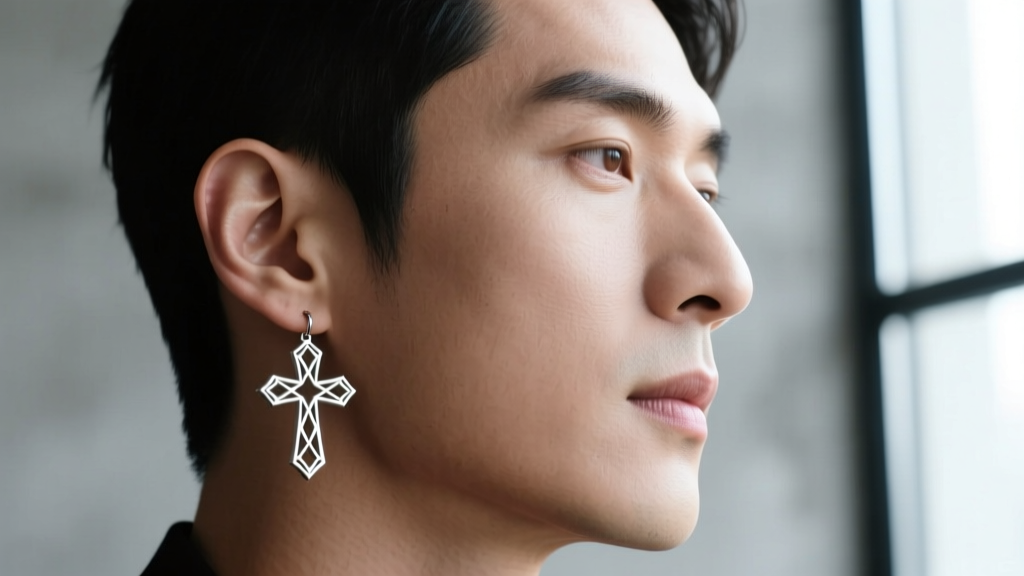
If the skin around your piercing is red, flaky, or turning a bruised green-black, you are likely experiencing nickel contact dermatitis or copper oxidation. The term 'surgical steel' is largely unregulated in the fashion jewelry market. Many budget-friendly cross earrings are stamped 316L but contain 8% to 12% nickel to achieve a high-polish finish. When sweat and natural skin oils interact with the nickel ions, it triggers an immune response.
According to the Mayo Clinic, nickel allergy is one of the most common causes of allergic contact dermatitis. Furthermore, the Association of Professional Piercers strictly advises against using 316L steel for fresh piercings or for individuals with known metal sensitivities, recommending implant-grade titanium instead.
Material Troubleshooting Matrix
| Material | Nickel Content | Best Use Case | Troubleshooting Note |
|---|---|---|---|
| 316L Surgical Steel | 8% - 12% | Budget fashion, healed lobes only | Avoid if you sweat heavily; causes green skin and itching. |
| ASTM F-136 Titanium | 0% | Sensitive skin, fresh piercings, heavy dangles | The gold standard for hypoallergenic male jewelry. |
| 925 Sterling Silver | 0% (Contains 7.5% Copper) | Occasional wear, dry climates | Copper reacts with sulfur in sweat, causing black/green oxidation. |
| 14k / 18k Solid Gold | Trace (depends on alloy) | Everyday luxury, heirloom pieces | Ensure it is nickel-free white gold; yellow gold is generally safe. |
Gauge Mismatches: Forcing the Post
Men's earlobes are anatomically thicker and denser than women's, and many men have historically stretched their lobes or experienced minor scar tissue buildup from previous blowouts. Standard fashion earrings are typically manufactured at 20-gauge (0.81mm) or 18-gauge (1.02mm). Attempting to force a thin 20G post through a dense or slightly stretched male lobe can cause micro-tearing, inflammation, and the dreaded 'cheese cutter' migration.
Expert Rule of Thumb: For a standard male lobe piercing, always default to a 16-gauge (1.2mm) or 14-gauge (1.6mm) post for cross earrings. The thicker wire provides structural rigidity, preventing the earring from bending under the weight of the cross pendant while reducing localized pressure on the fistula (the piercing hole).
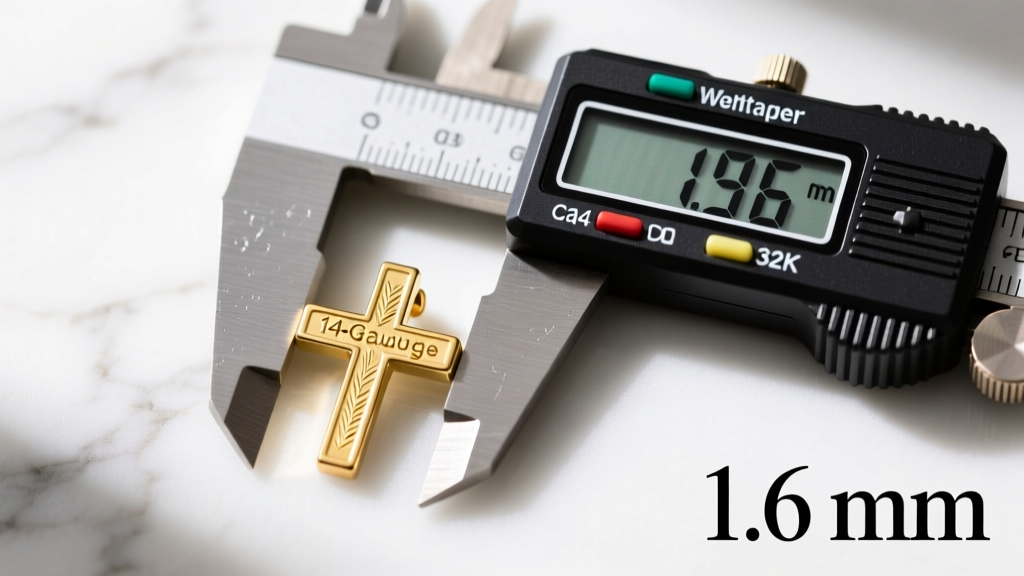
If you have purchased a high-end cross earring but the post is too thin (18G or 20G), take it to a professional jeweler. They can easily snip the original post and laser-weld a thicker, implant-grade titanium or solid gold wire in its place for a minimal fee. This is a crucial troubleshooting step for preserving both the jewelry and your ear health.
Proportion and Droop: Fixing the Forward Tilt
A frequent aesthetic failure in cross earring male designs is the 'forward tilt.' This happens when the cross hangs awkwardly, pointing toward the floor rather than resting flat against the side of the face. This is not a flaw in your ear shape; it is a manufacturing defect related to the center of gravity and the solder joint placement.
Diagnosing the Center of Gravity
On a well-engineered dangle cross, the jump ring or soldered loop should be placed exactly at the top vertical axis, allowing the piece to swing freely and settle flat. However, on heavier or poorly cast crosses, the mass of the bottom arm pulls the earring forward. If your cross earring constantly tilts forward, check the backing. Using a heavy, oversized friction back or a screw-back can sometimes counterbalance the front weight, pulling the post backward into a flush position. Alternatively, switch to a flat-back labret style post if the cross is a stud, ensuring the backing sits flush against the rear of the lobe without pushing the decorative face outward.
Quick Troubleshooting Summary
| Symptom | Root Cause | Immediate Fix |
|---|---|---|
| Lobe aches or stretches | Earring exceeds 6 grams | Apply silicone support patches; switch to hollow titanium. |
| Itchy, red, or flaky skin | Nickel contact dermatitis | Discard 316L steel; upgrade to ASTM F-136 Titanium. |
| Skin turns green/black | Copper oxidation in 925 Silver | Coat post in clear nail polish temporarily; upgrade to solid gold. |
| Earring tilts forward | Poor center of gravity | Use a heavier, wider friction back to counterbalance the front. |
| Piercing hole feels tight | Post gauge is too thin (20G) | Have a jeweler laser-weld a thicker 14G (1.6mm) post. |
By treating your jewelry choices with the same technical scrutiny as any other wardrobe investment, you can eliminate the physical discomfort associated with men's earrings. Prioritize implant-grade materials, respect the weight limits of your tissue, and never compromise on gauge thickness for a flawless, pain-free fit.


