Troubleshooting Pear Shaped Diamond Drop Earrings
Solve common issues with pear shaped diamond drop earrings, from flipping and drooping to prong snagging. Expert fixes for perfect drape and security.

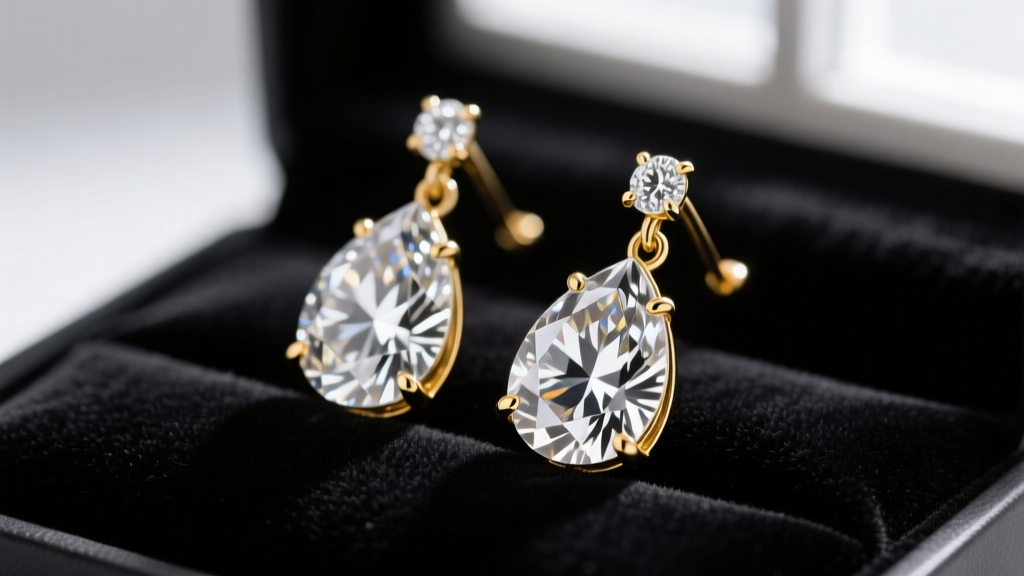
Pear shaped diamond drop earrings represent a unique intersection of vintage elegance and modern brilliance. However, their distinctive teardrop silhouette introduces specific structural and ergonomic challenges that standard round or princess cuts simply do not face. As we move through 2026, the market has seen a massive surge in large-format lab-grown pear diamonds, with total carat weights (CTW) frequently exceeding 3.00 carats. While this makes luxury more accessible, it drastically exacerbates the physical strain on earring hardware and earlobes.
Whether your drops are constantly flipping upside down, dragging your earlobe downward, or snagging on your favorite silk blouses, these issues are not inherent flaws of the gemstone. They are hardware and engineering failures. This comprehensive troubleshooting guide dives deep into the mechanics of pear shaped diamond drop earrings, providing bench-level solutions to restore their perfect drape, security, and visual symmetry.
The Physics of the Drop: Why Pear Shapes Misbehave
Unlike a symmetrical round brilliant, a pear-cut diamond has an uneven center of gravity. The bulbous rounded end carries significantly more mass than the tapered point. When suspended from a single jump ring or a rigid post, this asymmetrical weight distribution creates a pendulum effect. If the earring’s hardware lacks the necessary tension or counterweight, the drop will inevitably rotate, twist, or flip, hiding the diamond’s face-up brilliance against the neck.
Furthermore, the acute angle of the pear’s tip acts as a natural snag point. According to the GIA Diamond Buying Guide, the pointed end of a pear shape is the most vulnerable area for chipping if not properly protected by the setting. Troubleshooting these earrings requires addressing both the macro-mechanics of the earring back and the micro-mechanics of the prong setting.
Problem 1: The Dreaded Earring Flip (and How to Stop It)
The most frequent complaint regarding pear shaped diamond drop earrings is the “flip”—where the diamond rotates sideways or completely upside down, resting point-up against the jawline. This occurs when the connection point between the post and the drop (the jump ring or bale) has too much lateral play, or when the earring back fails to hold the post perfectly perpendicular to the earlobe.
Upgrading Your Earring Backs and Hardware
Standard friction backs (butterfly backs) are largely insufficient for heavy, asymmetrical drops. The friction groove on a standard post wears down over time, allowing the earring to tilt forward. When the post tilts, gravity forces the pear drop to swing outward and flip.
- Silicone O-Ring Stabilizers: For existing earrings, sliding a 2mm silicone o-ring onto the post before attaching the metal back creates a shock-absorbing wedge that forces the post to remain perpendicular to the lobe.
- La Poussiere Screw Backs: These threaded backs lock onto a specialized post, eliminating forward tilt entirely. They are the gold standard for drops over 2.0 CTW.
- Soldered Bales: If your drops hang from a jump ring, take them to a bench jeweler to have the ring soldered shut. An open jump ring will naturally warp into an oval shape under the pendulum weight of a pear diamond, causing twisting.
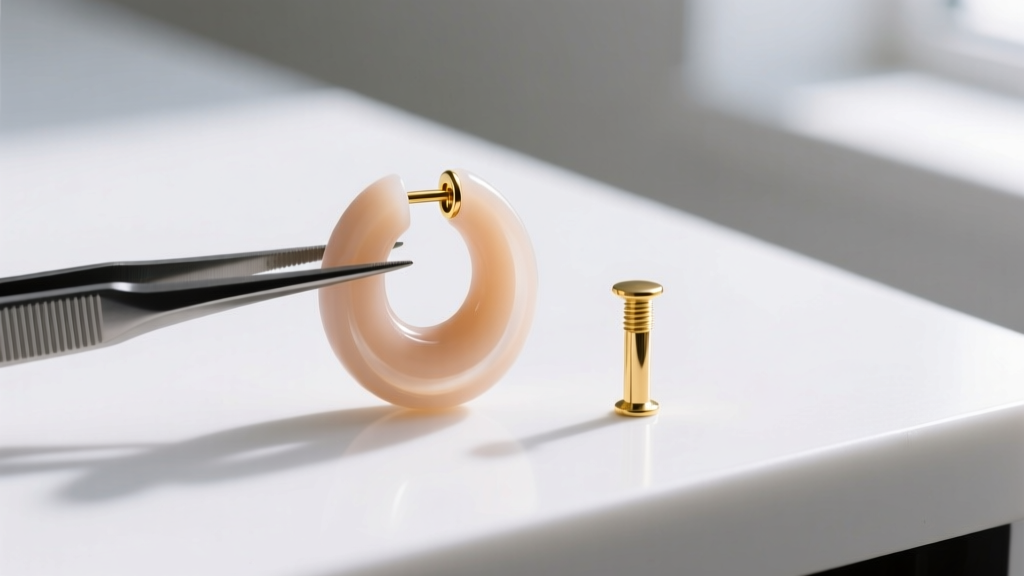
Problem 2: Post Droop and Lobe Strain
A pear shaped diamond drop earring concentrates its weight at the bottom of the setting. This creates a lever effect on the earlobe piercing. If the post is too thin or the gold alloy is too soft, the post will physically bend downward, causing the diamond to point at the floor rather than resting elegantly against the neck.
Gauge Sizing and Metallurgy
Most commercial fine jewelry uses 20-gauge (0.81mm) posts. For heavy pear drops, this is a critical failure point. Upgrading the post thickness and selecting the right alloy is mandatory for long-term wearability.
| Post Gauge | Diameter (mm) | Max Recommended Drop Weight | Best Metal Alloy for Posts |
|---|---|---|---|
| 20-Gauge | 0.81mm | Up to 1.50 CTW | 18k Yellow Gold, Platinum |
| 18-Gauge | 1.02mm | 1.50 to 3.00 CTW | 14k White Gold, Platinum |
| 16-Gauge | 1.29mm | 3.00+ CTW (Heavy Drops) | 14k White Gold, Titanium |
Expert Note: 14k white gold is significantly stiffer than 18k yellow gold due to its nickel or palladium alloy mix and rhodium plating process. For heavy pear drops, an 18-gauge 14k white gold post will resist bending far better than a thicker 16-gauge 18k yellow gold post.
Problem 3: Snagging, Scratching, and V-Prong Failures
The tapered point of the pear cut is a structural vulnerability. If your pear shaped diamond drop earrings are constantly catching on hair, wool sweaters, or lace, the issue lies in the prong configuration. Standard round prongs leave the extreme tip of the diamond exposed. Not only does this exposed edge act as a hook for fabrics, but it also leaves the diamond’s weakest point susceptible to cleaving if struck against a hard surface.
The V-Prong Mandate
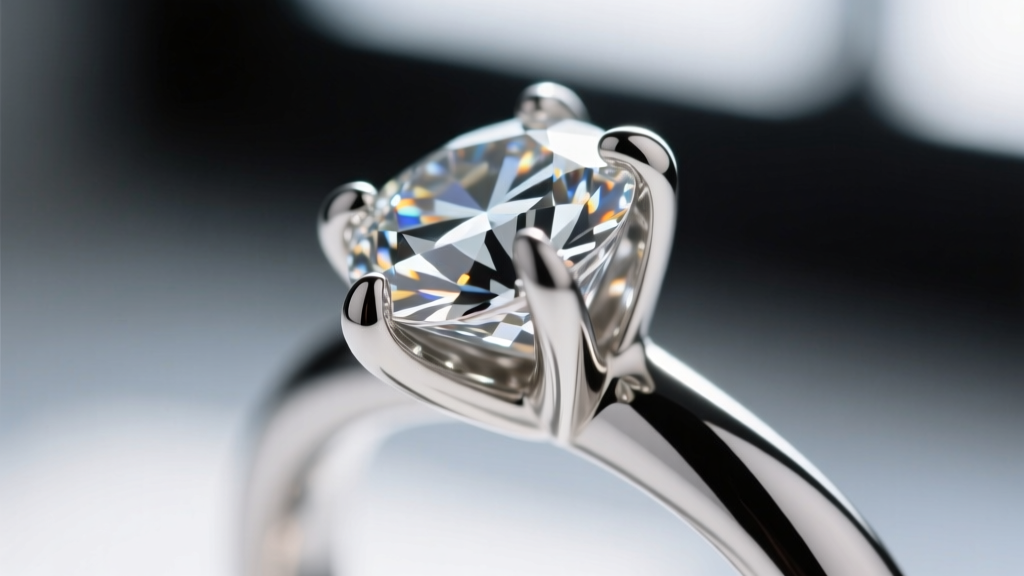
Any pear diamond over 0.50 carats must be set with a V-prong at the tip. A V-prong is a custom-shaped piece of metal that wraps entirely around the acute angle, forming a protective shield. If your current settings use round prongs at the tip, a bench jeweler can perform a “re-tipping” procedure to solder a V-shaped wire over the point. This simple modification eliminates 90% of snagging issues and drastically reduces the risk of catastrophic diamond chipping.
Orientation: Point Up vs. Point Down
While traditionally worn point-down (allowing the teardrop to follow the natural line of the neck), some modern designs orient the pear point-up. Point-up settings are inherently less prone to snagging on collars, as the smooth, rounded bulb rests against the skin. However, point-up drops require a heavily reinforced top-bale to prevent the earring from swinging wildly, as the center of gravity is now inverted.
Problem 4: The “Mismatched Pair” and Bow-Tie Effect
A unique troubleshooting issue specific to pear shaped diamond drop earrings is visual asymmetry. Because pears are notoriously difficult to cut symmetrically, finding a perfectly matched pair for earrings is a gemological challenge. If your earrings look “off” or display a dark shadow across the center, you are dealing with LWR mismatch and the bow-tie effect.
Troubleshooting Visual Dissonance
According to Blue Nile’s Diamond Shape Education, the Length-to-Width Ratio (LWR) dictates the overall silhouette of the pear. For a matched pair of drop earrings, the LWR of both stones must be within 0.05 of each other. If one earring has an LWR of 1.45 (classic teardrop) and the other is 1.60 (elongated), the human eye will instantly register the pair as mismatched, even if the carat weights are identical.
The Bow-Tie Troubleshooting Checklist:
- Identify the Shadow: The bow-tie is a dark, bow-tie-shaped shadow across the width of the stone caused by light leakage in the pavilion.
- Check the Pavilion Angles: Severe bow-ties in pears are caused by shallow pavilion angles. If the shadow remains dark even when the earring is moved in natural light, the cut is fundamentally flawed.
- Request ASET Imaging: When sourcing replacement drops or upgrading, always request an Angular Spectrum Evaluation Tool (ASET) image from the vendor. A well-cut pair of pears will show vibrant red and green light return with minimal blue (shadow) areas in the center.
Expert Maintenance and Cleaning Protocol
Because pear shaped diamond drop earrings dangle freely, they are exposed to aerosolized hairsprays, perfumes, and skin oils more than stud earrings. The intricate V-prongs and the tight basket settings easily trap debris, which dulls the diamond’s brilliance and can cause skin irritation on the neck.
Weekly Bench-Level Cleaning Routine:
- Ultrasonic Caution: Never use ultrasonic cleaners on pear drops if the stones have been fracture-filled or if the setting is older than 5 years without a prong check. The high-frequency vibrations can shatter the acute tip if micro-fractures are present.
- The Soft Brush Method: Use a baby-soft toothbrush dipped in a solution of warm water and a few drops of degreasing dish soap. Brush exclusively from the pavilion (the back of the stone) outward, pushing debris away from the V-prong crevices.
- Hardware Lubrication: If using screw-backs or threaded posts, apply a microscopic drop of synthetic watch oil to the threads once a year to prevent cross-threading and metal galling.
By addressing the center of gravity, upgrading your post gauge, and insisting on V-prong protection, you can transform your pear shaped diamond drop earrings from a high-maintenance liability into a secure, flawlessly draping statement piece. Proper hardware engineering is just as vital as the 4Cs when it comes to the true luxury of fine jewelry.


