How to Secure Hook Earrings Gold Styles That Keep Falling Out
Discover expert troubleshooting for hook earrings gold styles. Learn how to stop them from falling out, fix bent wires, and prevent skin irritation.

The Physics of the Slip-Out: Why Gold Hooks Fail
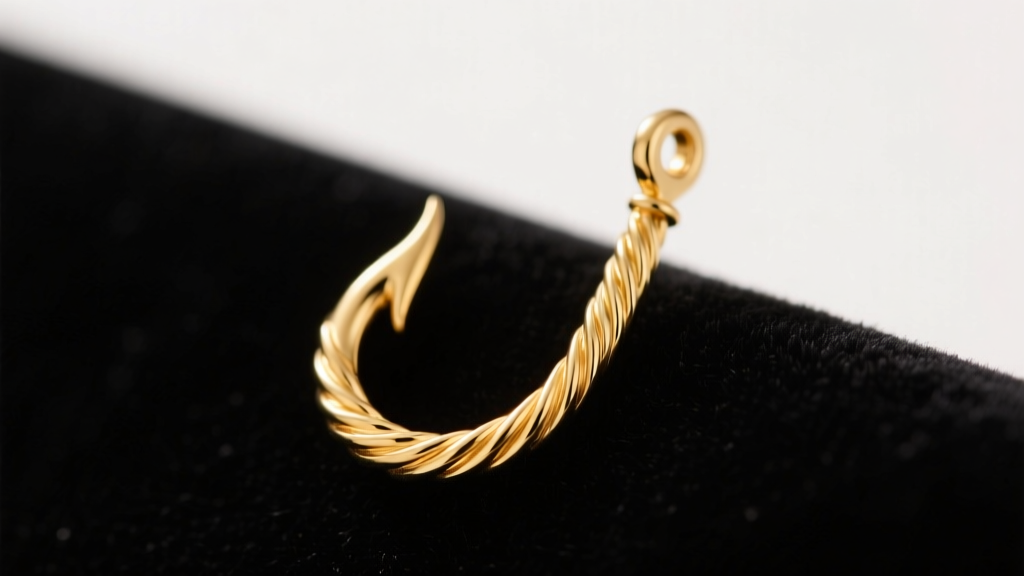
There are few things more frustrating in jewelry wear than reaching up to find your earlobe bare. When it comes to hook earrings gold designs, the 'slip-out' is a pervasive mechanical failure. To troubleshoot this, we must first understand the physics at play. A standard fish hook or shepherd's hook earring relies on a delicate balance of gravity and friction. When the decorative dangle is heavier than the counterweight of the hook's rear curve, the earring's center of gravity shifts forward. This causes the wire to rotate downward, sliding effortlessly out of the piercing.
Furthermore, earlobe thickness plays a critical role. A standard 22-gauge (0.64mm) gold hook has a wear length of about 10mm to 12mm. If your earlobe is thicker than 6mm, the hook sits too close to the edge of the piercing, leaving insufficient wire at the back to catch against the skin. Understanding these mechanical limitations is the first step toward a permanent fix.
Mechanical Fixes: Stopping the Slip
Before you retire your favorite pieces, implement these targeted mechanical solutions to secure your hook earrings gold settings.
1. Silicone O-Rings and Stopper Discs
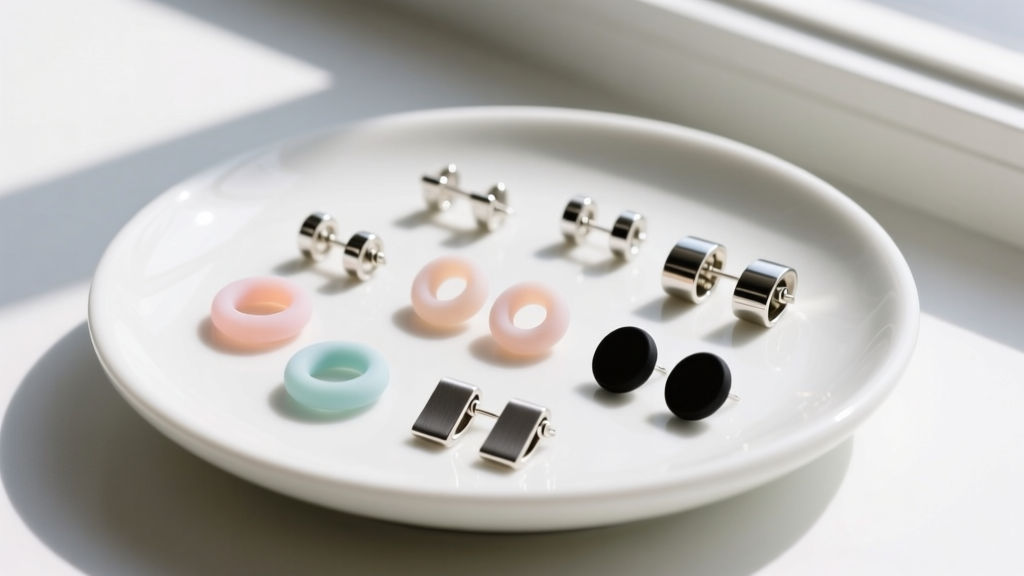
The most cost-effective and immediate solution is the silicone O-ring. Unlike standard butterfly backs that can damage the delicate threading or bend the thin gold wire, a 3mm inner-diameter silicone stopper slides onto the back of the hook and uses high-friction elastomer to grip the wire. A pack of medical-grade silicone stoppers typically costs between $5 and $8 for 40 pairs. They are virtually invisible and prevent the forward rotation that causes the earring to slide out.
2. French Wire Metal Clutches
For a more premium, secure fit, invest in French wire clutches (often called shepherd's hook clutches). These are essentially hollow, C-shaped metal tubes with a silicone insert. When you push the gold hook into the clutch, the internal silicone grips the metal while the rigid exterior prevents the earring from bending. Look for 14k gold-filled or sterling silver clutches, which retail for $15 to $30 per pair and offer a seamless aesthetic match to solid gold hooks.
3. The Tension Bend (Plier Adjustment)
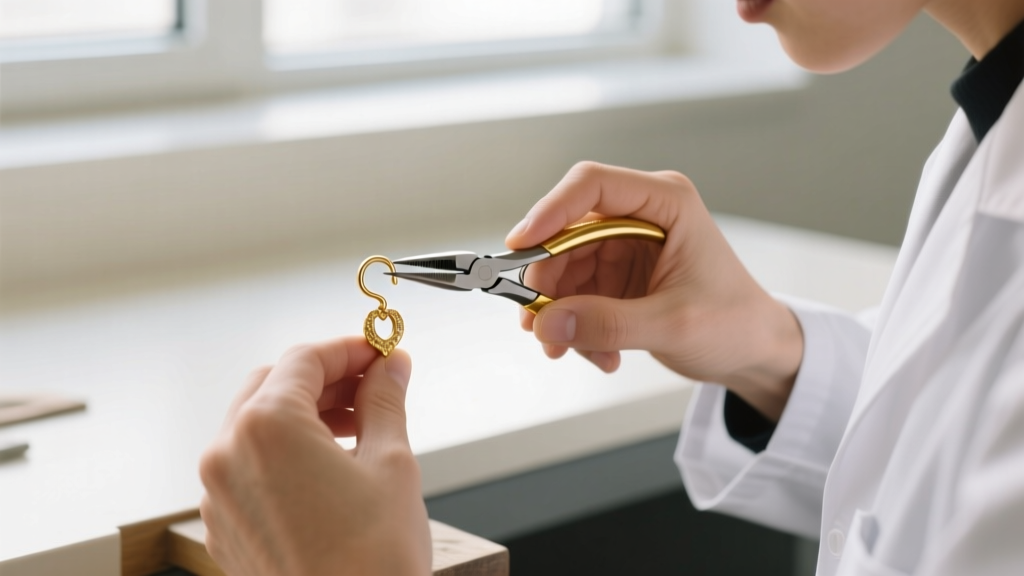
If you prefer to wear your hook earrings without backs, you can alter the wire's geometry. Using a pair of nylon-jaw pliers (never use standard steel jewelry pliers, as they will mar the soft gold), gently squeeze the front and back curves of the hook closer together. You are not bending the wire sharply; you are simply closing the 'C' shape to increase the tension against the sides of your earlobe. This creates a physical barrier that requires intentional pulling to remove.
Metallurgical Troubleshooting: Bending and Work Hardening
A frequent complaint with hook earrings gold styles is that the wire constantly bends out of shape. This is directly tied to the karat weight and the wire gauge. Pure 24k gold has a Vickers Hardness (HV) of roughly 25, making it as soft as lead. It is never used for hooks. Most high-end hooks are crafted in 18k gold (approx. 110 HV) or 14k gold (approx. 130-150 HV, depending on the copper/silver alloy mix).
| Gold Purity | Stamp | Avg. Vickers Hardness | Hook Durability & Risk |
|---|---|---|---|
| 24 Karat | 999 | ~25 HV | Unusable for hooks; will deform instantly under the weight of a dangle. |
| 22 Karat | 916 | ~55 HV | Very soft; requires thick 18-gauge wire to maintain shape. |
| 18 Karat | 750 | ~110 HV | Good durability; standard 20-gauge wire holds shape well for lightweight drops. |
| 14 Karat | 585 | ~140 HV | Industry standard; excellent spring-back and resistance to bending in 20g or 22g. |
The Work Hardening Trap: When a 14k or 18k gold hook gets bent, the natural instinct is to bend it back. However, gold alloys undergo 'work hardening.' Repeated bending aligns the crystal lattice structure of the metal, making it brittle. If you bend a 22-gauge 14k gold hook back and forth more than three or four times, it will snap cleanly. If your hook has lost its temper and become too stiff, a professional jeweler must anneal it (heat it to a specific temperature and quench it) to restore its malleability before reshaping.
The 'Itch' Factor: Troubleshooting Gold Allergies
Are your hook earrings gold in color, but causing your piercings to itch, weep, or turn green? This is a metallurgical mismatch. According to the Mayo Clinic, nickel allergy is one of the most common causes of contact dermatitis, and it frequently hides in jewelry.
White Gold Hooks and Rhodium Wear
White gold is not naturally white; it is an alloy of yellow gold mixed with white metals like nickel, palladium, or silver. To achieve a bright, reflective finish, white gold hooks are plated with rhodium. The friction point of a hook earring—where the wire slides in and out of the piercing—experiences constant abrasion. Within a few months, the rhodium plating wears off at this exact friction point, exposing the underlying nickel-laced alloy directly to the moist environment of the earlobe. This triggers rapid-onset dermatitis.
The Fix: If you love the look of white metal, switch to platinum or palladium hook earrings. If you must use white gold, have a jeweler re-plate the hooks annually, or coat the wire in a microscopic layer of clear jewelry guard (a temporary polymer barrier).
Vermeil vs. Gold-Filled vs. Plated
Many consumers buy 'gold' hooks that are actually brass or copper plated with a microscopic layer of gold (often less than 0.05 microns). As the gold wears away, the base metals oxidize and react with skin acidity, causing the dreaded 'green ear' effect. To ensure you are buying skin-safe hook earrings, the Gemological Institute of America (GIA) recommends looking for specific quality stamps. For sensitive ears, only purchase hooks stamped 14k, 18k, or explicitly labeled as 'Nickel-Free Gold-Filled' (which contains 100 times more gold than standard plating and is mechanically bonded to a brass core, preventing skin contact with the base metal).
Step-by-Step Reshaping Guide for Misshapen Hooks
If your gold hook has been crushed in a jewelry box or snagged on a sweater, follow this precise protocol to reshape it without causing a fracture.
- Inspect the Wire: Use a 10x jeweler's loupe to check for micro-cracks, especially near the base of the loop where the wire is soldered. If you see a crack, stop; reshaping will snap it.
- Secure the Loop: Hold the top loop firmly between your thumb and forefinger. Do not grip the loop with pliers, as this will distort the solder joint.
- Apply Even Pressure: Using nylon-jaw pliers, grip the lower curve of the hook. Apply slow, continuous pressure to bend the wire back into a smooth, parabolic arc. Avoid sharp, jerky movements.
- Check the Alignment: Hold the earring up to your eye line. The front curve and the back curve should run parallel to one another. If they splay outward, gently squeeze the sides of the hook together with the flat of your plier jaws.
- Polish the Friction Point: Reshaping can cause microscopic burrs. Run a fine-grit (8000+) polishing cloth over the wire to ensure it slides through your piercing without micro-tearing the fistula tissue.
Long-Term Maintenance for Gold Hooks
To preserve the structural integrity and finish of your hook earrings gold pieces, proper storage and cleaning are non-negotiable. Never throw loose hook earrings into a communal jewelry box; the hooks will act as grappling hooks, tangling with chains and bending under the weight of heavier pieces. Store them individually in soft flannel pouches or thread them through a dedicated earring card with reinforced holes.
Expert Warning on Ultrasonic Cleaners: While ultrasonic cleaners are excellent for removing sebum and dead skin from earring wires, they can be disastrous for hook earrings that feature glued-in gemstones (like pearls or opals) on the dangle. The high-frequency vibrations can shatter the adhesive bond, causing the stone to fall out. Always clean hooked dangles manually using a soft brush, warm water, and a drop of mild dish soap.
By understanding the specific gauge limitations, alloy behaviors, and mechanical physics of your jewelry, you can transform your hook earrings from a frustrating liability into a secure, comfortable, and lifelong staple in your collection.


