Avoid an Allergic Reaction to Fake Earrings: Metal Guide
Discover why you get an allergic reaction to fake earrings. Compare nickel, brass, and surgical steel to find hypoallergenic metals for sensitive ears.

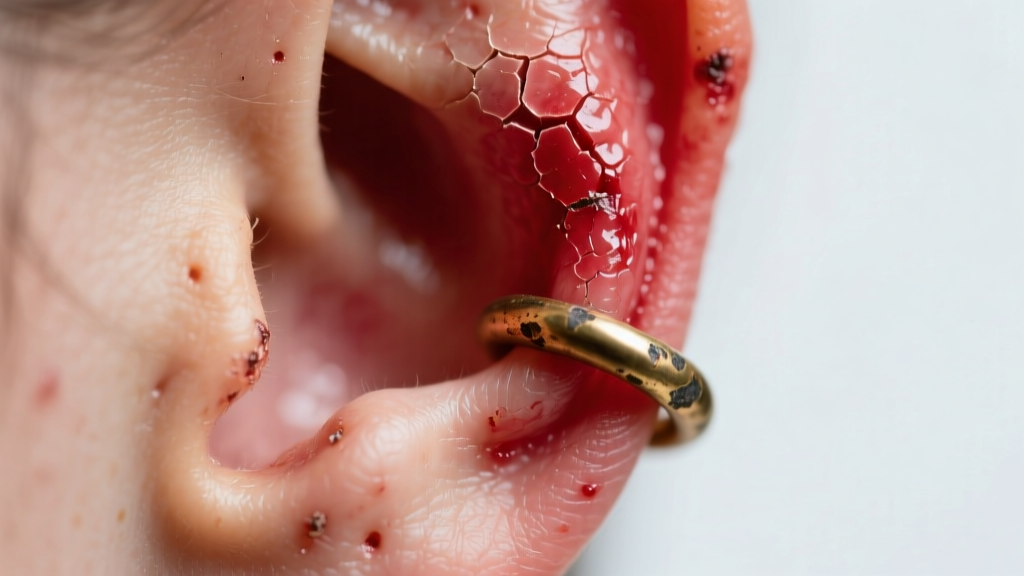
Experiencing an itchy, red, or weeping earlobe shortly after putting on a new pair of studs is a frustratingly common issue. An allergic reaction to fake earrings is rarely a mystery; it is almost always a predictable metallurgical failure. Costume jewelry, often marketed as "hypoallergenic" or "nickel-free," frequently relies on cheap base metals and ultra-thin plating that degrades rapidly against human skin. Understanding the exact properties of these metals is the first step toward building a safe, comfortable earring wardrobe.
The Science of Contact Dermatitis and Metal Ions
When you experience an allergic reaction to fake earrings, you are likely suffering from allergic contact dermatitis. According to the American Academy of Dermatology, nickel allergy is the most common contact allergy worldwide, affecting roughly 18% of women and 6% of men. However, the metal itself is not the direct culprit; it is the ions released by the metal.
When base metals interact with the natural salts and acids in your sweat, they undergo a mild oxidation process. This releases nickel ions, which penetrate the stratum corneum (the outermost layer of skin). Your immune system identifies these ions as foreign invaders, triggering a localized T-cell response that results in erythema (redness), edema (swelling), and severe pruritus (itching). Because sweat acts as an electrolyte, wearing cheap earrings during exercise or in humid environments accelerates this ion leaching exponentially.
Why Costume and "Fake" Earrings Trigger Flare-Ups
The term "fake earrings" generally refers to mass-produced costume jewelry made from brass, zinc alloys, or nickel silver (which contains no actual silver, but rather a mix of copper, nickel, and zinc). To make these inexpensive metals look premium, manufacturers apply surface coatings. Here is where the failure modes occur:
Flash Plating vs. Vermeil
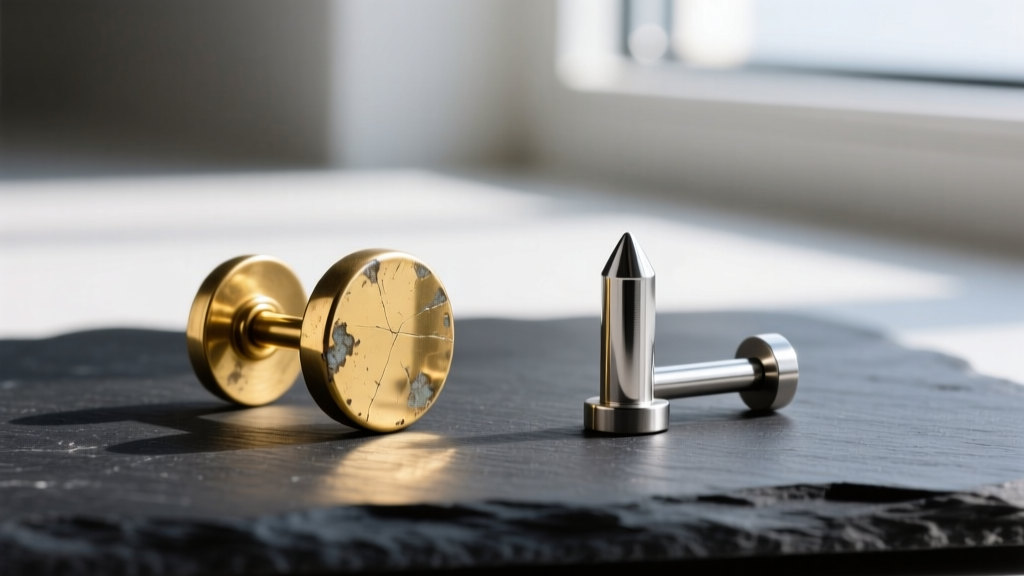
Most department-store earrings utilize "flash plating," an electrochemical process that deposits a microscopic layer of gold or silver—often less than 0.1 microns thick—over a brass or nickel core. This layer is so thin that the friction of insertion and the acidity of your skin can wear it away in a matter of days, or even hours. Once the base metal is exposed, an allergic reaction to fake earrings is practically guaranteed.
Even higher-end "gold vermeil" (which requires a minimum of 2.5 microns of gold over sterling silver) can cause issues if the sterling silver core contains copper alloys that oxidize, or if the wearer has a specific sensitivity to silver sulfides.
The "Surgical Steel" Misconception
Many brands market 316L surgical stainless steel as a cure-all for sensitive ears. While 316L steel is highly corrosion-resistant, it inherently contains between 8% and 12% nickel. The nickel is trapped within the steel's crystal lattice, meaning it leaches at a vastly slower rate than pure nickel alloys. For healed lobes, 316L is often fine. However, for fresh piercings, cartilage placements, or individuals with severe hyper-reactivity, 316L will still trigger an immune response.
The Hypoallergenic Material Hierarchy
To permanently avoid an allergic reaction to fake earrings, you must transition to biocompatible, implant-grade materials. The Mayo Clinic recommends sticking to specific elemental metals that do not require alloying with reactive elements. Below is a metallurgical comparison of safe earring materials.
| Material Grade | Nickel Content | Price Range (Per Pair) | Best Application |
|---|---|---|---|
| Implant-Grade Titanium (ASTM F136) | 0.0% (Nickel-Free) | $25 - $80 | Fresh piercings, severe allergies, cartilage |
| Niobium | 0.0% (Elemental Metal) | $20 - $60 | Hoops, huggies, highly reactive lobes |
| 14k / 18k Solid Yellow Gold | 0.0% (Alloyed with Ag/Cu) | $150 - $500+ | Healed lobes, luxury everyday wear |
| 14k White Gold (Palladium Alloy) | 0.0% (Avoid standard Ni-alloys) | $180 - $600+ | Healed lobes requiring a silver aesthetic |
| Platinum (950 Pt) | 0.0% | $400 - $1500+ | Lifetime heirloom pieces, absolute sensitivity |
A Warning on White Gold: Standard 14k white gold is frequently alloyed with nickel to achieve its bright, silvery color. If you are buying white gold, you must explicitly verify that it is alloyed with palladium instead of nickel, or ensure it has a thick rhodium plating that is regularly maintained.
Gauge Size, Friction, and Piercing Location
Material is only half the battle; the physical dimensions of the earring post also dictate how your skin reacts. Standard fashion earrings are typically manufactured at 20-gauge (0.81mm) or 22-gauge (0.64mm). These ultra-thin posts create high localized pressure points inside the fistula (the piercing tunnel).
The Cartilage Vulnerability
Cartilage tissue is avascular, meaning it lacks direct blood flow and heals much slower than the earlobe. If a 20-gauge brass post causes micro-tears in a cartilage piercing, the resulting inflammation can lead to perichondritis or hypertrophic scarring (piercing bumps). For cartilage, always opt for 16-gauge (1.29mm) or 14-gauge (1.63mm) implant-grade titanium labret studs. The thicker post distributes pressure evenly and provides structural stability, reducing the friction that exacerbates allergic responses.
PVD Coating: A Modern Solution for Color
If you desire black, rose gold, or vibrant anodized colors without relying on reactive electroplating, look for Physical Vapor Deposition (PVD) coatings. PVD bonds a microscopic layer of titanium nitride to the titanium base in a vacuum chamber. Unlike flash plating, PVD is highly scratch-resistant, biocompatible, and will not leach ions into the skin, making it a safe alternative for those prone to an allergic reaction to fake earrings.
Immediate Protocol for Allergic Flare-Ups
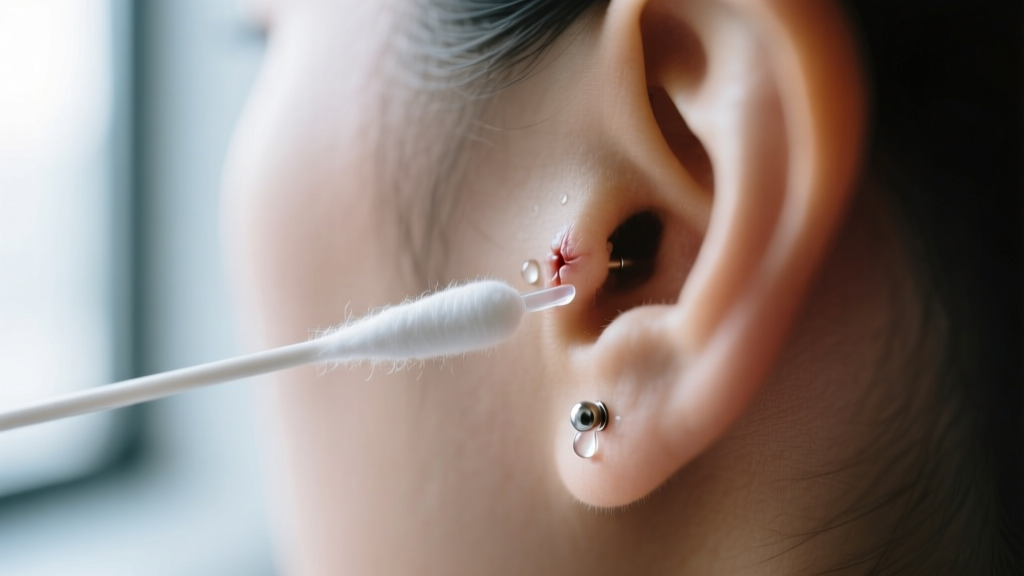
If you have already developed a reaction, swift action is required to prevent secondary bacterial infections. The National Center for Biotechnology Information (NCBI) notes that compromised skin barriers from contact dermatitis are highly susceptible to Staphylococcus aureus colonization.
- Remove the Offending Metal Immediately: Do not attempt to "push through" the reaction. Take the earrings out to halt the ion transfer.
- Cleanse with Sterile Saline: Avoid harsh chemicals like rubbing alcohol or hydrogen peroxide, which destroy newly forming tissue cells. Use a 0.9% sterile sodium chloride wound wash.
- Apply a Topical Corticosteroid: An over-the-counter 1% hydrocortisone ointment applied twice daily for 3 to 5 days will suppress the localized T-cell immune response and reduce swelling.
- Downsize and Switch Materials: Once the tissue has calmed, re-insert only an ASTM F136 titanium post. If the piercing hole is swelling shut, a professional piercer can taper the fistula open safely using a sterilized steel insertion taper coated in jojoba oil.
Final Verdict on Building a Safe Wardrobe
Ultimately, the adage "you get what you pay for" applies strictly to metallurgy. Avoiding an allergic reaction to fake earrings requires abandoning the illusion of cheap, heavily-plated costume jewelry. By investing in solid 14k gold, pure niobium, or implant-grade titanium, you are not just buying jewelry; you are investing in biocompatible engineering that respects your body's immune system. Check for laser-engraved hallmarks, request material safety data sheets (MSDS) from reputable jewelers, and prioritize structural integrity over fleeting fast-fashion trends.


