Symptoms of Allergic Reaction to Earrings and Hypoallergenic Metals
Learn to identify symptoms of allergic reaction to earrings, compare hypoallergenic metal grades, and find safe jewelry solutions for sensitive ears.

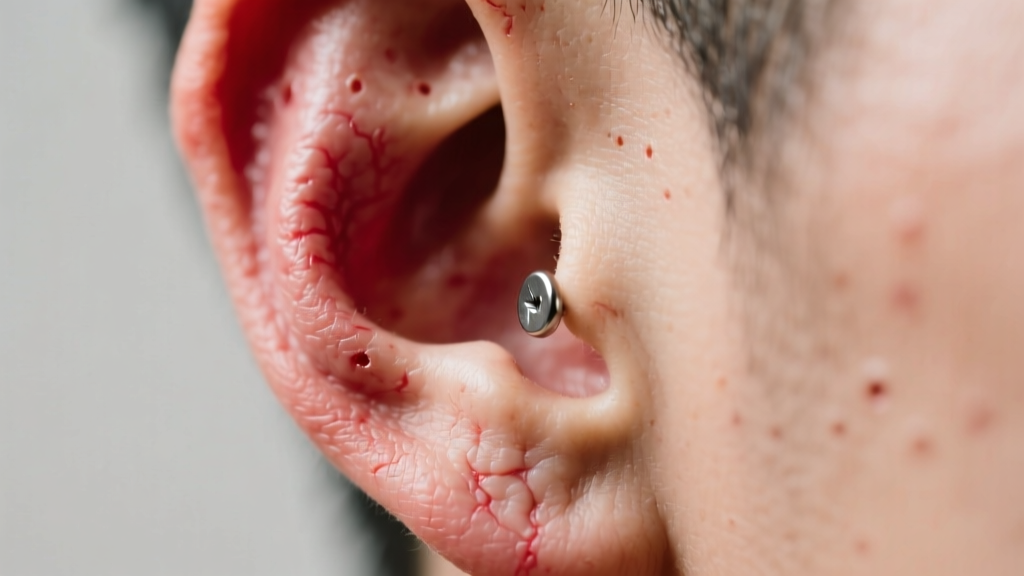
If you have ever taken off a pair of earrings only to find your earlobes red, itchy, and flaking, you have likely experienced contact dermatitis. As jewelry metallurgy evolves, the market is flooded with misleading terms like 'hypoallergenic' and 'surgical steel,' leaving consumers vulnerable to adverse reactions. Understanding the exact symptoms of allergic reaction to earrings is the first step toward curating a safe, comfortable jewelry collection. In this comprehensive guide, we break down the biological mechanisms of metal allergies, compare the metallurgical properties of common earring materials, and provide actionable protocols for sensitive ears.
Decoding the Symptoms of Allergic Reaction to Earrings
A metal allergy is not an immediate anaphylactic response; it is a Type IV delayed hypersensitivity reaction. When nickel or other reactive ions leach from your earrings into the skin, Langerhans cells (the skin's immune sentinels) capture these ions and present them to T-cells. This process takes time, which is why the symptoms of allergic reaction to earrings typically manifest 48 to 72 hours after continuous wear.
Differentiating Allergy from Infection
Many people mistake an allergic flare-up for a piercing infection, leading to improper treatment. According to the Mayo Clinic, distinguishing between the two is critical for proper healing:
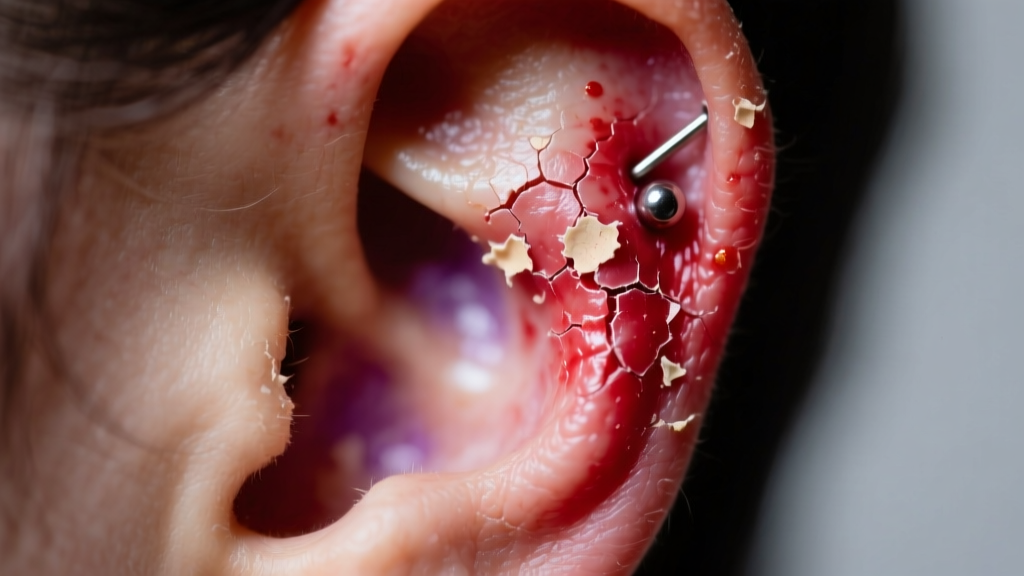
- Allergic Contact Dermatitis: Characterized by intense pruritus (itching), localized erythema (redness), clear fluid weeping, dry flaking skin, and a rash that extends slightly beyond the immediate piercing site.
- Bacterial Infection: Characterized by throbbing pain, excessive heat radiating from the tissue, thick yellow or green purulent discharge (pus), and sometimes systemic symptoms like a fever.
The Culprits: Metal Alloys and Nickel Release Rates
Nickel is the most common metal allergen globally, affecting approximately 15-20% of the population. However, it is not the mere presence of nickel in an alloy that causes a reaction; it is the rate at which nickel ions are released into the skin's sweat and sebum. The European Union's Nickel Directive established the gold standard for safety: a nickel release rate of less than 0.5 µg/cm²/week.
The 'Surgical Steel' Myth
The term 'surgical steel' is largely unregulated in the jewelry industry. Most commercial earrings labeled as such are made from 316L stainless steel. While 316L is excellent for medical scalpels and clamps, it contains between 10% and 14% nickel. When exposed to the acidic pH of human skin, the protective chromium oxide layer on the steel can degrade, allowing nickel ions to leach at rates far exceeding the 0.5 µg/cm²/week safety threshold. Furthermore, thicker gauge earrings (like 14g or 12g cartilage hoops) provide a larger surface area for ion transfer, potentially exacerbating the reaction.
Material Comparison Chart: Nickel Content vs. Release Rate
| Material Grade | Nickel Content | Avg. Release Rate (µg/cm²/week) | Safe for Sensitive Ears? |
|---|---|---|---|
| 316L Surgical Steel | 10% - 14% | 0.5 - 2.5+ | No |
| ASTM F136 Titanium | 0% | 0.0 | Yes |
| Unalloyed Niobium | 0% | 0.0 | Yes |
| 18k Yellow Gold | 0% (typically) | 0.0 | Yes |
| 14k White Gold | 5% - 15% | 0.2 - 1.8 | No |
Hypoallergenic Material Comparison: What Actually Works
If you are experiencing the symptoms of allergic reaction to earrings, you must transition to truly biocompatible materials. Here is a deep dive into the metallurgical properties of the safest options available in 2026.
Implant-Grade Titanium (ASTM F136)
Not all titanium is created equal. Commercial grade 2 titanium (ASTM F67) is pure but softer and can contain trace impurities. For earrings, you want ASTM F136 (Ti6Al4V ELI). This is an implant-grade alloy containing titanium, aluminum, and vanadium, processed with Extra Low Interstitial (ELI) elements. It is entirely nickel-free, highly corrosion-resistant, and lightweight, making it the absolute best choice for fresh piercings and hyper-reactive earlobes. Expect to pay $15 to $45 for high-quality ASTM F136 threadless or internally threaded studs from reputable brands like NeoMetal or BVLA.
Niobium: The Reactive Alternative
Niobium is an elemental metal, meaning it is not an alloy and cannot contain hidden nickel. It is highly malleable, making it a favorite for seamless cartilage hoops and clickers. One of niobium's unique properties is its reactivity to anodization; by applying specific voltages, piercers can change the color of the metal without using paints or platings that could flake off and cause irritation.
Solid Gold: Navigating the Alloys
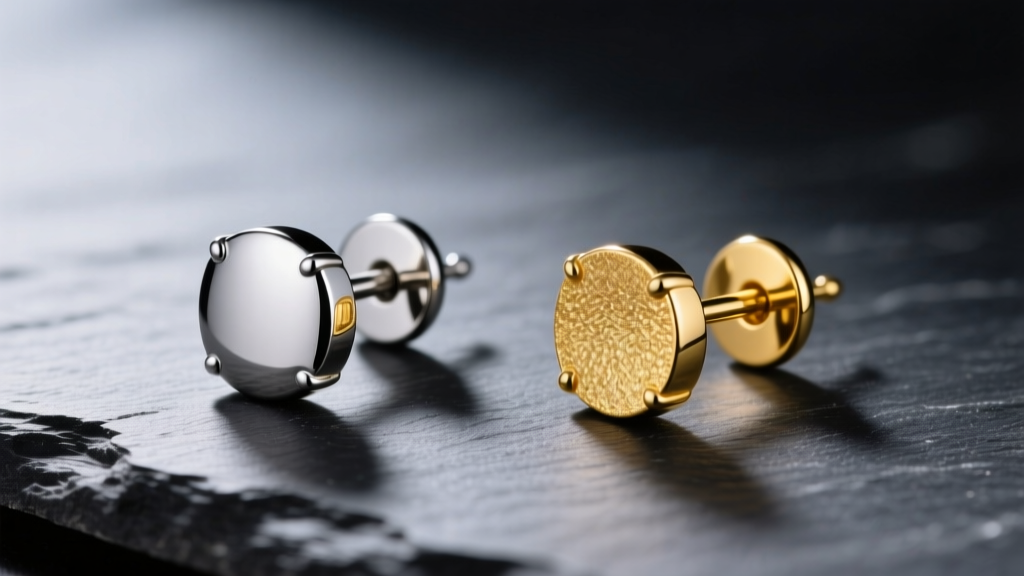
Pure 24k gold is too soft for earring posts, so it must be alloyed. 18k gold (75% pure gold) is generally safer than 14k (58.5% pure gold) because there is less room for reactive alloy metals. However, the color of the gold matters immensely. Yellow gold is typically alloyed with copper and silver (safe). White gold, on the other hand, is frequently alloyed with nickel to achieve its silvery hue. Always opt for palladium-alloyed white gold if you prefer a silver tone, or stick to yellow and rose gold.
Troubleshooting and Immediate Relief Protocols
If you are currently suffering from an active flare-up, follow this step-by-step protocol to mitigate tissue damage and restore your skin barrier.
- Immediate Removal: Take out the offending earrings. Do not attempt to 'push through' the reaction, as continuous exposure will deepen the hypersensitivity.
- Gentle Cleansing: Wash the area with a sterile, preservative-free 0.9% saline wound wash. Avoid harsh soaps, rubbing alcohol, or hydrogen peroxide, which will strip the compromised lipid barrier and delay healing.
- Topical Corticosteroids: Apply an over-the-counter 1% hydrocortisone cream to the affected earlobe twice daily for up to 7 days to suppress the localized T-cell response. The American Academy of Dermatology recommends this as a first-line defense for mild contact dermatitis.
- Moisturize and Protect: Once the weeping stops, apply a thin layer of plain petroleum jelly or a ceramide-rich ointment to protect the micro-tears in the skin from environmental pathogens.
Expert Warning: Never remove jewelry from a fresh, unhealed piercing (less than 6-12 months old) without consulting a professional piercer or dermatologist. Removing the post can cause the fistula (the piercing channel) to close rapidly, trapping bacteria and leading to an abscess. If you suspect an allergy in a new piercing, have a piercer swap the jewelry to an ASTM F136 titanium post immediately.
Preventative Coatings and Jewelry Hacks
What happens if you inherit a beautiful pair of vintage 316L steel or brass earrings that you desperately want to wear? While the only 100% foolproof method is to buy biocompatible metals, there are temporary workarounds for healed piercings.
The Clear Nail Polish Myth
Coating earring posts with clear nail polish is a widely circulated internet hack. While it provides a temporary physical barrier, nail polish is brittle, degrades quickly when exposed to skin oils and friction, and often contains formaldehyde and toluene—chemicals that can trigger their own allergic contact dermatitis. We strongly advise against this method.
PTFE Sleeves and Parylene Coating
For a safer barrier, use PTFE (Teflon) tubing or bioplast sleeves. You can slide a microscopic 20g or 18g PTFE sleeve over the earring post, ensuring the reactive metal never touches the fistula. For high-end jewelry, look for brands that offer Parylene-C conformal coating. Parylene is a biocompatible polymer applied via chemical vapor deposition, creating a pinhole-free, frictionless barrier that is completely inert and safe for long-term wear against sensitive skin.
Final Thoughts on Ear Health
Recognizing the symptoms of allergic reaction to earrings is crucial for maintaining the long-term health and aesthetics of your piercings. Chronic inflammation from repeated allergic reactions can lead to tissue scarring, hypertrophic scarring, and the eventual rejection of the piercing channel. By investing in verified ASTM F136 titanium, pure niobium, or carefully selected 18k gold alloys, you can eliminate the guesswork and wear your favorite studs, hoops, and huggies with absolute comfort and confidence.


