How to Style Male Pearl Earrings: A Step-by-Step Guide
Master the art of wearing male pearl earrings with our step-by-step styling guide. Learn about sizing, pearl types, gauge thickness, and outfit pairing.

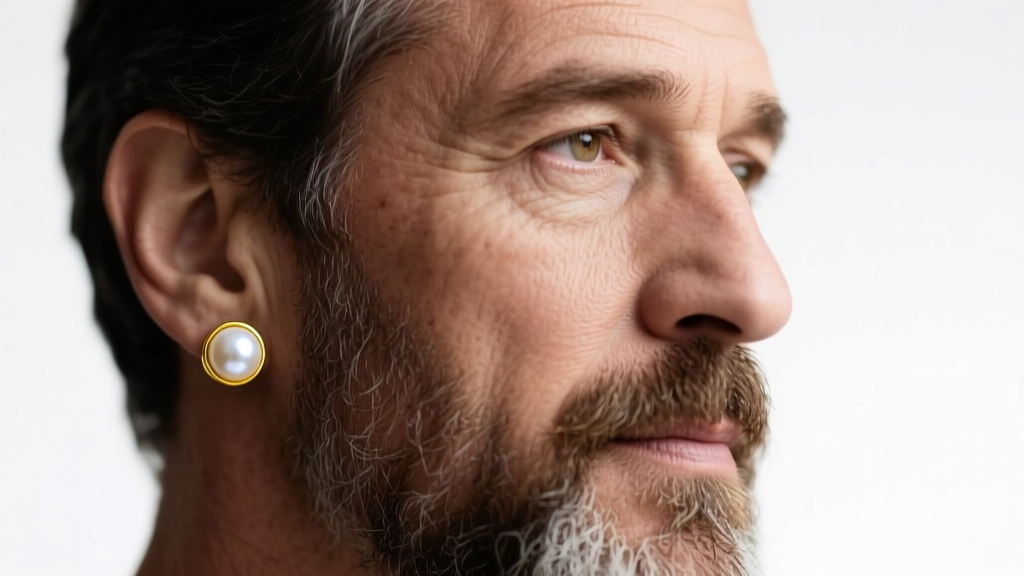
The Mainstream Shift: Pearls in 2026 Menswear
The evolution of men's jewelry has completely dismantled outdated gender norms, and nowhere is this more evident than in the widespread adoption of male pearl earrings. What began as a red-carpet rebellion by musicians and actors has firmly cemented itself as a staple in everyday menswear by 2026. However, pulling off this look requires more than just buying a random strand of pearls and hoping for the best. It demands an understanding of scale, hardware mechanics, and stylistic contrast.
This comprehensive, step-by-step guide will walk you through the exact specifications, material grades, and styling frameworks needed to wear pearl earrings with confidence and precision. Whether you are looking for a subtle 6mm stud for the office or a statement 12mm Tahitian pearl for evening wear, the details matter.
Step 1: Choosing the Right Pearl Type and Size
The foundation of your earring is the pearl itself. According to the Gemological Institute of America (GIA), pearls are evaluated on luster, surface quality, shape, and color. For men, the most critical factor is often the overtone and the millimeter (mm) size. A pearl that is too small (under 5mm) can look like a standard diamond stud from a distance, losing its unique organic texture. A pearl that is too large (over 13mm) can overwhelm the jawline and look costumey.
Pearl Type Comparison Chart
| Pearl Type | Origin | Ideal Size for Men | Color & Overtone | Est. Price (Per Stud) |
|---|---|---|---|---|
| Freshwater | China | 7.0mm - 9.0mm | White, Peach, Lavender | $40 - $150 |
| Akoya | Japan / China | 6.5mm - 8.5mm | Cream/White, Rose Overtone | $120 - $450 |
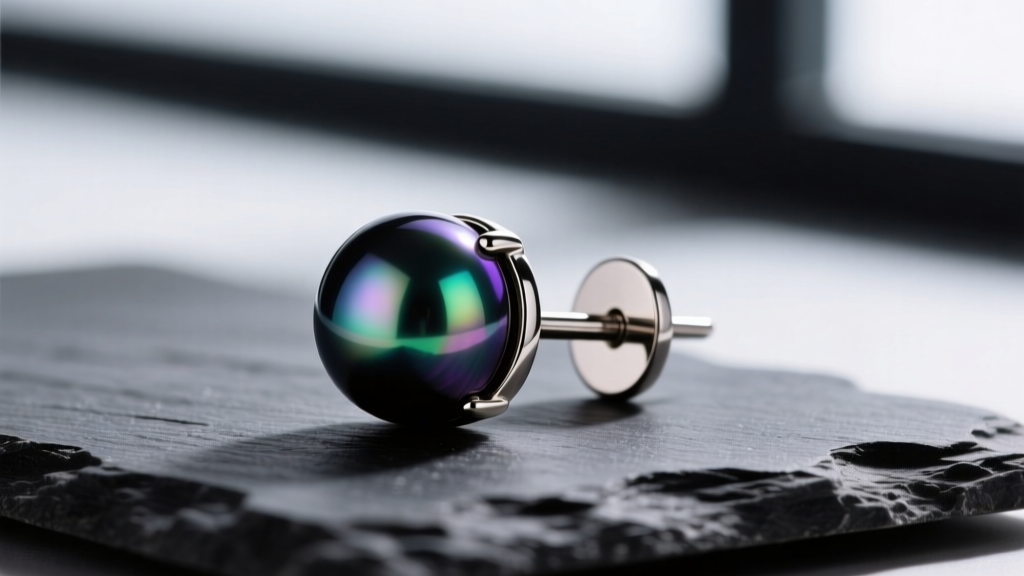
| Tahitian | French Polynesia | 8.5mm - 12.0mm | Dark Grey, Peacock Green | $250 - $900+ |
Expert Tip: If you want a masculine, rugged aesthetic, skip the perfectly round, bright white Akoya pearls. Instead, opt for a baroque (irregularly shaped) Tahitian pearl with a peacock green overtone. The asymmetrical shape and dark, moody colors align perfectly with masculine streetwear and rugged casual attire.
Step 2: Selecting the Hardware and Gauge
The biggest mistake men make with earrings is ignoring the hardware. The traditional "butterfly back" friction post is a functional nightmare—it snags in hair, traps dead skin, and is incredibly uncomfortable to sleep on. Furthermore, the thin wire of standard fashion jewelry often contains nickel, leading to contact dermatitis.
Upgrade to Flat-Back Labrets
For any long-term piercing, you should be using threadless or internally threaded flat-back labrets. Brands like Neometal or BVLA manufacture these from ASTM F136 implant-grade titanium. The flat disc sits flush against the back of the ear, making it invisible from behind and completely comfortable for sleeping or wearing over-ear headphones.
Understanding Gauge Thickness
The Association of Professional Piercers (APP) recommends specific gauges for ear stability. Ensure your pearl earring post matches your piercing gauge to prevent the "cheese-cutter effect," where a wire that is too thin slowly migrates through the tissue.
- 18 Gauge (1.0mm): The standard for traditional earlobe piercings done at jewelry stores. Ideal for lightweight 6mm-7mm pearls.
- 16 Gauge (1.2mm): The professional standard for lobes and cartilage. Offers superior stability and is highly recommended for heavier 9mm+ pearls to prevent sagging.
- 14 Gauge (1.6mm): Typically reserved for cartilage (helix) or stretched lobes. You will need a custom pearl end to fit a 14G post.
Step 3: Placement and Piercing Considerations
Where you place the pearl dramatically alters the vibe of the jewelry. The standard lower lobe is the most universally accepted and easiest to style. However, as menswear has evolved, so has piercing placement.
The Upper Lobe vs. The Helix
If you have a second piercing, placing a smaller 5mm or 6mm pearl in the upper lobe creates a sophisticated, curated look without venturing into full cartilage territory. If you prefer a helix (cartilage) piercing, be aware that the tissue is thicker and less vascular. Cartilage piercings take 6 to 12 months to fully heal. Never put a heavy pearl in a healing helix; the weight will cause swelling and migration. Stick to a lightweight titanium bead until fully healed, then swap to a secure threadless pearl end.
"The key to men's pearl jewelry is intentionality. A single, well-placed, high-quality pearl in a matte titanium setting reads as modern and architectural, whereas a cluster of cheap, mismatched pearls reads as an afterthought."

Step 4: Outfit Pairing and Styling Frameworks
Styling male pearl earrings relies heavily on the Rule of Contrast. Pearls are inherently soft, organic, and historically delicate. To make them work in a masculine wardrobe, you must juxtapose them against rugged, structured, or minimalist fabrics. Here are three proven styling frameworks for 2026:
1. The Rugged Contrast (Casual / Weekend)
Pair a bright white 8mm Akoya pearl stud with heavy, textured fabrics. Think a faded vintage denim jacket, a heavyweight flannel, or a distressed leather motorcycle jacket. The harshness of the leather and denim neutralizes the "preciousness" of the pearl, turning it into a striking focal point.
2. The Monochrome Minimalist (Office / Smart Casual)
For a professional or elevated environment, subtlety is key. Wear a black merino wool turtleneck or a crisp, unbuttoned charcoal linen shirt. Choose a single, dark Tahitian pearl (9mm) set in blackened sterling silver or matte titanium. The dark pearl blends seamlessly with the monochrome palette, revealing its peacock green luster only when the light catches it.
3. The Asymmetrical Streetwear Stack (Evening / Events)
If you have multiple piercings, mix textures. Combine a 7mm baroque freshwater pearl in the lower lobe with a plain, unadorned 16G titanium clicker hoop in the helix. The mix of organic pearl and industrial metal perfectly captures the modern streetwear ethos.
Step 5: Care and Maintenance Routine
Pearls are organic gemstones, primarily composed of calcium carbonate. On the Mohs scale of hardness, they rank between 2.5 and 3.0. For context, a copper penny is a 3.5, and steel is around 4.5. This means your pearls can be easily scratched by other jewelry, keys, or even coarse fabrics.
The "Last On, First Off" Rule
Pearls are highly susceptible to acids and chemicals. Hairspray, cologne, sweat, and skincare products will degrade the nacre over time, stripping the pearl of its luster and leaving it chalky. Always put your pearl earrings on after applying grooming products, and take them off first when you get home.
Cleaning Protocol
- Never use ultrasonic cleaners. The high-frequency vibrations can shatter the nacre or loosen the glue holding the pearl to the post.
- Never use commercial jewelry dips. The ammonia and harsh acids will destroy the pearl's surface.
- Wipe down after wear. Use a clean, dry microfiber cloth to gently wipe the pearl and the titanium post before storing.
- Store separately. Keep your pearl earrings in a soft cotton pouch, completely isolated from diamond, sapphire, or metal jewelry that could scratch them.
By treating your hardware with the same respect as a fine mechanical watch, and applying these deliberate styling frameworks, male pearl earrings transition from a fleeting trend into a permanent, sophisticated pillar of your personal style.


