2026 Trend Report: Styling Curated Ear Lobe Earrings
Discover 2026 trends for curated ear lobe earrings. Learn expert stacking frameworks, gauge sizing, material grades, and weight limits for perfect lobe styling.

The 2026 Shift: Redefining Ear Lobe Earrings
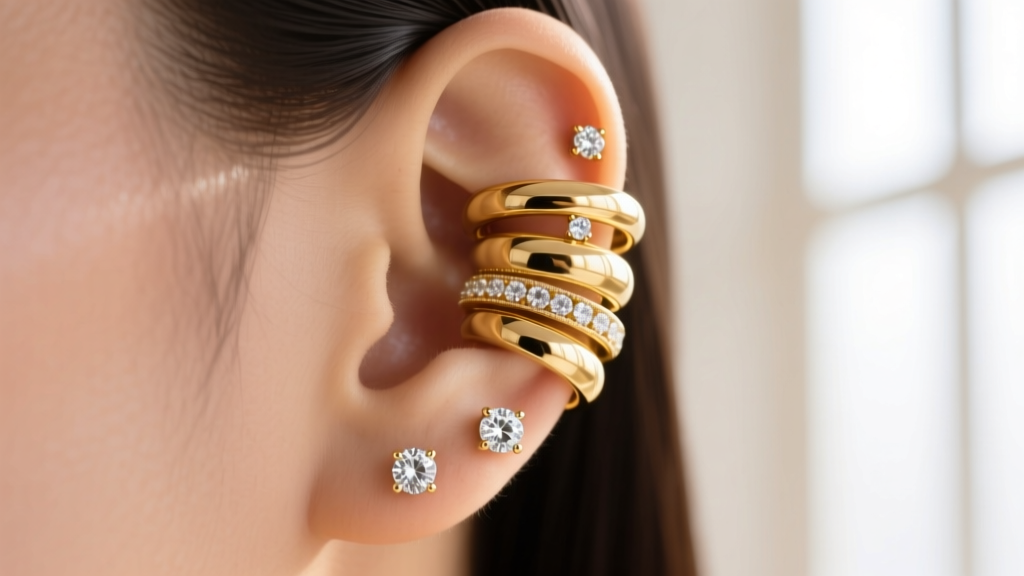
The standard lobe piercing is no longer just a passive canvas for a solitary diamond stud. In 2026, ear lobe earrings have evolved into a sophisticated discipline of spatial design, metallurgy, and personal branding. The era of the perfectly symmetrical, matched pair is yielding to the 'curated lobe constellation'—an approach that treats the lower ear anatomy as an asymmetrical gallery. This shift is driven by a desire for hyper-personalization, moving away from mass-produced mall kiosk jewelry toward bespoke, anatomically fitted pieces. Understanding the interplay between gauge thickness, metal density, and lobe tissue capacity is now mandatory for executing a flawless stack.
Material Science: ASTM Standards and Weight Limits
When selecting fine ear lobe earrings, the metallurgical composition dictates both the longevity of the piece and the health of the fistula (the piercing channel). The Association of Professional Piercers (APP) strictly recommends implant-grade materials for long-term wear. The gold standard in 2026 remains ASTM F136 titanium for structural posts, paired with 14k or 18k solid gold for the decorative ends.
Beware of the 'surgical steel' marketing trap. This vague term often encompasses 316L stainless steel, which contains up to 10% nickel. Prolonged contact with nickel in a warm, moist environment like the earlobe frequently triggers contact dermatitis and localized hyperpigmentation. Furthermore, weight distribution is critical. A standard lobe piercing can comfortably support up to 7 grams of continuous weight. Exceeding this threshold with heavy, oversized statement hoops without upsizing the gauge leads to tissue fatigue and permanent elongation.
Mechanics of Fine Jewelry: Internal Threading vs. Threadless
The structural integrity of ear lobe earrings relies heavily on how the decorative end attaches to the post. External threading (where the screw is cut into the post itself) is entirely obsolete in high-end jewelry; dragging sharp threads through the delicate lobe tissue causes micro-tears and scar tissue buildup. In 2026, luxury jewelers exclusively utilize two mechanisms:
- Internal Threading: The screw is located on the decorative end, and the post is perfectly smooth. This requires precise CNC machining and is typically found in premium 14k gold pieces ranging from $150 to $400.
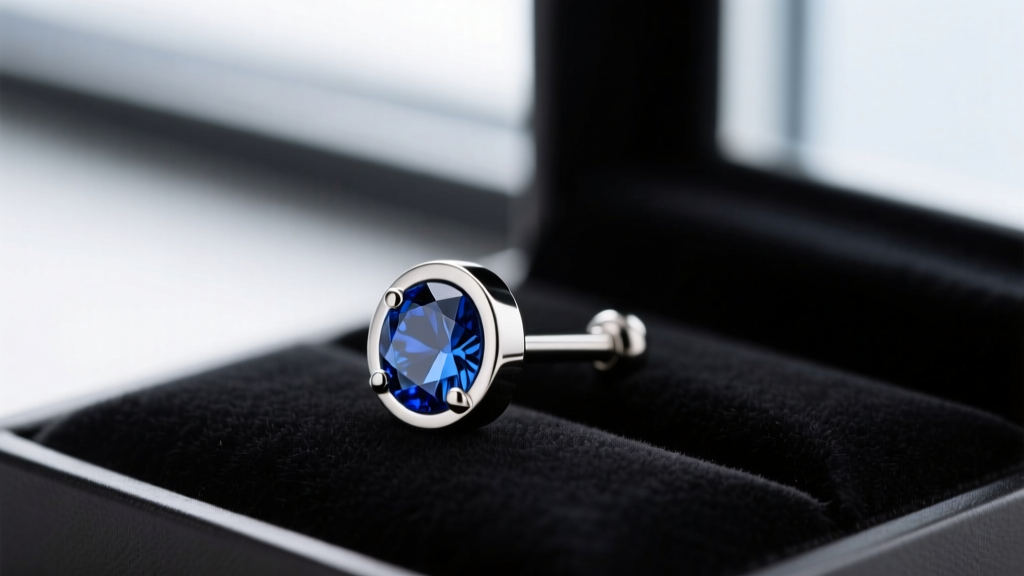
- Threadless (Push-Pin): The decorative end features a slightly bent titanium pin that inserts into a hollow post, creating tension-based friction. This is the preferred method for high-end gemstone ends (often $80 to $250 per piece) as it eliminates the risk of cross-threading and allows for seamless swapping of ends without removing the base post.
2026 Silhouette Forecast: Data-Driven Trend Analysis
Analyzing market data and high-fashion editorial placements reveals a distinct pivot in how ear lobe earrings are being styled this year. The focus has shifted from sheer size to textural contrast and mixed-metal layering.
| Style Element | 2025 Dominant Trend | 2026 Forecast & Evolution |
|---|---|---|
| Metal Palette | Monochromatic Yellow Gold | Mixed-Metal (White Gold + Yellow Gold layering) |
| Hoop Silhouette | Thin, Lightweight Huggies | Chunky, Hollow-Tubing 'Sleepers' (14g/12g) |
| Placement | Symmetrical Matched Pairs | Asymmetrical Constellations (3-5 lobes per ear) |
| Gemstone Cuts | Traditional Round Brilliant | Rose Cuts and Raw, Uncut Diamonds |
The 3-Point Stacking Framework
Building a cohesive lobe stack requires an understanding of visual hierarchy. Rather than randomly placing studs, expert piercers and stylists utilize the 3-Point Framework to ensure the ear lobe earrings complement the wearer's facial structure and ear anatomy.
- The Anchor (Primary Lobe): This is the foundational piece, usually placed in the standard 18g (1.02mm) or 16g (1.29mm) piercing. Opt for a 4mm to 6mm wide solid gold clicker or a heavy bezel-set gemstone. The anchor dictates the metal tone and overall vibe of the stack.
- The Bridge (Secondary Lobe): Positioned 6mm to 8mm above the anchor, this piercing is typically 18g. The jewelry here should contrast the anchor. If the anchor is a textured hoop, the bridge should be a sleek, threadless titanium end featuring a single, high-clarity diamond or sapphire.
- The Apex (Upper Lobe / Edge): Often pierced at 20g (0.81mm), this placement requires delicate, low-profile jewelry. A 2mm flush-set diamond or a micro-huggie works best here, drawing the eye upward and elongating the ear visually.
Troubleshooting: Migration and the Cheese-Cutter Effect
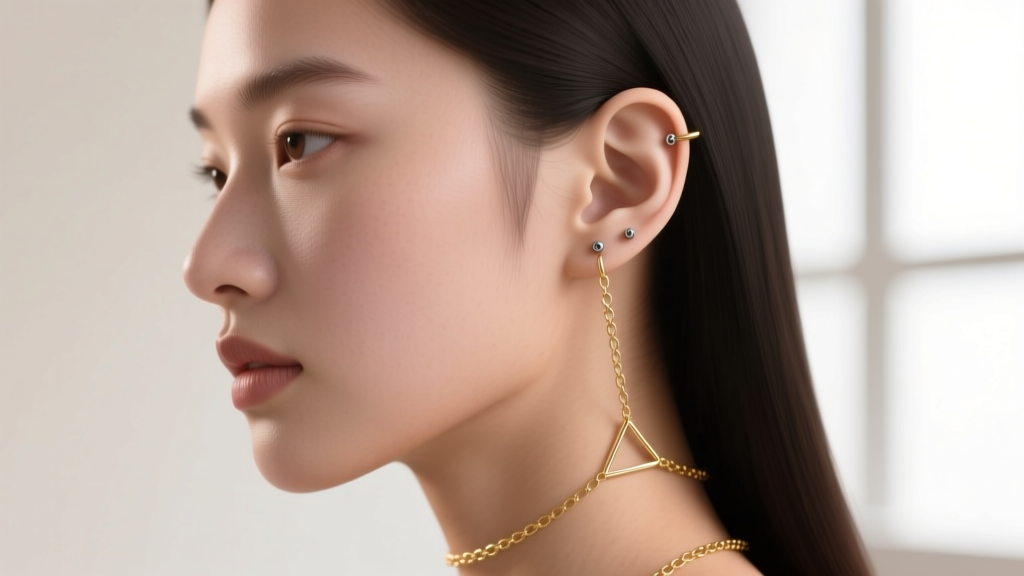
One of the most common failure modes in styling ear lobe earrings is the 'cheese-cutter effect.' This occurs when a heavy decorative end (e.g., a 10-gram pendant) is attached to a wire that is too thin (e.g., 22g or 0.64mm). Over months of wear, gravity and the weight of the gold cause the thin wire to slowly slice downward through the lobe tissue, much like a wire cutting through a block of cheese. This results in irreversible migration and eventual tearing.
To prevent this, the Gemological Institute of America (GIA) and master jewelers recommend upsizing the post thickness for any pendant or heavy drop earring. Transitioning to a 14g (1.63mm) flat-back labret post distributes the weight across a wider surface area of the fistula, neutralizing the downward shear force. Furthermore, utilizing flat-back discs rather than butterfly clasps eliminates the pressure points at the rear of the earlobe, preventing localized necrosis and ensuring the jewelry sits perfectly flush against the anatomy.
Pro Tip: If your primary lobe piercing has already begun to migrate or stretch due to heavy jewelry, consult a professional piercer about a 'dermal punch' procedure to remove the damaged fistula tissue, allowing you to re-pierce the lobe cleanly at a heavier 14g or 12g gauge for future statement pieces.