Earring Infected Old Piercing: Causes, Fixes, and Prevention
Discover why your earring infected an old piercing. Learn to differentiate allergies from infections, choose safe metals, and heal fast.

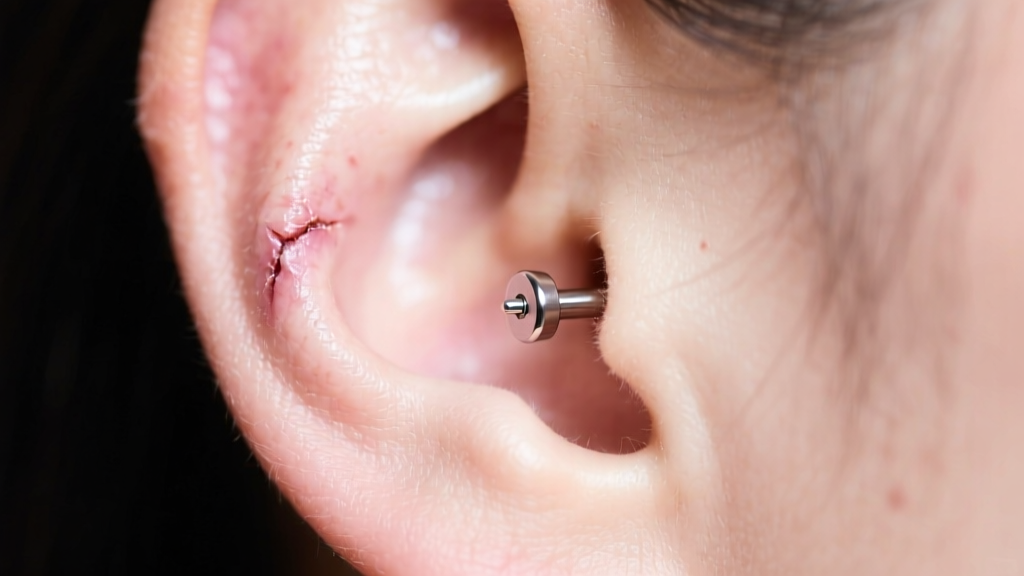
It is one of the most frustrating paradoxes in body modification: you have had your lobes or cartilage pierced for years, perhaps even decades, yet you suddenly wake up to find your earring infected in an old piercing. The hole is fully healed, the fistula (the tube of skin lining the piercing channel) is mature, and you have worn earrings without issue for a lifetime. So why the sudden inflammation, pain, or discharge?
As a beginner-friendly explainer, this guide cuts through the noise of internet myths. We will break down the exact biological and mechanical reasons why mature piercings flare up, how to differentiate a true bacterial infection from a metal allergy, and the precise triage steps you need to take to save your piercing and your comfort.
The Great Imposter: Allergy vs. True Infection
When an old piercing suddenly becomes red, itchy, and swollen, the immediate assumption is a bacterial infection. However, according to the American Academy of Dermatology, the vast majority of these flare-ups are actually Allergic Contact Dermatitis (ACD). Understanding the difference is critical because the treatments are entirely different.
Allergic Contact Dermatitis (The Nickel Trap)
If your flare-up is characterized by intense itching, localized flaking, a red rash that spreads slightly beyond the piercing hole, and clear, sticky weeping, you are likely experiencing ACD. This is almost always caused by nickel. Many commercial fashion earrings are made from "surgical stainless steel" or "hypoallergenic" alloys. In 2026, it is widely known in the dermatological community that "surgical steel" is an unregulated marketing term that often contains 8% to 12% nickel. When your skin's moisture breaks down the metal, nickel salts leach into the fistula, triggering an immune response.
True Bacterial Infection
A true infection, usually caused by Staphylococcus aureus or Pseudomonas aeruginosa, presents differently. According to data from the National Center for Biotechnology Information (NCBI), bacterial infections in piercings are marked by throbbing pain, localized heat, significant swelling, and the presence of purulent exudate (thick yellow or green pus). If the area is hot to the touch and exceptionally tender, bacteria have breached the skin barrier.
Mechanical Trauma: Gauge Mismatches and Micro-Tears
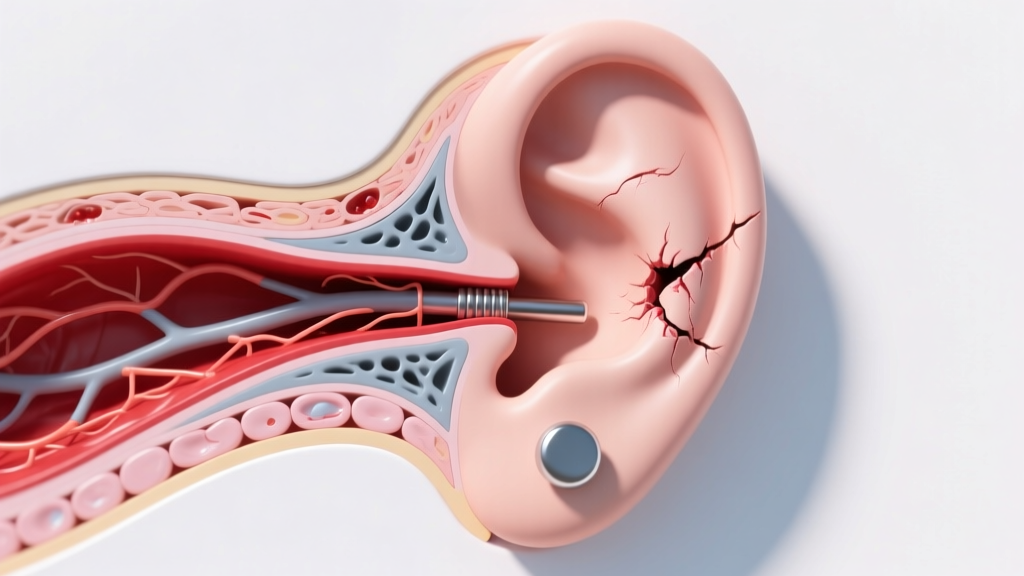
If you are certain your jewelry is made of safe, biocompatible metals, the culprit is likely mechanical trauma. The fistula of an old piercing is essentially a delicate, permanent scar tube. It is highly elastic but has a specific "memory" of its gauge size.
Standard healed lobe piercings are typically 20-gauge (0.81mm) or 18-gauge (1.02mm). However, many modern fashion earrings, heavy statement studs, or cheap hoop earrings feature posts that are 16-gauge (1.29mm) or even 14-gauge (1.60mm). Forcing a thicker post through a narrower fistula causes microscopic tearing along the inner lining of the piercing channel. These micro-tears create open wounds inside the ear, immediately inviting natural skin bacteria to cause an infection.
Standard Piercing Gauges vs. Earring Post Sizes
| Gauge Size | Diameter (mm) | Common Application | Risk to Old Piercings |
|---|---|---|---|
| 20g | 0.81mm | Standard healed lobes, delicate nose studs | Low risk; fits most mature lobe fistulas |
| 18g | 1.02mm | Standard lobes, some cartilage/helix | Moderate risk if forced into a 20g hole |
| 16g | 1.29mm | Cartilage, tragus, daith, industrial | High risk; will cause micro-tears in standard lobes |
| 14g | 1.60mm | Nipples, navels, stretched lobes | Severe trauma; requires gradual stretching |
Step-by-Step Triage: How to Treat the Flare-Up
When you realize your earring infected an old piercing, immediate and correct action is required to prevent the hole from rejecting or forming an abscess. Follow this professional triage protocol:
- Remove the Offending Jewelry: If the earring is made of questionable metal or is visibly too thick, take it out immediately. Do not force it.
- Cleanse with Sterile Saline: Spray the front and back of the piercing with a sterile 0.9% sodium chloride wound wash. Never use contact lens saline, which contains preservatives that irritate open wounds.
- Avoid Harsh Chemicals: Do not apply rubbing alcohol, hydrogen peroxide, or tea tree oil. The Association of Professional Piercers (APP) strictly warns against these, as they destroy fibroblasts—the cells responsible for rebuilding your skin barrier.
- Apply a Warm Compress: Soak a clean, lint-free gauze pad in warm saline and hold it against the ear for 5 minutes. This increases localized blood flow, bringing white blood cells to fight off bacteria.
- Re-insert Safe Jewelry: Leaving an irritated piercing empty can cause the fistula to shrink and trap bacteria inside, forming an abscess. Insert a sterilized, implant-grade titanium stud to keep the channel open and allow it to drain.
The 2026 Safe Metals Checklist
To ensure an old piercing never flares up again, you must curate your jewelry box with biocompatible materials. The term "hypoallergenic" is legally meaningless in the jewelry industry. Instead, look for these specific metallurgical standards:
- ASTM F-136 Implant-Grade Titanium: The gold standard for sensitive ears. It contains zero nickel and is the exact same metal used in surgical joint replacements.
- ASTM F-67 Commercially Pure Titanium: A slightly softer, unalloyed titanium that is also entirely safe for long-term wear in mature piercings.
- Niobium: A highly inert, reactive metal that is completely nickel-free and excellent for those with severe metal sensitivities.
- Solid 14k or 18k Gold (Nickel-Free): Ensure the gold is alloyed with silver or copper, not nickel. Avoid gold-plated or gold-filled jewelry, as the plating will eventually wear off inside the friction-heavy fistula, exposing the base metal.
When to See a Medical Professional
While most minor flare-ups can be managed at home with saline and a change of jewelry, certain symptoms require immediate medical intervention. If you experience redness that is rapidly spreading away from the piercing site (a sign of cellulitis), a fever, or if the earring backing has become embedded in the swollen tissue, you must visit an urgent care clinic or a dermatologist. A doctor may need to prescribe a course of oral antibiotics, such as cephalexin, to clear a deep tissue infection that topical saline cannot reach.
"A healed piercing is a resilient piece of anatomy, but it is not invincible. Treat your fistula with the same respect you would a fresh wound, and always prioritize metal purity over aesthetic trends."
By understanding the mechanics of gauge sizes, recognizing the signs of nickel allergy, and sticking to implant-grade materials, you can keep your old piercings healthy, comfortable, and ready for your favorite earrings for decades to come.


