The Embedded Earring Trend: 2026 Style & Piercing Guide
Discover the 2026 embedded earring trend. Explore microdermal anchors, flush-fit styling, gauge specs, and expert placement guides for a seamless look.

The Anatomy of the Embedded Earring Aesthetic
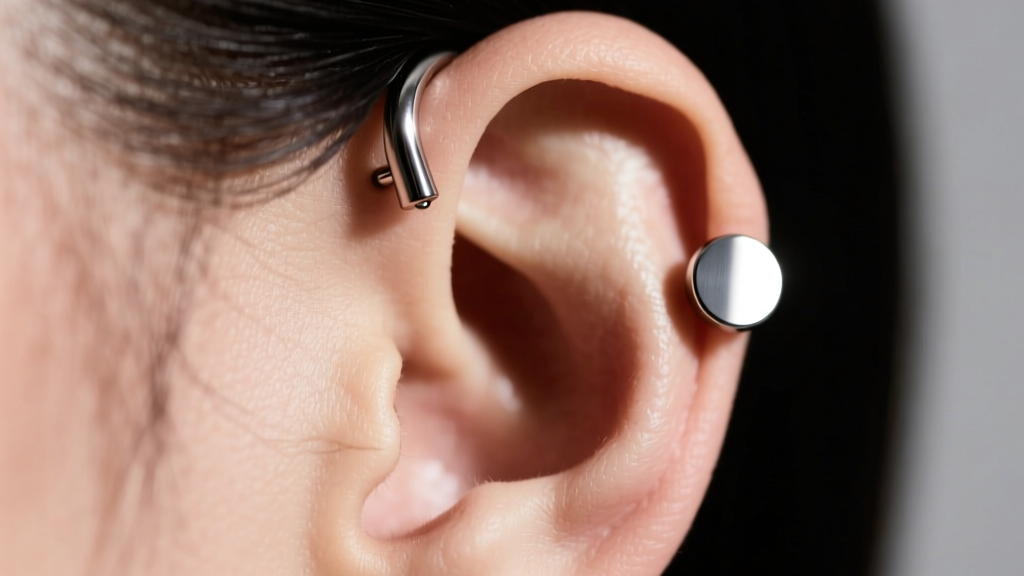
The concept of the embedded earring has fundamentally shifted how we approach ear styling and body modification in 2026. No longer confined to traditional lobe piercings or standard cartilage hoops, the embedded aesthetic relies on the illusion of jewelry emerging seamlessly from the skin itself. This trend is driven by two distinct categories of body jewelry: actual microdermal anchors (surgically implanted beneath the dermis) and high-precision flush-fit flat-back studs that mimic the dermal look by sitting completely flush against the conch, helix, or ear lobe.
As a style and trend analysis, the embedded look represents a departure from the heavy, dangling maximalism of the early 2020s. Today’s collectors prioritize negative space, geometric precision, and biocompatible minimalism. Whether you are mapping out a periauricular constellation of dermals or curating a seamless flat-back cartilage stack, understanding the structural engineering behind these pieces is critical for both aesthetics and long-term tissue health.
Material Grades and Gauge Specifications
When dealing with embedded jewelry—particularly pieces that sit flush against the skin or are implanted into it—material purity is non-negotiable. The gold standard, as outlined by the Association of Professional Piercers (APP), is implant-grade titanium (ASTM F-136). This specific alloy is highly biocompatible, non-magnetic, and virtually free of nickel, drastically reducing the risk of contact dermatitis and foreign body rejection.
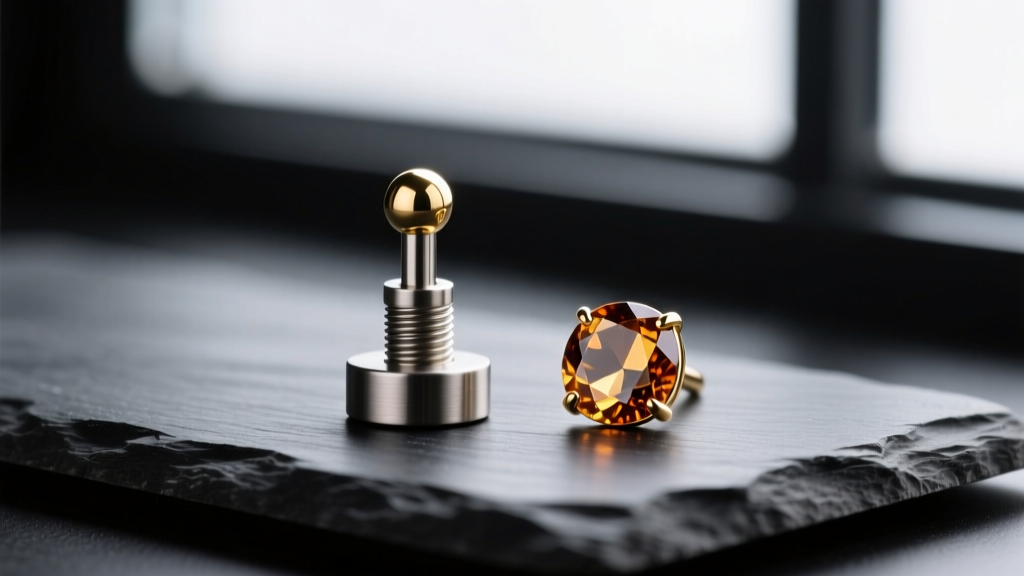
For the visible tops and decorative elements, 14k or 18k solid gold (specifically alloyed without cadmium or nickel) remains the premium choice. In 2026, threadless (push-pin) technology has entirely superseded internally threaded jewelry for embedded applications. Threadless systems, pioneered by brands like Neometal, utilize a slight bend in the pin to create tension against the inside of the post, ensuring the gemstone top never unscrews and gets lost in your hair or bedding.
Embedded Jewelry Specs & Pricing Matrix
| Jewelry Type | Standard Gauge | Material Requirement | Avg. Price Range (USD) | Snag & Rejection Risk |
|---|---|---|---|---|
| Microdermal Anchor | 14g (1.6mm) or 12g (2.0mm) | ASTM F-136 Titanium Base | $80 - $250 | High (Snagging can cause immediate rejection) |
| Flush Flat-Back Labret | 16g (1.2mm) or 18g (1.0mm) | Titanium or 14k Solid Gold | $45 - $180 | Low (Flush profile prevents catching) |
| Tension-Fit Embedded Cuff | N/A (Non-pierced) | Surgical Steel or Gold Plated | $25 - $90 | Moderate (Can slip if tension is lost) |
Placement Strategy: Mapping the Ear and Periauricular Zone
The embedded earring trend extends beyond the traditional boundaries of the ear cartilage into the periauricular zone (the skin immediately surrounding the ear). Styling these pieces requires an understanding of facial geometry and ear anatomy.
The Anti-Tragus and Conch Flush Pairing
For those avoiding dermal implants, the flush-fit embedded look is best achieved in the conch and anti-tragus. A 16g flat-back labret with a low-profile bezel-set diamond (1.5mm to 2.5mm) creates the illusion of an embedded stone. Because the conch is a deep, protected pocket of cartilage, a flush stud here is highly protected from snagging. Pairing this with a matching flush stud in the anti-tragus creates a striking, symmetrical axis that draws the eye inward.
Periauricular Dermal Anchors
Dermal anchors placed just in front of the tragus or trailing down the jawline near the earlobe are a hallmark of the 2026 embedded trend. These placements elongate the neck and frame the jawline. For round face shapes, vertical alignment of periauricular dermals helps create an elongating effect. For angular or square face shapes, placing a single embedded dermal near the upper helix root softens the facial structure by drawing the eye upward and outward.
Healing, Rejection Risks, and Long-Term Maintenance
The most critical aspect of the embedded earring aesthetic is understanding the biological reality of microdermal anchors. Unlike standard piercings that have an entry and exit hole, a dermal anchor features a footed base (often L-shaped or T-shaped) that is inserted into a dermal pocket created by a biopsy punch or dermal elevator. The skin heals over the base, leaving only the threaded or threadless top visible.
According to dermatological and professional piercing consensus, dermal anchors carry a significantly higher rejection rate than standard piercings—often between 10% and 30% over a five-year period. The body recognizes the base as a foreign object and may slowly push it to the surface. To maximize the lifespan of an embedded dermal:
- Avoid Snag Hazards: Never use loofahs, rough towels, or tight-fitting helmets near healing dermals. A single hard snag can tear the dermal pocket, triggering immediate immune rejection.
- Strict Aftercare: Cleanse only with sterile 0.9% sodium chloride wound wash twice daily. Avoid tea tree oil, alcohol, and harsh soaps, which cause tissue desiccation and micro-tears.
- Monitor for Migration: If the skin around the base becomes persistently red, thins out, or you can see the edge of the titanium plate beneath the skin, consult a professional piercer for safe removal before it scars.
2026 Trend Forecast: What is Next for Embedded Styling?
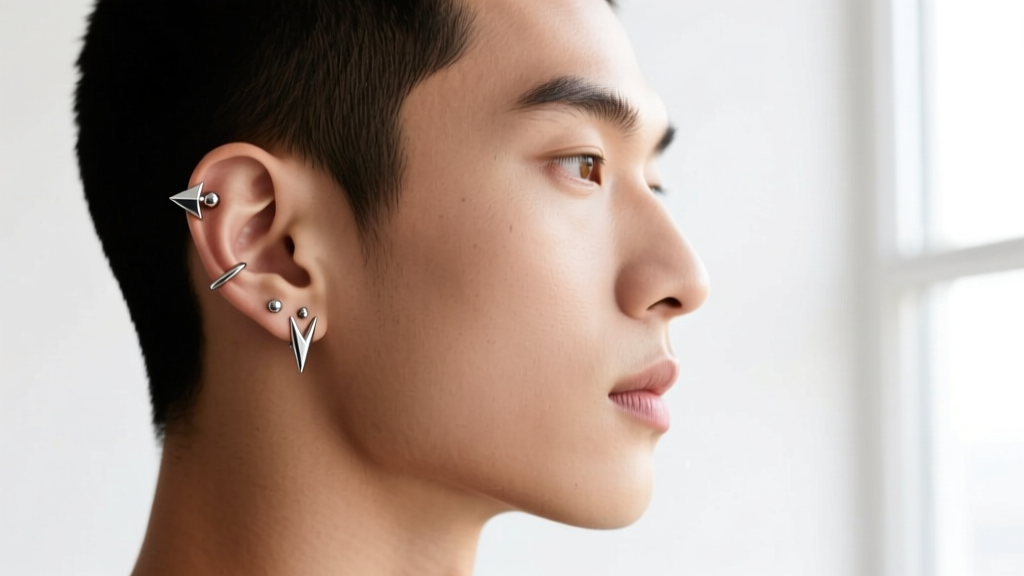
As we move deeper into 2026, the embedded earring category is evolving through material innovation. We are seeing the rise of biocompatible polymers for temporary embedded illusions, allowing wearers to test periauricular placements before committing to a permanent dermal punch. Furthermore, the integration of lab-grown diamonds and synthetic sapphires into ultra-low-profile bezel settings has made the flush-fit embedded look more accessible, dropping the price point of high-end aesthetic stacks by nearly 30%.
Ultimately, the embedded earring trend is a masterclass in subtle luxury. It requires meticulous planning, a commitment to premium implant-grade materials, and a deep respect for tissue anatomy. When executed correctly, the result is a breathtaking, seamless constellation of jewelry that appears to be a natural extension of the body itself.


