The Beginner's Guide to Styling 14k Gold Shell Earrings
Discover everything about 14k gold shell earrings. Our beginner-friendly guide covers karat purity, styling tips, gauge sizes, and care routines.

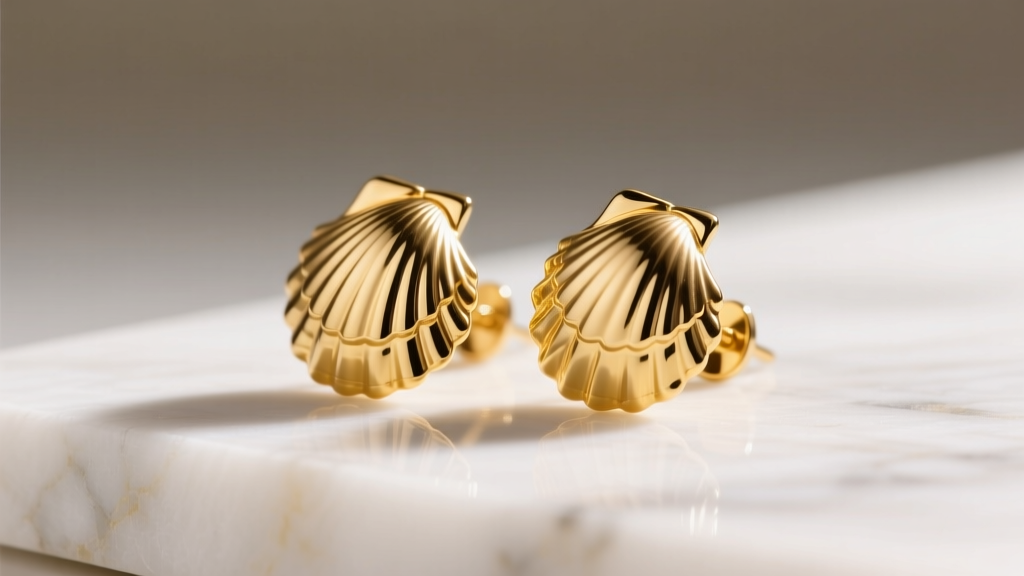
Shell earrings have transcended their seasonal, bohemian roots to become a permanent fixture in fine jewelry collections. For beginners stepping into the world of precious metals, 14k gold shell earrings offer the perfect intersection of organic beauty, everyday durability, and accessible luxury. However, not all shell earrings are created equal. From understanding karat purity and gauge thickness to mastering the art of facial styling, this comprehensive guide will teach you exactly how to choose, wear, and care for your oceanic-inspired fine jewelry.
Why 14k Gold is the Sweet Spot for Shell Motifs
When shopping for fine jewelry, you will typically encounter 10k, 14k, 18k, and 24k gold. While 24k gold is 99.9% pure, it is far too soft for intricate jewelry designs. According to the Gemological Institute of America (GIA), pure gold has a low Vickers hardness, meaning it scratches and bends with minimal pressure.
Shell motifs are characterized by their delicate, undulating edges, scalloped ridges, and tapered points. If a shell earring were cast in 18k or 24k gold, the thin edges would easily warp if you accidentally slept on them or snagged them on a sweater. 14k gold, which consists of 58.5% pure gold alloyed with metals like copper, silver, and zinc, provides the necessary structural rigidity. This specific alloy blend ensures that the intricate ridges of a conch or scallop shell design remain sharp and intact for decades, while still retaining the hypoallergenic properties and rich color of pure gold.
Yellow Gold vs. White Gold Alloys
For beginners, it is crucial to understand that the alloy mix changes depending on the color of the gold:
- 14k Yellow Gold: Typically alloyed with silver and copper. It is naturally hypoallergenic and provides a warm, vintage contrast to the oceanic shell theme.
- 14k White Gold: Alloyed with palladium or nickel to achieve a silvery hue, then plated with rhodium. If you have sensitive skin, always verify that the white gold is nickel-free or palladium-based, as nickel can cause contact dermatitis.
Decoding the Anatomy: Gauge, Backings, and Casts
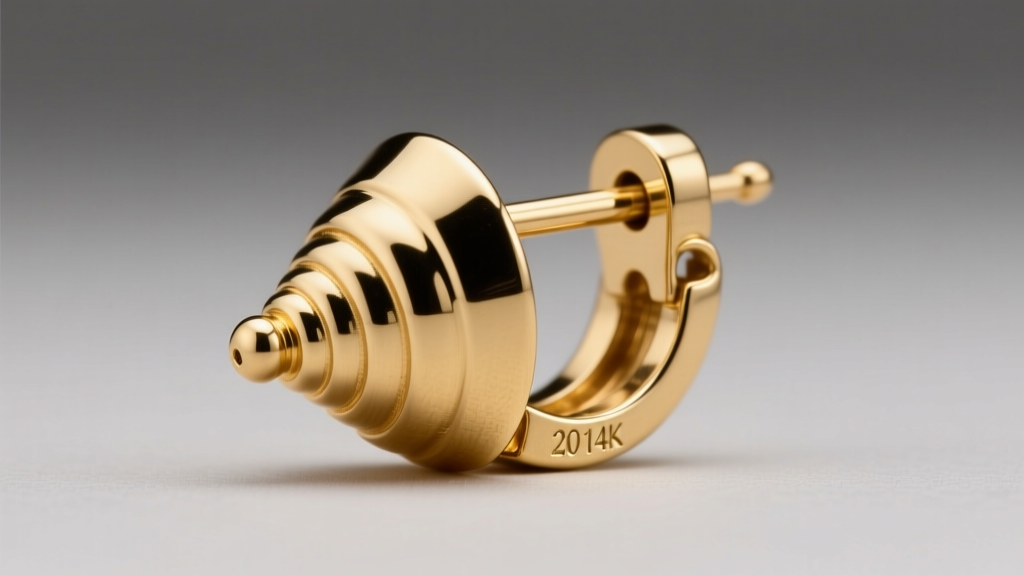
A common beginner mistake is ignoring the structural anatomy of the earring post and backing. Because shell designs can be slightly top-heavy, the hardware must be robust enough to support the motif without drooping.
Understanding Post Gauge Sizes
The 'gauge' refers to the thickness of the metal post that goes through your piercing. Standard lobe piercings are usually done at 20-gauge (0.81mm) or 18-gauge (1.02mm). If you are buying shell earrings for a standard lobe piercing, a 20g post is perfectly adequate for lightweight studs. However, if you are purchasing a larger, dangling shell drop earring, insist on an 18g post. The thicker metal will prevent the earring from bending forward and will sit flush against your earlobe.
Choosing the Right Backing
Never pair an expensive 14k solid gold earring with a cheap, friction-push butterfly backing. The tension on push-backs degrades over time, leading to lost jewelry. Instead, look for:
- Screw-Backs: The post is threaded, and the backing screws on securely. This is the gold standard for expensive lobe studs.
- Flat-Back Labrets: If you are wearing a shell motif in your cartilage (helix), a flat-back titanium or 14k gold labret post is essential to prevent the shell from drooping forward.
Solid Gold vs. Gold Plated: A Buyer's Comparison
Beginners are often confused by marketing terms like 'vermeil' and 'gold-filled.' When investing in a timeless motif like a shell, understanding the difference between solid 14k gold and plated alternatives will save you from buyer's remorse. Below is a breakdown to help you make an informed purchasing decision.
| Material Type | Base Metal | Gold Layer Thickness | Lifespan & Durability | Average Price Range |
|---|---|---|---|---|
| 14k Solid Gold | None (Solid Alloy) | N/A (Solid throughout) | Lifetime; can be polished and repaired | $90 - $350+ |
| Gold Vermeil | Sterling Silver | Minimum 2.5 microns | 2-5 years; will eventually wear off | $45 - $120 |
| Gold Plated | Brass or Copper | Less than 0.5 microns | Months; high risk of tarnish and skin irritation | $15 - $40 |
How to Style Shell Earrings for Your Face Shape
Shell earrings come in a vast array of silhouettes, from tight, spiraled conch shapes to elongated, fanned scallop drops. Matching the silhouette to your face shape is a fundamental styling principle that elevates your look from casual to intentional.
Styling by Face Shape
- Round Faces: Avoid wide, circular scallop shells that add horizontal width. Instead, opt for elongated, teardrop-shaped cowrie shells or vertically oriented conch dangles to create a lengthening illusion.
- Square Faces: Soften a strong jawline with rounded, asymmetrical shell motifs. Organic, free-form mother-of-pearl shells cast in 14k gold provide a softening contrast to angular features.
- Oval Faces: You have the versatility to pull off almost any style. Bold, oversized 14k gold fan shells that hug the earlobe make a striking statement.
- Heart-Shaped Faces: Choose bottom-heavy designs. Dangling shell earrings that are wider at the bottom help balance a narrower chin and wider forehead.
Lobe vs. Cartilage Placement
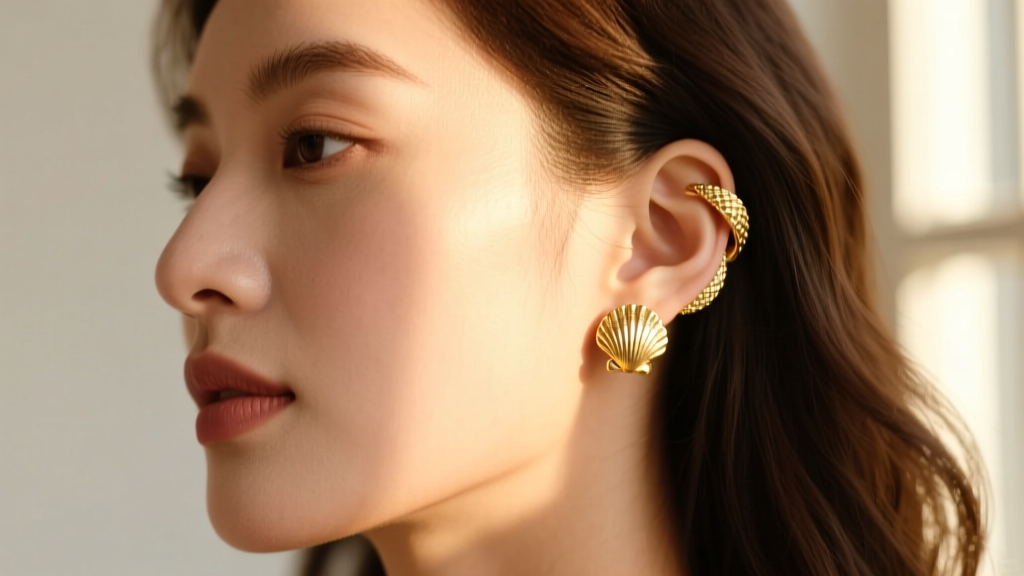
While shell earrings are traditionally worn on the earlobe, they are increasingly popular in cartilage piercings. For a helix piercing, choose a small, lightweight shell stud (under 8mm) with a flat-back post. Heavy shells in the upper cartilage will pull the jewelry forward, causing the post to poke the side of your head and leading to piercing irritation.
The 3-Step Care Routine to Prevent Damage
Even though 14k gold is highly durable, the alloyed metals (specifically copper and silver) can react to environmental factors. Furthermore, the intricate grooves of a shell design can trap lotions and dead skin cells, dulling the metal's luster. The Jewelers of America recommends regular, gentle maintenance for textured gold pieces.
Step 1: Avoid Chlorine and Stress Corrosion
Never wear your 14k gold shell earrings in a chlorinated pool or hot tub. Chlorine reacts aggressively with the copper and silver alloys in 14k gold, leading to a phenomenon called 'stress corrosion cracking.' This can cause the delicate edges of your shell design to become brittle and snap off entirely.
Step 2: The Baby Toothbrush Method
Because shells have deep ridges and scalloped edges, standard polishing cloths cannot reach the crevices. Mix a few drops of mild, phosphate-free dish soap into a bowl of warm water. Soak the earrings for 10 minutes, then gently scrub the grooves with a brand-new, extra-soft baby toothbrush. Rinse with distilled water and pat dry with a microfiber cloth.
Step 3: Proper Storage to Prevent Scratches
Gold is a relatively soft metal. If you toss your shell earrings into a jewelry box alongside diamond rings, the diamonds (which are a 10 on the Mohs hardness scale) will easily scratch the 14k gold. Always store your shell earrings in individual anti-tarnish flannel pouches or soft silicone compartments.
Troubleshooting: What If Your Shell Earring Bends?
If you accidentally sleep on your 14k gold shell earring and the scalloped edge bends, do not try to bend it back with your fingers. Repeated bending of gold alloy causes 'work hardening,' which will eventually cause the metal to snap. Instead, take the earring to a professional bench jeweler. They can use a rawhide mallet and a polished steel mandrel to gently tap the shell back into its original shape without marring the surface or compromising the metal's integrity.
Beginner's Golden Rule: When buying 14k gold shell earrings, always check the hallmark. Look for a tiny '14k' or '585' stamp on the back of the shell or the earring post. If it is missing, ask the retailer for a solid gold authenticity guarantee before purchasing.
By understanding the material science of 14k gold, selecting the correct gauge and backing, and styling the motif to complement your unique features, you can confidently wear your shell earrings as a timeless, everyday staple. Whether you are gifting them or treating yourself, this oceanic classic is an investment in enduring style.


