How to Style and Care for Tassel Earrings: Expert Guide
Learn how to style, wear, and clean tassel earrings with our expert step-by-step guide. Discover face-shape pairing and maintenance tips.


The Evolution of Tassel Earrings in 2026
Tassel earrings have transitioned from fleeting festival trends to permanent staples in fine jewelry wardrobes. In 2026, the focus has shifted heavily toward sustainable materials, ultra-lightweight recycled titanium hooks, and hand-wrapped silk threads. However, their dramatic silhouettes and unique material compositions require specific styling techniques and specialized maintenance. Whether you are wearing delicate 14k gold-filled chain tassels or bold, Navajo-style wrapped silk threads, mastering the mechanics of how they interact with your face shape, earlobe health, and daily routine is essential. This comprehensive, step-by-step guide will teach you how to select, wear, and maintain your tassel earrings like a professional jeweler.
Step 1: Pairing Tassel Earrings with Your Face Shape
Because tassel earrings draw the eye vertically, they act as a powerful tool for balancing facial proportions. The length, volume, and binding cap of the tassel all contribute to the optical illusion they create. Use the decision matrix below to find your ideal match.
| Face Shape | Ideal Tassel Length | Best Silhouette & Volume | Recommended Materials |
|---|---|---|---|
| Round | 3 to 4 inches | Narrow, linear, and sparse threads | Sterling silver chains, fine silk |
| Oval | 1.5 to 2.5 inches | Teardrop or bell-shaped wraps | Gold-filled wire, rayon blends |
| Square | 2 to 3 inches | Soft, wispy, rounded caps | Matte silk, lightweight cotton |
| Heart | Chin-length (2.5 inches) | Wider at the bottom, triangular | Beaded tassels, mixed metals |
The Proportion Rule
Never let the bottom of a long tassel earring hit exactly at your jawline if you have a strong or wide jaw. This creates a harsh horizontal line that emphasizes width. Instead, opt for tassels that end either an inch above the jaw or gently brush the collarbone to elongate the neck.
Step 2: Managing Earlobe Health and Gauge Sizes
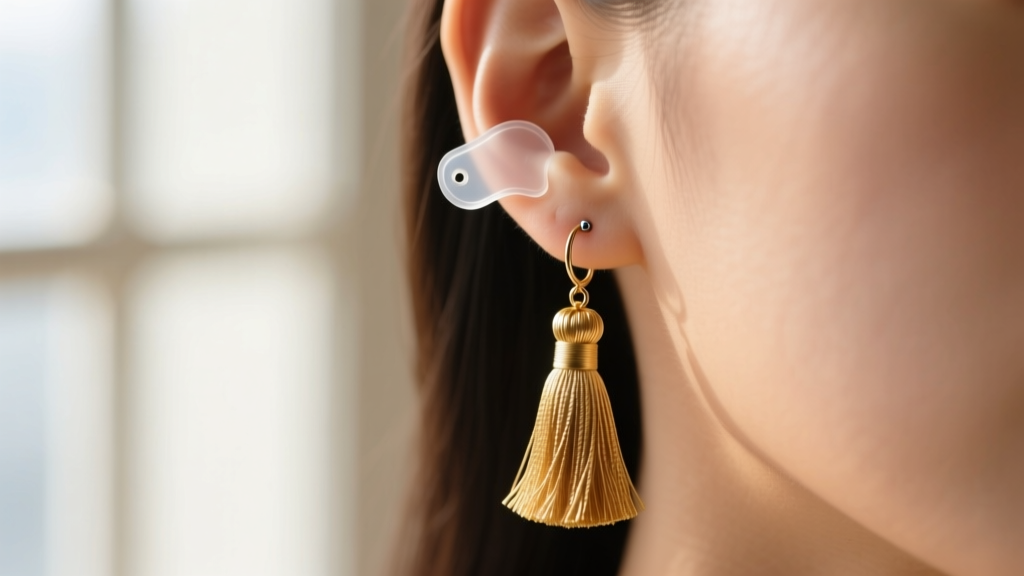
The most common mistake wearers make with dangle and tassel earrings is ignoring the physics of leverage. A tassel that hangs two inches below the earlobe creates a pendulum effect. According to dermatological guidelines on piercing care from the American Academy of Dermatology, continuous downward torque on a standard piercing can lead to migration, thinning of the fistula, and permanent lobe stretching—a phenomenon known in the body modification community as the "cheese-cutter effect."
Understanding Wire Gauges
- 20-Gauge (0.81mm): The standard for most commercial fashion earrings. Safe only for lightweight thread tassels under 5 grams.
- 18-Gauge (1.0mm): Ideal for medium-weight silk wraps and small chain tassels. Provides slightly more structural integrity.
- 16-Gauge (1.2mm): Required for heavy, beaded, or multi-strand metal tassels. If your piercing is stretched to 16G, always opt for custom hooks to prevent tearing.
How to Apply Lobe Support Patches
If you are wearing heavy statement tassels with standard 20G or 18G wires, you must use earring support patches (often made of medical-grade silicone or leather).
- Clean the back of your earlobe with an alcohol wipe and let it dry completely.
- Peel the adhesive backing off the silicone support patch.
- Thread the earring post through the patch's pre-cut slit.
- Press the patch firmly against the back of your earlobe, ensuring the post is centered.
- Secure with a sturdy silicone or metal friction back. The patch distributes the tassel's weight across a wider surface area, preventing the wire from slicing through the tissue.
Step 3: Step-by-Step Cleaning Guide
Cleaning tassel earrings requires a bifurcated approach depending on whether your tassels are made of metal chains or textile threads. Submerging textile tassels in water will ruin the structural integrity of the wrap and cause dyes to bleed.
Cleaning Metal Chain Tassels
According to the Jewelers of America, ultrasonic cleaners are excellent for solid metal chain tassels, provided they do not feature porous gemstones like turquoise or opals.
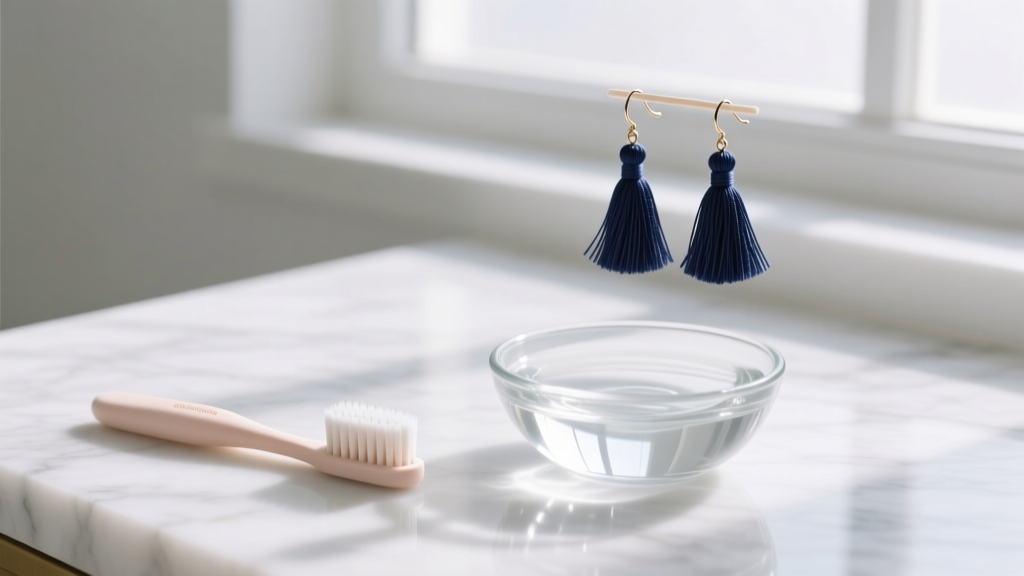
- Fill a small bowl with warm distilled water and two drops of mild, phosphate-free dish soap.
- Submerge the metal tassels for exactly three minutes.
- Agitate gently using a soft-bristled baby toothbrush, brushing parallel to the chains to avoid bending individual links.
- Rinse with distilled water and immediately pat dry with a microfiber cloth. Hang upside down to air dry completely before storage to prevent water spots.
Refreshing Silk and Rayon Thread Tassels
Never soak thread tassels. Instead, use steam and mechanical brushing to remove oils and dust.
- Steam: Hold the earrings 6 to 8 inches away from a garment steamer for 15 seconds. The gentle heat relaxes the fibers and releases trapped odors.
- Brush: While the threads are still warm and slightly damp from the steam, use a clean, dry spoolie (mascara wand) to comb through the tassel from the binding cap down to the tips.
- Spot Clean: For makeup stains on the top binding, dip a cotton swab in micellar water and gently dab the soiled area without saturating the underlying threads.
Step 4: Troubleshooting Common Tassel Issues
Even high-end tassel earrings from luxury artisans are prone to specific wear-and-tear issues. Here is how to troubleshoot them using jeweler-approved methods.
Problem: Fraying Thread Bindings
The top wrap (or binding) of a thread tassel is under constant tension. If you notice the silk or cotton threads beginning to slip or fray near the metal cap, do not pull them. Instead, use a toothpick to apply a microscopic drop of cyanoacrylate (jeweler's super glue) or clear, flexible fabric glue directly to the inside of the binding wrap. Allow it to cure for 24 hours. Never apply glue to the free-flowing threads, as it will create a hard, visible crust.
Problem: Severe Tangling in Storage
Storing tassel earrings in a standard jewelry box guarantees a tangled mess. Metal chain tassels will knot together, while thread tassels will bend and warp.
"The golden rule of tassel storage is gravity. If they aren't hanging, they are warping." — Master Jeweler & ArchivistAlways store tassel earrings by hanging them on a dedicated earring tree or a velvet-lined valet stand. If you must travel with them, use a hard-shell eyeglass case. Lay the earrings flat, allowing the tassels to fall straight down the length of the case, and place a sheet of tissue paper gently over the threads to prevent friction against the case lid.
Step 5: Styling Rules for Necklines and Hair
Tassel earrings command attention, meaning your clothing and hair must act as a supporting canvas rather than a competing element.
- The Neckline Rule: Pair long tassels with strapless, off-the-shoulder, or deep V-neck tops. Avoid high collars, turtlenecks, or ruffled blouses, which will visually clash with the earrings and physically tangle with the threads.
- The Hair Rule: To prevent the "cheese-cutter effect" and avoid painful snags, wear your hair in a sleek updo, a French twist, or a tight braid when wearing chain-metal tassels. If wearing your hair down, ensure it is swept over the opposite shoulder of your dominant hand to minimize friction when you move.
- The Metal Mix: According to the Gemological Institute of America (GIA), mixing metal tones is highly encouraged in modern styling. Pairing 14k yellow gold tassel caps with a white gold or platinum necklace creates a sophisticated, layered aesthetic that feels intentional rather than accidental.
Final Thoughts on Tassel Maintenance
Tassel earrings are an investment in movement and artistry. By respecting the gauge limitations of your piercings, utilizing proper steam-cleaning techniques for delicate threads, and storing them with gravity in mind, you can ensure your favorite pieces remain vibrant and structurally sound for years to come. Treat your tassels with the same care you would afford a fine gemstone, and they will continue to elevate your wardrobe with effortless, kinetic elegance.


