How to Design Unique Diamond Earrings: A Step-by-Step Custom Guide
Learn how to design unique diamond earrings with our step-by-step custom guide. Master diamond cuts, metal settings, and pricing for bespoke ear jewelry.

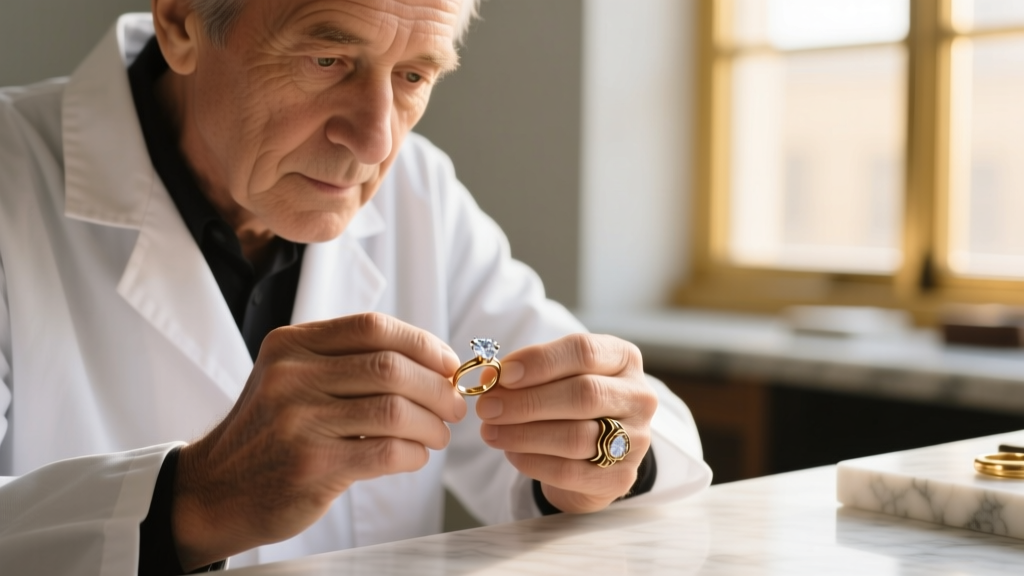
Designing bespoke jewelry is no longer reserved for red-carpet celebrities or legacy collectors. As we navigate the bespoke jewelry landscape in 2026, commissioning unique diamond earrings has become an accessible, highly personalized process for anyone looking to move beyond mass-produced mall jewelry. Whether you are envisioning an asymmetrical ear-scape, a vintage-inspired kite-cut drop, or a modern tension-set cartilage cuff, the journey from a rough sketch to a finished masterpiece requires a strategic approach.
Unlike buying off-the-shelf studs, custom design demands a working knowledge of gemology, metallurgy, and structural engineering. A beautiful rendering means nothing if the earring post snaps under the weight of a heavy drop, or if the diamond setting catches on your hair. This comprehensive, step-by-step guide will walk you through the exact technical specifications, material grades, and design frameworks needed to bring your unique diamond earrings to life.
Step 1: Map the Silhouette and Piercing Anatomy
Before selecting stones, you must define the structural canvas: your ear anatomy. The placement of your piercing dictates the gauge (thickness) of the earring post and the overall weight distribution of the piece.
Gauge Sizing and Weight Limits
Standard lobe piercings are typically done at 20-gauge (0.81mm) or 18-gauge (1.02mm). If your unique diamond earrings feature a heavy drop silhouette—such as a 4-carat total weight (TCW) chandelier design—an 18-gauge or even 16-gauge (1.29mm) post is mandatory. Using a standard 20-gauge wire for a heavy drop will result in a bent post, causing the earring to droop forward and putting undue stress on the solder joint where the post meets the basket.
Face Shape Mapping
- Round Faces: Opt for elongated, angular unique diamond earrings like kite or marquise drops to create vertical lines and add structure.
- Square Faces: Choose curved silhouettes, such as pear-shaped diamond halos or organic, fluid bezel-set hoops, to soften the jawline.
- Heart Faces: Teardrop or chandelier designs that widen at the bottom help balance a narrower chin.
Step 2: Source Non-Traditional Diamond Cuts
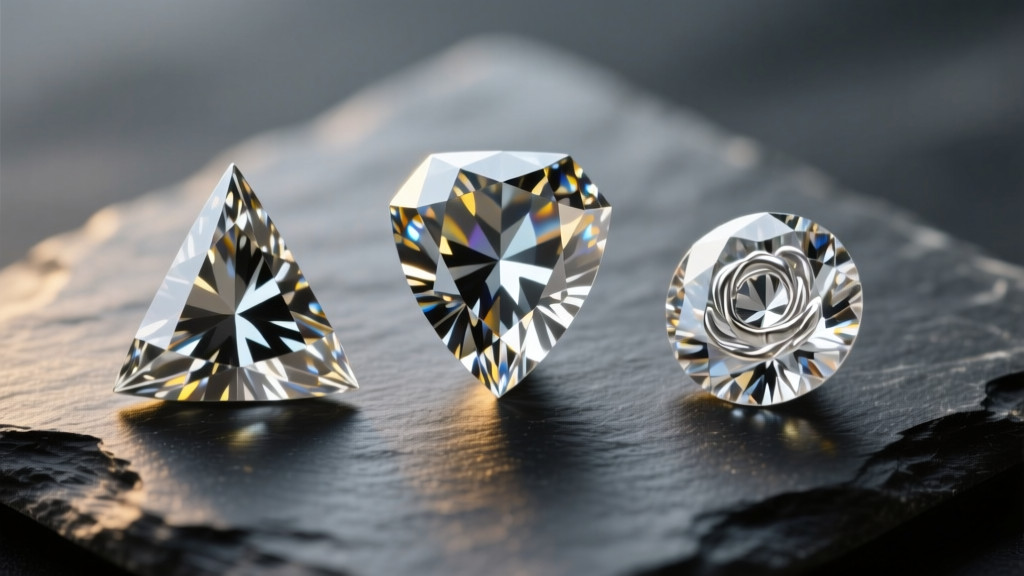
The hallmark of unique diamond earrings is stepping away from the ubiquitous round brilliant cut. Alternative and antique cuts offer distinct light performance and allow you to maximize visual size without exponentially increasing the carat weight.
According to the Gemological Institute of America (GIA), a diamond's shape refers to its geometric outline, while the cut dictates its light return. When sourcing unique shapes, understanding the pavilion depth is critical for your budget and design.
| Diamond Cut | Pavilion Depth | Visual Spread (per carat) | Best Custom Setting |
|---|---|---|---|
| Rose Cut | Flat (0%) | Extremely Large | Bezel or Halo |
| Kite Cut | Medium to Deep | Moderate | Prong (with V-tips) |
| Salt & Pepper | Varies (Custom) | Large (often step-cut) | Heavy Bezel |
| Hexagon | Deep | Smaller (faces up small) | Cluster or Solitaire |
Pro Tip: Because rose cuts lack a pavilion (the bottom cone of the diamond), a 6mm rose cut might only weigh 0.45 carats, whereas a 6mm round brilliant weighs roughly 0.90 carats. This makes rose cuts highly cost-effective for creating massive, unique diamond earrings on a moderate budget.
Clarity and Color Adjustments for Earrings
When reviewing the GIA 4Cs framework, remember that earrings are viewed from a distance, unlike engagement rings which are scrutinized up close. You can safely downgrade clarity to SI1 (Slightly Included) without compromising visual beauty, provided the inclusions are not directly under the table facet. However, do not compromise on color if you are using white gold or platinum; stick to G or H color grades to prevent the stones from looking yellowish against the white metal.
Step 3: Engineer the Setting and Metal Alloy
A common failure mode in custom jewelry is choosing a metal that is too soft to securely hold the diamond over decades of daily wear. Your choice of alloy directly impacts the longevity of your unique diamond earrings.
Metal Hardness and Prong Security
Jewelers measure metal hardness using the Vickers scale (HV). 14k gold (58.5% pure gold) has a Vickers hardness of roughly 135 HV, making it highly durable and excellent for intricate, delicate prongs. 18k gold (75% pure) sits around 125 HV; it offers a richer, warmer color but is softer, meaning prongs may require re-tipping every 5 to 7 years. Platinum (95% pure) is dense and malleable. While it scratches easily, it does not lose metal volume over time, making it the ultimate choice for secure bezel settings and heavy drop earring hinges.
White Gold Maintenance
If you prefer a silver hue, consider 14k Palladium White Gold instead of standard nickel-alloy white gold. Palladium white gold is naturally white and does not require rhodium plating every 12 months, saving you long-term maintenance costs and keeping your unique diamond earrings looking pristine.
Securing the Backs
Never pair high-value bespoke earrings with standard friction (butterfly) backs. The tension on the metal scroll weakens over time, leading to lost earrings. Always specify screw-backs or locking omega backs in your custom design brief to ensure mechanical security.
Step 4: Review the CAD and Wax Prototypes
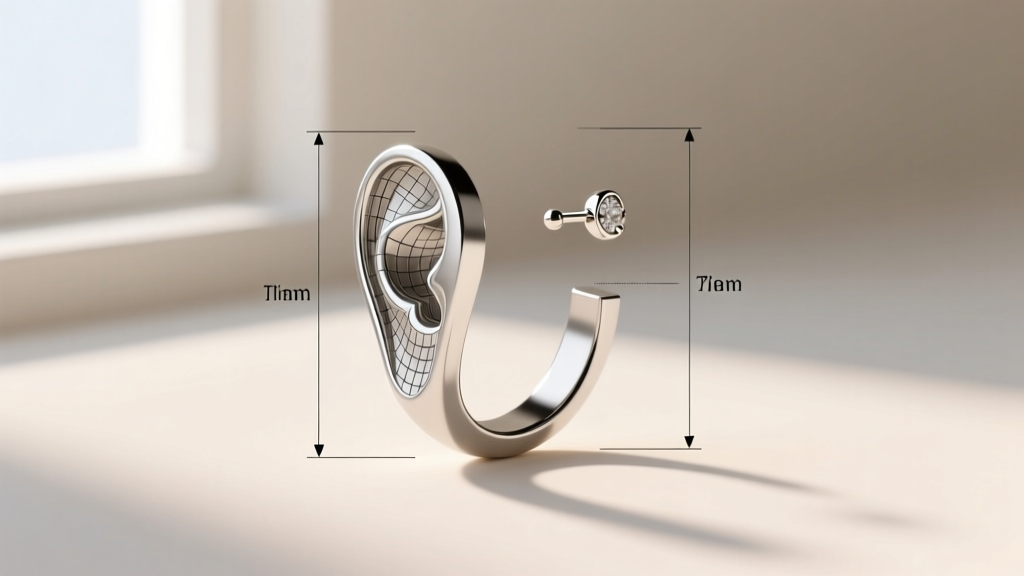
Once your jeweler translates your sketch into a Computer-Aided Design (CAD) model, you will receive a 3D rendering. This is your last chance to alter the engineering before the metal is cast.
The CAD Review Checklist
- Check the Drop Length: Ensure the total drop length does not exceed 45mm unless it features an articulated hinge. Rigid drops longer than 45mm will constantly poke the neck and bend the post.
- Verify the Hinge Tolerances: If your unique diamond earrings feature moving parts (like a hinged drop or an ear cuff), the CAD must show a clearance gap of at least 0.2mm around the hinge pin to allow for polishing and fluid movement.
- Inspect the Prong Thickness: Prongs should be at least 0.8mm thick at the base. Anything thinner risks snapping if the earring is snagged on a sweater.
"A successful custom earring design isn't just about how it looks in a rendering; it's about how it behaves in motion. Always ask your jeweler to simulate the drop weight against the post thickness in the CAD phase." — Master Bench Jeweler
Step 5: Understand Custom Pricing and Timelines
Commissioning unique diamond earrings is an investment in both materials and specialized labor. Understanding the cost breakdown prevents sticker shock and helps you allocate your budget effectively.
Cost Breakdown Framework
- Design and CAD Fee: $150 to $400. This covers the 3D modeling and technical drafting.
- Casting and Fabrication: $300 to $800. This includes the wax model, metal casting, and bench work (polishing, setting, and assembly).
- Stone Sourcing: Highly variable. A matched pair of 1-carat total weight (TCW) SI1/G color kite-cut diamonds might cost $1,200, whereas a pair of flawless, custom-cut hexagonal diamonds could exceed $6,000.
In total, expect to invest between $2,500 and $10,000+ for a pair of high-quality, fully bespoke unique diamond earrings. The timeline typically spans 4 to 8 weeks, factoring in stone sourcing, CAD approval, casting, and meticulous hand-setting.
Final Thoughts on Bespoke Ear Jewelry
Designing unique diamond earrings is a rewarding exercise in personal expression and structural artistry. By prioritizing correct gauge sizing, selecting alternative diamond cuts for maximum visual impact, and choosing the right metal alloy for long-term security, you ensure your custom pieces will become enduring heirlooms. Take your time during the CAD review phase, ask your jeweler detailed questions about hinge tolerances and prong thickness, and invest in secure locking backs. The result will be a pair of earrings that are not only visually stunning but engineered to last a lifetime.


