Silver Stud Earrings Men: 2026 Budget & Value Guide
Discover the true value of men's silver stud earrings in 2026. We break down 925 sterling vs. fine silver, pricing tiers, and how to avoid overpaying.


The Real Cost of Men's Silver Studs in 2026
The market for men's jewelry has undergone a massive shift over the last few years, and as we navigate 2026, silver stud earrings for men remain a cornerstone of everyday style. However, with fluctuating precious metal spot prices and an influx of mass-produced overseas inventory, determining the actual value of a simple silver stud has never been more confusing. Are you paying for metallurgical integrity, or are you simply funding a brand's marketing budget?
As a foundational piece in any curated ear stack, a men's silver stud needs to balance durability, biocompatibility, and aesthetic weight. In this comprehensive value assessment, we strip away the hype and analyze the true cost-per-wear of men's silver studs, breaking down material grades, hidden manufacturing costs, and the exact price tiers you should expect to pay this year.
Decoding Silver Grades: 925 vs. 999 vs. Argentium
Not all silver is created equal, and understanding the alloy composition is the first step in assessing value. Pure silver is inherently too soft for body jewelry, meaning it must be alloyed with other metals to maintain structural integrity.
Why 999 Fine Silver Fails as a Post
Fine silver (99.9% pure) is exceptionally hypoallergenic and highly resistant to tarnish. However, its Vickers hardness rating is far too low for earring posts. A 999 fine silver post will bend under the pressure of a friction backing, warp during sleep, and eventually snap at the base of the head. If a brand markets a 'pure silver' earring post, it is a metallurgical red flag.
The 925 Sterling Standard
Sterling silver (92.5% silver, 7.5% copper) is the industry standard. The copper addition provides the necessary tensile strength to withstand daily wear. However, copper is also the culprit behind sterling silver's tendency to oxidize and tarnish when exposed to sulfur and moisture. To combat this, reputable brands apply a micro-layer of rhodium plating (typically 0.1 to 0.5 microns thick) to seal the metal and provide a bright, white-gold-like finish.
The 2026 Premium Alternative: Argentium Silver
For those willing to pay a slight premium, Argentium silver (usually 93.5% or 96% silver, alloyed with germanium instead of copper) has become the gold standard for high-end men's studs in 2026. It is virtually tarnish-proof, naturally hypoallergenic, and can be fusion-welded without creating weak points. According to the Gemological Institute of America (GIA), understanding these alloy distinctions is critical for consumers looking to invest in lasting jewelry rather than disposable accessories.
2026 Price Tier Breakdown: What Should You Actually Pay?
To help you assess value, we have categorized the current market for men's silver stud earrings into three distinct pricing tiers. This framework assumes a standard 4mm to 6mm stud design without heavy precious gemstone inlays.
| Tier | Price Range (USD) | Material & Build Quality | Backing Mechanism | Value Verdict |
|---|---|---|---|---|
| Budget | $15 - $35 | Hollow posts, thin flash-plating, potential nickel alloys. | Standard friction (butterfly) backs. | High risk of tarnish and allergy. Replace frequently. |
| Mid-Tier | $40 - $85 | Solid 925 Sterling, 0.2-micron rhodium plating, polished finish. | Precision-machined push-backs or screw-backs. | The sweet spot for everyday wear and reliable durability. |
| Premium | $90 - $180+ | Argentium 960 or recycled 925, bezel-set onyx/lapis, flat-back labret. | Internally threaded flat-backs or secure screw mechanisms. | Exceptional comfort, lifetime longevity, and high E-E-A-T craftsmanship. |
When evaluating the mid-tier and premium brackets, you are paying for the labor involved in finishing the post. A high-quality earring post is sanded to a mirror finish so it glides through the fistula without causing micro-tears in the healed tissue. Budget earrings often feature rough, machine-cut posts that harbor bacteria and irritate the piercing channel.
Hidden Costs: Allergies, Tarnish, and Backings
The initial purchase price is only one side of the value equation. The 'hidden costs' of cheap silver studs manifest in dermatological and maintenance issues.
The Nickel Threat in Budget Alloys
While true sterling silver uses copper as an alloy, unregulated manufacturers sometimes cut costs by using nickel or zinc to whiten the metal and increase hardness. Nickel is a notorious contact allergen. The National Center for Biotechnology Information (NCBI) notes that nickel contact dermatitis affects a significant portion of the population, leading to itchy, swollen, and weeping earlobes. Always verify that a brand explicitly guarantees 'nickel-free' 925 silver, especially if you are buying from unverified marketplace sellers.
The Engineering of Earring Backings
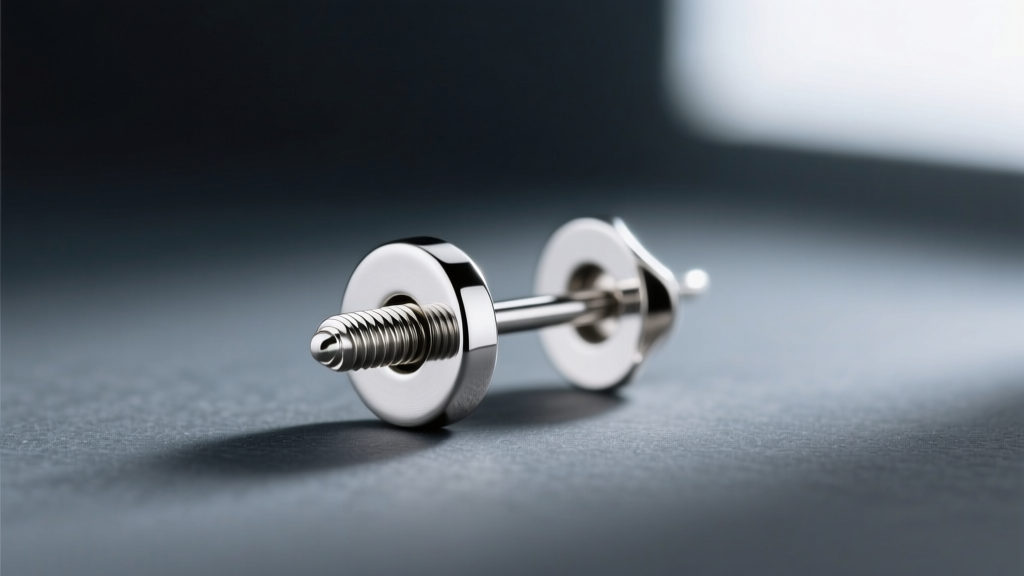
A heavy, well-crafted silver stud head requires a counterbalance. Budget friction backs (the classic 'butterfly' scroll) rely on tension that degrades over time, leading to lost earrings. Mid-tier and premium brands utilize threaded screw-backs or flat-back labret styles. Flat-backs, in particular, offer immense value for men who sleep on their sides, as the flat disc eliminates the sharp post-end that traditionally digs into the neck or jawline.

Gauge and Sizing: Ensuring a Proper Fit
Value is irrelevant if the earring does not fit your anatomy. Men's ear piercings are typically performed in one of three standard gauges, and buying the wrong post thickness will result in discomfort or the 'cheese-cutter effect,' where a thin wire slowly migrates through the tissue.
- 20 Gauge (0.81mm): The standard for mall-kiosk and piercing-gun piercings. Most budget and mid-tier fashion brands default to this size. It is lightweight but can feel flimsy on larger earlobes.
- 18 Gauge (1.02mm): A slightly thicker, more robust option. Many premium men's jewelry brands use 18G as their baseline for a more substantial, masculine feel without requiring stretching.
- 16 Gauge (1.29mm) & 14 Gauge (1.63mm): The standard for professional needle piercings, particularly in the cartilage (helix, tragus). If your lobe was pierced by a professional with a needle, an 18G or 20G stud will slide around loosely, increasing the risk of irritation bumps.
Before purchasing, use a digital caliper to measure your current earring post, or consult your piercer. Investing in a brand that offers multiple gauge options for the same stud head design is a hallmark of a high-value, customer-centric manufacturer.
Final Verdict: Where to Spend and Where to Save
When building your collection of silver stud earrings, allocate your budget based on wear frequency. For a primary, everyday stud that you will sleep, shower, and work in, the premium tier ($90-$180) is non-negotiable. The investment in Argentium silver or heavily rhodium-plated 925, combined with a flat-back or threaded mechanism, pays for itself by eliminating replacement costs and allergic reactions.
Conversely, if you are buying secondary, trend-driven studs—such as a specific geometric shape or a seasonal gemstone inlay—the mid-tier ($40-$85) offers the best balance of metallurgical safety and aesthetic variety. Avoid the sub-$20 budget tier entirely; the savings are quickly negated by ruined piercings and tarnished metal. In 2026, true value in men's jewelry is defined by precision engineering and material transparency, not just the lowest price tag.


