The Ultimate Guide to Buying Turquoise Diamond Earrings
Discover what to look for when buying turquoise diamond earrings. Learn about stone grading, treatments, diamond melee quality, and protective settings.

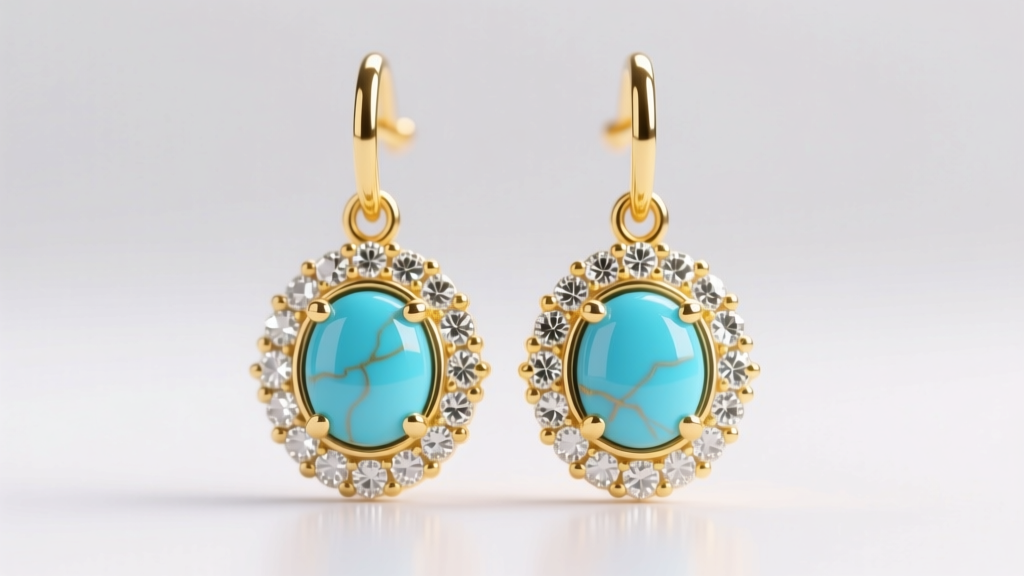
The Allure and Engineering of Turquoise Diamond Earrings
Pairing the earthy, historical depth of turquoise with the icy brilliance of diamonds creates a striking visual contrast that has captivated jewelry designers for decades. However, from a gemological and structural engineering perspective, combining these two stones presents unique challenges. Turquoise is a relatively soft, porous phosphate mineral with a Mohs hardness of 5 to 6, while diamond sits at a perfect 10. When shopping for turquoise diamond earrings, understanding how these disparate materials interact, how they are treated for longevity, and how they should be set is critical to making a wise investment.
This comprehensive buying guide will walk you through the exact specifications, grading nuances, and structural requirements you need to evaluate before purchasing turquoise and diamond earrings in 2026.
Decoding Turquoise: Origins, Matrix, and Treatments
The value and durability of the turquoise used in your earrings depend heavily on its origin and whether it has undergone stabilization. Because natural turquoise is porous, it can absorb skin oils, cosmetics, and environmental moisture, leading to color shifts and structural degradation over time. According to the Gemological Institute of America (GIA), the majority of turquoise on the commercial market is stabilized to improve its durability and color retention.
Common Turquoise Treatments
- Natural (Untreated): Extremely rare and highly prized. Only the highest-grade, densest turquoise (often from historic Persian or specific Nevada mines) is hard enough to be cut and polished without chemical reinforcement. It requires meticulous care.
- Stabilized: The industry standard for fine jewelry. The stone is infused with a clear epoxy resin (such as Opticon) or plastic under pressure. This permanently hardens the stone, prevents color shifting, and allows for precise cabochon cutting. Stabilization is an accepted and expected treatment, provided it is disclosed.
- Zachery Treatment: A proprietary, non-polymer treatment that reduces porosity and enhances the stone's ability to take a high polish without adding artificial dyes or heavy plastics.
- Reconstituted: Turquoise dust and fragments bonded with resin and dyed. This should be avoided in fine diamond earrings, as it holds virtually no intrinsic gemological value.
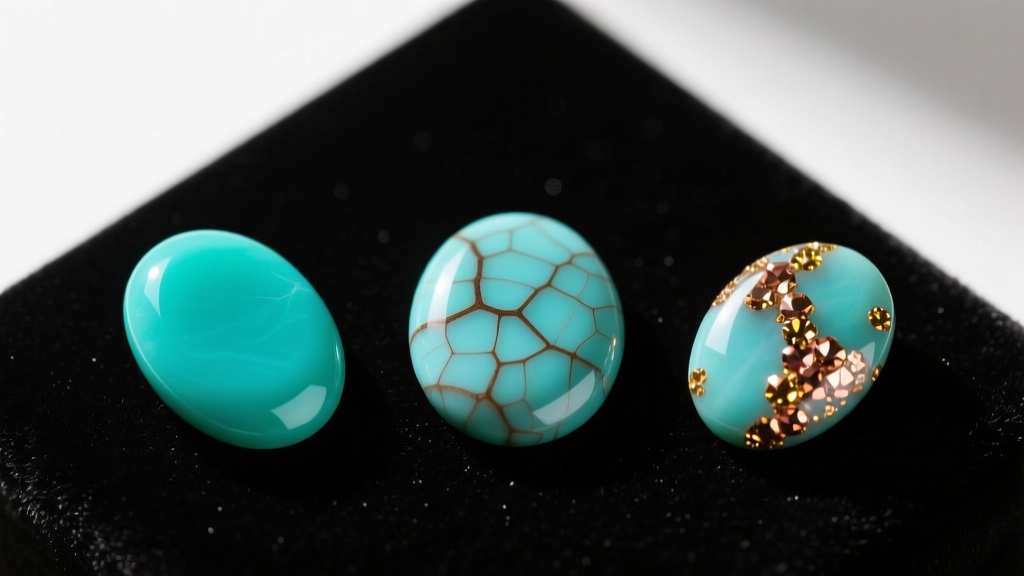
Turquoise Origins and Matrix Patterns
The "matrix" refers to the host rock or mineral inclusions visible within the turquoise. While some buyers prefer a completely clean stone, others seek out intricate matrix webbing for its unique character.
| Origin / Type | Color Profile | Matrix Characteristics | Market Position |
|---|---|---|---|
| Sleeping Beauty (AZ) | Uniform sky blue | None to minimal | Premium (Mine closed, highly sought after) |
| Kingman (AZ) | Light to deep blue | Brown to black webbing, copper pyrite | Highly collectible, distinctive |
| Persian (Iran) | Intense robin-egg blue | Usually none (clean) | Historical premium, museum grade |
| Hubei (China) | Varied blues and greens | Heavy brown/black matrix | Commercial grade, heavily treated |
Evaluating Diamond Accents: What Quality Do You Need?
In turquoise diamond earrings, the diamonds typically serve as accent stones (melee) rather than the primary focal point. Melee diamonds are generally defined as stones weighing less than 0.15 carats each. Because of their small size, the rigorous grading standards applied to center stones are unnecessary and can lead to overpaying.
Cut: Single vs. Full Cut Melee
This is a crucial detail often overlooked by buyers. Single cut melee features only 17 or 18 facets. They are cheaper to produce but lack the scintillation required to stand out against opaque turquoise. Always look for full cut melee, which features the standard 57 or 58 facets of a round brilliant diamond. Full cut melee will catch the light dynamically, providing the necessary sparkle to contrast the matte or polished finish of the turquoise cabochon.
Color and Clarity Targets
Do not pay a premium for VVS clarity or D-F color in melee accents. The optimal value and visual performance for diamond halos or pavé borders around turquoise is found in the G-H color range (near colorless) and SI1-SI2 clarity. At the size of melee diamonds, SI-level inclusions are completely invisible to the naked eye, and G-H color faces up brilliantly white, especially when set in white gold or platinum.
Crucial Setting and Metal Considerations
The structural integrity of turquoise diamond earrings hinges entirely on how the softer stone is protected from the harder diamond and from daily wear impacts.
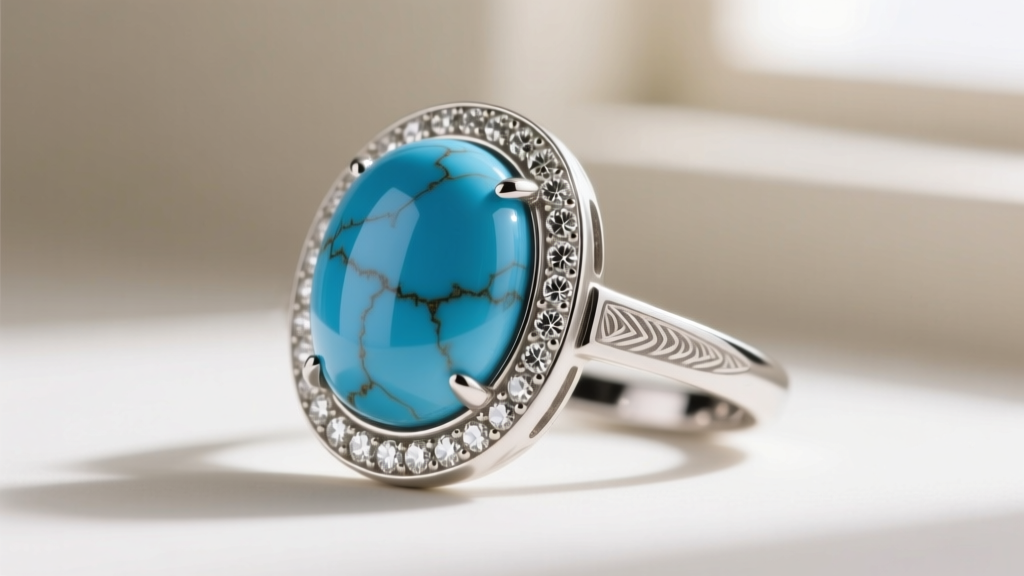
The Mandatory Bezel Setting
Turquoise should never be set with traditional prongs. Prongs leave the edges of the cabochon exposed, and because turquoise has a distinct cleavage plane and low toughness, a single knock against a doorframe or countertop will chip the stone. Furthermore, prong settings can trap moisture against the porous back of the stone if not fully sealed. A full bezel setting is mandatory for turquoise. The metal rim should completely encircle the girdle of the cabochon, protecting the edges and securing the stone firmly against the gallery.
Post Gauge and Backings for Drops and Dangles
Turquoise cabochons, especially when paired with diamond halos and crafted in dense metals like 18k gold or platinum, carry significant weight. Standard 20-gauge (0.81mm) earring posts are often too thin to support this weight, leading to bending or the earring drooping uncomfortably on the earlobe. Look for earrings featuring 18-gauge (1.02mm) or even 16-gauge posts. Additionally, heavy turquoise drops require secure backings; opt for la-poussette (push-click) backs or screw backs rather than standard friction butterflies, which can easily slip off and result in the loss of the earring.
Metal Color Pairings
- 18k Yellow Gold: The traditional and most popular choice. The warm undertones of yellow gold complement the earthy matrix of the turquoise and enhance the vintage or Southwestern aesthetic.
- Platinum / 18k White Gold: Offers a sleek, modern look. The white metal maximizes the brilliance of the diamond accents. However, be aware that stark white metal can sometimes wash out very pale, low-saturation turquoise. This pairing works best with intense, deep-blue Persian or Sleeping Beauty stones.
- 14k Rose Gold: A contemporary choice that brings out the copper and brown tones in Kingman or Spiderweb turquoise matrix.
Pricing Tiers and Market Realities
Understanding what to expect financially will help you identify authentic pieces and avoid inflated retail markups. Prices vary wildly based on the origin of the turquoise, the carat weight of the diamond melee, and the precious metal used.
- Entry-Level ($400 - $900): Typically features sterling silver or 10k/14k gold, stabilized commercial-grade turquoise (often Hubei origin), and single-cut diamond accents of lower clarity.
- Mid-Range Fine Jewelry ($1,200 - $3,500): Features 14k or 18k gold, high-quality stabilized American turquoise (like Kingman), full-cut G/H SI melee diamonds, and precision bezel settings. This is the sweet spot for most buyers seeking durable, beautiful everyday earrings.
- Investment / Designer ($4,000 - $10,000+): Reserved for untreated, natural Sleeping Beauty or historic Persian turquoise, set in platinum or 18k gold with VVS/VS melee diamonds, often featuring intricate hand-engraved galleries or custom lapidary work.
Care, Maintenance, and Common Failure Modes
Even stabilized turquoise requires specific care to maintain its polish and structural integrity alongside its diamond accents. According to Encyclopedia Britannica, turquoise is highly sensitive to chemical solvents and extreme heat.
What to Avoid
- Ultrasonic Cleaners: Never put turquoise diamond earrings in an ultrasonic cleaner. The high-frequency vibrations can fracture the turquoise, and the heat of the cleaning solution can melt or cloud the stabilizing resin, ruining the stone's polish.
- Steam Cleaners: The sudden thermal shock of steam can cause the turquoise to crack or separate from the epoxy backing.
- Chemical Exposure: Hairspray, perfume, and lotions can build up on the surface of the turquoise, dulling its polish. While diamonds repel oil, turquoise absorbs it.
Proper Cleaning Protocol
To clean your earrings, use a soft, damp microfiber cloth to gently wipe the surface of the turquoise. For the diamond accents, you can use a soft-bristled baby toothbrush dipped in a mild solution of warm water and a few drops of grease-cutting dish soap, carefully brushing only the diamonds and the metal setting while avoiding prolonged soaking of the turquoise. Dry immediately with a lint-free cloth.
Final Buying Checklist
Before finalizing your purchase, verify the following specifications with the jeweler:
- Is the turquoise stabilization disclosed? (Avoid undisclosed dyed or reconstituted stones).
- Are the diamonds full-cut (57 facets) rather than single-cut?
- Is the turquoise fully encased in a bezel setting without exposed edges?
- Is the post gauge thick enough (18g or thicker) to support the weight of the piece without bending?
By prioritizing structural protection, demanding full-cut diamond melee, and understanding the origin of your turquoise, you can acquire a pair of turquoise diamond earrings that are not only visually breathtaking but engineered to last for generations.


