Tiger Eye Earrings: 2026 Trend Analysis & Styling Guide
Discover the 2026 tiger eye earrings trend. Our expert analysis covers chatoyancy, setting mechanics, pricing tiers, and face-shape styling for this grounding gem.

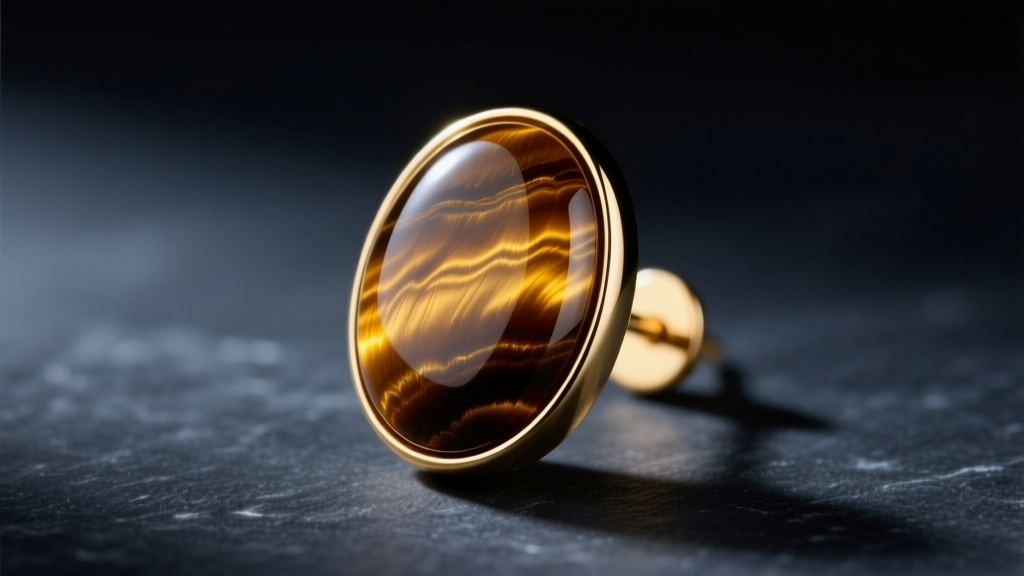
The 2026 Shift: From Bohemian Staple to Quiet Luxury
For decades, tiger eye earrings were relegated to the realm of fast-fashion bohemian accessories, often featuring poorly polished beads wrapped in cheap copper wire. However, the 2026 jewelry landscape has completely reimagined this grounding gemstone. Driven by the "quiet luxury" movement and a consumer pivot toward earthy, architectural aesthetics, tiger eye has graduated to high-end ear curations. Today's top designers are utilizing precision-cut cabochons, faceted rose cuts, and geometric inlays set in recycled 14k and 18k gold. The focus has shifted from the stone's mystical reputation to its striking optical phenomena and structural versatility in modern ear styling.
Gemological Profile: Pseudomorphism and Chatoyancy
To understand how to properly set and wear tiger eye, one must understand its unique formation. According to the Gemological Institute of America (GIA), tiger eye is a product of pseudomorphism—a process where quartz replaces the fibrous mineral crocidolite (blue asbestos). This replacement preserves the parallel fibrous structure, which is responsible for the stone's signature chatoyancy (the "cat's eye" effect). When light hits these microscopic parallel fibers, it reflects in a single, sharp band that glides across the surface as the earring moves.
On the Mohs scale of hardness, tiger eye ranks at a 7. While this makes it highly resistant to everyday scratching, its fibrous internal structure means it can be susceptible to splitting if subjected to harsh lateral impacts. For earrings, this is rarely an issue compared to rings or bracelets, but it heavily dictates the setting mechanics required by master jewelers.
Setting Mechanics: Why Bezel Beats Prong
When evaluating high-end tiger eye earrings, the setting is just as critical as the stone. Prong settings, while excellent for maximizing light return in faceted diamonds, are a structural liability for tiger eye cabochons. The pressure required to tighten a prong over a fibrous stone can induce micro-fractures along the natural cleavage planes. Furthermore, tiger eye is rarely cut with the precise, sharp girdles required for secure prong seating.
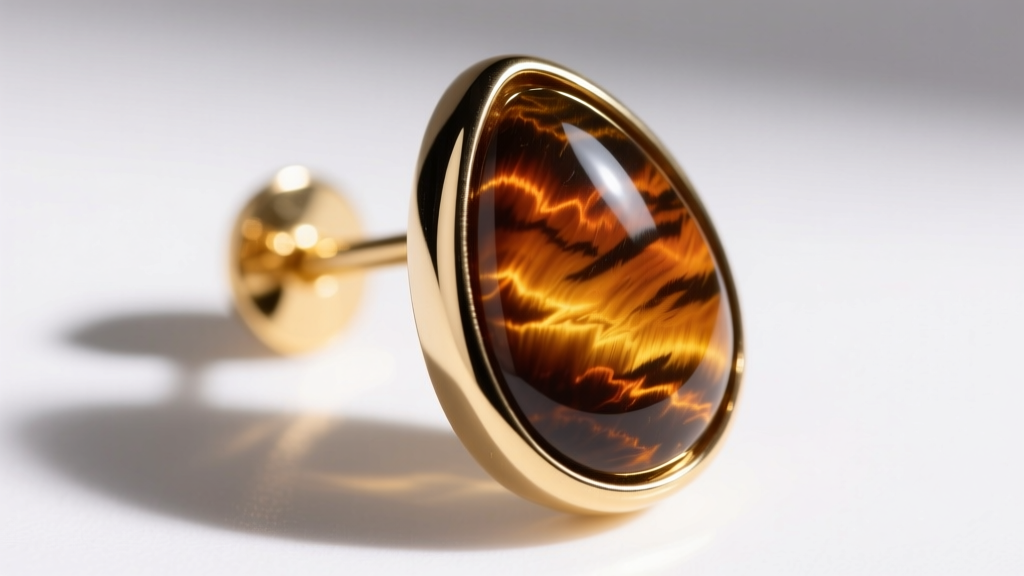
Instead, the industry standard for 2026 is the flush or full-bezel setting. A well-crafted bezel wraps the entire perimeter of the cabochon in a protective metal rim, securing the stone without applying localized pressure points. For drop earrings, a bezel also prevents the stone from chipping if the earring swings and strikes a hard surface.
Post Gauge and Weight Distribution
Tiger eye has a specific gravity of approximately 2.65, making it surprisingly dense. A 15mm tiger eye teardrop can easily exceed 8 grams. Standard 20-gauge (0.8mm) earring posts will inevitably bend under this weight, causing the earring to droop forward and slowly stretch the earlobe piercing. Expert jewelers mandate 18-gauge (1.0mm) or 16-gauge (1.2mm) posts for any tiger eye drop exceeding 5 carats. For cartilage placements, such as helix studs, flat-back labrets with 16-gauge posts and secure screw-in bezels are essential to prevent the heavy stone from migrating or tearing the delicate fistula.
Market Pricing and Material Grade Matrix
The market for tiger eye earrings is highly stratified. Below is a breakdown of the current pricing tiers, material grades, and hardware quality you should expect when shopping.
| Tier | Price Range | Metal & Hardware | Stone Quality & Cut | Best For |
|---|---|---|---|---|
| Commercial | $25 - $60 | Sterling silver or gold-plated brass; butterfly friction backs | Tumbled beads, opaque with minimal chatoyancy; wire-wrapped | Occasional wear, casual boho styles |
| Bridge | $85 - $220 | Solid 14k gold-filled or recycled sterling silver; secure latch backs | Polished cabochons with strong banding; basic bezel settings | Everyday office wear, durable huggies |
| Fine / Artisan | $300 - $850+ | Solid 14k/18k gold; custom friction posts, screw-in labrets | Premium "hawk's eye" or highly chatoyant golden tiger eye; faceted rose cuts | Curated ear projects, luxury gifting |
Face Shape and Ear Curation Strategy
Because tiger eye possesses a dense, visually heavy appearance due to its dark golden-brown and amber banding, the silhouette of the earring must be carefully matched to the wearer's facial geometry.

- Round Faces: Avoid circular hoops with inlaid tiger eye, which will exaggerate facial fullness. Instead, opt for elongated, angular silhouettes like marquise-cut tiger eye drops or geometric baguette dangles. The vertical lines draw the eye downward, creating an illusion of length.
- Square Faces: Soften a strong, angular jawline with curved, fluid designs. Tiger eye huggie earrings or oval cabochon studs set in yellow gold provide a warm, rounded contrast to sharp bone structure.
- Heart-Shaped Faces: Balance a narrower chin with bottom-heavy designs. Teardrop or chandelier earrings featuring small tiger eye briolettes at the base add visual weight to the lower half of the face.
- Cartilage & Helix Pairings: For a modern 2026 ear curation, pair a heavy tiger eye lobe drop with a minimalist, 16-gauge tiger eye threadless stud in the upper helix. This anchors the ear visually without overwhelming the cartilage.
Care, Maintenance, and Failure Modes
Proper maintenance is critical to preserving the optical phenomena of tiger eye. According to gemological care guidelines outlined by Lang Antiques University, the fibrous nature of the stone requires specific cleaning protocols.
Critical Warning: Never place tiger eye earrings in an ultrasonic cleaner. The high-frequency vibrations can exploit internal stress fractures within the fibrous silica structure, leading to catastrophic splitting of the cabochon. Furthermore, steam cleaners can force moisture into microscopic gaps between the stone and the bezel setting, potentially oxidizing the metal from the inside out.
The Correct Cleaning Protocol:
- Mix a few drops of mild, phosphate-free dish soap in lukewarm water.
- Use an ultra-soft baby toothbrush to gently agitate the back of the stone and the setting prongs or bezel rim.
- Rinse briefly under a gentle stream of distilled water to prevent hard water spots.
- Dry immediately with a lint-free microfiber cloth, buffing the surface in a single direction to maximize the chatoyant band's visibility.
By understanding the gemological quirks, structural requirements, and styling nuances of tiger eye, you can elevate this ancient stone into a sophisticated, modern cornerstone of your 2026 jewelry wardrobe.


