Best Materials for Simple Beaded Earrings: A Deep Comparison
Discover the best materials for simple beaded earrings. We compare glass, gemstone, and polymer beads alongside hypoallergenic wire options.

The Anatomy of Simple Beaded Earrings
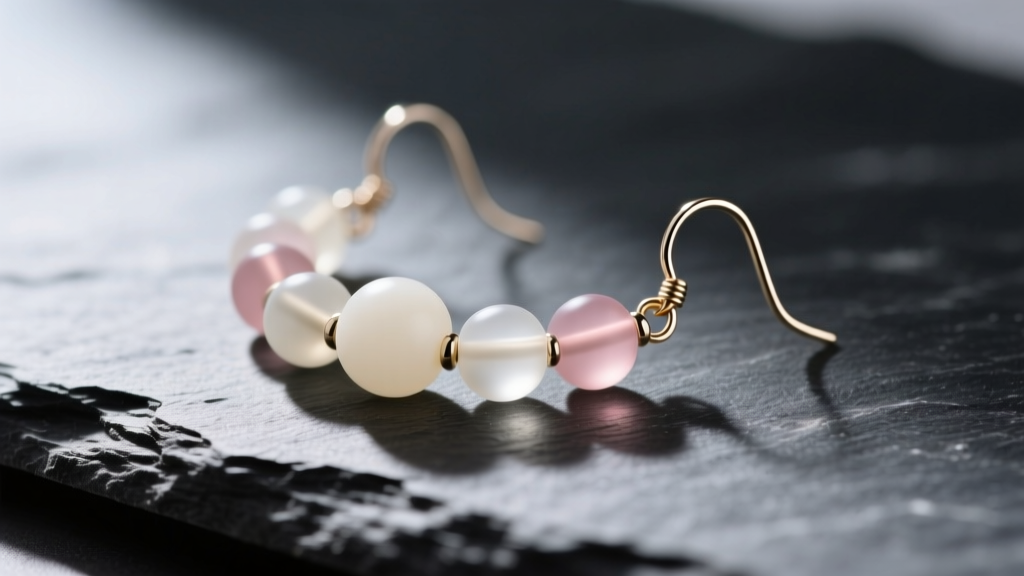
Simple beaded earrings represent a cornerstone of minimalist jewelry design, yet their apparent simplicity masks a complex interplay of material science, structural mechanics, and dermatological biocompatibility. A standard beaded earring typically consists of a primary bead or small cluster suspended from a headpin or eye pin, finished with a French hook or leverback. While the aesthetic appeal relies on the bead, the longevity and wearability are entirely dictated by the metallurgical properties of the wire and the physical characteristics of the bead material. In this comprehensive guide, we dissect the exact material grades, gauge specifications, and failure modes associated with crafting and wearing simple beaded earrings, ensuring you make informed decisions whether you are a collector, a maker, or a consumer with sensitive skin.
The Bead Matrix: Weight, Porosity, and Hardness
The bead itself acts as the focal point and the primary weight-bearing element of the earring. Different materials possess vastly different specific gravities and Mohs hardness ratings, which directly impact how the earring sits on the earlobe and how it resists environmental degradation.
Glass and Lampwork
Soda-lime glass and borosilicate glass are the most common materials for artisan beaded earrings. Borosilicate (often known by the brand name Pyrex) has a lower coefficient of thermal expansion, making it highly resistant to cracking during the lampworking process. However, glass beads carry a specific gravity of approximately 2.5, meaning a 12mm round glass bead will weigh roughly 2.2 grams. When paired with a heavy brass hook, this can cause earlobe fatigue over an 8-hour wear period. For simple beaded earrings intended for daily wear, opt for hollow glass beads or smaller 6mm to 8mm solid lampwork beads to maintain a weight under 1.5 grams per ear.
Natural Gemstones vs. Dyed Agates
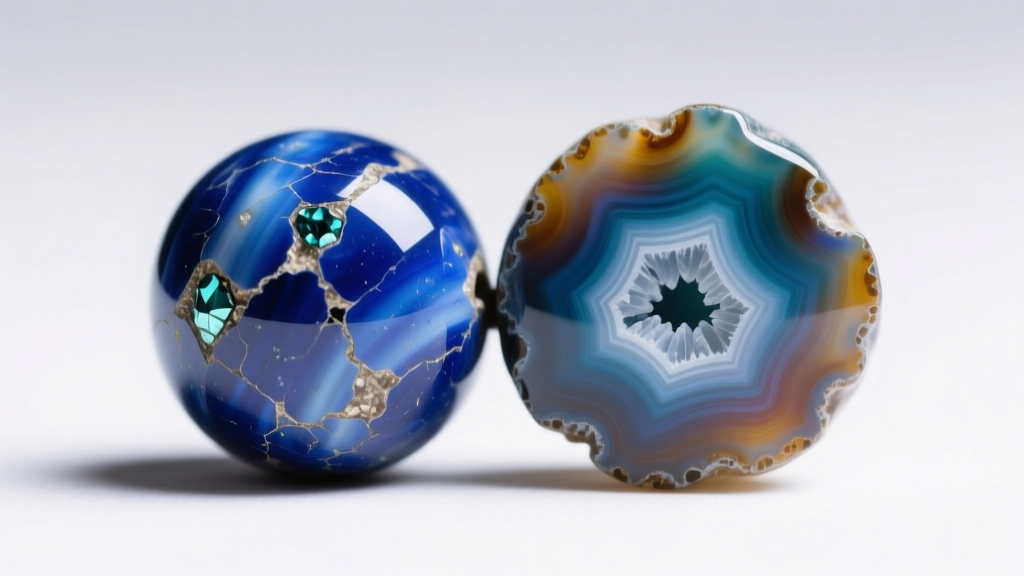
Gemstones introduce the variable of porosity and hardness. According to the Gemological Institute of America (GIA), minerals like quartz (amethyst, citrine) rank at a 7 on the Mohs scale, making them highly resistant to scratching from everyday dust (which contains quartz particles). Conversely, porous stones like turquoise (Mohs 5-6) or dyed agates require careful maintenance. The dye in treated agates can leach when exposed to the acidic pH of human sweat or alcohol-based hand sanitizers. If you choose porous gemstones for simple beaded earrings, ensure they are sealed with a jewelry-grade cyanoacrylate or opt for naturally stable stones like garnet or lapis lazuli.
Polymer Clay and Acrylics
Polymer clay (PVC-based) has surged in popularity due to its ultra-lightweight nature, boasting a specific gravity of roughly 1.2 to 1.4. A 20mm polymer clay bead can weigh less than a gram, making it the ultimate material for statement-sized simple beaded earrings that won't stretch the piercing. However, polymer clay is susceptible to UV degradation and can become brittle over time if exposed to direct sunlight. Acrylic beads offer a similar weight advantage but are prone to micro-scratching, which dulls their optical clarity after a few months of friction against hair and clothing.
Hardware Metallurgy: Solving the Contact Dermatitis Puzzle
The most critical point of failure in beaded earrings is not the bead, but the wire that passes through the fistula (the piercing hole). Nickel allergy is the most common contact allergy worldwide, affecting up to 20% of the population, as noted by the Mayo Clinic. Even trace amounts of nickel in 'hypoallergenic' stainless steel can trigger severe dermatitis. Here is a metallurgical breakdown of the best wire materials for sensitive ears.
| Metal / Alloy | Composition & Grade | Nickel Risk | Tensile Strength & Best Use | Price Range (per oz) |
|---|---|---|---|---|
| Niobium | Pure elemental metal (99.9%) | Zero | Highly malleable, dead soft. Best for simple wrapped loops. | $8 - $12 |
| Titanium | Grade 23 (6AL-4V) Implant Grade | Zero | High tensile strength, stiff. Best for straight headpins. | $15 - $25 |
| Argentium Silver | 93.5% Silver, Germanium alloy | Zero | Medium hardness, highly tarnish-resistant. Best for forged hooks. | $40 - $55 |
| Gold-Filled | 14/20 Ratio (5% 14k gold over brass core) | Low (if core unexposed) | Half-hard temper, excellent spring-back. Best for leverbacks. | $30 - $45 |
Expert Insight: Avoid 'surgical steel' or '316L stainless steel' if you have a known nickel allergy. The term 'surgical' refers to the steel's use in non-implant surgical tools, not its biocompatibility for long-term piercing wear. Always demand ASTM F-136 compliant titanium or pure niobium for the ear wire.
Wire Gauge and Structural Mechanics
Selecting the correct wire gauge is paramount for both the structural integrity of the earring and the comfort of the wearer. The standard piercing hole for a healed earlobe is 20-gauge (0.81mm) to 18-gauge (1.02mm). Therefore, the ear wire must be 20-gauge or thinner to pass through comfortably without stretching the tissue.
24-Gauge (0.51mm) Wire
This ultra-thin wire is reserved exclusively for lightweight beads with small drill holes, such as freshwater pearls or delicate gemstone briolettes. Because 24-gauge wire has very low tensile strength, it must be used in a 'dead soft' temper. Makers must utilize wrapped loops rather than simple loops to prevent the wire from unspooling under the weight of the bead. It is never used for the ear hook itself, as it will easily bend out of shape when inserted into the ear.
22-Gauge (0.64mm) Wire
The industry standard for simple beaded earrings. A 22-gauge half-hard wire provides the perfect balance between malleability for creating loops and stiffness for maintaining the shape of a French hook. It easily passes through 90% of commercially available glass and gemstone beads. When working with 22-gauge sterling silver or gold-filled wire, jewelers must be mindful of 'work hardening'—the process where the metal becomes brittle and snaps if bent back and forth too many times.
20-Gauge (0.81mm) Wire
Reserved for heavy glass beads, large metal accents, or structural ear cuffs. While 20-gauge provides excellent structural support, it can cause discomfort in newer or tighter piercings. It is highly recommended to sand and polish the tip of any 20-gauge ear hook to a perfectly smooth, rounded point to prevent micro-tears in the fistula upon insertion.
Common Failure Modes and Maintenance
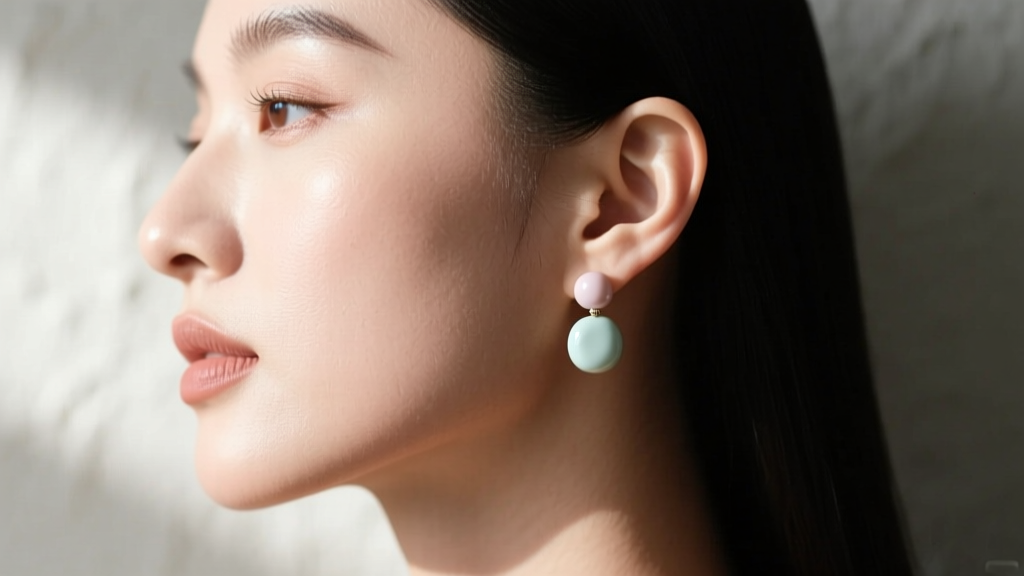
Even the highest quality simple beaded earrings will fail if their material limitations are ignored. Understanding these failure modes allows for proactive maintenance and better purchasing decisions.
- Loop Unspooling: The most frequent mechanical failure. Occurs when a 'simple loop' (a single bend) is used instead of a 'wrapped loop' (where the tail of the wire is coiled tightly around the stem). Heavy glass beads will gradually pull a simple loop open due to kinetic movement during walking.
- Bead Abrasion: Hard gemstones (Mohs 7+) will slowly wear away softer metal headpins. If you use quartz or beryl beads on a copper or pure silver headpin, the wire will eventually thin and snap at the base of the bead. Always use a harder metal wire, like half-hard stainless steel or titanium, for high-hardness stones.
- Galvanic Corrosion: Mixing dissimilar metals in the presence of an electrolyte (sweat) causes rapid degradation. Never pair a copper headpin with an aluminum or zinc-based bead cap, as the copper will act as a cathode and rapidly corrode the anodic bead cap.
- Tarnish and Sulfur: Standard sterling silver (92.5% silver, 7.5% copper) tarnishes when the copper reacts with sulfur compounds in the air. Upgrading to Argentium silver, which replaces some copper with germanium, creates a transparent germanium dioxide layer that virtually eliminates tarnish.
The Decision Framework: Matching Material to Lifestyle
To select the perfect simple beaded earrings, apply this practical decision matrix based on your daily environment and physiological needs:
For the High-Activity / Fitness Lifestyle:
Choose Borosilicate glass or solid quartz beads on Grade 23 Titanium headpins. Titanium will not corrode from heavy sweat, and the hard glass will not degrade from frequent washing. Avoid porous stones and sterling silver entirely.
For the Sensitive Skin / Allergy-Prone Wearer:
Prioritize pure Niobium ear wires. Niobium is an elemental metal, meaning it cannot contain hidden alloy allergens. Pair it with smooth, non-porous beads like glazed ceramic or polished agate to prevent any bacterial trapping near the piercing site.
For the Statement / Maxi-Size Lover:
Opt for hollow-core glass or polymer clay beads paired with 20-gauge Gold-Filled leverback hooks. The lightweight beads prevent earlobe stretching and 'cheese-cutter' syndrome, while the leverback mechanism ensures the heavier visual profile remains securely on the ear without the risk of slipping off.
By looking past the superficial aesthetics and evaluating the specific gravity, Mohs hardness, and metallurgical purity of your jewelry, you can curate a collection of simple beaded earrings that are as durable and biocompatible as they are beautiful.


