The Ultimate Guide to Safe Frozen Elsa Earrings for Kids
Discover how to choose safe, hypoallergenic Frozen Elsa earrings for kids. Learn about implant-grade titanium, screw backs, and nickel-free standards.

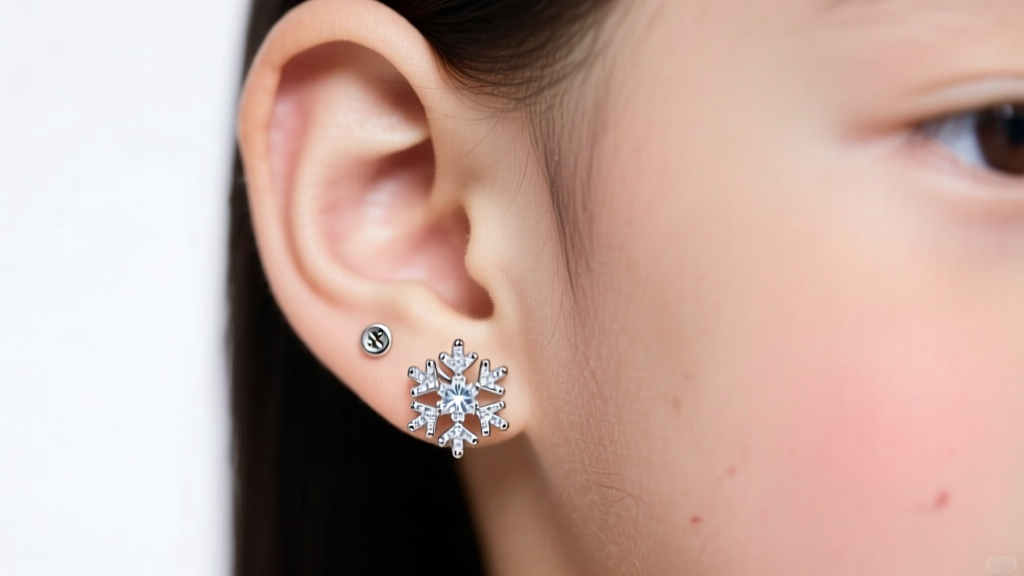
The Magic and the Metal: Why Material Matters Most
When your child asks for Frozen Elsa earrings, the immediate instinct is to find the most glittering, ice-blue snowflake or Elsa silhouette available. However, as any parent who has dealt with red, swollen, and itchy earlobes knows, the mass-market character jewelry found in big-box stores and mall kiosks is often a dermatological nightmare. The core issue isn't the design; it is the metallurgy.
Most commercially licensed character earrings are classified as "fashion jewelry." They are typically cast from zinc alloys or brass and plated with a microscopically thin layer of silver or rhodium. Beneath that plating lies nickel, a common allergen. As we move through 2026, the market for hypoallergenic children's jewelry has thankfully expanded, allowing parents to find beautiful, character-inspired pieces that won't compromise their child's health. To make an informed purchase, you must look past the icy aesthetic and examine the alloy.
Decoding the Metals: What to Look For
When shopping for skin-safe Elsa-inspired studs or dangles, restrict your search to these three biocompatible materials:
- Implant-Grade Titanium (ASTM F136): This is the gold standard for pediatric piercings. It is entirely nickel-free, highly resistant to corrosion from sweat and water, and lightweight enough for delicate earlobes.
- Solid 14k or 18k Gold: Ensure it is solid gold, not gold-plated or gold-filled. Yellow, white, or rose gold are all acceptable, provided they are alloyed with metals like copper or silver rather than nickel.
- Niobium: A highly reactive metal that is naturally hypoallergenic and can be anodized to create brilliant, permanent ice-blue colors without the use of toxic dyes or plating.
The Danger of 'Mystery Metals'
According to the American Academy of Dermatology, nickel allergy is the most common cause of allergic contact dermatitis. When a child sweats or swims, the salts and moisture break down cheap metal platings, leaching nickel ions directly into the skin. This triggers an immune response resulting in blistering, crusting, and severe itching. If an earring listing simply says "metal alloy," "silver-tone," or "surgical steel" (which often contains up to 10% nickel), leave it in the virtual cart.
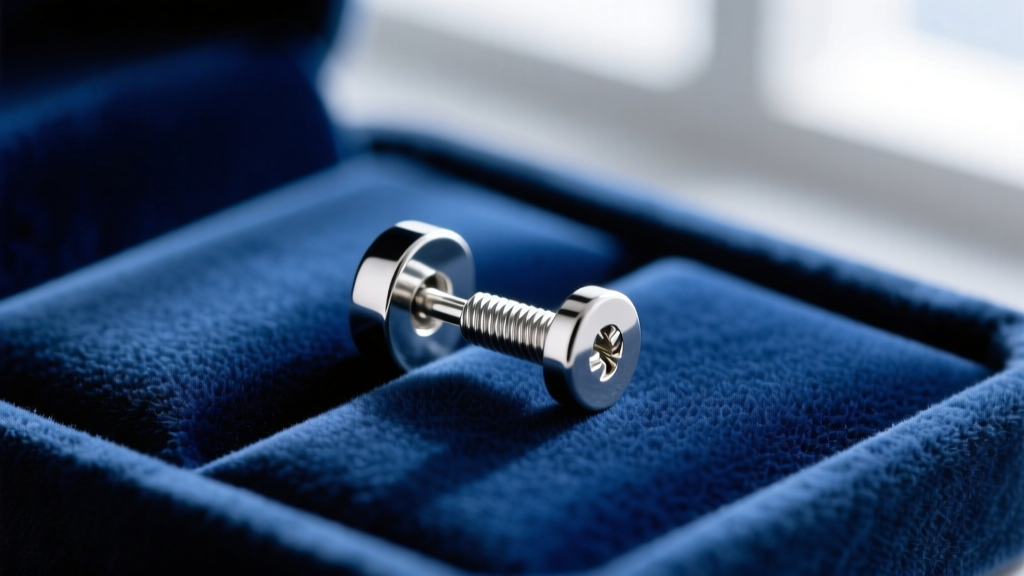
Sizing, Threading, and Security: A Technical Breakdown
Finding the right metal is only half the battle. The physical mechanics of the earring dictate both the safety of the healing fistula (the tunnel of skin that forms the piercing) and the likelihood of losing the earring during active play.
Gauge Sizes for Pediatric Lobes
Standard ear piercings performed with a needle are typically 18-gauge (1.0mm) or 16-gauge (1.2mm). Piercings done with a piercing gun are often 20-gauge (0.8mm). When buying Frozen Elsa earrings, you must match the post thickness to the child's piercing. Forcing a thick 16g post into a delicate 20g healing fistula can cause micro-tears and scar tissue buildup. Always verify the gauge size with the jeweler before purchasing; most high-quality custom makers offer 20g and 18g options for kids.
Internally Threaded vs. Externally Threaded
This is a detail most beginners miss. Cheap earrings feature external threading, meaning the screw-like threads are on the post itself. Pushing a threaded post through a piercing acts like a cheese grater on the delicate tissue. High-quality jewelry is internally threaded or threadless (push-pin). In internally threaded jewelry, the post is perfectly smooth, and the threads are located on the backing, ensuring a seamless glide through the ear.
Comparing Earring Backings for Active Kids
| Backing Type | Security Rating | Hygiene Factor | Best Use Case |
|---|---|---|---|
| Butterfly (Friction) | Low | Poor (traps bacteria) | Older teens; not recommended for kids |
| Screw-Back | High | Good (easy to clean) | Active kids; sleeping |
| Threadless (Push-Pin) | Very High | Excellent (no crevices) | New piercings; high-security needs |
Finding Authentic, Skin-Safe Elsa Designs
Because Disney strictly controls its licensing, finding officially licensed Elsa merchandise made from implant-grade titanium can be challenging. Major theme parks and official online stores prioritize mass production over metallurgical purity. So, how do you get the Frozen aesthetic safely?
The best approach in 2026 is to seek out independent, professional body jewelers who specialize in custom anodized titanium or enamel work. Many reputable online piercing studios offer "snowflake" or "ice crystal" designs crafted from ASTM F136 titanium, featuring lab-grown sapphires or blue cubic zirconia that perfectly mimic Elsa's icy magic. While these custom pieces may cost between $45 and $120 per pair—compared to the $12 plastic-backed pairs at the mall—they are an investment in your child's health and will last a lifetime without tarnishing.
A Parent’s Checklist for Piercing and Aftercare
If you are using these new Elsa earrings for a fresh piercing, the aftercare protocol is just as critical as the metal choice. According to pediatric experts at Nemours KidsHealth, earlobes take a minimum of 6 to 8 weeks to heal, though many professional piercers recommend leaving the initial jewelry in for up to 6 months to ensure the fistula is fully mature and stable.
Expert Rule of Thumb: Never remove or change a child's new piercing jewelry for cleaning. The friction of removing and reinserting the post damages the fragile healing tissue. Instead, spray sterile 0.9% sodium chloride wound wash directly onto the front and back of the earring twice a day, and let it air dry.
Signs of Trouble to Watch For
While some mild redness and tenderness are normal in the first week, you should consult a pediatrician if you notice:
- Yellow or green discharge (pus) crusting around the post.
- The earring backing embedding into the swelling earlobe.
- Red streaks radiating from the piercing site or a fever.
If an allergic reaction occurs (characterized by intense itching, clear fluid weeping, and flaky skin), remove the jewelry immediately and replace it with a verified implant-grade titanium stud to keep the hole from closing while the skin recovers.
Final Thoughts on Ice and Alloys
Your child's desire to wear Frozen Elsa earrings is a wonderful opportunity to introduce them to the concept of quality over quantity. By bypassing the temptation of cheap, nickel-laden fashion jewelry and investing in internally threaded, implant-grade titanium snowflakes or ice-blue crystals, you ensure that their magical accessories remain a source of joy rather than a medical nuisance. Armed with the knowledge of gauge sizes, threading types, and biocompatible metals, you can confidently navigate the jewelry market and give your little queen the safe, sparkling crown she deserves.


