The Complete Earring Size Chart mm Guide for Buyers
Master the earring size chart mm to find your perfect fit. Our buying guide covers stud, hoop, and huggie dimensions for every piercing type.

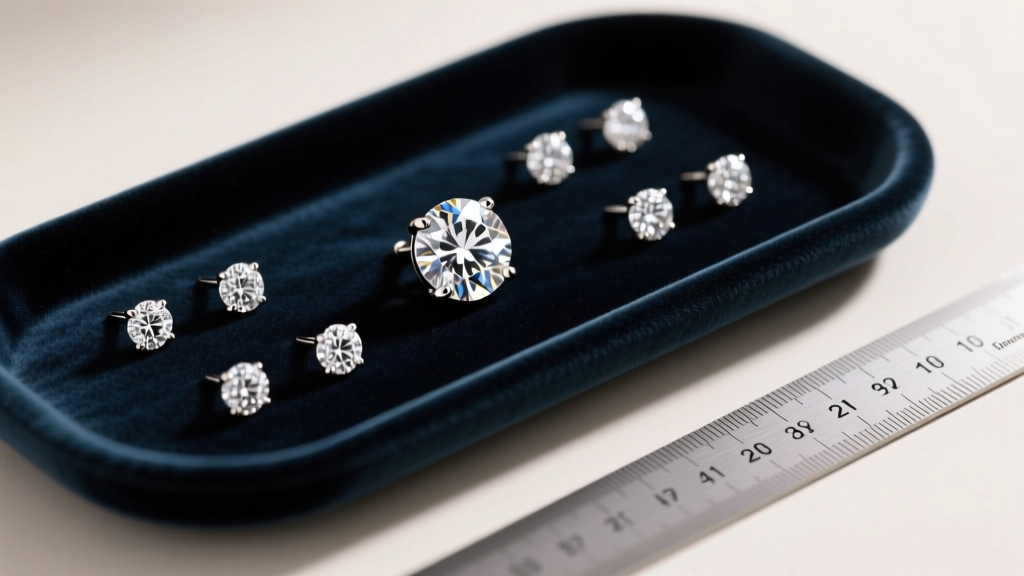
Why Millimeters Matter More Than Carats or Gauge
When shopping for fine jewelry, buyers frequently conflate carat weight, gauge thickness, and millimeter dimensions. However, consulting a precise earring size chart mm is the only foolproof way to predict how a piece will actually sit on your ear. Carat is a measure of weight, not physical footprint; a 1-carat round brilliant diamond measures roughly 6.5mm across, but a 1-carat emerald cut might measure 7x5mm. Similarly, gauge refers exclusively to the thickness of the post or wire, not the decorative face or hoop diameter.
According to the Association of Professional Piercers (APP), standard lobe piercings are typically done at 20-gauge (0.81mm) or 18-gauge (1.02mm), while cartilage piercings like the helix or tragus are often 16-gauge (1.29mm). Understanding the interplay between the post gauge and the decorative millimeter size is critical for avoiding fistula compression, lobe drooping, and the dreaded 'cheese-cutter effect' in delicate cartilage.
The Definitive Earring Size Chart mm for Studs
Stud earrings are the foundation of any curated ear. However, a 4mm stud looks vastly different on a petite earlobe versus a larger one. Below is a comprehensive breakdown of standard stud dimensions, their visual equivalents, and their ideal anatomical placements.
| Millimeter (mm) Size | Visual Reference | Diamond Equivalent (Approx.) | Ideal Piercing Placement |
|---|---|---|---|
| 2mm - 2.5mm | Pinhead / Grain of sand | 0.03ct - 0.05ct | Upper lobe stacks, rook, conch |
| 3mm | Peppercorn | 0.10ct | Second/third lobe holes, helix, tragus |
| 4mm | Standard pencil eraser | 0.25ct | Standard lobe (everyday), forward helix |
| 5mm | Match head | 0.50ct | Standard lobe (statement piece) |
| 6mm | Sweet pea | 0.75ct | Primary lobe (bold, requires secure backing) |
| 8mm+ | Aspirin tablet | 2.00ct+ | Primary lobe only (requires jumbo back or screw-back) |
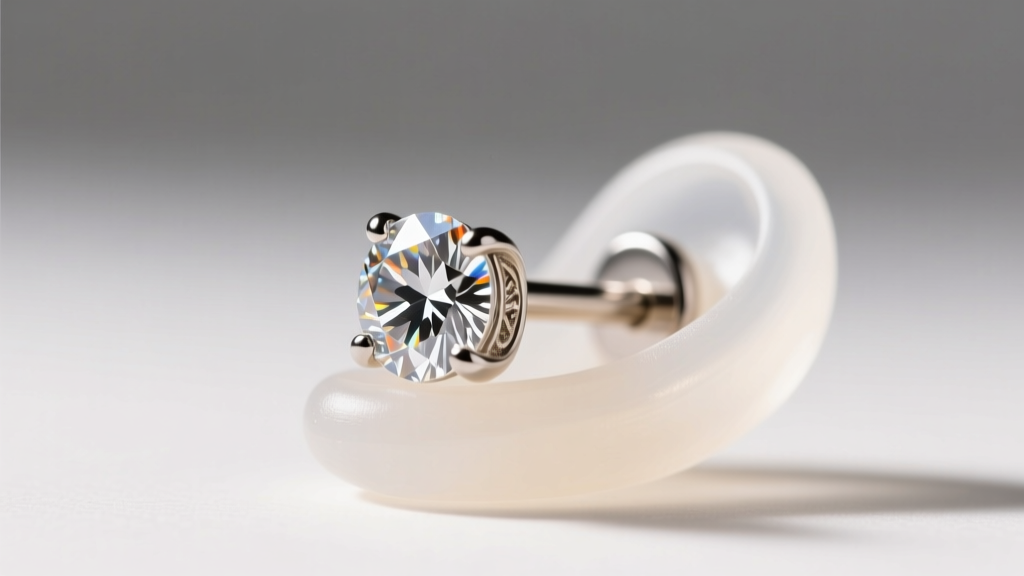
Pro Tip: When purchasing studs 5mm or larger, always check the post length. A standard post is 9mm to 11mm long. If the decorative face is 8mm wide and the post is only 9mm long, the earring back will dig painfully into your skin, leaving no room for natural swelling or breathing space.
Navigating Hoop and Huggie Inner Diameters
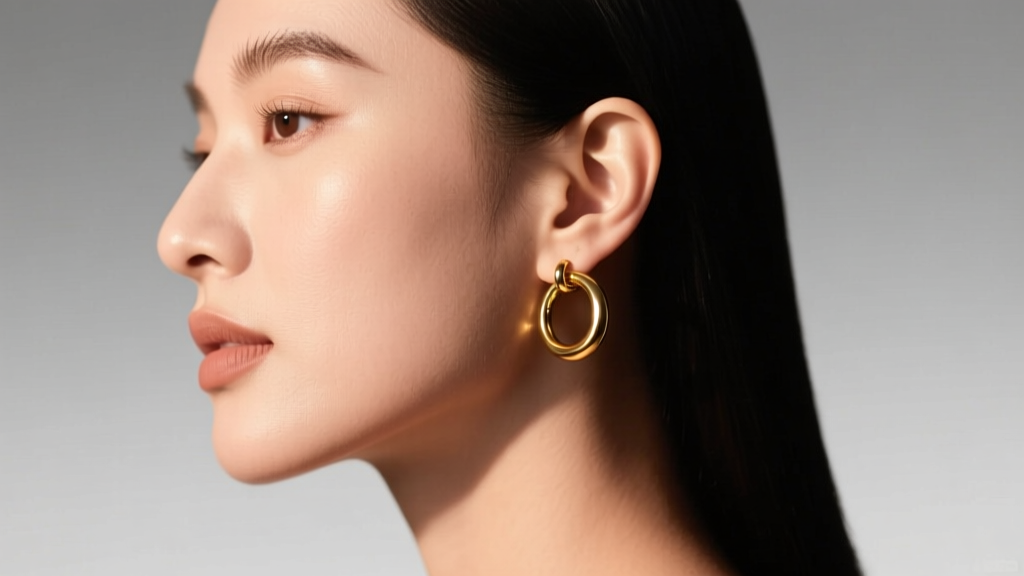
The most common point of failure when buying hoops online is confusing Inner Diameter (ID) with Outer Diameter (OD). A high-quality earring size chart mm will always list the ID, as this dictates whether the hoop will comfortably clear your ear tissue.
Huggies and Cartilage Snug Fits (8mm - 12mm ID)
Huggies are designed to 'hug' the earlobe or cartilage. An 8mm ID huggie is extremely tight and usually only suitable for very thin earlobes or freshly healed, slim helix piercings. A 10mm to 12mm ID is the sweet spot for standard lobe huggies. If you are buying for a thicker cartilage fold (like a conch or daith), you must measure the tissue thickness; a hoop with too small an ID will cause migration and rejection.
Standard and Statement Hoops (15mm - 40mm+ ID)
- 15mm - 20mm (Small): Rests just below the earlobe. Ideal for active lifestyles and sleeping.
- 25mm - 30mm (Medium): The classic 'quarter-sized' hoop. Grazes the jawline and offers excellent visibility from the front profile.
- 35mm - 50mm (Large/Statement): High visual weight. Often requires a thicker wire gauge (14g or 12g) to prevent the hoop from bending out of its circular shape under its own weight.
Dangle and Drop Earrings: Length vs. Visual Weight
When evaluating drop earrings, millimeter length is measured from the base of the earwire (or stud) to the lowest point of the dangling element. However, length does not equal visual weight. A 40mm linear diamond bar drop will look incredibly sleek and minimalist, while a 40mm teardrop chandelier earring will look massive and heavy.
'Always consider the center of gravity. A long, top-heavy drop earring will pull the lobe forward, making the earring face downward rather than laying flat against the neck. Look for articulated joints or flexible links that allow the earring to move independently of the stud post.' — Master Jeweler & CAD Designer
For face-shape mapping, elongated drops (50mm+) are exceptional for softening angular or square jawlines, while shorter, wider drops (20mm-30mm) add necessary width to long, oval face shapes.
Common Sizing Mistakes and Failure Modes
Even with a perfect earring size chart mm in hand, buyers frequently make structural errors that compromise both the jewelry and the piercing. Watch out for these specific failure modes:
- The Cheese-Cutter Effect: Wearing a heavy, large-mm hoop on a very thin wire (e.g., a 30mm hoop on a 22-gauge wire). The weight of the hoop concentrates force onto a microscopic slice of tissue, slowly slicing through the fistula over time.
- Choking the Cartilage: Using a hoop with an ID that perfectly matches the diameter of the piercing hole when the ear is flat. When the ear bends or swells slightly, the hoop has no clearance, leading to pressure necrosis and hypertrophic scarring.
- The Butterfly Back Trap: Using standard friction backs on 6mm+ studs. The surface area of a standard butterfly back is too small to distribute the weight of a large stone, causing the stud to perpetually tilt forward.
How to Accurately Measure Your Existing Jewelry
To build your own personalized reference based on an earring size chart mm, you must measure the jewelry you already own and love. Do not use a fabric sewing tape measure or a standard school ruler; the margin of error is too high for precision jewelry.
Invest in a pair of digital vernier calipers (available for under $15 online). Place the earring between the caliper jaws and measure the exact millimeter width of the face, or the inner diameter of the hoop. Record these numbers alongside photos of how they look on your ear. This data-driven approach eliminates the guesswork of online shopping, ensuring that every future purchase fits your unique anatomy perfectly.
For further reading on how gemstone dimensions translate to physical size, the Gemological Institute of America (GIA) provides excellent resources on the relationship between carat weight, cut proportions, and millimeter spread.


