Technical Guide to 18 Gauge Earrings for Cartilage Piercings
Master the technical specs of 18 gauge earrings. Explore wire thickness, ASTM titanium grades, threading types, and healing cartilage best practices.

The Metric Reality: What 1.0mm Means for Your Fistula
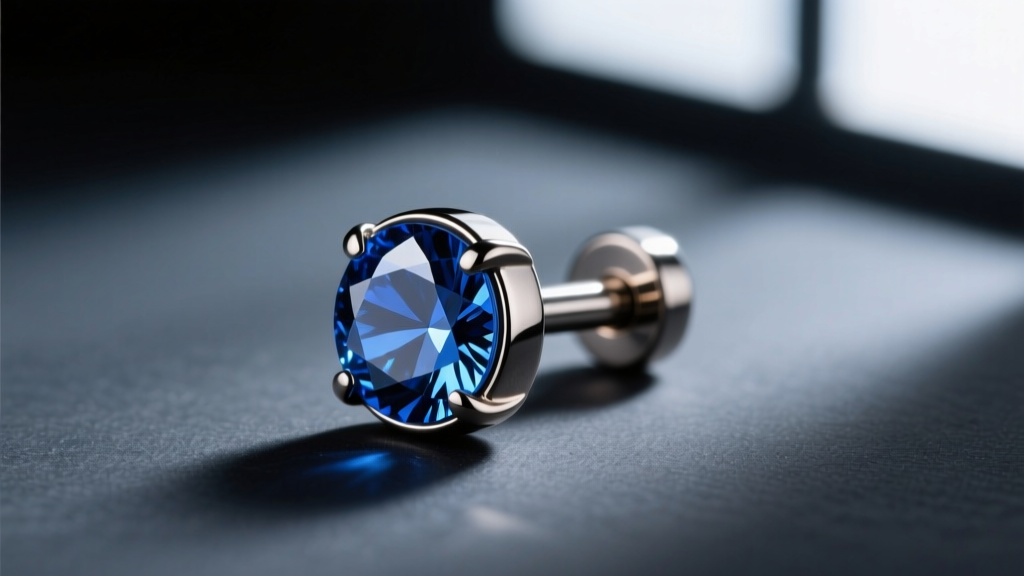
In the professional body modification industry, precision is not just a preference; it is a biological necessity. When we discuss 18 gauge earrings, we are referring to a wire thickness of exactly 1.024 millimeters (often rounded to 1.0mm). While 18g is a standard, unproblematic size for traditional earlobe piercings, its application in cartilage placements—such as the helix, tragus, conch, or forward helix—requires a deep understanding of tissue biomechanics and metallurgy.
Standard cartilage piercings performed by reputable professionals in 2026 are typically established at 16 gauge (1.29mm) or 14 gauge (1.63mm). The 18 gauge size occupies a controversial middle ground. It is frequently requested by clients seeking ultra-delicate, minimalist aesthetics, but it introduces specific mechanical risks that both the wearer and the jeweler must actively manage. Understanding the exact physical footprint of an 18g post is the first step in preventing long-term tissue rejection and migration.
Biomechanics and the 'Cheese-Cutter' Effect
The most critical failure mode associated with 18 gauge earrings in cartilage is the phenomenon known in physics and piercing communities as the 'cheese-cutter effect.' This occurs when a thin wire under tension applies concentrated force to a small surface area of tissue.
Pressure is defined as Force divided by Area (P = F/A). Because an 18g hoop has a surface area roughly 37% smaller than a 14g hoop, any snagging, sleeping pressure, or downward drag multiplies the localized pressure against the fistula (the healed tube of skin). Over months or years, this continuous micro-trauma triggers the body's immune response to treat the jewelry as a foreign object attempting to escape, leading to gradual migration and eventual rejection.
Mitigating Vector Forces
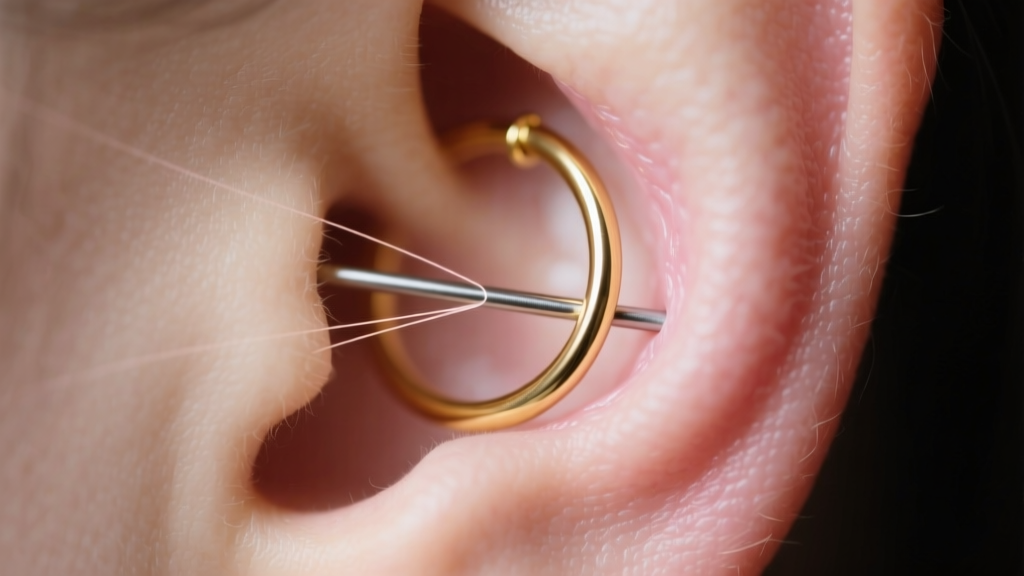
If you are committed to wearing 18g jewelry in cartilage, you must eliminate rotational and downward vector forces. This means strictly avoiding continuous hoop rings (like captive bead rings or seamless rings) in 18g thicknesses for cartilage. Instead, opt for flat-back labret studs. A flat disc distributes the resting pressure evenly across the back of the ear, neutralizing the cheese-cutter effect and providing a stable anchor for the delicate 1.0mm post.
Metallurgy: ASTM F-136 Titanium vs. 316L Surgical Steel
At a mere 1.0mm thickness, the material integrity and biocompatibility of your 18 gauge earrings are paramount. Thinner posts have less structural mass, meaning any corrosive breakdown or nickel leaching is concentrated in a smaller tissue envelope. According to the Association of Professional Piercers (APP), implant-grade materials are non-negotiable for long-term wear.
| Material Grade | Nickel Content | Structural Yield Strength | Best Use Case | Avg. Post Price (2026) |
|---|---|---|---|---|
| ASTM F-136 Titanium (Ti-6Al-4V) | 0% (Trace only) | High (Resists bending at 1.0mm) | Fresh piercings, sensitive cartilage, daily wear | $15 - $35 |
| 316L Surgical Steel | 8% - 10.5% | Moderate (Prone to micro-fractures) | Fully healed lobes only; avoid in cartilage | $5 - $12 |
| Niobium (Unalloyed) | 0% | Low (Highly malleable, bends easily) | Custom bent rings, highly reactive allergies | $10 - $20 |
| 14k / 18k Solid Gold (Nickel-Free) | 0% (Palladium alloyed) | High (Excellent for delicate threading) | Healed cartilage, high-end aesthetic upgrades | $60 - $150+ |
As noted by the Mayo Clinic, nickel sensitization is a cumulative immune response. Wearing 316L steel in a tight 18g cartilage fistula traps sweat and sebum against nickel-bearing alloys, accelerating contact dermatitis. Always demand mill certificates or proof of ASTM F-136 compliance when purchasing high-end 18g titanium posts.
Threading Mechanics: The 18 Gauge Dilemma
The method by which the decorative end attaches to the 18g post is perhaps the most overlooked technical detail in fine jewelry. Because the post is only 1.0mm thick, carving threads into or onto the metal severely compromises its structural integrity and tissue safety.
External Threading: A Structural Failure
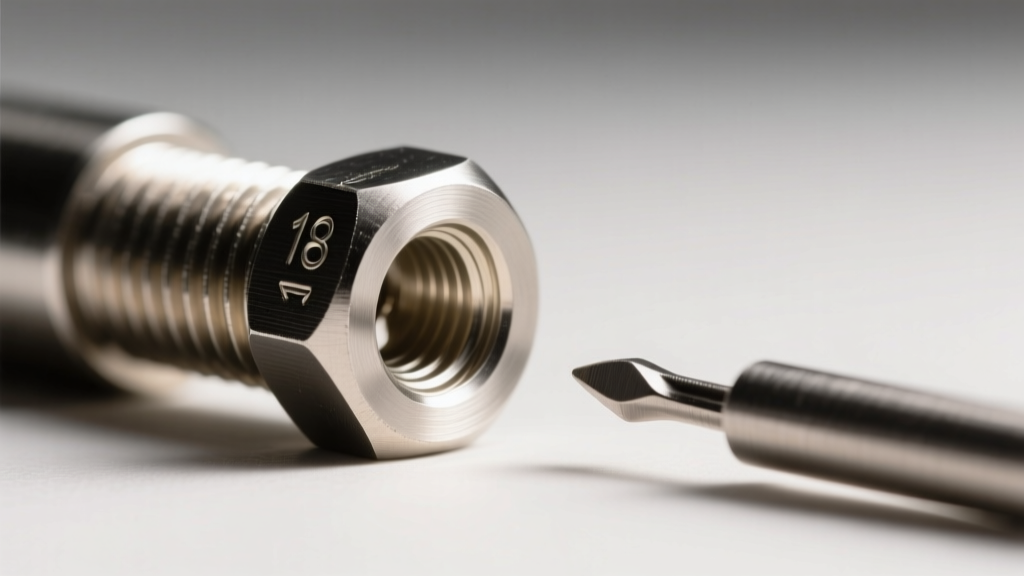
External threading (where the screw pattern is cut into the outside of the 1.0mm post) is universally condemned by modern piercers. The jagged threads act like a file, tearing the delicate epithelial lining of the fistula every time the jewelry is inserted or removed. Furthermore, cutting threads into an already thin 18g wire creates a 'necking' point—a weak spot where the post is highly likely to snap under lateral stress.
The Threadless (Press-Fit) Revolution
For 18 gauge earrings, threadless tension-fit systems are the undisputed gold standard in 2026. Brands like Neometal and BVLA utilize a smooth 1.0mm titanium pin with a slight, deliberate bend (typically between 5 and 15 degrees). When pushed into the hollow post, the tension of the bent pin against the inner wall creates a secure, mechanical lock without the need for fragile screw threads. This allows for seamless insertion, zero tissue tearing, and a vastly superior structural profile for ultra-thin jewelry.
"When stepping down to an 18 gauge post for delicate helix or tragus placements, threadless tension jewelry isn't just a preference; it's a mandatory safety protocol to prevent fistula micro-tearing and post shearing."
— Senior APP-Certified Piercer & Jewelry Fabricator
Curating Your 18 Gauge Setup: A Troubleshooting Checklist
If you are transitioning to 18 gauge earrings for a delicate, curated ear look, use this technical checklist to ensure your setup is biologically and mechanically sound:
- Verify the Gauge: Use digital calipers to measure the post. Many mass-market brands mislabel 19g (0.9mm) or 20g (0.8mm) as 18g. A true 18g post must measure 1.0mm.
- Check the Disc Diameter: For cartilage, a 2.5mm to 3.0mm flat back disc is ideal. Anything smaller will sink into the tissue; anything larger will trap moisture and cause hypertrophic scarring.
- Assess the Post Length: Cartilage swells asymmetrically. Ensure your piercer measures your tissue depth and selects a post that leaves exactly 1.5mm to 2mm of clearance for drainage and swelling.
- Avoid O-Rings and Rubber Clutches: These trap bacteria and degrade rapidly. Only use internally threaded or threadless titanium flat-backs secured by tension or mechanical threading.
- Mind the Snag Zones: If you wear 18g studs, ensure the decorative end has a low profile (e.g., bezel-set gems rather than prong-set stones) to prevent catching on hair and clothing, which transfers kinetic shock directly to the 1.0mm wire.
Final Thoughts on Precision Body Jewelry
Wearing 18 gauge earrings in cartilage is an exercise in balancing delicate aesthetics with strict biological limits. By prioritizing ASTM F-136 titanium, eliminating external threads in favor of press-fit tension systems, and strictly avoiding hoop rings in this gauge, you can safely achieve the ultra-fine, minimalist look without compromising the lifelong health of your piercings. Treat your jewelry as a medical-grade implant, and your body will reward you with a stable, thriving canvas for years to come.


