Lewis Hamilton Earrings: Troubleshooting Heavy Cartilage Stacks
Learn how to safely style heavy Lewis Hamilton earrings. Troubleshoot lobe tearing, cartilage migration, and weight issues in layered ear stacks.

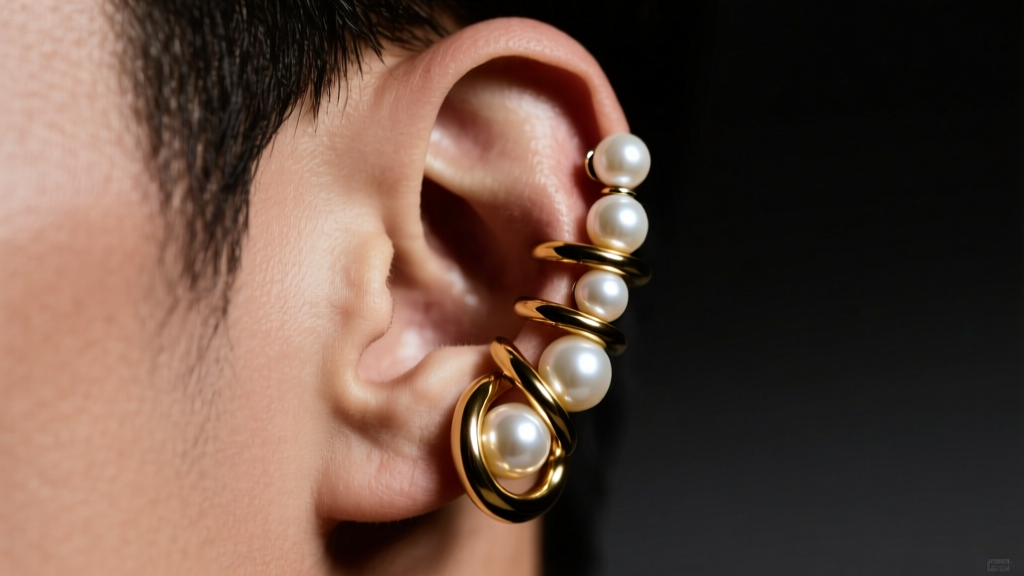
Lewis Hamilton’s ear curation is undeniably legendary. From the Met Gala to the Formula 1 paddock, his iconic, gender-fluid jewelry stacks—featuring mismatched pearls, diamond-encrusted chunky hoops, and heavy cross pendants—have completely redefined modern ear styling. However, replicating this bold aesthetic often leads to a harsh physical reality: ear fatigue, lobe tearing, and cartilage migration. When you stack multiple heavy pieces across the helix, conch, and lobe, the cumulative shear force can cause permanent tissue damage if not properly managed.
As we navigate the evolving jewelry trends of 2026, the desire for maximalist, Hamilton-inspired ear stacks is higher than ever. But wearing heavy jewelry requires more than just a high pain tolerance; it demands a deep understanding of ear anatomy, weight distribution, and metallurgical safety. This comprehensive troubleshooting guide will help you achieve the ultimate layered ear stack without sacrificing the health of your piercings.
The Anatomy of the Hamilton Stack: Why Weight Matters
The secret to Lewis Hamilton's ear game lies in the strategic placement of varying volumes and textures. He frequently pairs delicate 3mm Akoya pearl studs with massive, 15-gram diamond hoops and heavy pendant drops. While visually striking, this creates a biomechanical nightmare for standard piercings. A typical 20-gauge or 18-gauge lobe piercing can safely support roughly 7 to 10 grams before gravity begins to stretch the fistula (the piercing channel). When you introduce heavy statement pieces, the downward torque pulls the jewelry against the bottom of the piercing channel, restricting blood flow and causing micro-tears.
Cartilage piercings, such as the helix or flat, are even more vulnerable. Because cartilage lacks the elastic tissue and robust blood supply of the earlobe, excessive weight doesn't just stretch the hole—it triggers an immune response that can lead to migration or outright rejection. Understanding the weight tolerances of different ear zones is the first step in troubleshooting your stack.
Piercing Weight Tolerances and Gauge Requirements
| Piercing Type | Max Safe Weight | Min Recommended Gauge | Best Supportive Styles |
|---|---|---|---|
| Standard Lobe | 10g - 12g | 16g - 14g | Lightweight hoops, secure stud backings |
| Stretched Lobe | 25g+ | 12g - 8g | Heavy pendants, thick wire continuous hoops |
| Helix / Flat | 3g - 5g | 16g - 14g | Flat-back labrets, small hinged clickers |
| Conch | 8g - 12g | 14g - 12g | Large shields, heavy captive bead rings |
Troubleshooting Common Heavy-Stack Failures
If you are attempting to curate a multi-piercing stack inspired by F1 royalty, you are likely to encounter specific structural failures. Here is how to diagnose and fix the most common issues associated with heavy earrings.
Failure 1: The "Cheese-Wire" Effect and Lobe Splitting
The Problem: Thin, heavy hoops act like a wire cheese slicer on soft lobe tissue. Over time, the jewelry slowly migrates downward, thinning the bottom of the lobe until it splits entirely. The Fix: You must increase the surface area of the jewelry. Swap thin 20-gauge wires for 14-gauge or 12-gauge tubing or flat-backed designs. If you must wear a thin, heavy pendant, use a clear silicone O-ring or a specialized earring lifter patch behind the lobe to distribute the weight across a wider area of skin.
Failure 2: Helix Migration from Ring Torque
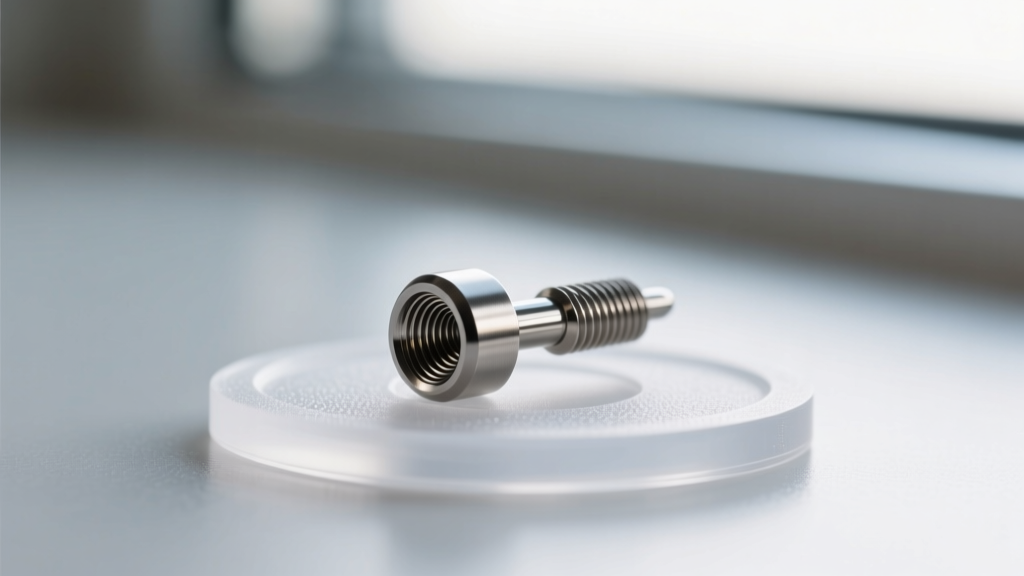
The Problem: Wearing heavy captive bead rings (CBRs) or seamless hoops in the upper cartilage creates outward pressure. The circular shape of the ring forces the ends of the jewelry apart, pushing against the piercing channel and causing the body to reject the foreign object by pushing it toward the surface. The Fix: Ditch the rings in your upper stack. According to the Association of Professional Piercers (APP), flat-back labrets are vastly superior for cartilage stability. A 14-gauge internally threaded titanium flat-back provides a flush fit against the ear, eliminating rotational torque and allowing the tissue to rest, even when surrounded by heavier lobe pieces.
Failure 3: Clasp Slippage and Earring Loss
The Problem: Heavy statement hoops frequently pull standard butterfly backs off the post, or the tension on a hinged segment ring fails, resulting in the loss of expensive diamond or gold jewelry. The Fix: Upgrade your findings. For posts, switch to screw-on backs or secure silicone friction backs with a wider base. For hoops, invest in high-quality clickers with a locking latch mechanism, or opt for endless hoops that feature a custom-tensioned pin-and-tube closure that requires a deliberate twisting motion to open.
Material Upgrades to Prevent Migration and Tearing
When your ear is under physical stress from heavy jewelry, it is also highly susceptible to chemical stress. Heavy earrings cause increased friction and micro-movements within the fistula. If your jewelry is made of porous metals or contains nickel, this friction will rapidly accelerate allergic contact dermatitis and tissue swelling.
"When a client presents with inflamed, migrating cartilage piercings burdened by heavy stacks, the first thing we do is remove the mystery metals. The combination of mechanical stress and nickel exposure is a guaranteed path to permanent scarring." — Master Piercer & APP Member
To safely wear heavy stacks, your baseline materials must be flawless. Implant-grade titanium (ASTM F136) is the absolute gold standard for any piercing that is healing, irritated, or bearing weight. Its mirror-finish surface prevents bacteria and dead skin cells from harboring inside the channel. For visible luxury pieces like Hamilton's signature diamonds and pearls, ensure the settings are crafted from solid 14k or 18k gold, or platinum. As noted by the Gemological Institute of America (GIA), alloy mixes in lower-karat golds or silver-plated brass can introduce copper and nickel, which react poorly with stressed, sweaty skin—especially in high-friction environments like a racing paddock or a crowded red carpet.
Step-by-Step Guide to Reinforcing Your Ear Stack
Achieving a safe, maximalist ear stack requires a deliberate reinforcement protocol. Follow these steps before loading up your ears with heavy statement pieces:
- Audit Your Current Gauge: Visit a professional piercer to measure your current jewelry. If your lobes are pierced at 20g or 18g, have them gradually stretched to 14g using taper insertion. This provides the necessary structural foundation for heavy hoops.
- Implement Weight Rotation: Never wear your heaviest pendant drops or chunky gold hoops for more than 6-8 hours at a time. Swap them out for lightweight titanium studs or small huggies while sleeping or working out to allow the fistula to recover its shape.
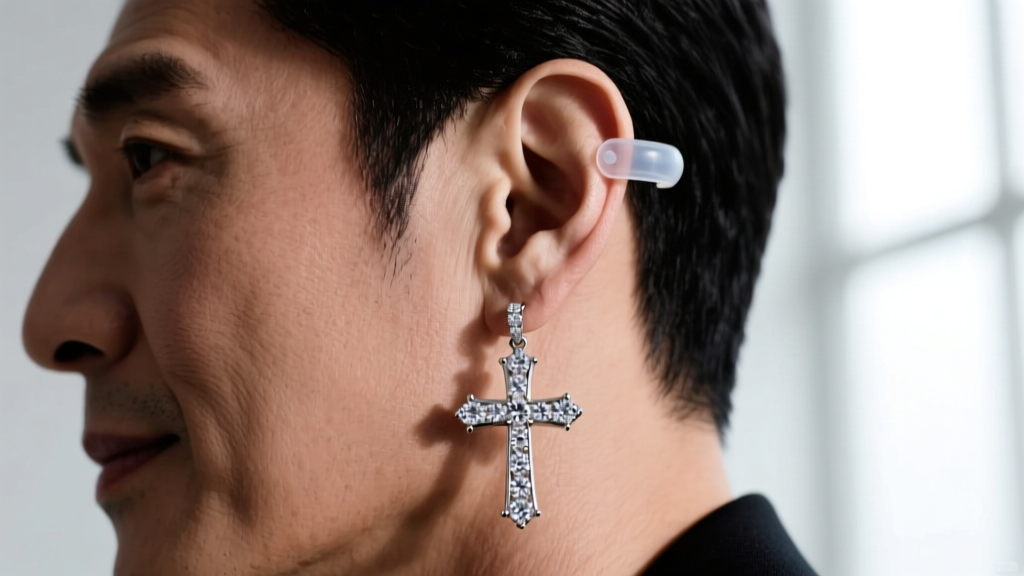
- Utilize Supportive Backings: Purchase medical-grade silicone earlifters. These small, concave pads sit between the earring back and your skin, lifting the heavy jewelry to a horizontal position and preventing the post from digging into the side of your neck or jawline.
- Anchor with the Conch: If you want the visual weight of a large hoop but lack the lobe stability, route a large, lightweight continuous hoop through a healed conch piercing instead. The conch cartilage is thick, dense, and far more capable of bearing visual volume without the risk of splitting.
Final Thoughts on Safe Statement Styling
The allure of Lewis Hamilton's earrings lies in their fearless combination of luxury, volume, and personal expression. However, true style mastery involves understanding the limits of your own anatomy. By respecting weight thresholds, upgrading to implant-grade titanium and solid gold, and utilizing modern supportive backings, you can curate a heavy, multi-layered ear stack that turns heads without destroying your tissue. Treat your piercings with the same mechanical respect you would give to a high-performance machine, and your ears will carry your favorite statement pieces for a lifetime.


