Where Did Kim Lose Her Diamond Earring? Preventing High-Value Loss
Discover where Kim lost her diamond earring and learn expert troubleshooting to secure high-value studs with proper backs, gauges, and settings.

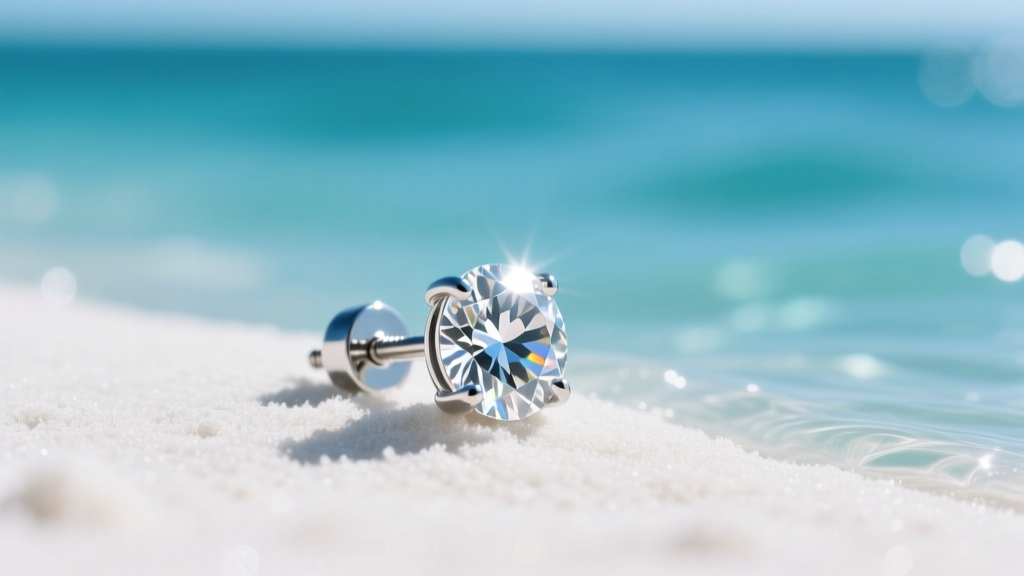
The internet has never forgotten the infamous 2010 vacation disaster. When reality television fans and jewelry enthusiasts alike ask, where did Kim lose her diamond earring, the answer is the shallow, turquoise waters of Bora Bora. The reality star lost a $75,000 diamond stud while swimming, a catastrophic event that perfectly illustrates the mechanical vulnerabilities of high-value jewelry. While the gossip made headlines, the underlying failure was purely structural: a standard friction earring back is entirely inadequate for heavy, high-carat diamonds in aquatic environments.
As we navigate the jewelry landscape in 2026, losing a five-figure diamond stud remains a prevalent issue. This troubleshooting guide dissects the physics of earring loss, analyzes hardware failure modes, and provides a definitive framework for securing your most valuable ear jewelry.
The Physics of Friction Back Failure in Water
To understand the Bora Bora incident, we must examine the mechanics of the standard "push" or friction back. These backs rely on the tension of two small metal loops gripping the notched groove of the earring post. In a controlled, dry environment, this tension is sufficient for lightweight studs. However, water introduces three critical failure vectors:
- Lubricitation: Water eliminates the friction coefficient between the metal post and the backing loops, allowing the back to slide off with minimal lateral force.
- Thermal Contraction: Cold ocean water causes the metal post to contract microscopically, loosening the grip of the friction back's tension loops.
- Hydrodynamic Drag: The force of moving water against the earlobe and the diamond's basket setting creates a pulling effect that standard friction backs cannot withstand.
According to the Gemological Institute of America (GIA), the security of a diamond earring relies equally on the setting's prongs and the structural integrity of the backing mechanism. A heavy diamond in a 4-prong martini setting acts as a lever; when the post bends even slightly, the backing is compromised.
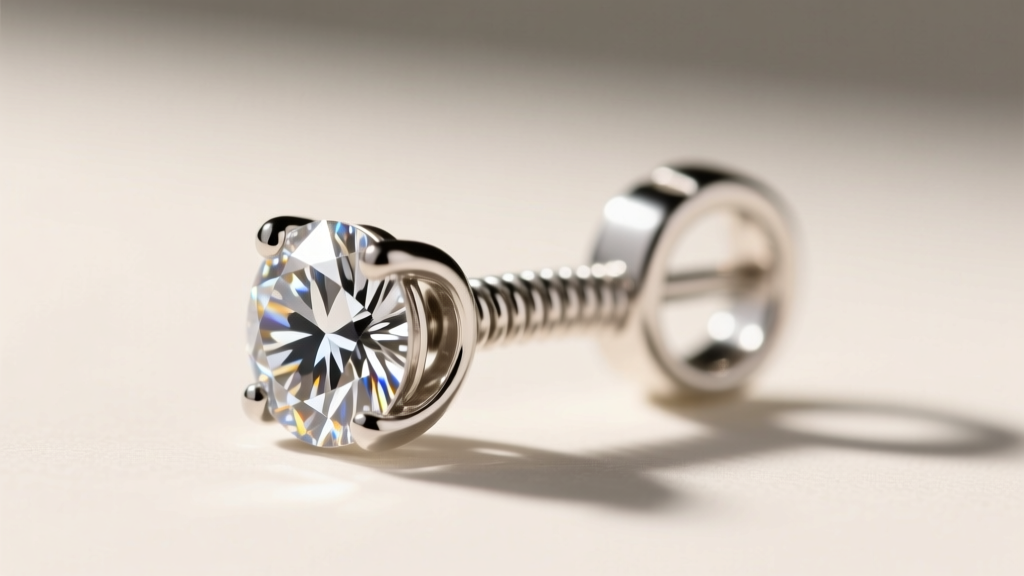
Troubleshooting Earring Backs: Security Matrix
If you are investing in diamonds over 1.5 carats, standard friction backs are a liability. Below is a comparative matrix of earring back security systems available on the market today, ranked by their effectiveness in preventing high-value loss.
| Backing Type | Security Score | Mechanism | Best Use Case | Upgrade Cost |
|---|---|---|---|---|
| Standard Friction (Push) | 3/10 | Tension loops on notched post | Lightweight studs (<0.50ct) | Included |
| Screw Back | 7/10 | Threaded post and nut | Medium diamonds (0.50ct - 2.0ct) | $40 - $80 |
| La Pousette (Locking) | 9/10 | Spring-loaded internal clutch | High-value studs & active wear | $120 - $180 |
| Chrysmela (Micro-grip) | 10/10 | Patented internal ball-bearing grip | Heavy carat weights (2.0ct+) | $100 - $150 |
Note: Screw backs can suffer from thread stripping over time if cross-threaded. For ultimate security, mechanical locking backs like La Pousette or Chrysmela are the industry standard for high-net-worth jewelry insurance requirements.
Metallurgy and Gauge: The Hidden Culprits of Loss
The backing is only half the equation. The earring post itself must be engineered to support the diamond's weight. A standard earring post is 18-gauge (1.02mm thick). When an 18-gauge post is paired with a 3.0-carat diamond (which can weigh over 0.6 grams and feature a deep basket), the post will inevitably bend during daily wear or sleep.
Post Gauge Recommendations by Carat Weight
- 0.25ct - 1.00ct: 18-Gauge (1.02mm) or 17-Gauge (1.14mm) is sufficient.
- 1.00ct - 2.50ct: 16-Gauge (1.29mm) is required to prevent lever-action bending.
- 2.50ct and above: 14-Gauge (1.63mm) or custom 13-Gauge platinum posts are mandatory.
Furthermore, the metal alloy matters. 14k and 18k yellow gold are relatively soft. For heavy diamonds, Platinum (Pt950) or 18k White Gold alloyed with nickel/palladium provides the necessary tensile strength to keep the post perfectly straight, ensuring the locking back maintains its grip.
Setting Geometry: Martini vs. Basket
The center of gravity dictates post stress. A classic 3-prong martini setting sits closer to the earlobe, reducing the lever effect and minimizing post bending. However, martini settings can poke the back of the ear if the post is too short. A 4-prong basket setting distributes the diamond's weight more evenly but sits higher off the lobe, increasing the risk of hair snagging—which is a primary cause of lateral pull and subsequent earring loss.
"The most common reason clients lose heavy diamond studs isn't that the backing fell off; it's that the post bent, altering the geometry of the locking mechanism and allowing the back to slide away unnoticed." — Master Jeweler Bench Notes, 2025.

Recovery Protocols: What to Do When the Worst Happens
If you find yourself recreating the Bora Bora incident and dropping a high-value diamond in sand, grass, or water, immediate and methodical action is required.
- Freeze the Area: Do not walk around or sweep. Foot traffic drives small diamonds deep into sand or carpet fibers.
- Use the Right Technology: Standard metal detectors are calibrated for ferrous metals and large coin-sized objects. Diamonds are carbon and non-metallic. You must search for the setting. Use a VLF (Very Low Frequency) metal detector with a small sniping coil to detect the gold or platinum basket.
- UV Fluorescence Search: If lost in a dark environment or at dusk, use a high-powered 365nm UV flashlight. Approximately 25% to 35% of natural diamonds exhibit blue fluorescence under UV light, making them glow visibly against dark sand or carpet.
- Sand Sifting: If lost on a beach, mark a 10-foot radius from the point of loss. Use a fine-mesh sand sifter (1/4 inch hardware cloth) to manually process the top 6 inches of sand.
- The Nylon Stocking Trick: If lost indoors on carpet, attach a nylon stocking over the nozzle of your vacuum cleaner. The vacuum's suction will lift the earring, but the nylon mesh will catch it before it enters the dustbin.
Insurance and Appraisal Troubleshooting
Even with the best hardware, catastrophic loss occurs. Standard homeowner's insurance policies often have a $1,500 sub-limit for jewelry, which will not cover a single lost diamond stud. To properly protect high-value earrings, you must schedule them on a specialized policy.
Providers like Jewelers Mutual offer dedicated jewelry insurance that covers "mysterious disappearance"—a crucial clause. If your earring falls off and you simply cannot find it, standard policies may deny the claim, citing a lack of proof of theft. A scheduled personal articles floater with mysterious disappearance coverage ensures you are reimbursed for the appraised replacement value.
Action Step: Ensure your appraisal explicitly lists the diamond's exact millimeter dimensions, carat weight, color, clarity, and the specific metal weight of the setting. Update this appraisal every 24 months to account for market fluctuations in diamond and precious metal pricing.
Final Verdict: Securing Your Investment
The story of where Kim lost her diamond earring serves as a $75,000 masterclass in jewelry hardware failure. By upgrading to mechanical locking backs, ensuring your post gauge matches your carat weight, and maintaining a specialized insurance rider, you can wear high-carat diamond studs with absolute confidence. Do not let a $2 piece of friction wire compromise a five-figure investment.


