Ancient Earrings: A Beginner's Guide to History and Styling
Discover the fascinating history of ancient earrings, from Sumerian hoops to Etruscan gold. Learn how to safely wear historical styles today.

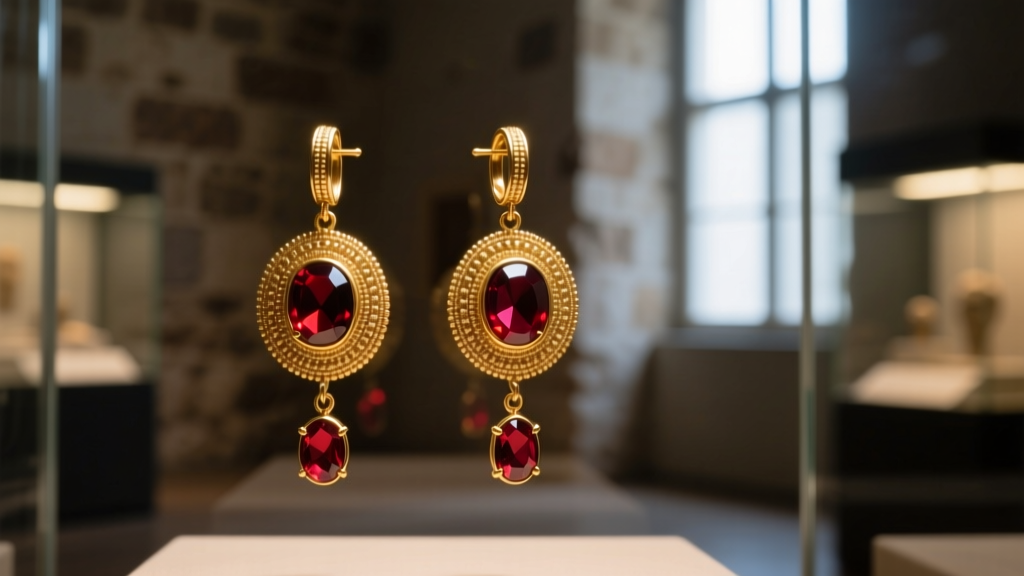
When we think of ancient earrings, we often picture heavy, museum-bound artifacts forged from solid gold and adorned with semi-precious stones. Yet, the jewelry worn by our ancestors was far more than mere decoration. It was a complex language of social status, spiritual protection, and regional identity. For the modern jewelry enthusiast, understanding the origins of ear adornment offers a profound appreciation for the pieces we wear today. This beginner-friendly guide explores the metallurgy, piercing mechanics, and styling evolution of ancient earrings, bridging the gap between 3000 BCE archaeology and 2026 fashion.
The Dawn of Ear Adornment: Sumerian and Egyptian Origins
The earliest known earrings were discovered in the Royal Tombs of Ur in ancient Sumer (modern-day Iraq), dating back to roughly 2500 BCE. According to archives from The British Museum, these early pieces were predominantly "boat-shaped" hoops crafted from gold, lapis lazuli, and carnelian. Unlike modern huggies that snap securely around the earlobe, Sumerian hoops were thick, heavy crescents that required stretched ear piercings to support their immense weight.
Simultaneously, ancient Egyptians were pioneering the use of ear studs and heavy pendant earrings. While the lower classes wore simple hoops made of copper or bronze, royalty and high priests adorned themselves with intricate pendants featuring the Uraeus (the rearing cobra) or the goddess Isis. Egyptian goldsmiths were among the first to utilize electrum—a naturally occurring alloy of gold and silver—which gave their earrings a distinct, pale-yellow luminosity that pure gold could not replicate.
Etruscan Mastery: Granulation and the Baule
Fast forward to the 7th century BCE, and the Etruscans in central Italy revolutionized earring craftsmanship. They perfected a technique known as granulation, where microscopic spheres of gold (some as small as 0.1mm) were fused to a gold backing without the use of modern soldering. This created a textured, shimmering surface that caught the light beautifully.
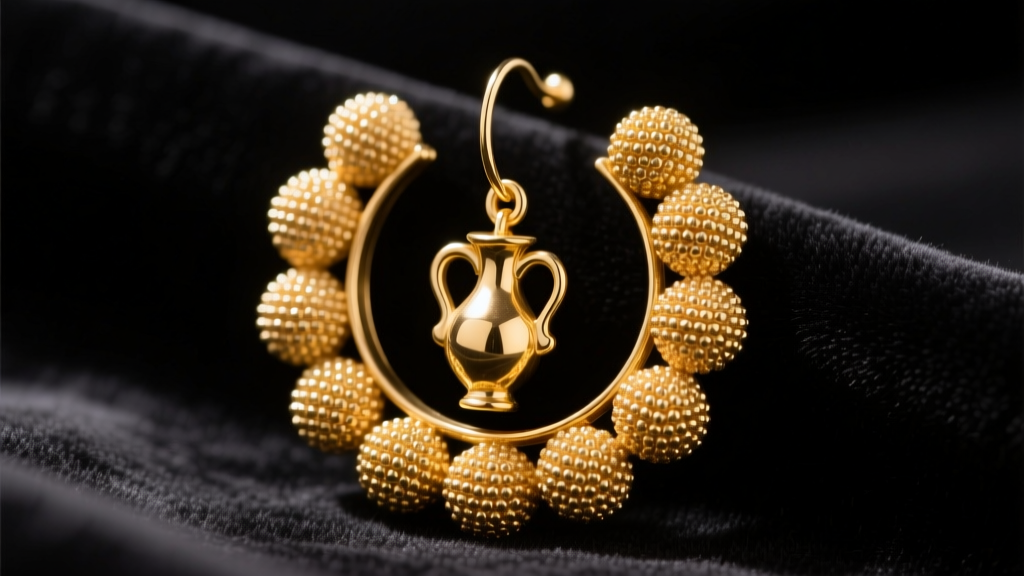
The signature Etruscan design was the baule (or basket) earring. Shaped like a small pouch or amphora, these earrings were often filled with gold dust or small seeds, creating a subtle rattling sound when the wearer moved. As noted by The Metropolitan Museum of Art, this auditory element was believed to ward off evil spirits, proving that ancient earrings served a deeply functional, spiritual purpose beyond aesthetics.
"In antiquity, the weight and sound of an earring were just as important as its visual brilliance. Heavy gold pulled the lobe downward, signaling that the wearer did not engage in manual labor, while the clinking of granulated pendants acted as an acoustic shield against the evil eye."
Material Safety: Ancient Alloys vs. Modern Standards
While we admire the artistry of ancient earrings, replicating their exact material composition today can be a biological hazard. Ancient metallurgy often relied on alloys that are now considered unsafe for prolonged skin contact, particularly in fresh or sensitive piercings. Below is a breakdown of historical materials and their modern, body-safe equivalents.
| Ancient Material | Historical Use & Composition | Modern Safe Alternative | Why the Change? |
|---|---|---|---|
| Electrum | Natural gold/silver alloy (approx. 70% gold, 30% silver). Used heavily in Lydia and Egypt. | 14k or 18k Yellow Gold | Modern karat gold offers consistent alloy ratios, preventing the unpredictable tarnishing seen in raw electrum. |
| Bronze & Copper | Copper mixed with tin. Common for lower-class Roman and Egyptian hoops. | Implant-Grade Titanium (ASTM F136) | Copper and bronze oxidize rapidly, turning skin green and causing contact dermatitis in modern wearers. |
| Niello Inlay | A black mixture of copper, silver, and lead sulfides used for contrast in Roman studs. | Black Rhodium Plating or Enamel | Lead is highly toxic and strictly banned in modern jewelry manufacturing. |
| Porous Lapis Lazuli | Raw, untreated lapis imported from Afghanistan to Sumer. | Synthetic Spinel or Sealed Lapis | Raw porous stones harbor bacteria in the humid environment of a piercing hole. |
The Gauge Debate: How Did They Pierce?
One of the most common questions beginners ask when studying ancient earrings is: How did they get those thick wires through their ears? The answer lies in the historical approach to body modification. Today, a standard earlobe piercing is done at 20-gauge (0.81mm) or 18-gauge (1.02mm). However, ancient earring wires were rarely this delicate.
Because ancient goldsmiths lacked modern wire-drawing machines, their wires were hand-hammered and significantly thicker to maintain structural integrity. Most surviving Greek and Roman earring wires measure between 12-gauge (2.05mm) and 10-gauge (2.59mm). Furthermore, the weight of the gold naturally stretched the lobes over time.
Translating Ancient Gauges to Modern Wear
- For Standard Piercings (20g-18g): If you purchase authentic historical replicas, a jeweler must solder a modern, thinner titanium or 18k gold post onto the back of the ancient-style hoop or drop. Never force a 12g historical wire into an 18g hole, as this will cause micro-tears and blowouts.
- For Stretched Lobes (10g-00g): Collectors with intentionally stretched earlobes can comfortably wear true 1-to-1 replicas of Sumerian crescents and Roman bullae without modification.
- Clip-On Alternatives: For those without piercings, the heavy, screw-back clip-ons popular in the mid-20th century are actually closer to the mechanical grip required to hold heavy ancient-style drops than modern friction backs.
Styling Ancient Silhouettes for Modern Face Shapes
You do not need to wear a toga or a linen kalasiris to pull off ancient earring silhouettes. The key to integrating these historical shapes into a modern wardrobe is matching the geometry of the earring to your face shape.
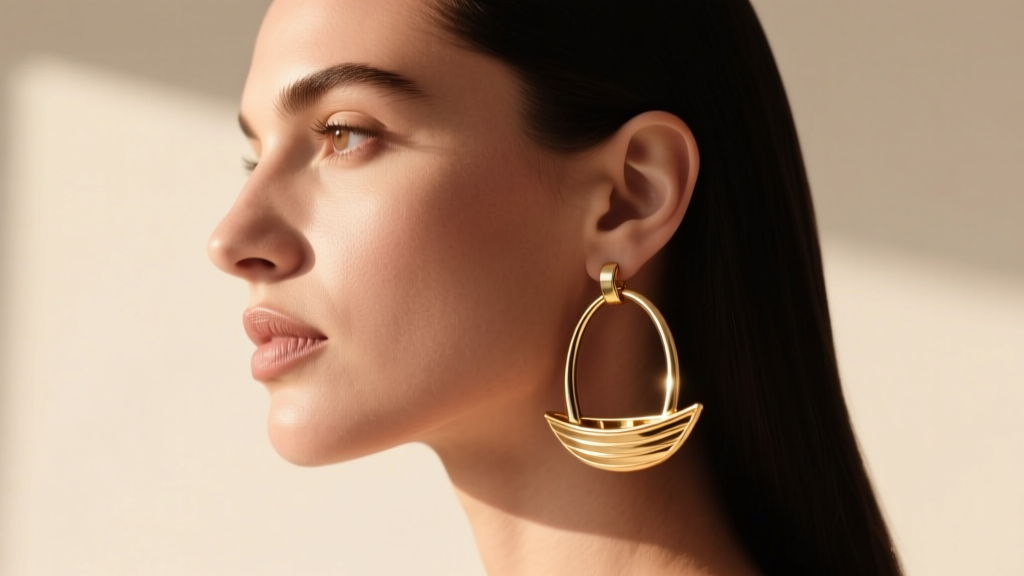
1. The Sumerian Boat Hoop (Crescent)
Best for: Square and Heart-shaped faces.
The wide, sweeping curve of the boat hoop softens strong jawlines and balances a wider forehead. In 2026, look for lightweight, hollow-formed 14k gold crescents that mimic the Sumerian silhouette without the neck-straining weight of solid gold.
2. The Etruscan Baule (Basket Drop)
Best for: Round and Oval faces.
The vertical elongation of the baule drop draws the eye downward, creating the illusion of a longer, more sculpted neck. Pair these with an updo to allow the granulated texture to catch the light.
3. The Roman Bulla (Spherical Pendant)
Best for: Diamond and Oblong faces.
The spherical volume of the bulla adds width to the cheekbones, perfectly balancing the narrow chin of a diamond face shape or the vertical length of an oblong face.
Sourcing and Pricing: Building a Historical Collection
Acquiring ancient-inspired earrings ranges from affordable museum replicas to high-end artisan investments. Here is what you can expect to pay in the current market:
- Museum Replicas ($50 - $150): Institutions like the Met and the British Museum license designs to manufacturers. These are typically cast in 925 sterling silver or 14k gold vermeil. They are excellent for beginners wanting historical accuracy on a budget, though the vermeil plating may wear off after 2-3 years of daily use.
- Specialized Artisan Jewelers ($250 - $800): Jewelers who specialize in historical recreation use traditional lost-wax casting and hand-granulation. These pieces are solid 14k or 18k gold and are built to become family heirlooms.
- Authentic Antiquities ($2,000 - $20,000+): Purchasing actual ancient earrings requires buying from verified auction houses or antiquities dealers with strict provenance documentation. Warning: Authentic antiquities are incredibly fragile and should be worn only as pendants on a necklace or kept in a display case, as the ancient gold is too soft to withstand the tension of modern earlobe movement.
Whether you opt for a modern titanium stud with a lapis lazuli inlay or a meticulously crafted Etruscan granulated drop, ancient earrings offer a timeless connection to human history. By understanding the materials, gauges, and cultural significance behind these pieces, you can wear the past safely and stylishly in the present.


