Cameo Earring Value Assessment: Pricing & Buying Guide
Discover how to assess cameo earring value. Learn pricing tiers, spot hand-carved shell vs. agate, and avoid molded fakes with our expert buying guide.

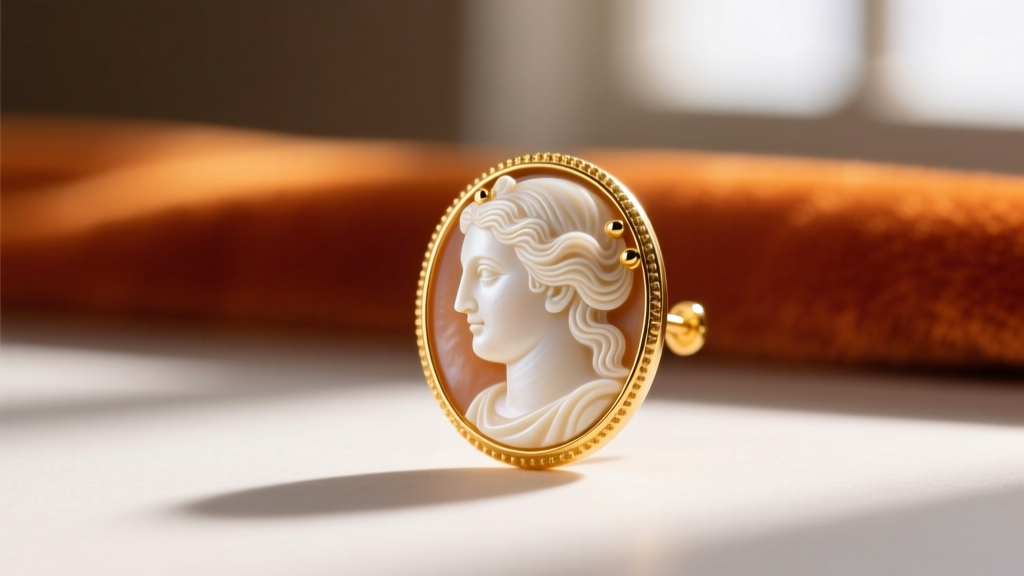
The Resurgence of the Cameo Earring: Assessing Value in 2026
The cameo earring has transcended its reputation as a dusty Victorian relic to become a cornerstone of the modern 'grandmillennial' and neo-romantic jewelry movements. As we navigate the 2026 estate and artisan jewelry market, demand for authentic, hand-carved cameos has surged, inevitably attracting a flood of mass-produced imitations. For the discerning collector or the budget-conscious buyer, understanding the nuanced value drivers of a cameo earring is essential. Value is not merely dictated by age; it is a complex matrix of material hardness, carving technique, anatomical proportion, and hardware integrity.
In this comprehensive value assessment, we break down exactly what you are paying for, how to authenticate a genuine piece, and where the smart money is being spent in today's market.
Material Hierarchy: What Dictates the Base Price?
The foundation of any cameo earring's value lies in its raw material. The Gemological Institute of America (GIA) categorizes cameo materials into distinct tiers based on rarity, durability, and carving difficulty.
1. Shell Cameos (The Accessible Classic)
Shell cameos are the most common and affordable entry point for collectors. They are typically carved from marine shells, which offer a natural two-tone color contrast. The value of a shell cameo depends heavily on the species:
- Bullmouth Shell (Cypraecassis rufa): Yields a striking orange or reddish-brown background with a white foreground. Highly durable and widely used in mid-tier jewelry.
- Emperor Helmet Shell (Cassis madagascariensis): Features a brown and white contrast. Often thicker, allowing for deeper relief carving, but slightly more brittle than bullmouth.
- Queen Conch (Strombus gigas): The pinnacle of shell cameos, featuring a delicate pink and white gradient. Due to overharvesting and CITES trade restrictions, authentic vintage conch cameos command a massive premium in the 2026 secondary market.
2. Agate and Hardstone (The Investment Tier)
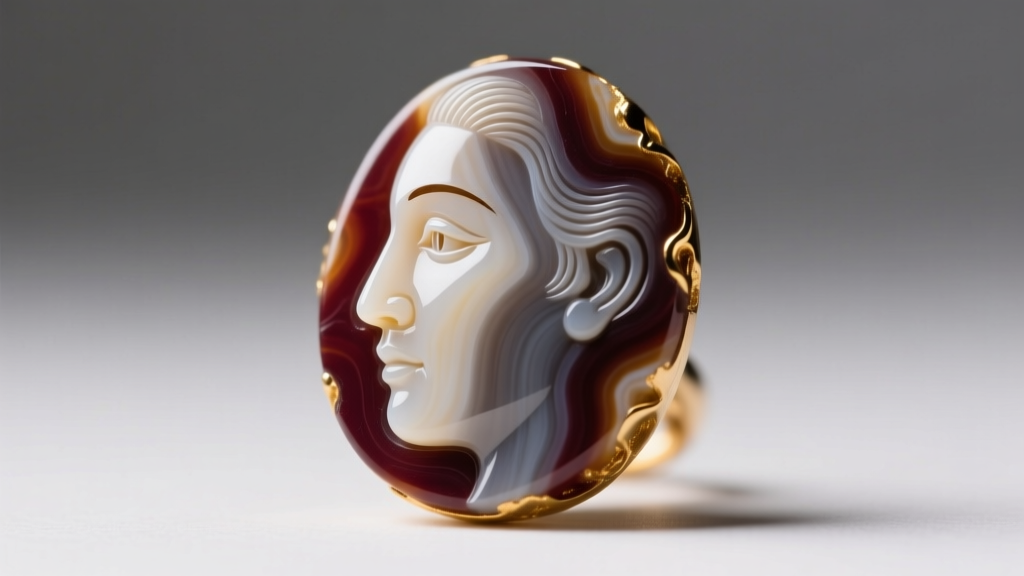
Hardstone cameos, particularly those carved from banded agate or sardonyx, represent the highest echelon of cameo artistry. Agate is significantly harder than shell (Mohs 6.5-7 vs. Mohs 2.5-3), requiring immense skill, specialized diamond-tipped tools, and exponentially more time to carve. The most prized agate cameos originate from the historic carving hub of Idar-Oberstein, Germany, or the traditional workshops of Torre del Greco, Italy. Sardonyx, with its sharp, parallel bands of brown and white, allows for breathtakingly crisp detail and deep undercutting that shell simply cannot support.
3. Resin, Celluloid, and Plastic (The Imitation Tier)
Modern epoxy resins and vintage plastics like Bakelite or celluloid are molded, not carved. While vintage celluloid pieces hold minor historical novelty value, they possess zero intrinsic gemological worth. They are the primary culprit behind 'bargain' cameo earrings found in fast-fashion and tourist markets.
The Carving Technique: Hand vs. Machine vs. Mold
A common trap for novice buyers is assuming that because a cameo is made of real shell, it holds high value. The carving method is the true multiplier of worth.
Hand-Carved (The Gold Standard)
True hand-carving is executed using a traditional burin or modern flexible-shaft micromotors. Under a 10x jeweler's loupe, a hand-carved cameo will reveal microscopic parallel striations, slight asymmetries, and evidence of 'undercutting'—a technique where the carver hollows out the background beneath the subject's profile to create a 3D shadow effect. According to Lang Antiques University, the presence of deep undercutting and distinct tool marks are the primary indicators of a master-carved piece.
Laser-Cut and Ultrasonic (The Mid-Tier Compromise)
Ultrasonic milling uses a master template to press a vibrating tool against multiple shell blanks simultaneously. While carved from real material, these pieces lack the depth, soul, and undercutting of hand-carved works. The edges will appear slightly rounded, and the background will be entirely flat. These are common in the $50–$120 retail bracket.
Molded (The Zero-Value Fake)
Molded resin or crushed-shell powder mixed with epoxy is poured into a silicone mold. There are no tool marks, the edges are uniformly soft, and the piece will feel unnaturally warm and lightweight compared to stone or solid shell.
2026 Market Value & Pricing Tiers
To help you assess whether a listing is fairly priced, we have compiled a structural pricing matrix based on current 2026 estate, auction, and artisan retail data.
| Material & Technique | Hardware / Setting | Estimated Value Range (Per Pair) | Market Verdict |
|---|---|---|---|
| Molded Resin / Plastic | Base Metal / Gold-Plated | $15 - $45 | Avoid. Zero resale or intrinsic value. |
| Shell (Ultrasonic Machine) | Vermeil / Gold-Filled | $60 - $140 | Fair for fashion, but not an investment. |
| Bullmouth Shell (Hand-Carved) | Solid 10k or 14k Gold | $250 - $600 | Excellent entry-level collector piece. |
| Vintage Conch Shell (Hand-Carved) | 14k or 18k Yellow Gold | $800 - $2,500+ | Highly sought after; appreciating asset. |
| Sardonyx Agate (Hand-Carved) | 18k Gold / Platinum / Diamonds | $1,200 - $5,000+ | Museum/Heirloom quality. Top-tier investment. |
Authentication: The 10x Loupe Test
Never purchase a high-value cameo earring without performing a physical inspection. Arm yourself with a 10x triplet loupe and run through this diagnostic checklist:
- The Temperature Test: Touch the cameo to your cheek or wrist. Real shell and agate will feel distinctly cool and take a moment to warm up. Resin and plastic will feel room-temperature or warm immediately.
- Inspect the Background: Look at the flat area behind the carved profile. If it is perfectly flat and polished to a mirror shine, it is likely ultrasonic or laser-cut. A hand-carved background often has a subtle, matte texture or faint, sweeping tool marks.
- Check for Undercutting: Tilt the earring at a 45-degree angle. Does the chin, nose, or hair physically overhang the background? If the profile slopes smoothly down to a flat plane without any negative space beneath it, it is machine-milled or molded.
- Examine the Edges: Molded cameos will have a slight 'lip' or seam line around the outer edge where the mold halves met. Hand-carved edges are sharp and intentionally finished.
Hardware and Settings: The Hidden Cost Factor
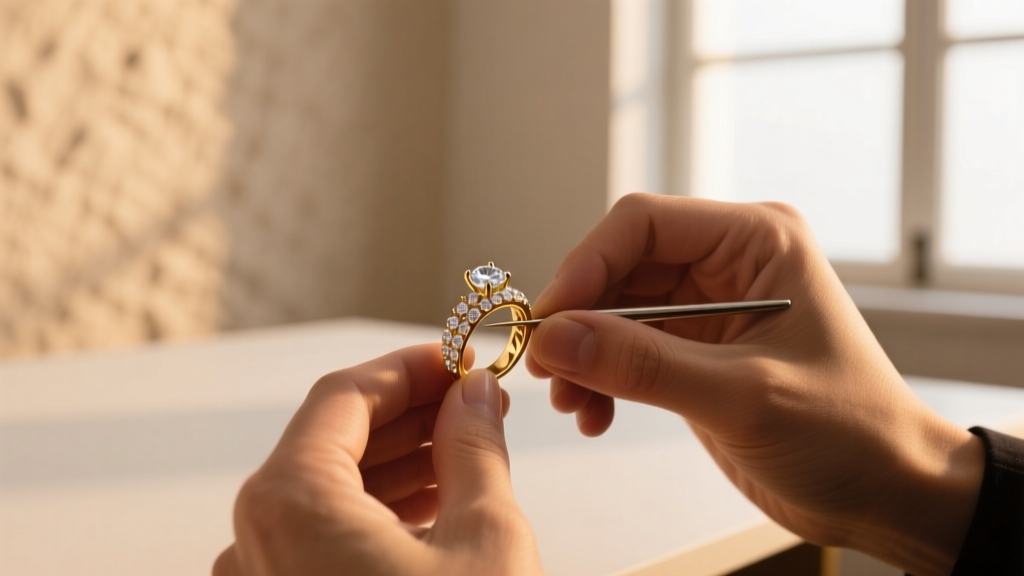
When assessing the budget and value of a cameo earring, buyers frequently overlook the hardware. Cameos—especially agate and large shell pieces—are dense and heavy. A poorly engineered setting will ruin the wearing experience and devalue the piece.
Gauge and Weight Distribution
Standard lightweight earrings use 20-gauge or 22-gauge wire. A genuine 30mm agate cameo earring will easily weigh between 8 and 15 grams. If hung on a thin 22-gauge French wire, the earring will constantly tilt forward, stretching the earlobe and risking loss. High-value cameo earrings utilize 16-gauge or 18-gauge wire and feature reinforced backing systems.
The Ideal Backings
- Omega Backs / Clip-Backs: Common on vintage 1940s-1960s shell cameos. The wide, hinged paddle distributes the weight across the earlobe rather than concentrating it on the piercing hole.
- Leverback with a Safety Catch: Essential for heavy agate drops. The leverback locks securely, preventing the earring from being pulled out by a scarf or hair.
- Friction Backs with Wide Posts: If the cameo is a stud, the post must be thick (18g minimum) and the butterfly back must have a wide, flat base to prevent drooping.
Expert Tip: When evaluating estate cameo earrings, check the prongs or bezel for 'push marks.' A master jeweler setting an irregular, hand-carved shell will use a custom-fitted bezel with microscopic, hand-burnished push marks. A perfectly uniform, machine-stamped bezel on an asymmetrical shell is a red flag that the cameo has been forcefully glued or poorly retrofitted into a mass-produced setting.
Final Verdict: Where Should You Invest?
If your budget is under $100, you are better off purchasing a high-quality, machine-carved shell cameo set in gold vermeil from a reputable artisan, rather than gambling on a 'bargain' hand-carved piece that is likely damaged or poorly executed. However, if you are allocating $300 or more, pivot your focus entirely to authenticated, hand-carved pieces. In the 2026 market, mid-century Victorian revival shell cameos and late-19th-century sardonyx agates are outperforming standard diamond solitaire studs in terms of aesthetic uniqueness and long-term value retention. By prioritizing carving depth, material integrity, and heavy-gauge hardware, you can confidently acquire cameo earrings that are both wearable art and enduring financial assets.


