The Anatomy of Emerald Cut Drop Earrings: A Technical Guide
Master the technical nuances of emerald cut drop earrings. Explore facet geometry, ideal clarity grades, setting mechanics, and pricing tiers.

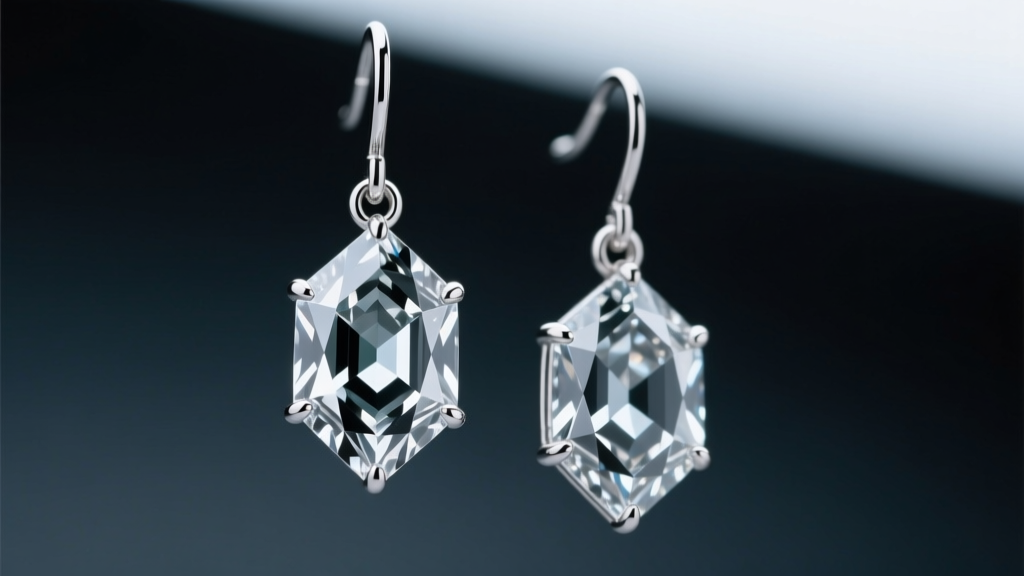
The Geometry of the Step Cut: Why Proportions Dictate Performance
When evaluating emerald cut drop earrings, the untrained eye focuses solely on carat weight. However, from a gemological and engineering perspective, the performance of a step-cut stone in a kinetic drop setting is entirely dictated by its proportional geometry. Unlike brilliant cuts that rely on complex pavilion angles to scatter light, the emerald cut utilizes parallel step facets—typically 57 in total, comprising 25 crown facets, 8 girdle facets, and 24 pavilion facets—to create the signature "hall of mirrors" effect.
For drop earrings, the length-to-width (L/W) ratio is critical. While a standard emerald cut diamond usually falls between 1.30 and 1.50, the optimal L/W ratio for a drop earring is precisely 1.35 to 1.42. Why? Because gravity and the vertical orientation of the earlobe naturally elongate the visual perception of the stone. A ratio exceeding 1.50 will appear excessively narrow and baguette-like when suspended, while a ratio below 1.30 will look disproportionately wide and stubby, disrupting the elegant vertical line of the drop.
Furthermore, the table percentage (the width of the top facet relative to the entire stone) must be strictly controlled. According to the Gemological Institute of America (GIA), an ideal table percentage for step cuts ranges from 61% to 69%. If the table exceeds 72%, the concentric step facets become too narrow, collapsing the hall of mirrors effect and resulting in a flat, lifeless appearance when the earring swings in ambient light.
Clarity and Color: The Unforgiving Nature of Open Facets
The broad, open table and large step facets of an emerald cut act as a magnifying glass for internal inclusions. While a brilliant-cut diamond can mask SI1 or SI2 inclusions within its chaotic light return, an emerald cut offers nowhere for flaws to hide. This is especially true for drop earrings, which constantly shift in angle, catching light from multiple directions and illuminating internal carbon spots or feather inclusions.
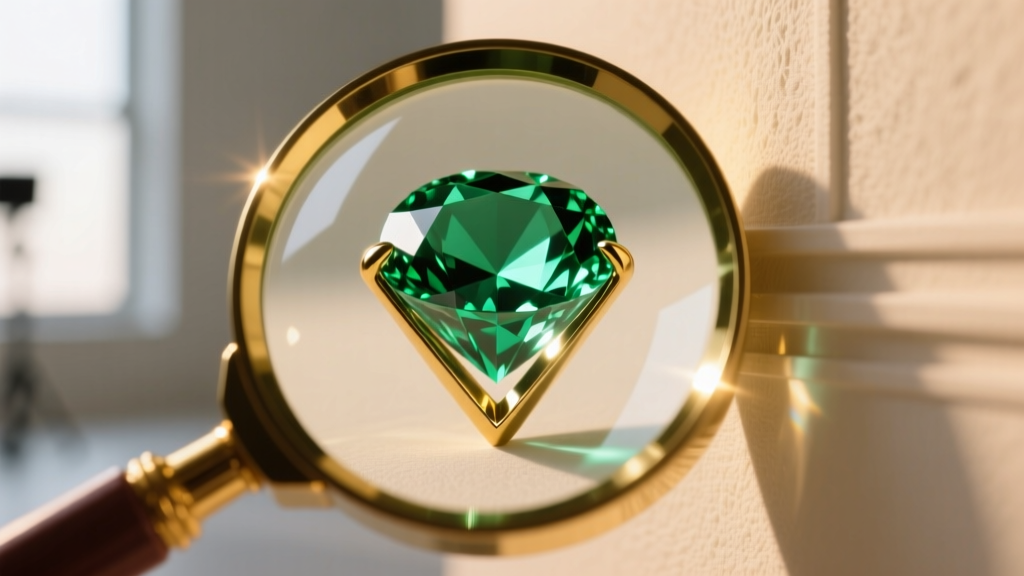
For emerald cut drop earrings, the baseline clarity must be VS1. However, for stones exceeding 2.00 carats per earring, VVS2 is highly recommended to ensure absolute eye-cleanliness. Color retention is equally demanding. Step cuts retain body color more readily than brilliant cuts due to their deeper pavilions and broader facets. Therefore, a minimum color grade of H is required to prevent the stone from facing up with a warm or yellowish tint, which is particularly noticeable against the skin tone of the jawline and neck.
Comparative Grading Matrix for Drop Settings
| Parameter | Emerald Cut (Step) | Radiant Cut (Mixed) | Oval Cut (Brilliant) |
|---|---|---|---|
| Minimum Clarity (Eye-Clean) | VS1 (VVS2 for >2ct) | SI1 | SI1 |
| Minimum Color Grade | H | I | H |
| Optimal L/W Ratio for Drops | 1.35 - 1.42 | 1.20 - 1.30 | 1.40 - 1.50 |
| Light Return Mechanism | Hall of Mirrors (Flashes) | Crusie / Scintillation | Broad Flashes / Scintillation |
Setting Mechanics and Weight Distribution in Drops
Designing a secure setting for an emerald cut drop earring requires addressing the stone's most significant structural vulnerability: the cropped corners. These four corners are where the crystal lattice is most exposed and prone to chipping upon impact. In a static ring setting, a standard prong might suffice, but drop earrings are kinetic. They swing, catch on clothing, and are subjected to lateral torque.
The Necessity of V-Prongs
For emerald cut drops, V-prongs (also known as chevron prongs) on all four corners are non-negotiable. A V-prong wraps entirely around the vulnerable corner, distributing lateral impact forces down the shank of the prong rather than concentrating stress on the diamond's point. The metal used for these prongs must have high tensile strength. Platinum (specifically 950Pt/50Ru alloy) is the superior choice for V-prongs due to its density and lack of memory, meaning it will bend rather than snap if snagged, keeping the stone secure.
Articulation and Hinge Engineering
The connection point between the upper stud (or hook) and the emerald drop is known as the articulation joint. This joint dictates how the earring moves. If the jump ring connecting the two components is too tight, the drop will remain rigid, failing to catch dynamic light. If it is too loose, the heavy emerald cut stone will flip upside down, showing its pavilion to the world.
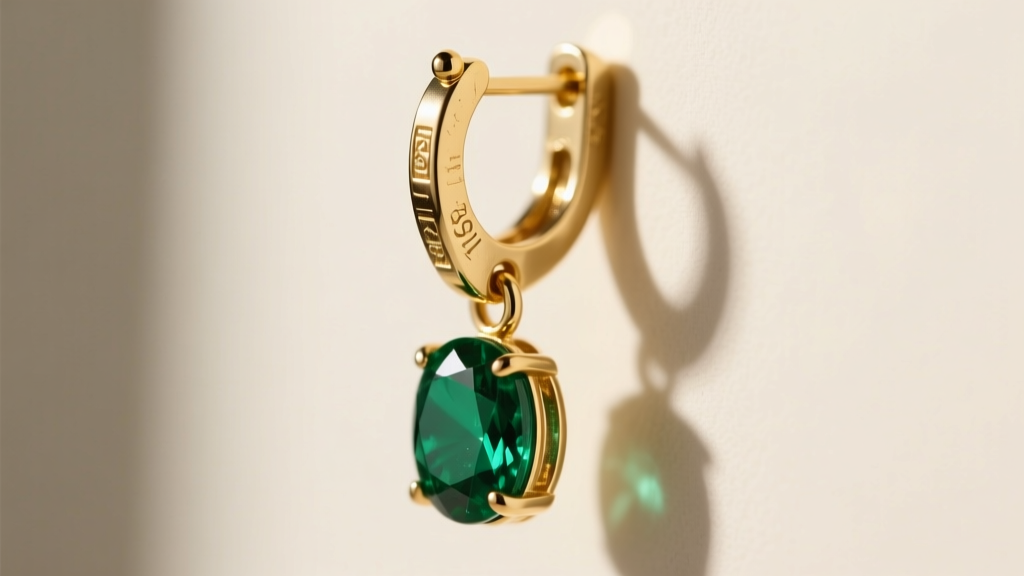
Master jewelers utilize a micro-hinge articulation or a precisely calibrated hidden jump ring with a tolerance of less than 0.2 millimeters. This allows the emerald drop to swing freely on the Y-axis (forward and backward) while restricting rotation on the Z-axis, ensuring the table facet always remains oriented outward toward the viewer. When sourcing or custom-commissioning emerald cut drop earrings, always test the articulation by gently tapping the stone; it should swing smoothly and return to a forward-facing rest position within 1.5 seconds.
Metal Selection: Securing the Architecture
The choice of precious metal impacts both the security of the setting and the optical performance of the emerald cut. Because emerald cuts feature long, linear facets, the color of the surrounding metal reflects directly into the stone.
- Platinum (950/50): The ultimate standard for high-carat emerald drops. Its natural white luster does not reflect unwanted color into the stone, and its durability ensures the V-prongs remain secure over decades of kinetic wear.
- 18k White Gold: A cost-effective alternative to platinum, but requires rhodium plating. As the plating wears off over time, the yellowish undertone of the alloy can reflect into the broad table of the emerald cut, slightly altering its perceived color grade.
- 18k Yellow Gold: Highly sought after for vintage-inspired drop earrings. However, the yellow reflections will inherently warm up the stone. If choosing yellow gold, you can safely drop the diamond color grade to J or K, as the metal's warmth will mask the stone's natural body color, offering significant cost savings without sacrificing aesthetic harmony.
2026 Market Pricing and Value Retention
As of 2026, the market for emerald cut drop earrings has bifurcated sharply between mined and lab-grown origins, with distinct pricing tiers driven by the exacting clarity requirements of the step cut. Because emerald cuts require higher baseline clarities (VS1+), the price premium for flawless or VVS stones is more pronounced than in brilliant cuts.
Pricing Benchmarks (Per Pair, Platinum Setting)
- Lab-Grown (2.00 CTW, VS1, F Color): $2,800 - $3,500. The lab market has stabilized, but high-clarity emerald cuts still command a premium due to the difficulty of growing large, inclusion-free step-cut rough.
- Mined Natural (2.00 CTW, VS1, G Color): $14,000 - $18,500. Natural emerald cuts of this size and clarity remain scarce, holding strong value retention among collectors.
- Mined Natural (4.00 CTW, VVS2, D Color): $65,000 - $85,000+. Investment-grade pairs with perfect articulation and custom V-prong engineering.
Final Verdict: Sourcing with Precision
Purchasing or designing emerald cut drop earrings is an exercise in precision. It requires looking past the carat weight and scrutinizing the L/W ratio, demanding uncompromising clarity grades, and insisting on V-prong articulation engineering. By adhering to these technical parameters, you ensure that the earrings do not merely hang from the earlobe, but rather act as kinetic optical instruments, capturing and reflecting light with every movement. For further reading on diamond proportions and grading standards, consult the GIA Clarity Grading Scale to verify the exact inclusion mapping of your chosen stones.


