How to Clean and Care for Gold Angel Wing Earrings
Learn expert techniques to clean, polish, and store your gold angel wing earrings. Protect intricate feather details and maintain their brilliant shine.

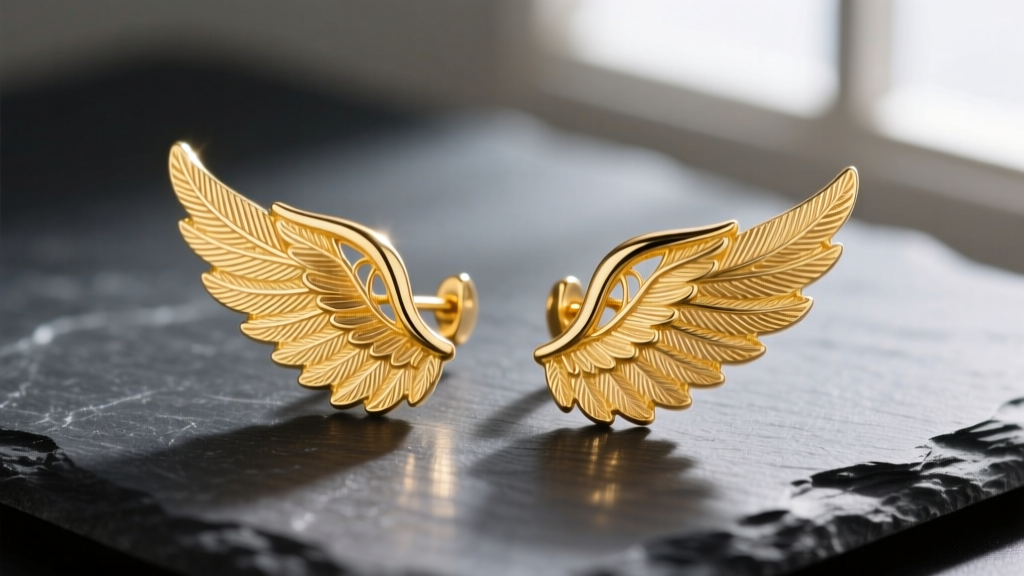
The Anatomy of Gold Angel Wing Earrings: Why They Need Special Care
Gold angel wing earrings are a timeless symbol of protection, freedom, and spirituality, but their intricate designs present unique maintenance challenges. Unlike simple gold hoops or smooth bezel-set studs, angel wing motifs feature deep undercuts, micro-filigree, and overlapping feather barbs. These structural crevices act as magnets for sebum (skin oils), dead epidermal cells, cosmetic residue, and environmental pollutants. Over time, this accumulation not only dulls the reflective surface of the gold but can also accelerate the oxidation of the alloy metals used in the karat mixture.
As of 2026, jewelry designers are increasingly utilizing advanced 3D CAD modeling to create hyper-realistic feather textures in gold. While visually stunning, these matte and sandblasted textures are highly susceptible to damage from abrasive cleaning methods. Understanding the metallurgical composition of your earrings is the first step in preserving their celestial shine. Pure 24k gold is entirely immune to tarnish, but it is far too soft for intricate jewelry. Therefore, your angel wings are likely crafted from 14k or 18k gold. The copper and silver alloys mixed into these karats to provide structural integrity are precisely what cause the dark, dull film that builds up in the feather crevices when exposed to sulfur, chlorine, and acidic sweat.
Step-by-Step Cleaning Protocol for Intricate Wing Motifs
To safely restore the luster of your gold angel wing earrings without damaging the delicate prongs or textured finishes, you must abandon harsh commercial jewelry dips and adopt a gentle, multi-phase degreasing protocol. The Gemological Institute of America (GIA) consistently advises against using chlorine bleach or abrasive toothpaste, as these can cause microscopic pitting in the gold alloys and permanently scratch polished edges.
Phase 1: The Degreasing Soak
Begin by preparing a lukewarm soaking solution. Fill a small glass bowl with distilled water heated to approximately 85°F to 95°F. Avoid tap water, as the dissolved minerals and hard water salts can leave stubborn calcium deposits in the tiny feather grooves. Add exactly three to four drops of a mild, pH-neutral liquid dish soap (the original blue formula of Dawn is the industry standard among bench jewelers for its superior grease-cutting surfactants). Submerge your earrings and allow them to soak for 15 to 20 minutes. This dwell time is critical; it allows the surfactants to break the molecular bonds of the hardened sebum trapped beneath the overlapping wing layers.
Phase 2: Micro-Brushing the Feather Crevices
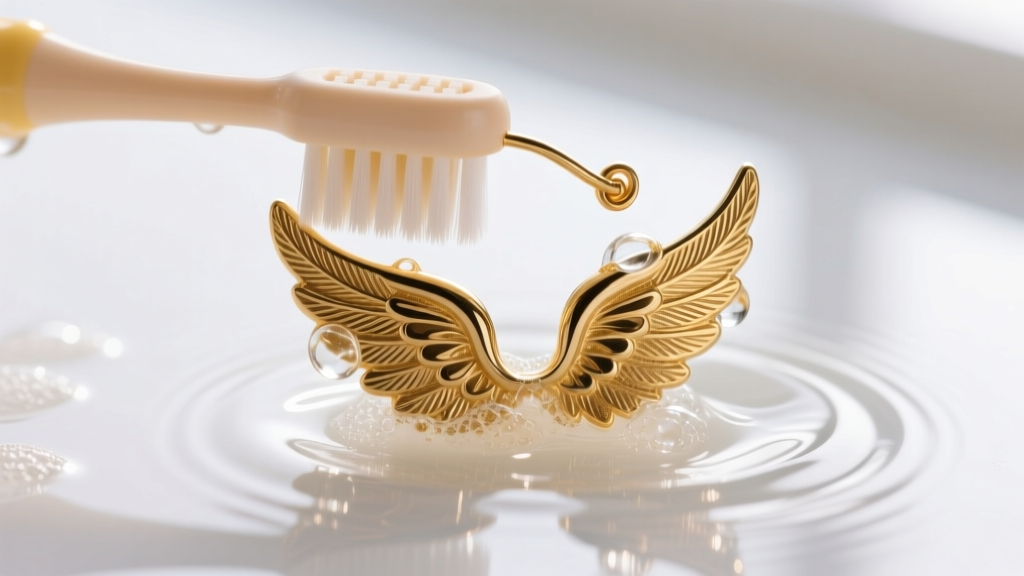
After soaking, the loosened debris must be physically agitated. Do not use a standard adult toothbrush, as the bristles are too stiff and can bend delicate gold wirework or loosen micro-pave gemstone settings. Instead, utilize an ultra-soft baby toothbrush or a specialized jewelry detailing brush with 0.1mm nylon bristles. Brush gently in the direction of the feather barbs—moving from the base of the wing outward toward the tips. This directional brushing prevents snagging on any raised filigree. Pay special attention to the posterior side of the earring, where the post or hinge meets the wing base, as this is the primary accumulation zone for skin oils.
Phase 3: Rinsing and Precision Drying
Rinse the earrings thoroughly under a gentle stream of lukewarm distilled water. To dry, avoid rubbing them with a cotton towel, which can leave behind microscopic lint fibers that catch on the wing tips. Instead, use a manual camera lens blower or a can of compressed air (held at least six inches away) to force the water droplets out of the deep crevices. Follow this by gently patting the polished edges with a clean, lint-free microfiber cloth. Air-drying is strongly discouraged, as evaporating water will leave visible spotting on the high-polish sections of the wings.
Material-Specific Considerations and Vulnerabilities
The specific karat of your gold angel wing earrings dictates their hardness, tarnish resistance, and overall vulnerability during the cleaning process. Refer to the table below to tailor your maintenance approach based on your specific pair.
| Gold Karat | Alloy Composition | Hardness & Durability | Tarnish Risk | Cleaning Considerations |
|---|---|---|---|---|
| 10k Gold | 41.7% Gold, 58.3% Alloy | Highly durable, stiff | Highest (prone to dark oxidation) | Requires more frequent degreasing; can withstand slightly firmer brushing. |
| 14k Gold | 58.5% Gold, 41.5% Alloy | Excellent balance of strength | Moderate (standard tarnishing) | Ideal for everyday wear; follow standard soaking and micro-brushing protocol. |
| 18k Gold | 75.0% Gold, 25.0% Alloy | Softer, richer color | Low (resists heavy oxidation) | Highly susceptible to scratching; use only the softest brushes and avoid polishing cloths. |
| 22k/24k Gold | 91.6% - 99.9% Gold | Very soft, easily warped | None (pure gold does not tarnish) | Extremely rare for detailed wings; clean only with a soft cloth and mild soap, no brushing. |
The Ultrasonic Cleaner Trap: What to Avoid
Many jewelry owners mistakenly believe that ultrasonic cleaners are the ultimate solution for intricate designs. While these machines use high-frequency sound waves (typically 40-45 kHz) to create microscopic cavitation bubbles that blast away dirt, they are highly dangerous for certain styles of gold angel wing earrings. If your wings feature pave-set micro-diamonds, cubic zirconia, or delicate pearl accents along the feather edges, the intense vibrations can shatter the stones or rattle them completely out of their microscopic prongs.
Furthermore, if your angel wings feature a contrasting finish—such as a matte, sandblasted, or florentine texture on the feather barbs with high-polish edges—prolonged exposure to ultrasonic cavitation can degrade the specialized surface finish, leaving the gold looking uniformly flat and overly shiny. The Jewelers of America explicitly recommends avoiding ultrasonic cleaners for any jewelry with fractured stones, porous gems, or specialized matte textures. Stick to the manual soaking and brushing method to guarantee the structural and aesthetic integrity of your earrings.
Storage Solutions to Prevent Wing Warping
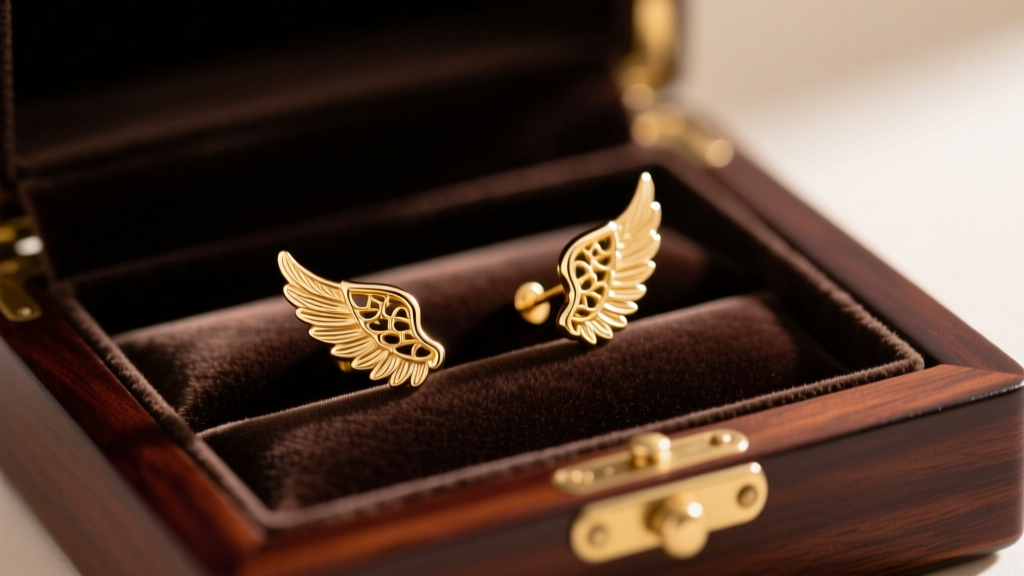
Proper storage is just as critical as proper cleaning. The defining characteristic of angel wing earrings is their asymmetrical, protruding silhouette. The upper and lower tips of the wings extend outward, making them highly vulnerable to mechanical stress. If you toss your earrings loosely into a communal jewelry drawer or a soft pouch, the wing tips will inevitably catch on chains, clasps, or other rings.
Because gold is a naturally malleable metal, a bent wing tip might seem like an easy fix. However, repeatedly bending a gold alloy back and forth causes a metallurgical phenomenon known as work-hardening. The crystal lattice structure of the metal becomes brittle at the stress point, eventually leading to a microscopic stress fracture and a snapped wing tip. To prevent this, store your gold angel wing earrings in a multi-compartment jewelry box with individual velvet pillows, or thread the posts through a dedicated, rigid earring organizer card. Ensure they have enough lateral clearance so that the wing tips do not press against the walls of the compartment or the fabric lining.
When to Seek Professional Jewelry Maintenance
While routine home cleaning will maintain the daily brilliance of your gold angel wing earrings, professional intervention is required for deep-seated issues. If you notice a persistent dark discoloration in the deepest filigree crevices that does not respond to the degreasing soak, the alloy metals may have suffered from advanced sulfur oxidation. A professional bench jeweler can safely use a mild electrolytic cleaning process or a specialized steam cleaner to lift this oxidation without damaging the gold.
Additionally, if your angel wings feature hinged mechanisms (such as huggie-style wings that wrap around the earlobe) or screw-back posts, you should have a jeweler inspect the tension and threading annually. Over time, the repetitive opening and closing of hinges can wear down the internal friction joints, leading to a loose fit and a high risk of losing the earring. By combining meticulous at-home care with annual professional check-ups, your gold angel wing earrings will remain a pristine, radiant staple in your collection for decades to come.


