Earring Gay Side Myth: Modern Men's Piercing Buying Guide
Debunking the earring gay side myth. Our modern buying guide covers men's ear piercing placements, safe materials, gauge sizes, and healing tips.


If you have found yourself searching for the "earring gay side" before booking a piercing appointment or buying a new piece of jewelry, you are participating in a cultural ritual that dates back over forty years. For decades, a pervasive urban legend dictated that the side of a man's pierced ear acted as a covert signal of his sexual orientation. But as we navigate the style landscape of 2026, it is time to separate historical trivia from modern aesthetic reality. Today, ear curation is about facial symmetry, personal expression, and high-quality metallurgy—not outdated codes.
This comprehensive buying guide will debunk the historical myth, explain how to choose the right placement for your anatomy, and provide a deep dive into the material grades, gauge sizes, and threading types you need to know before making a purchase.
The Origin of the "Earring Gay Side" Trope
The concept of the "gay ear" originated in the 1970s and peaked in the 1980s and 1990s. During an era when LGBTQ+ individuals faced severe discrimination and lacked mainstream representation, covert signaling systems were necessary for community building and safety. Much like the hanky code, piercing the right ear became a subtle, deniable way for gay men to identify one another in hostile environments. This birthed the infamous, and highly problematic, schoolyard rhyme: "Left is right, and right is wrong."
Pop culture of the 1990s cemented this idea into the public consciousness. Mainstream media and fashion magazines frequently referenced the "right ear rule," turning a survival mechanism into a rigid, heteronormative fashion binary. Men who simply wanted to wear a diamond stud or a silver hoop on their right ear were often subjected to unwarranted assumptions about their sexuality.
Why the Code is Dead in Modern Fashion
In 2026, the "earring gay side" code is entirely obsolete. The mainstreaming of queer culture, the dismantling of rigid gender binaries in fashion, and the rise of gender-fluid style icons have completely erased the signaling value of a single pierced ear. Icons like A$AP Rocky, Bad Bunny, and Lenny Kravitz have long sported multiple piercings on both ears, proving that ear jewelry is a universal accessory.
Today, professional piercers and jewelers approach ear curation through the lens of anatomy and aesthetics. The decision to pierce the left, right, or both ears is based on your sleeping habits, facial asymmetry, and the specific "curated ear" layout you wish to achieve. If you are buying an earring, your focus should be on the quality of the metal and the precision of the fit, not the archaic social anxieties of the 1980s.
The Modern Buying Guide: Choosing Your Placement
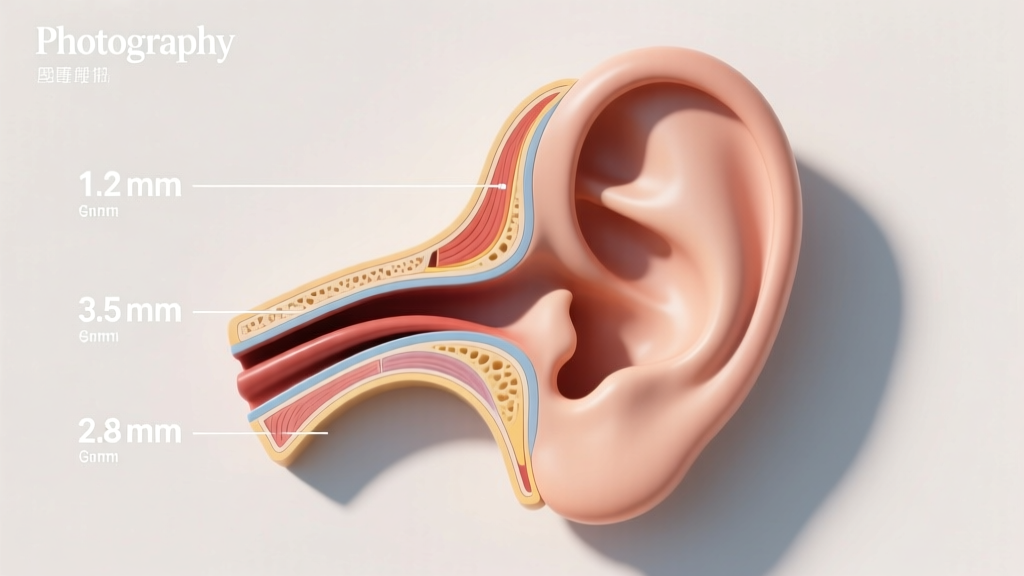
When planning a piercing or buying jewelry for an existing one, understanding ear anatomy is crucial. Different placements require different jewelry styles and healing protocols.
Standard and Upper Lobes
The standard lobe is the most common and fastest-healing placement. It is highly versatile, accommodating everything from minimalist threadless studs to heavier dangles. The upper lobe (often called the second or third lobe) sits higher on the earlobe tissue. Because the space is tighter, upper lobes are best suited for smaller, snug-fitting studs or micro-huggies to avoid crowding the ear's natural folds.
Helix and Flat Cartilage
The helix (the outer rim of the ear) and the flat (the upper, relatively flat area of cartilage) are prime real estate for masculine and edgy aesthetics. These areas require specialized jewelry like captive bead rings, seamless hoops, or flat-back labret studs. Cartilage is notoriously unforgiving; buying jewelry with the correct post length is critical to avoid embedding or irritation bumps.
Material Grades: What to Actually Buy
The most critical factor in buying body jewelry is the material. The market is flooded with misleading terms like "surgical steel" or "hypoallergenic silver," which can cause severe contact dermatitis and complicate healing. According to the Association of Professional Piercers (APP), only specific, highly polished, implant-grade materials should be used.
| Material | Grade / Standard | Nickel Content | Best Use Case |
|---|---|---|---|
| Titanium | ASTM F136 (Implant-Grade) | Zero | Fresh piercings, sensitive skin, everyday wear |
| Gold | 14k or 18k Solid (Nickel-Free) | Trace/Zero | Healed piercings, luxury upgrades |
| Niobium | Commercially Pure (CP) | Zero | Healed piercings, anodized color options |
| Steel | 316L / 316LVM (Surgical) | 8% - 12% | Avoid for fresh piercings; okay for fully healed |
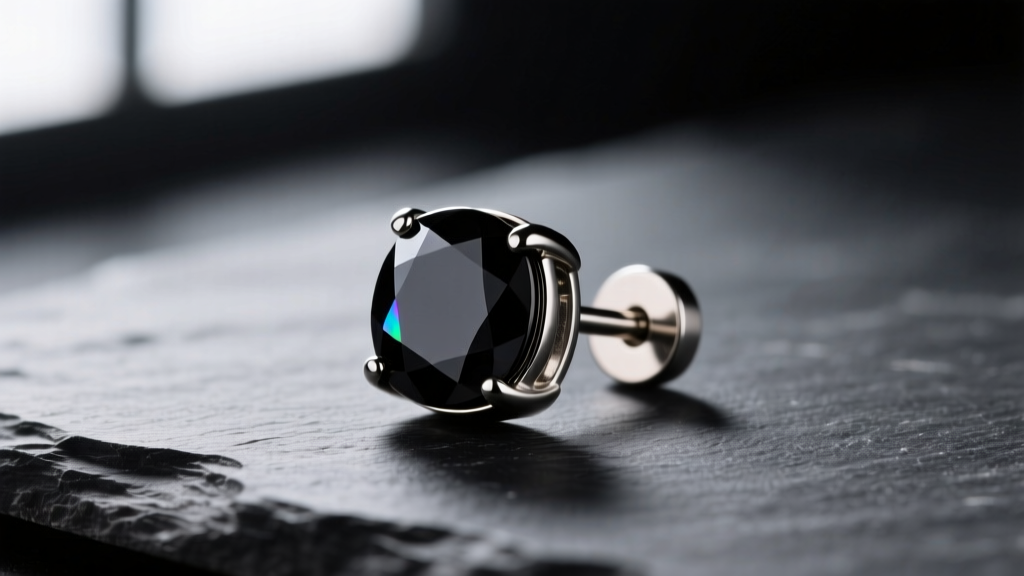
For a masculine, understated look, ASTM F136 titanium paired with a matte gemstone is the gold standard. It is lightweight, completely biocompatible, and will not tarnish or turn your skin green.
Understanding Gauge Sizes and Threading
Buying the right earring also means matching the exact thickness (gauge) and threading mechanism of your piercing. Guessing your gauge will result in jewelry that either won't fit or will stretch and damage the fistula (the piercing channel).
- 20G (0.81mm): Standard for basic earlobe piercings done with a gun (though needle piercing is always recommended). Common for delicate, traditional earrings.
- 18G (1.0mm): The standard for professional needle-pierced lobes and some delicate cartilage placements.
- 16G (1.2mm): The most common gauge for helix, tragus, and conch cartilage piercings. Offers structural stability for hoops and clickers.
- 14G (1.6mm): Often used for industrial bars and thicker cartilage setups.
The Threading Mechanism Matters
When buying threaded jewelry, always look for internally threaded or threadless (push-pin) options. Internally threaded jewelry has the screw mechanism on the post, meaning the smooth shaft passes through your piercing. Threadless jewelry uses tension to hold a slightly bent pin inside a hollow post, offering the most secure fit. Never buy externally threaded jewelry (where the screw is on the post itself), as the sharp threads will tear and scar the delicate tissue of the fistula every time you insert it.
Aftercare and Healing Timelines
Even the highest quality titanium earring will cause complications if the aftercare protocol is ignored. Cartilage piercings, in particular, have limited blood supply, making them prone to irritation bumps and prolonged healing.
"The golden rule of piercing aftercare is LITHA: Leave It The Hell Alone. Do not twist the jewelry, do not sleep on it, and do not apply essential oils or harsh chemicals."
For daily cleaning, use only a sterile, preservative-free 0.9% sodium chloride saline wound wash. Spray it gently onto the front and back of the piercing twice a day, and carefully dry the area with a non-woven gauze or by using a hair dryer on the cool setting. Avoid cotton swabs, as they can leave microscopic fibers tangled around the post.
According to professional aftercare guidelines, you should expect the following healing timelines before swapping your initial jewelry for decorative pieces:
- Earlobes: 6 to 8 weeks for initial healing; 3 to 6 months for full stabilization.
- Helix / Cartilage: 6 to 12 months. Cartilage can remain tender and prone to flare-ups for up to a year.
- Tragus / Conch: 6 to 9 months, heavily dependent on avoiding pressure from headphones and phone calls.
Final Verdict: Wear What Fits Your Anatomy
The "earring gay side" is a relic of a bygone era. In 2026, the only rules that govern men's and masculine-presenting ear jewelry are anatomical precision, material safety, and personal confidence. Whether you opt for a single 18G titanium stud in your left lobe, a curated array of black onyx threadless ends on your right helix, or a symmetrical setup across both ears, the choice is entirely yours. Invest in implant-grade metals, respect the healing process, and let your style speak for itself.


