The Ultimate Turquoise Earring Buying Guide: What to Look For
Discover how to choose the perfect turquoise earring. Learn about stabilization, matrix patterns, metal pairings, and lobe-safe hardware.

The Allure of the Turquoise Earring: Beyond the Blue
Few gemstones carry the cultural weight and vibrant visual impact of turquoise. Whether you are drawn to the clear, robin-egg blue of Sleeping Beauty or the intricate, dark spiderweb matrix of Kingman, a well-chosen turquoise earring can serve as a striking focal point for any wardrobe. However, the modern gemstone market is saturated with imitations, heavily treated stones, and misrepresented origins. As we navigate the jewelry landscape in 2026, understanding the gemological and structural nuances of turquoise is no longer optional—it is essential for making an informed purchase.
This comprehensive buying guide will walk you through the critical factors of turquoise authenticity, stabilization methods, metal pairings, and the often-overlooked hardware considerations necessary to protect your earlobes from the weight of these beautiful, yet dense, stones.
Decoding Turquoise: Natural vs. Stabilized vs. Imitation
Turquoise is a relatively soft, porous mineral, typically ranking between 5 and 6 on the Mohs hardness scale. Because of its porosity, raw turquoise can easily absorb oils, cosmetics, and moisture, which can alter its color and structural integrity over time. To combat this, the jewelry industry utilizes several treatment methods. According to the Gemological Institute of America (GIA), understanding these treatments is the first step in evaluating any turquoise earring.
| Turquoise Type | Treatment Level | Durability | Market Value |
|---|---|---|---|
| Natural (Untreated) | None (Cut and polished only) | Low to Medium (Prone to color shift) | Premium / Collector |
| Stabilized | Epoxy or resin infused under pressure | High (Retains color and structure) | Standard / Accessible |
| Zachery Treated | Potassium silicate (no polymers/resins) | High (Enhances polish and durability) | High (Respected in trade) |
| Reconstituted (Block) | Turquoise dust mixed with resin and dye | Medium (Uniform but lacks natural value) | Low / Budget |
| Dyed Howlite/Magnesite | Completely different stone dyed blue | Medium (Dye can fade or rub off) | Very Low (Imitation) |
When shopping for a turquoise earring, stabilization is not inherently a bad thing. In fact, the GIA notes that stabilization is a widely accepted practice that makes the stone durable enough for everyday wear in earrings and rings. The key is disclosure: reputable jewelers will always specify if a stone is stabilized. What you must avoid is paying natural prices for reconstituted block turquoise or dyed howlite.
Matrix Patterns and Mine Origins
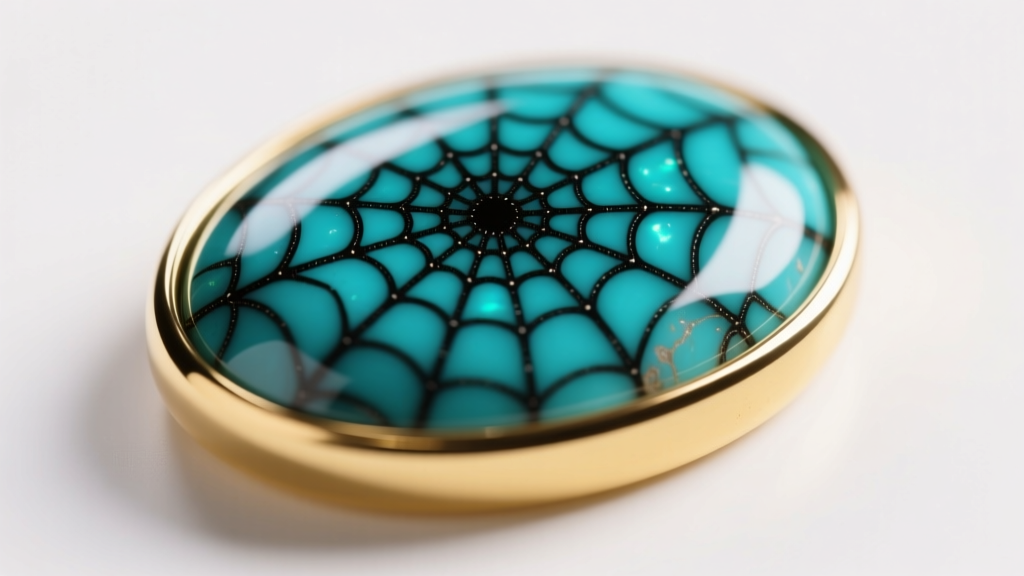
The 'matrix' refers to the host rock that remains within the turquoise cabochon. This webbing can range from fine, delicate spiderwebs to bold, chunky patterns of brown limonite or black manganese oxide. The origin of the stone heavily dictates both its matrix style and its price point.
Sleeping Beauty (Arizona)
Known for its pure, unblemished, sky-blue color with little to no matrix. The Sleeping Beauty mine closed in 2012, making genuine, untreated stones from this origin increasingly rare and expensive. If you see a 'Sleeping Beauty' turquoise earring selling for suspiciously low prices, it is likely dyed howlite or stabilized Chinese turquoise.
Kingman (Arizona)
The Kingman mine is famous for its high-quality stones featuring a striking black or brown spiderweb matrix. Kingman turquoise is highly prized by collectors and Southwestern jewelry artisans. It takes a beautiful polish and provides a bold contrast when set in sterling silver.
Persian (Iranian)
Historically considered the finest in the world, Persian turquoise is celebrated for its intense, robin-egg blue hue and lack of matrix. Due to export restrictions and mine depletions, genuine Persian turquoise earrings are exceptionally rare in the Western market and command top-tier luxury pricing.
Metal Pairings and Hardware Considerations
The aesthetic and structural pairing of metal to stone is where many mass-market turquoise earrings fail. Beyond the visual contrast, the physical properties of the metal and the weight of the stone must be carefully balanced to ensure comfort and longevity.
Silver vs. Gold: The Tarnish Factor
Sterling silver (925) is the traditional and most popular pairing for turquoise, offering a crisp, bright contrast that enhances the stone's blue and green tones. However, silver tarnishes when exposed to sulfur and moisture. Because turquoise is porous, harsh silver polishes and liquid tarnish removers can seep into the stone, causing permanent discoloration or a chalky residue. If you choose silver, ensure the setting includes a protective bezel or a sealed backing. For a maintenance-free alternative, 14k or 18k yellow gold provides a warm, luxurious backdrop that will never tarnish, though it significantly increases the price of the earring.
Gauge and Weight: Protecting Your Lobes
Turquoise is a dense, heavy stone. A large teardrop or heavy hoop adorned with turquoise cabochons can easily exceed 15 grams per earring. Standard earlobe piercings are typically done at 20-gauge (0.81mm) or 18-gauge (1.02mm). Hanging heavy stones from thin 20-gauge wires creates a 'cheese-cutter' effect, which can slowly stretch, tear, or migrate your piercing over time.
- For Studs (Under 5 grams): Standard 20-gauge or 18-gauge posts are perfectly safe.
- For Dangles and Drops (5 to 15 grams): Look for 16-gauge (1.29mm) ear wires or sturdy leverback clasps that distribute weight more evenly across the lobe.
- For Statement Pieces (Over 15 grams): Opt for clip-on conversions, ear cuffs that distribute weight to the cartilage, or use silicone earring backs (O-rings) to provide structural support behind the lobe.
Pricing Tiers: What Should You Pay?
Pricing for turquoise earrings varies wildly based on origin, treatment, and metal. Here is a realistic breakdown of what you should expect to pay in the current market for a standard pair of stud or drop earrings (approx. 8mm to 12mm stones):
- Budget ($20 - $60): Reconstituted block turquoise, dyed howlite, or heavily stabilized, low-grade Chinese turquoise set in silver-plated brass or low-karat gold vermeil.
- Mid-Range ($75 - $250): Genuine stabilized Kingman or Royston turquoise with attractive matrix, set in solid 925 sterling silver or 10k/14k gold-filled wire.
- Premium ($300 - $800+): Natural, untreated high-grade Kingman, rare Sleeping Beauty, or Persian turquoise set in solid 14k/18k gold or heavy, artisan-crafted sterling silver with intricate stampwork.
Care and Maintenance: Avoiding the 'Green' Fade
The most common complaint among turquoise owners is the stone gradually turning from a vibrant blue to a dull, muddy green. This is not a defect; it is a chemical reaction. Turquoise is a copper aluminum phosphate. When the copper is exposed to prolonged moisture, oils, and cosmetics, it oxidizes and shifts color.
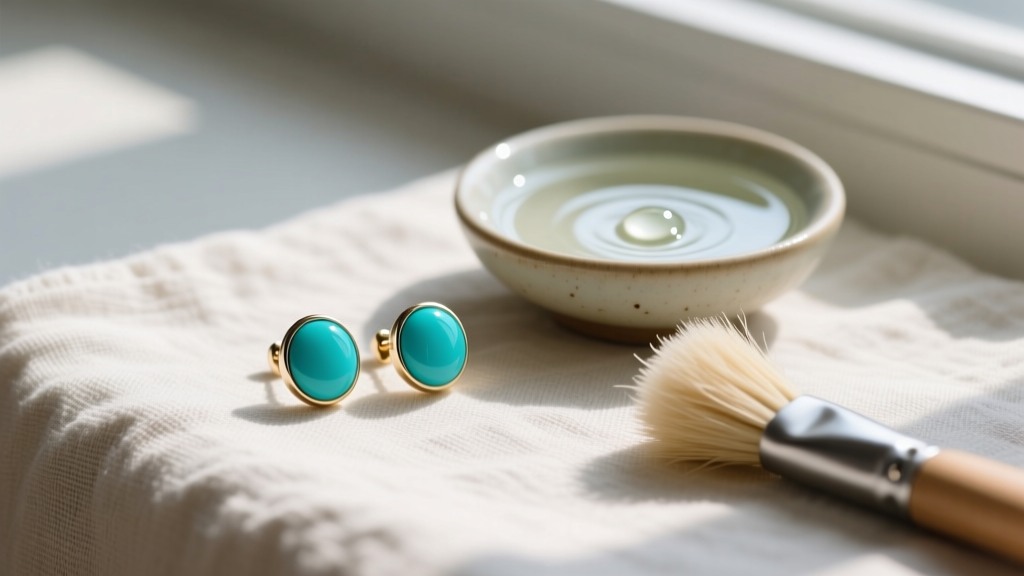
To preserve the integrity and color of your turquoise earrings, follow these strict care guidelines:
- The 'Last On, First Off' Rule: Always put your turquoise earrings on after applying makeup, hairspray, lotions, and perfumes. Remove them before washing your face or showering.
- Never Use Ultrasonic Cleaners: The high-frequency vibrations and heat can fracture the stone and melt the resins used in stabilized turquoise.
- Proper Cleaning: If your earrings become soiled, wipe them gently with a soft, slightly damp microfiber cloth. Dry them immediately. According to the Silver Institute, when cleaning the silver settings around porous stones, use a polishing cloth rather than liquid dips to prevent chemical damage to the gem.
- Storage: Store your turquoise earrings in a soft pouch away from direct sunlight and harder gemstones (like diamonds or sapphires) that could scratch the turquoise's relatively soft surface.
Final Verdict: Choosing Your Perfect Pair
Investing in a turquoise earring is an investment in natural art. By prioritizing full disclosure on treatments, understanding the structural limits of your piercings, and committing to proper care, you can secure a pair of earrings that will remain vibrant and beautiful for decades. Whether you prefer the pristine blue of a Sleeping Beauty stud or the rugged, webbed charm of a Kingman dangle, armed with this knowledge, you can shop with absolute confidence.