14k Gold Double Hoop Earrings: Material & Alloy Guide
Explore the metallurgy of 14k gold double hoop earrings. Compare hardness, alloys, and structural durability for everyday wear.

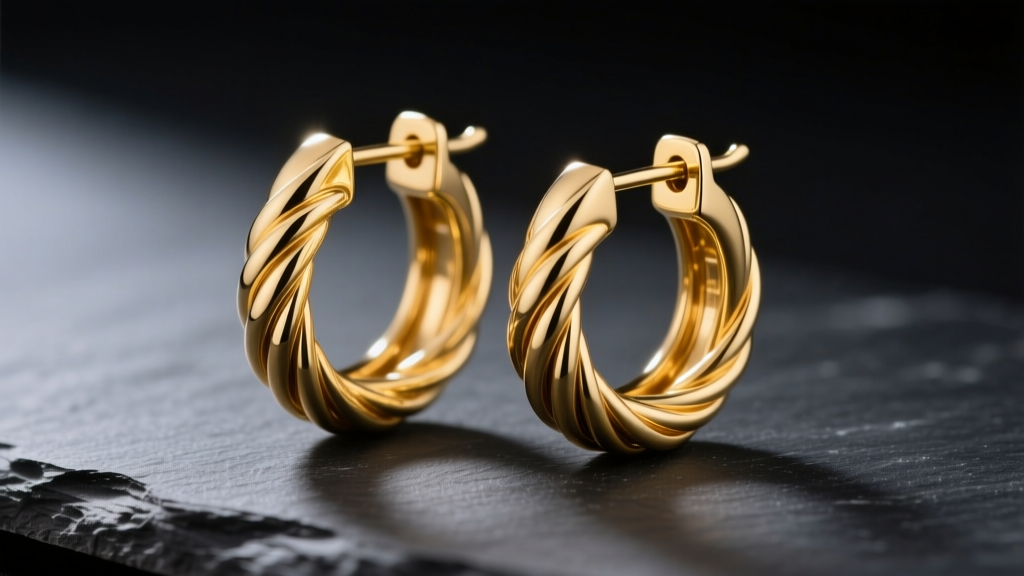
When selecting the perfect everyday jewelry, 14k gold double hoop earrings represent a masterclass in balancing aesthetic volume with material durability. The concentric or layered design of double hoops inherently increases the surface area, overall weight, and mechanical stress placed on the earring's post and clasp. While pure gold is prized for its value, its extreme malleability makes it entirely unsuitable for the structural demands of a double-layered hoop. This is where the precise metallurgy of 14-karat gold steps in, offering a scientifically optimized alloy that resists bending, tarnish, and hinge fatigue.
In this comprehensive material guide, we dissect the exact alloy compositions, Vickers hardness ratings, and structural mechanics that make 14k gold the undisputed champion for double hoop silhouettes. Whether you are evaluating a hinged clicker or a traditional latchback, understanding the metallurgical properties of your jewelry ensures your investment withstands the rigors of daily wear.
The Metallurgy of 14k Gold: Why It Wins for Double Hoops
To understand why 14k gold outperforms higher karats for complex earring designs, we must look at its atomic composition. According to the Gemological Institute of America (GIA), 14k gold consists of exactly 58.5% pure gold and 41.5% alloyed metals. This 41.5% is not merely filler; it is a carefully calibrated mixture of copper, silver, zinc, and sometimes palladium, engineered to alter the physical properties of the metal.
The primary metric jewelers use to evaluate durability is the Vickers Hardness (HV) scale. Pure 24k gold sits at a remarkably soft 25 HV, meaning it can be scratched by a fingernail and easily bent out of shape. Standard 14k yellow gold, however, achieves a Vickers Hardness of approximately 120 to 140 HV. This nearly fivefold increase in structural rigidity is critical for double hoops. Because a double hoop features two concentric rings of metal, the outer ring acts as a pendulum if caught on clothing, transferring immense torque to the ear wire and the hinge. The 14k alloy provides the tensile strength necessary to absorb this shock without permanently warping the circular geometry.
Material Showdown: 14k Gold vs. 18k, 10k, and Vermeil
When shopping for layered hoop styles, consumers are frequently presented with a spectrum of gold options. Below is a data-driven comparison of how these materials perform specifically under the mechanical stress of a double hoop design.
| Material | Gold Purity | Vickers Hardness (HV) | Tarnish Risk | Suitability for Double Hoops |
|---|---|---|---|---|
| 10k Gold | 41.7% | ~150 - 170 HV | High | Excellent durability, but prone to oxidation and dullness over time. |
| 14k Gold | 58.5% | ~120 - 140 HV | Low | Optimal balance of rigidity, hypoallergenic properties, and rich color. |
| 18k Gold | 75.0% | ~90 - 110 HV | Very Low | Too soft for heavy concentric hoops; hinges and posts are prone to bending. |
| Gold Vermeil | N/A (Sterling Core) | ~60 - 80 HV | Moderate | Poor. The friction of a double hoop will quickly wear through the thin gold plating at the clasp. |
As the data illustrates, while 10k gold is technically harder, its high copper and zinc content makes it highly susceptible to tarnishing, especially in the tight, hard-to-clean crevices between concentric hoops. Conversely, 18k gold lacks the sheer tensile strength required to keep a heavy double hoop perfectly circular if dropped or snagged. 14k gold occupies the metallurgical 'sweet spot'.
Structural Integrity: Wire Gauge and Clasp Mechanics
The material alloy is only half the battle; the physical dimensions of the wire dictate the lifespan of your earrings. For 14k gold double hoop earrings, the wire gauge (thickness) and the clasp mechanism must be perfectly matched to the weight of the concentric design.
The Gauge Threshold
Wire thickness is measured in gauges, where a lower number indicates a thicker wire. Many lightweight, single-layer huggies are crafted at 20-gauge or even 22-gauge. However, for a double hoop, an 18-gauge (1.02mm) or 16-gauge (1.29mm) wire is mandatory. The added mass of the second ring creates a higher moment of inertia. If an 18k or even 14k hoop is made with a thin 22-gauge wire, the post will inevitably bend when inserting it through the earlobe, or the hinge pin will shear under the lateral stress.
Clasp Engineering: Hinged Snap vs. Latchback
- Hinged Snap (Clicker): Relies on a tiny internal tension wire. In 14k gold, this mechanism is highly reliable because the metal's 'springiness' (yield strength) allows the snap to click shut securely without fatiguing over thousands of uses.
- Traditional Latchback: Features a hinged post that clicks into a notched catch. For double hoops, the latchback is often preferred for larger diameters (over 25mm) because the catch physically blocks the post from sliding backward, compensating for the heavier swing weight of the concentric rings.
Color Variations and Allergenic Profiles in 14k Alloys
The 41.5% alloy mix in 14k gold not only dictates hardness but also determines the color and the dermatological safety of the earrings. According to DermNet NZ, contact dermatitis from jewelry is predominantly triggered by nickel and, to a lesser extent, high concentrations of copper.
14k Yellow Gold
Typically alloyed with a balanced mix of silver and copper. It offers a warm, traditional hue and is generally well-tolerated by sensitive skin, provided the manufacturer adheres to strict nickel-free standards.
14k Rose Gold
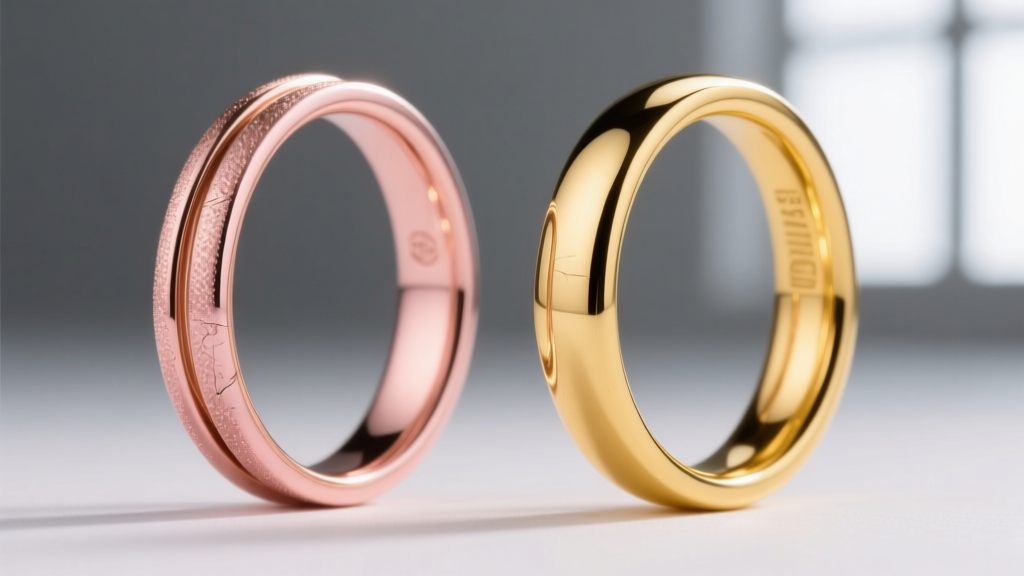
Achieves its pinkish tint through a significantly higher copper content (often upwards of 20% of the total alloy). While this extra copper pushes the Vickers Hardness slightly higher—making rose gold double hoops exceptionally scratch-resistant—it can trigger reactions in individuals with specific copper sensitivities. Furthermore, rose gold will naturally darken slightly over years of wear as the copper oxidizes, a patina many collectors actually desire.
14k White Gold
Created by alloying pure gold with white metals like palladium, nickel, or manganese. To achieve a bright, silvery finish, it is plated with rhodium. The friction point where the double hoop's clasp meets the ear wire will eventually wear through this rhodium plating, revealing the slightly yellowish 'champagne' color of the raw 14k white alloy beneath. This requires periodic re-plating by a jeweler to maintain the stark white aesthetic.

Common Failure Modes of Double Hoops (And How to Avoid Them)
Even the finest 14k gold will fail if the design ignores basic physics. When auditing a pair of double hoops before purchase, check for these specific structural vulnerabilities:
- The Concentric Snag: If the gap between the inner and outer hoop is less than 1.5mm, hair and fine threads will easily wedge between the rings. This creates a pulling force that can pry the outer ring away from the solder joint. Look for a gap of at least 2mm to 3mm.
- Solder Joint Starvation: In cheaper manufacturing, the outer ring is attached to the inner ring using a microscopic dot of solder. High-quality 14k gold double hoops utilize a 'sleeve' or 'collar' joint, where the outer ring physically wraps around the inner ring before being soldered, increasing the bonding surface area by 400%.
- Hinge Pin Extrusion: Over time, the friction of opening and closing the earring can cause the microscopic steel or gold pin inside the hinge to slide outward. Premium jewelers will laser-weld the hinge pin flush at both ends to prevent this.
Maintenance: Cleaning the Concentric Gap
The unique geometry of double hoops creates a micro-environment that traps sebum, dead skin cells, and environmental pollutants. Because 14k gold contains alloy metals that can oxidize when exposed to sulfur and acidic skin oils, regular maintenance is non-negotiable.
Avoid harsh chemical dips, which can degrade the polished finish and attack the copper in rose gold alloys. Instead, utilize a targeted cleaning approach:
- The Soft Bristle Method: Mix a few drops of mild, phosphate-free dish soap in warm distilled water. Use an extra-soft baby toothbrush to gently agitate the water specifically within the gap between the two hoops. The bristles will dislodge lipid buildup without scratching the 120 HV surface of the 14k gold.
- Ultrasonic Caution: While ultrasonic cleaners are excellent for solid 14k gold, they can be dangerous if your double hoops feature any gemstone accents or if the hinge mechanism has any microscopic looseness. The high-frequency vibrations can shatter tension-set stones or further loosen a compromised hinge pin.
- Drying Protocol: Never let water air-dry between the concentric rings, as it will leave hard water spots that mimic tarnish. Use a blast of compressed air or a dedicated jewelry drying cloth to wick moisture out of the clasp mechanism and the inter-ring gap.
Expert Verdict: Investing in 14k Gold Double Hoops
When navigating the market for layered ear aesthetics, 14k gold double hoop earrings stand out as the most pragmatic choice for the modern consumer. They offer the rich, luxurious luster and hypoallergenic safety of high-karat gold, fortified by the metallurgical resilience required to survive the mechanical torques of a concentric design. By prioritizing an 18-gauge or 16-gauge wire thickness, verifying the hinge engineering, and understanding the specific alloy profile of your chosen color, you secure a piece of jewelry that is not merely a fleeting trend, but a structurally sound, lifelong staple in your collection. Always verify the manufacturer's compliance with the Federal Trade Commission (FTC) Jewelry Guides to ensure the karat stamp accurately reflects the metallurgical reality of your investment.


