Crescent Moon Hoop Earrings: The Ultimate Material Guide
Compare the best metals for crescent moon hoop earrings. We analyze sterling silver, solid gold, and titanium for durability, allergies, and detail.

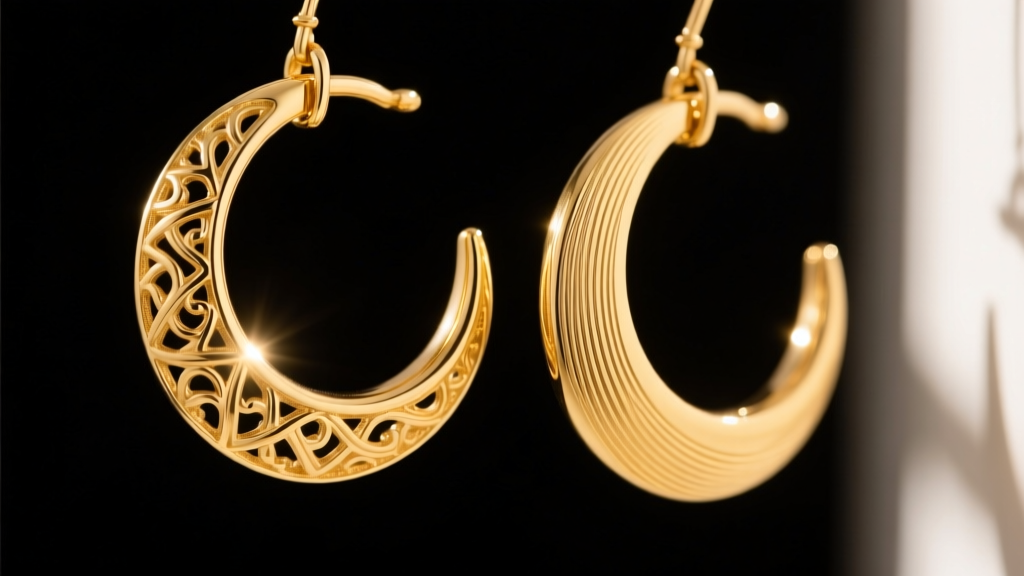
Crescent moon hoop earrings have transcended fleeting trends to become a staple in celestial jewelry collections. However, the asymmetrical geometry and intricate surface detailing of lunar motifs place unique structural demands on the metals used to craft them. A standard circular hoop distributes weight evenly, but a crescent-shaped hoop—or a hoop heavily adorned with lunar textures—creates an off-center center of gravity. This makes the choice of material not just an aesthetic decision, but a critical factor in the earring's longevity, comfort, and structural integrity.
In this comprehensive metallurgical guide, we break down the exact material properties, alloy grades, and manufacturing realities of the most common metals used for crescent moon hoops. Whether you are prioritizing hypoallergenic properties, tarnish resistance, or the crisp retention of crater engravings, understanding these material nuances is essential for making an informed purchase.
The Anatomy of Celestial Jewelry: Why Material Dictates Design
Before evaluating specific metals, it is crucial to understand how the crescent moon design interacts with earlobe mechanics. Unlike a perfectly symmetrical circle, a crescent hoop is inherently bottom-heavy or front-heavy depending on its orientation. This asymmetrical weight distribution exerts uneven torque on the ear piercing. If the metal is too soft, the hoop wire will gradually warp, causing the latchback or clicker closure to misalign. If the metal is too dense, the concentrated weight can cause lobe fatigue or stretching over time.
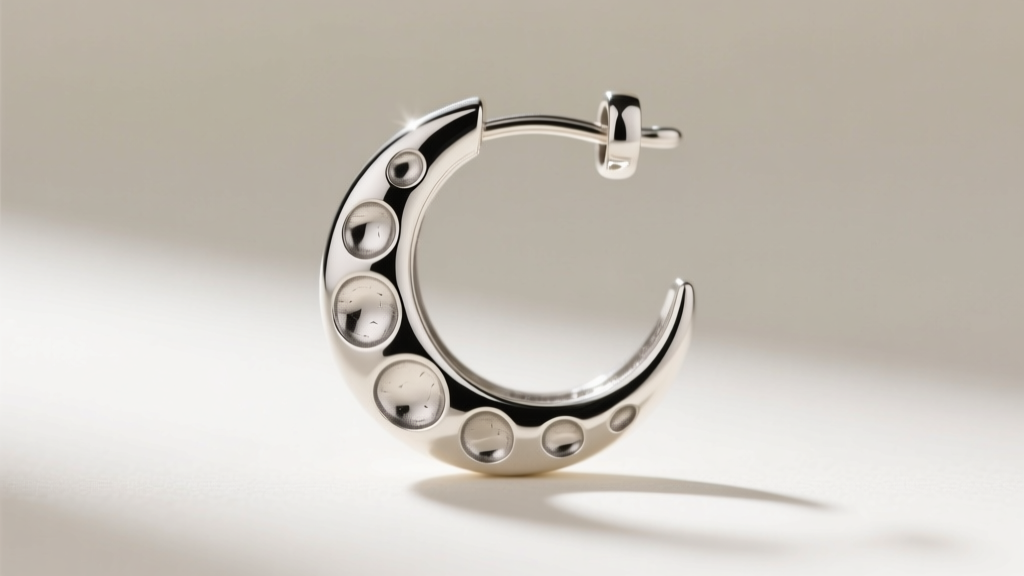
Furthermore, the lunar aesthetic relies heavily on surface texture—crater stippling, matte finishing, or high-polish bevels. The chosen metal must possess the right hardness and casting properties to hold these microscopic details without blurring during the finishing process or wearing smooth against the skin over years of use.
Deep Dive: Metal Grades and Properties for Moon Hoops
Sterling Silver (925) vs. Argentium Silver
Traditional sterling silver is an alloy comprising 92.5% pure silver and 7.5% copper. While the copper provides the necessary tensile strength to hold a hoop's shape, it is also the culprit behind silver's notorious tendency to oxidize and tarnish when exposed to sulfur and moisture. For crescent moon hoops with deep, textured crater engravings, tarnish can quickly accumulate in the recesses, turning the intricate details black and requiring aggressive polishing that may eventually soften the design.
The modern solution is Argentium Silver (typically 935 or 960 grade). By replacing a portion of the copper with germanium, Argentium forms a transparent, self-healing layer of germanium dioxide on the surface. This makes it highly tarnish-resistant while maintaining the brilliant white luster of pure silver. For celestial designs that require a bright, starlight-like reflectivity without constant maintenance, Argentium is vastly superior to traditional 925 sterling.
Gold Plated, Vermeil, and Solid 14k/18k Gold
When shopping for gold crescent moon hoops, the terminology dictates the lifespan of the piece. Gold-plated brass or copper bases are common in fast fashion, but the base metals can cause severe contact dermatitis once the microscopic gold layer wears through. Gold Vermeil is a step up, legally requiring a base of 925 sterling silver coated with at least 2.5 microns of gold. However, even vermeil will eventually wear down on high-friction areas like the hoop's post and clasp.
For heirloom-quality lunar hoops, solid gold is mandatory. According to the Gemological Institute of America (GIA), the karat weight determines both color and hardness. 18k gold (75% pure gold) offers a rich, deep yellow hue but is relatively soft; an 18k crescent hoop must be cast with a thicker wire gauge to prevent bending. 14k gold (58.5% pure gold, alloyed with copper, silver, and zinc) provides superior structural rigidity. For a continuous wire crescent hoop that must snap securely into a latchback closure, 14k gold's higher tensile strength makes it the most pragmatic choice for everyday wear.
Implant-Grade Titanium (ASTM F136)
For individuals with severe nickel allergies or highly sensitive earlobes, titanium is the undisputed champion. However, not all titanium is created equal. You must look for ASTM F136 implant-grade titanium (Ti-6Al-4V ELI), the standard verified by the Association of Professional Piercers (APP) for biocompatibility.
Titanium is roughly 45% lighter than steel and significantly lighter than gold, making it ideal for oversized, dramatic crescent moon hoops that would otherwise drag down the earlobe. The trade-off is manufacturing complexity. Titanium has a very high melting point and is notoriously difficult to cast using traditional lost-wax methods. Consequently, titanium moon hoops rarely feature deep, cast-in-the-wax crater textures. Instead, lunar details on titanium are typically achieved through precision CNC machining, laser etching, or anodization (using electricity to create vibrant, permanent oxide colors like deep space purples and blues).
Material Comparison Matrix
The following table synthesizes the practical differences between these metals, helping you align your material choice with your lifestyle and aesthetic priorities.
| Metal Type | Tarnish Resistance | Detail Retention | Weight Profile | Avg. Price Range |
|---|---|---|---|---|
| 925 Sterling Silver | Low (Requires polishing) | High (Excellent for casting) | Medium | $40 - $120 |
| Argentium Silver | Very High | High | Medium | $75 - $180 |
| Solid 14k Gold | High | Very High (Rigid) | Heavy | $250 - $600+ |
| Solid 18k Gold | High | Medium (Prone to scratching) | Heavy | $400 - $900+ |
| ASTM F136 Titanium | Absolute (Inert) | Low (Best for smooth/anodized) | Ultra-Light | $60 - $150 |
Gauge Sizing and Weight Distribution Mechanics
The wire gauge—the thickness of the metal passing through your earlobe—is a critical safety and comfort metric that varies by material. Because crescent moon hoops carry asymmetrical weight, the wire must be thick enough to resist bending, yet thin enough to pass comfortably through a standard piercing.
- 20-Gauge (0.81mm): Common for lightweight titanium or small, delicate silver hoops. While comfortable, a 20g wire in a heavy brass or gold-plated crescent can easily bend out of shape when taking the earring on and off.
- 18-Gauge (1.02mm): The industry sweet spot for solid 14k gold and sterling silver crescent hoops. It provides enough structural rigidity to support the weight of a textured lunar charm or an asymmetrical wire shape without warping, while still fitting most standard lobe piercings.
- 16-Gauge (1.29mm): Typically reserved for cartilage piercings (like the helix or tragus) or heavy, oversized statement hoops. If you are wearing a large, solid gold crescent moon hoop, a 16g wire prevents the 'cheese-cutter effect,' where thin wire slowly migrates through the earlobe tissue due to concentrated downward pressure.
Beyond gauge, the closure mechanism must compensate for the moon's shape. A standard fishhook wire will cause a front-heavy crescent to swing outward awkwardly. Opting for a hinged latchback or a segment ring clicker ensures the hoop maintains a fixed, flush orientation against the earlobe, keeping the crescent perfectly aligned.
Care Protocols by Metal Type
Maintaining the celestial brilliance of your earrings requires material-specific care routines. Generic jewelry cleaners can permanently damage certain alloys.
For Sterling and Argentium Silver: Avoid exposing your hoops to sulfur-rich environments, including hot springs, rubber bands, and certain wool fabrics. While Argentium resists tarnish, it is not immune. Clean textured silver moon hoops using a mild, phosphate-free dish soap and a soft-bristled baby toothbrush to gently dislodge oils trapped in the crater engravings. Never use abrasive silver dips, as they can strip the oxidized antiquing intentionally applied by jewelers to highlight lunar textures.
For Solid Gold: Gold is highly resistant to corrosion but vulnerable to chlorine. Wearing 14k or 18k gold hoops in heavily chlorinated swimming pools can cause 'stress corrosion cracking' at the solder points of the latchback hinge. Clean gold hoops with warm water and a few drops of gentle soap, drying them with a microfiber cloth to prevent water spots on high-polish bevels.
For Titanium: Titanium requires virtually no chemical maintenance. It will not react to sweat, chlorine, or saltwater. If an anodized titanium moon hoop loses its vibrant color due to skin oils and lotions, simply wiping it with rubbing alcohol will restore the oxide layer's optical interference properties, bringing the color back to life instantly.
Final Verdict: Choosing Your Lunar Metal
The ideal material for your crescent moon hoop earrings depends entirely on your biological needs and aesthetic expectations. If you demand intricate, cast-in crater details and a classic warm glow, solid 14k gold offers the best balance of structural rigidity and heirloom longevity. If you prefer a cool, starlight aesthetic with minimal upkeep, upgrade from standard sterling to Argentium silver. Finally, for those with metal sensitivities or a desire for oversized, gravity-defying statement pieces, ASTM F136 titanium provides an ultra-lightweight, biocompatible canvas for modern, anodized lunar art.


