Heart Nugget Earrings: Metal Comparison & Care Guide
Discover the best metals for heart nugget earrings. Compare 14k vs 18k gold, vermeil durability, gauge sizes, and cleaning tips for textured finishes.

The Anatomy of Heart Nugget Earrings
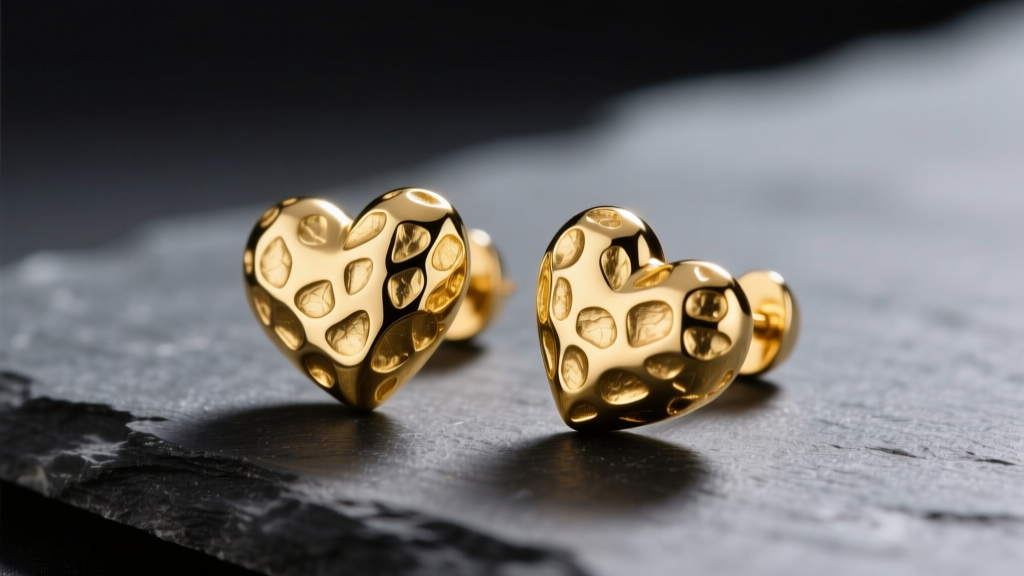
The intersection of romantic symbolism and raw, unrefined texture has made heart nugget earrings a staple in both streetwear and high-end jewelry collections. Unlike traditional polished heart studs, the "nugget" finish—often referred to as a Florentine finish, raw cast, or hammered texture—mimics the organic, irregular surface of natural gold nuggets. While visually striking, this specific design choice fundamentally alters the material science and maintenance requirements of the earring.
From a metallurgical perspective, applying a nugget texture increases the total surface area of the earring by up to 40% compared to a smooth, high-polish finish. This expanded surface area introduces unique failure modes: it accelerates plating wear on the high peaks, traps sebum and environmental debris in the deep valleys, and complicates the casting process. To make an informed purchase in 2026, buyers must look beyond the karat stamp and understand how different metals behave when subjected to the rigorous topography of a nugget finish.
Solid Gold Karats: 10K vs. 14K vs. 18K for Textured Hearts
When investing in solid gold heart nugget earrings, the karat weight dictates not just the color and price, but the structural longevity of the texture itself. Pure 24k gold is too soft for jewelry, so it is alloyed with metals like copper, silver, and zinc. According to the Gemological Institute of America (GIA), these alloy ratios directly impact the Vickers Hardness (HV) of the final piece.
| Metal Grade | Gold Content | Avg. Hardness (HV) | Texture Durability | Price Range (15mm Pair) |
|---|---|---|---|---|
| 10K Gold | 41.7% | 160 - 180 HV | Excellent (Peaks resist flattening) | $250 - $400 |
| 14K Gold | 58.5% | 130 - 150 HV | Very Good (Industry standard) | $450 - $750 |
| 18K Gold | 75.0% | 110 - 125 HV | Fair (Peaks may smooth over time) | $800 - $1,400+ |
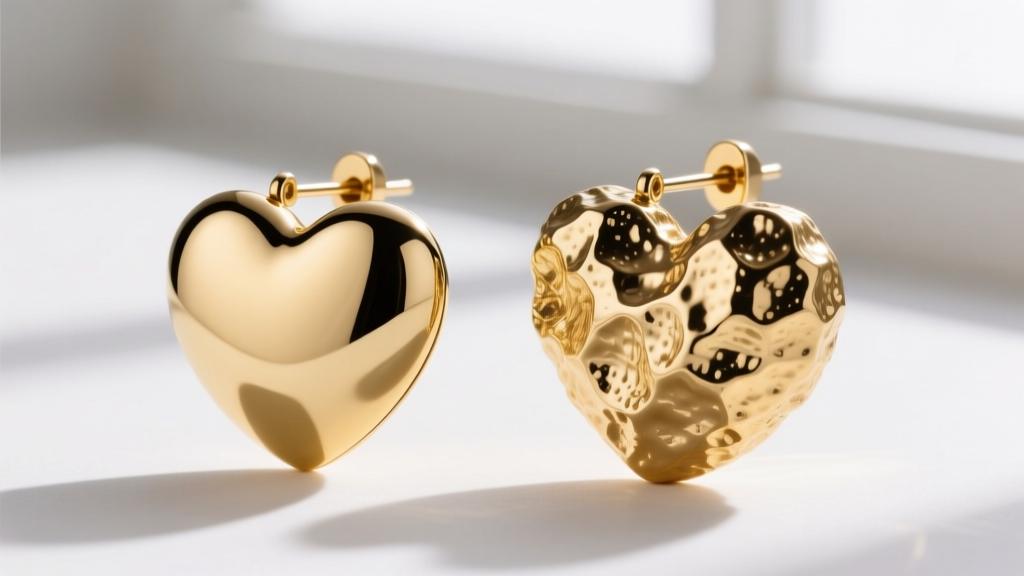
The Expert Verdict: 14K gold is the optimal choice for heart nugget earrings. It provides the rich, warm yellow hue associated with luxury while maintaining enough alloy hardness to prevent the high peaks of the nugget texture from flattening out against hair, clothing, and daily friction. 18K gold, while more valuable, is softer; over several years of daily wear, the sharp ridges of an 18K nugget heart will gradually burnish and lose their raw aesthetic.
The Plating Dilemma: Vermeil, Gold-Filled, and Flash Plating
If solid gold is outside your budget, you will encounter plated alternatives. However, the nugget texture is notoriously unforgiving on plated jewelry. Friction naturally targets the highest points of the earring—the peaks of the "nuggets."
- Flash Plating (Brass or Steel Base): Often measuring less than 0.5 microns thick, flash plating will wear off the peaks of a nugget earring within weeks of daily wear, exposing the base metal and causing a patchy, two-tone appearance. Avoid this entirely for textured designs.
- Gold-Filled (Mechanically Bonded): Gold-filled sheets are bonded to a brass core under heat and pressure. While durable, the extreme stretching required to press a gold-filled sheet into a deep, irregular nugget mold can cause micro-fractures in the gold layer, leading to premature flaking in the crevices.
- Heavy Vermeil (Sterling Silver Base): The Federal Trade Commission (FTC) mandates that gold vermeil must feature a minimum of 2.5 microns of gold over a sterling silver base. For heart nugget earrings, seek out brands that explicitly state "heavy vermeil" (often 3 to 4 microns). This extra thickness provides a buffer against the accelerated friction on the textured peaks.
Weight, Gauge, and Lobe Mechanics
The dense, three-dimensional nature of a nugget heart makes it significantly heavier than a flat, stamped heart earring. A solid 14K gold nugget heart measuring just 15mm across can weigh between 4 to 7 grams per earring. This weight introduces a mechanical challenge for the earlobe.
Standard earrings typically use 20-gauge (0.81mm) or 18-gauge (1.02mm) posts. When a heavy nugget earring is placed on a thin 20G post, gravity and movement create a "cheese cutter" effect, slowly slicing through the bottom of the earlobe piercing.
Actionable Advice: When purchasing solid gold heart nugget earrings, verify the post thickness. Opt for 16-gauge (1.29mm) or 14-gauge (1.63mm) posts to distribute the weight safely. If the design only comes with an 18G post, you must use wide-base silicone earring backs or omega-style clips to provide structural support and prevent the earring from drooping forward.
Alternative Metals: Sterling Silver and Platinum
For those seeking hypoallergenic or alternative metal options, sterling silver and platinum present distinct advantages and drawbacks when applied to the nugget finish.
Sterling Silver (925)
Sterling silver is highly affordable and casts beautifully, capturing the minute details of a nugget wax model. However, silver is highly susceptible to oxidation (tarnish). In a smooth earring, tarnish is easily wiped away. In a nugget earring, the deep valleys trap sulfur, sweat, and lotions, causing severe, localized tarnishing that turns the crevices black. If buying silver, ensure it is heavily rhodium-plated to seal the surface pores, though this will slightly dull the "raw" look of the nugget texture.
Platinum (950)
Platinum is exceptionally dense, hypoallergenic, and does not tarnish. A platinum heart nugget earring will maintain its structural integrity indefinitely, as platinum displaces rather than sheds when scratched. The downside is the cost and weight; a platinum pair will weigh nearly 60% more than the same design in 14K gold, making proper gauge sizing and lobe support absolutely critical.
Casting Porosity: The Hidden Flaw in Textured Jewelry
Most heart nugget earrings are created using lost-wax casting. Molten metal is poured into a plaster investment mold that previously held a wax prototype. A common defect in this process is casting porosity—tiny gas bubbles trapped inside the metal as it cools, resulting in microscopic pits on the surface.
On a smooth, polished earring, porosity is immediately visible as a tiny black dot or pinhole, and the piece is rejected during quality control. On a nugget earring, the chaotic, bumpy texture perfectly camouflages porosity. Over time, these microscopic pits can harbor bacteria, cause skin irritation, or act as stress concentrators that lead to cracking. When inspecting high-end solid gold nugget earrings, use a 10x jeweler's loupe to examine the deeper valleys of the texture. If you see perfectly round, smooth-bottomed pits, you are looking at gas porosity, not intentional design texture.
Maintenance and Cleaning Protocols
The deep crevices of heart nugget earrings require a specific cleaning protocol to maintain their brilliance without damaging the metal or any secondary plating.
- Avoid Ultrasonic Cleaners: Never place gold-plated or vermeil nugget earrings in an ultrasonic cleaner. The high-frequency cavitation bubbles will aggressively strip the plating from the peaks and edges of the texture.
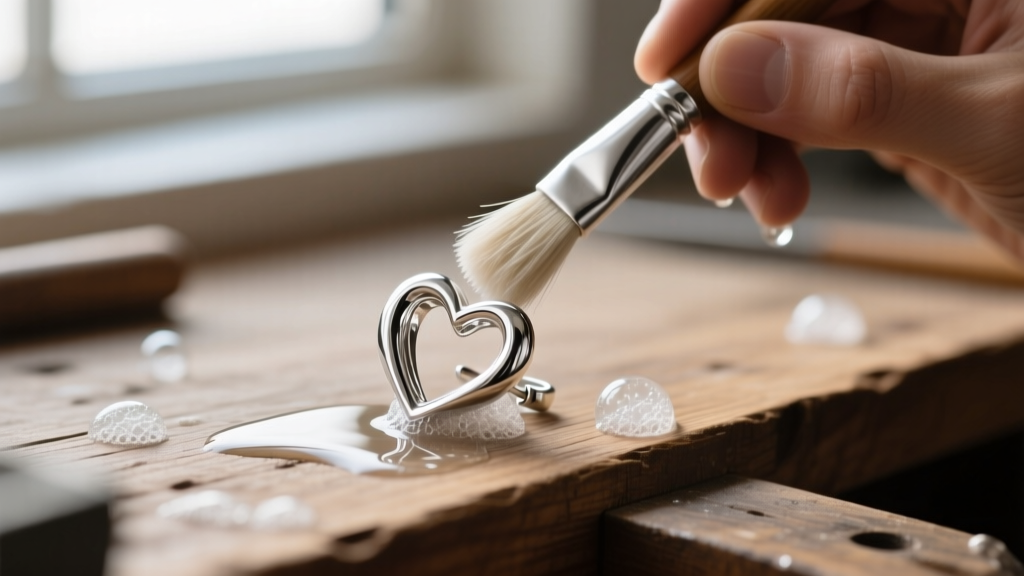
- The Soak and Brush Method: Create a solution of warm distilled water and a few drops of pH-neutral dish soap (avoid harsh detergents with added moisturizers, which leave a film). Let the earrings soak for 10 minutes to loosen sebum buildup in the valleys.
- Use an Extra-Soft Baby Toothbrush: Gently agitate the bristles into the crevices. Do not use hard-bristled jewelry brushes, as they can leave micro-scratches on the high peaks of 14K or 18K gold, eventually dulling the raw finish.
- Drying: Do not air dry, as water spots will form in the texture. Use a can of compressed air or a hair dryer on the "cool" setting to blow moisture out of the deep nugget pockets.
By understanding the metallurgical properties and mechanical demands of the nugget finish, you can select a pair of heart nugget earrings that balances raw aesthetic appeal with lifelong durability.


