Spiral Silver Earrings: The Ultimate Value & Budget Guide
Discover the true value of spiral silver earrings. We analyze material grades, gauge sizes, and pricing to help you budget for lasting quality.

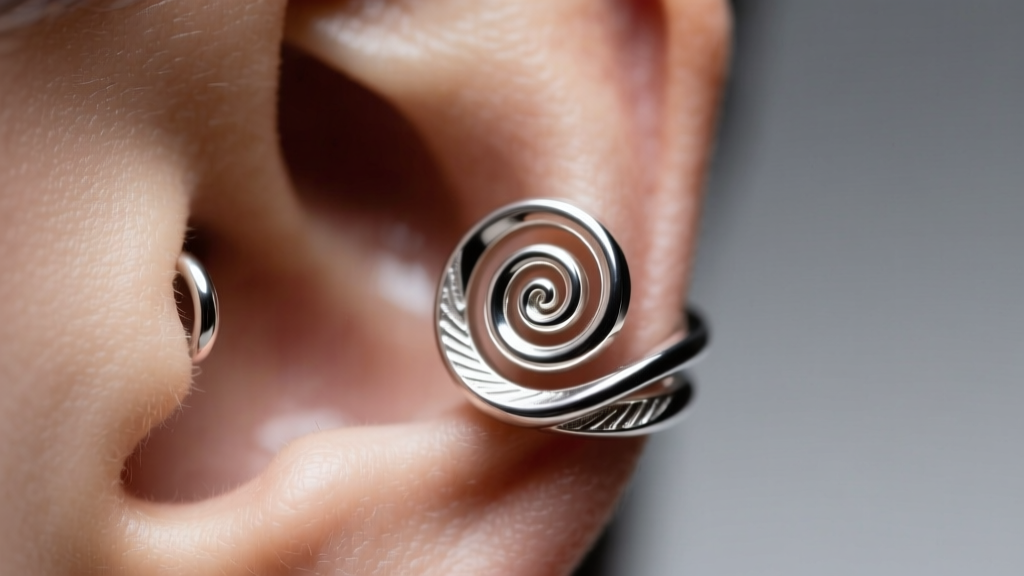
The resurgence of spiral silver earrings in 2026 has brought this dynamic silhouette to the forefront of ear styling. Whether worn as a continuous helix wrap, a lobe climber, or a tension-based ear cuff, the spiral design offers a striking visual flow. However, the very geometry that makes spiral earrings so appealing also makes them highly susceptible to structural failure if manufactured poorly. For consumers navigating a market flooded with options ranging from $12 to $150, distinguishing between a disposable fashion accessory and a lifelong jewelry investment requires a deep understanding of metallurgy, wire gauge physics, and cost-per-wear economics.
This comprehensive budget and value assessment breaks down exactly what you should pay for spiral silver earrings, which material grades justify premium pricing, and how to avoid the hidden costs of cheap alloys.
The Physics of the Spiral: Where Budget Meets Durability
Unlike a simple stud or a cast hoop, a spiral earring is formed by bending a continuous wire along a tightening or expanding radius. In metallurgy, this process introduces work-hardening. As the silver wire is bent into a spiral, the metal's crystal lattice structure compresses, increasing its hardness but simultaneously reducing its ductility.
When budget manufacturers use low-grade alloys or overly thin wires, the stress points along the inner curves of the spiral become prime locations for metal fatigue. Over time, the repeated tension of putting the earring on and taking it off—or the subtle pressure of sleeping on a cartilage spiral—will cause micro-fractures. Eventually, the wire snaps cleanly at the tightest curve. Investing in properly annealed, high-purity silver prevents this catastrophic failure.
"A well-engineered spiral earring must balance the tension required to hold its shape against the ductility needed to withstand daily manipulation. Compromising on wire thickness or alloy purity guarantees a shortened lifespan." — Master Jeweler Bench Notes, 2025.
Material Breakdown: Silver-Plated vs. 925 Sterling vs. Argentium
The term "silver" is heavily abused in the earring market. To accurately assess value, you must look past the marketing copy and examine the exact metallurgical composition. The Federal Trade Commission's Jewelry Guides strictly regulate how silver can be labeled, yet fast-fashion brands frequently skirt these rules with deceptive terminology.
1. Silver-Plated Brass or Copper (The Budget Trap)
Typically priced between $12 and $28, these earrings feature a microscopic layer of silver electroplated over a base metal core. While initially bright, the friction of the spiral sliding through a piercing or gripping the ear cartilage will wear away the plating within weeks. Once the brass or copper core is exposed, it reacts with skin oils and oxygen, resulting in green skin discoloration and a high risk of contact dermatitis. Value verdict: Poor. Cost-per-wear is exceptionally high due to rapid degradation.
2. 925 Sterling Silver (The Reliable Standard)
Composed of 92.5% pure silver and 7.5% copper, sterling silver offers the ideal balance of malleability and strength for spiral designs. Priced between $45 and $85 for quality artisan work, 925 silver will last a lifetime if cared for. The copper content, however, means the earrings will tarnish when exposed to sulfur and humidity, requiring occasional polishing. Value verdict: Excellent. The sweet spot for everyday wearers seeking durability without luxury markups.
3. Argentium 935 / 960 Silver (The Premium Investment)
Argentium replaces the copper in traditional sterling with germanium. This creates a silver alloy that is highly tarnish-resistant, naturally hypoallergenic, and possesses a brighter, whiter luster. Because it is a specialized alloy, Argentium spiral earrings command a premium, usually ranging from $95 to $160. Value verdict: Superior for low-maintenance buyers and those with copper sensitivities.
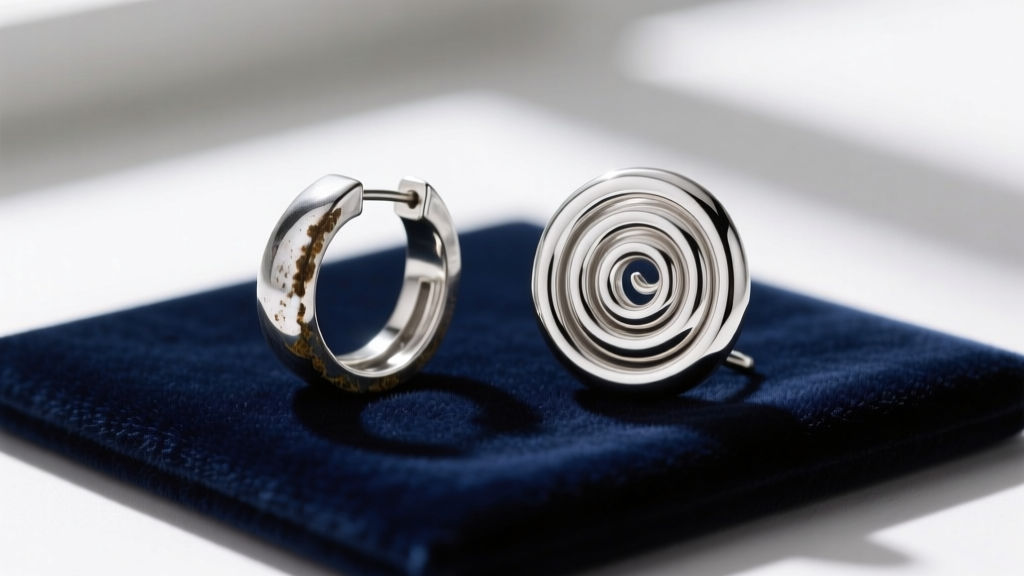
The 2026 Spiral Silver Earrings Value Matrix
Use the following matrix to benchmark prices when shopping for spiral earrings. If a piece falls significantly below these ranges, it is likely compromised in gauge thickness or material purity.
| Material Grade | Fair Market Price Range | Expected Lifespan | Tarnish Resistance | Best Application |
|---|---|---|---|---|
| Silver-Plated Brass | $12 - $28 | 1 - 3 Months | Very Low | Temporary fashion styling (unpierced cuffs only) |
| 925 Sterling Silver | $45 - $85 | 10+ Years | Moderate | Standard lobe and healed cartilage piercings |
| Argentium 935/960 | $95 - $160 | Lifetime | Extremely High | Sensitive ears, high-humidity climates, daily wear |
| "Tibetan" or "Alpaca" Silver | $5 - $15 | Variable | N/A (Base Metal) | Avoid entirely (Contains nickel/lead) |
Cartilage vs. Lobe: How Placement Dictates Your Budget
The anatomical placement of your spiral earring fundamentally changes the structural requirements—and therefore the budget—you must allocate. According to the Association of Professional Piercers (APP), jewelry intended for cartilage must meet strict standards for polish, gauge, and material biocompatibility to prevent fistula irritation.
Lobe Spirals and Climbers (20G to 18G)
For standard earlobe piercings, a 20-gauge (0.8mm) or 18-gauge (1.0mm) wire is sufficient. The earlobe is soft tissue, meaning the earring does not need to withstand heavy structural resistance. You can safely budget for delicate, intricately designed 925 sterling silver lobe spirals in the $40 to $60 range.
Helix and Conch Wraps (16G to 14G)
Cartilage is rigid, and the angle of a helix or conch piercing subjects the jewelry to lateral torque. If a spiral earring meant for cartilage is manufactured at a thin 20-gauge, the wire will easily bend out of its spiral alignment when snagged on hair or clothing. This bending creates pressure points inside the piercing channel, leading to cartilage bumps and migration. For cartilage spirals, you must budget for 16-gauge (1.2mm) or 14-gauge (1.6mm) wire. Because thicker wire requires more raw silver and advanced annealing techniques to shape without snapping, expect to pay a 20% to 30% premium over lobe-specific designs.
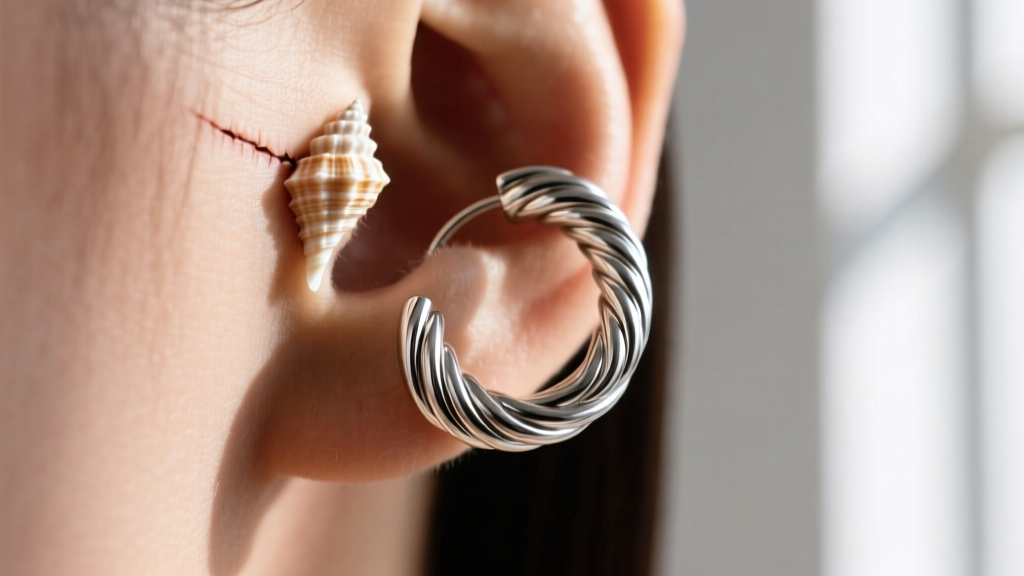
Red Flags: Spotting Overpriced and Under-Engineered Spirals
When assessing value, price is only one half of the equation. You must also inspect the physical engineering of the piece. Avoid spending your budget on spiral earrings that exhibit the following manufacturing flaws:
- Rough Wire Terminals: Run your finger over the ends of the spiral. If you feel a sharp burr or a flat, unpolished cut, the earring will cause micro-tears in your piercing channel. High-value spirals feature perfectly rounded, mirror-polished bead ends.
- Inconsistent Tension: Gently squeeze the spiral. It should offer uniform resistance. If one side feels loose while the other is rigid, the metal was improperly work-hardened and will warp asymmetrically over time.
- Deceptive Weight Pricing: Some brands charge premium prices for "heavy" silver spirals that are actually hollow-cast or feature thick, clumsy wire that lacks ergonomic refinement. Value lies in precision engineering, not just raw gram weight.
- Missing Hallmarks: Authentic 925 or Argentium pieces will bear a microscopic stamp (e.g., ".925" or the Argentium flying unicorn mark) near the clasp or wire base. Lack of a hallmark on a piece priced above $40 is an immediate red flag.
Final Verdict: Maximizing Your Investment
When budgeting for spiral silver earrings, the most cost-effective strategy is to bypass the $15 to $30 silver-plated tier entirely. The inevitable tarnishing, plating loss, and structural snapping make them a recurring expense rather than a jewelry purchase.
Allocate a minimum budget of $55 to $85 for a well-engineered, 18-gauge or 16-gauge 925 sterling silver spiral from a reputable bench jeweler. If you live in a humid climate, frequently swim, or have known metal sensitivities, stretching your budget to the $100 to $140 range for Argentium silver will yield a virtually maintenance-free accessory that retains its structural integrity and brilliant finish for decades. True value in spiral earrings is found at the intersection of proper gauge thickness, verified alloy purity, and flawless terminal finishing.


