Earring Card Hole Punch: Technical Guide for Jewelers
Master the earring card hole punch with our technical guide. Learn die sizes, paper GSM limits, and alignment for flawless jewelry packaging.

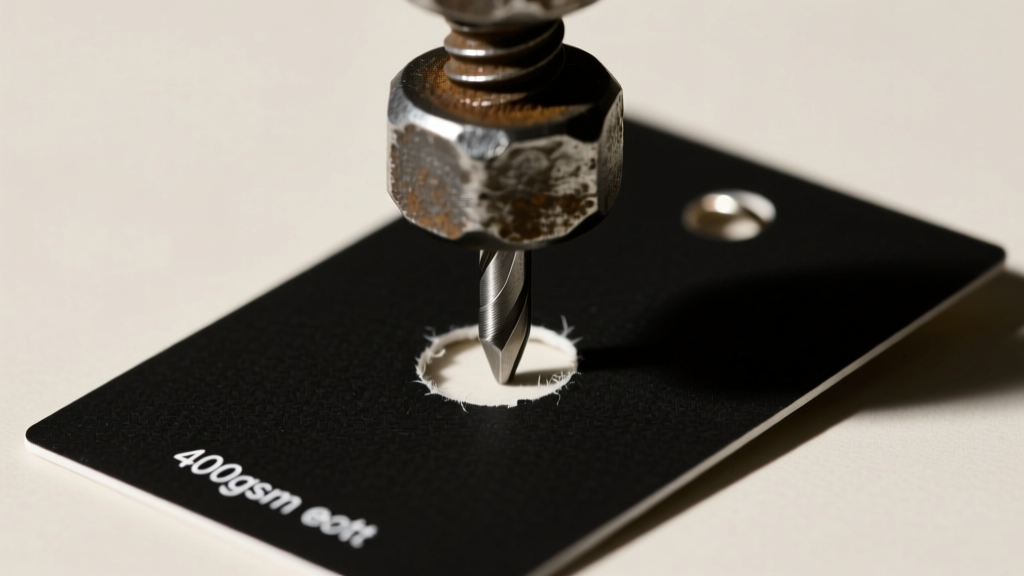
For independent jewelers and packaging designers, the presentation of a piece is just as critical as the craftsmanship of the metalwork. While much attention is paid to the jewelry itself, the structural integrity of the packaging often dictates the customer's first physical interaction with the brand. At the center of this intersection is the earring card hole punch—a tool that, when misunderstood, leads to frayed cardstock, bent earring posts, and a degraded unboxing experience. In 2026, with the industry's massive shift toward ultra-thick, sustainable cotton-rag papers and acrylic display cards, understanding the technical specifications of your punching equipment is no longer optional; it is a requirement for professional packaging.
The Anatomy of a Professional Earring Card Hole Punch
A precision earring card hole punch is not merely a sharpened tube. It is a matched set consisting of a male punch (the cutting pin) and a female die (the anvil or lower hole). The clearance between the male punch diameter and the female die hole is the single most important factor in achieving a clean cut. For standard paper stocks (up to 400 GSM), the optimal clearance is roughly 5% to 10% of the material thickness per side. If the clearance is too wide, the paper will tear and leave a fibrous halo around the hole. If it is too tight, the tool will bind, accelerating wear on the cutting edge and requiring excessive manual force.
Punch Mechanism Types: Lever vs. Plier vs. Arbor Press
Choosing the right mechanical advantage is dictated by your production volume and material density:
- Plier-Style Punches: Ideal for low-volume studios using standard 250–300 GSM cardstock. They rely on hand grip strength and typically feature a rotating turret with multiple die sizes. However, they lack the sheer force required for modern eco-friendly cotton papers.
- Lever-Style (Throat) Punches: The industry standard for medium-volume production. Models like the Roper Whitney No. 5 Jr. offer a mechanical advantage that cleanly shears through 600 GSM cover stock and thin leather. The throat depth (usually 2 to 4 inches) dictates how far from the edge you can place your earring holes.
- Arbor Press & Drill Press Setups: Reserved for high-volume manufacturing or non-traditional materials like 1/8-inch acrylic, wood veneer, or recycled PET plastics. These require specialized tungsten-carbide or high-speed steel (HSS) drill dies and rigid clamping jigs to prevent material shattering.
Matching Hole Diameters to Earring Post Gauges
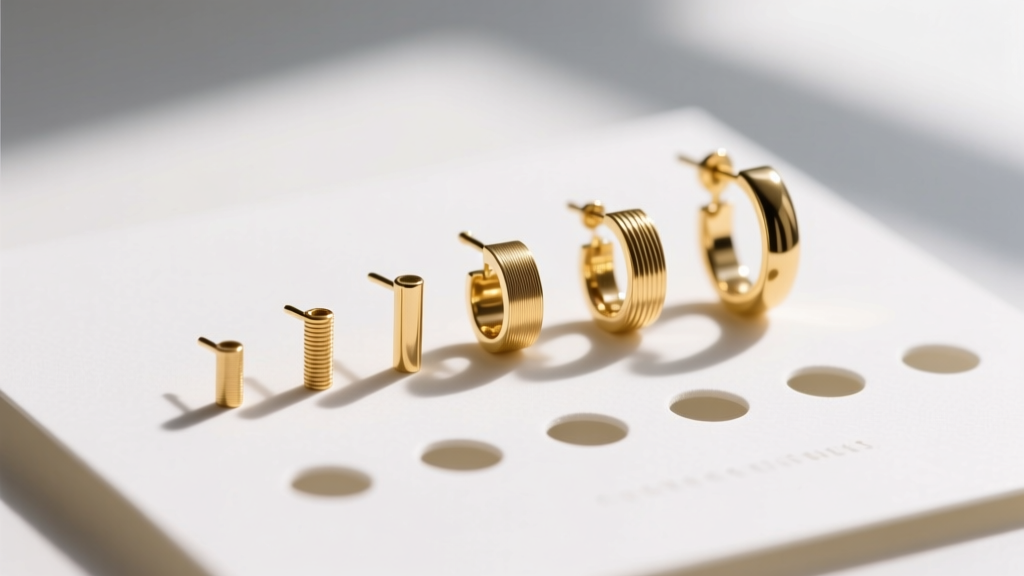
The most frequent error in jewelry packaging is utilizing a one-size-fits-all hole diameter. A hole that is too large makes the earring card feel cheap and allows the jewelry to flop downward, while a hole that is too small forces the jeweler to bend the post during insertion, potentially snapping the solder joint at the base of the earring.
Below is the definitive technical matrix for matching standard wire gauges to the correct earring card hole punch die size. Note that the hole must accommodate not just the wire, but also the friction of the earring back (butterfly clutch or silicone stopper) passing through during the customer's unboxing.
| Earring Wire Gauge | Wire Diameter (mm) | Recommended Punch Die Size (Imperial) | Punch Die Size (Metric) | Best Use Case |
|---|---|---|---|---|
| 22 Gauge | 0.64 mm | 1/16" | 1.58 mm | Delicate studs, lightweight pearls |
| 20 Gauge | 0.81 mm | 1/16" or 5/64" | 1.58 - 1.98 mm | Standard friction studs, small hoops |
| 18 Gauge | 1.02 mm | 3/32" | 2.38 mm | Standard French hooks, leverbacks |
| 16 Gauge | 1.29 mm | 3/32" or 1/8" | 2.38 - 3.17 mm | Heavy dangles, cartilage display hooks |
| 14 Gauge | 1.63 mm | 1/8" | 3.17 mm | Thick ear wires, specialized display hooks |
Paper Stock and GSM Limitations
In 2026, the jewelry industry has heavily favored uncoated, high-GSM (Grams per Square Meter) sustainable papers. While these materials feel luxurious, their long, interlocking fibers pose a significant challenge for standard punch dies. Coated cardstocks (like standard 14pt C2S) cut cleanly because the clay coating fractures sharply. Uncoated cotton-rag papers (often 400 to 600 GSM), however, tend to crush and tear if the punch die lacks a proper shear angle.
To achieve a clean cut on 600 GSM cotton paper, the male punch must feature a hollow-ground tip or a concave shear face. This design concentrates the cutting force on the perimeter of the hole, slicing the fibers rather than crushing them. If you are sourcing packaging from suppliers like Stuller or designing custom cards, always request a sample punch test on your exact paper stock before committing to a bulk die order.
Die Steel Grades and Maintenance
The longevity of your earring card hole punch is entirely dependent on the metallurgy of the die. Cheap, imported punches often use low-carbon steel that loses its edge after 500 cycles. Professional-grade tools utilize specific tool steels:
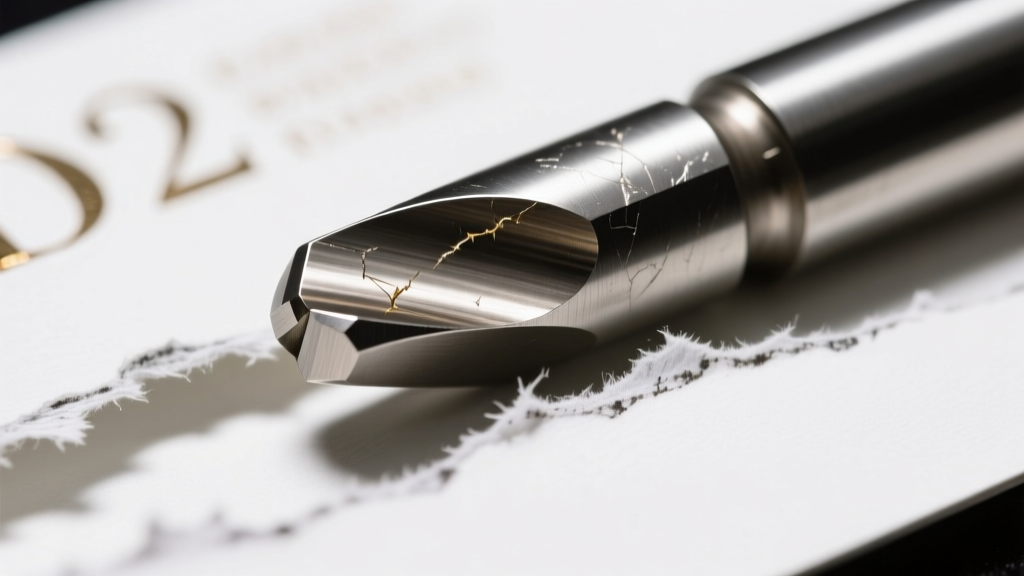
D2 Tool Steel: High carbon, high chromium. Exceptional edge retention, making it ideal for abrasive recycled papers containing silica or clay fillers. However, D2 is relatively brittle and can chip if dropped on a concrete studio floor.
A2 Tool Steel: Offers a better balance of toughness and wear resistance. It is the preferred material for lever punches that experience high lateral stress during operation.
Tungsten Carbide: Reserved for automated arbor presses punching acrylic or wood veneer. It is virtually impervious to wear but requires diamond tooling for resharpening.
For routine maintenance, jewelers should apply a micro-dose of dry PTFE lubricant to the male punch shaft every 1,000 cycles to prevent paper dust from binding the mechanism. Avoid liquid oils, which will attract paper chads and create an abrasive paste that ruins the die clearance.
Troubleshooting Common Punching Defects
Even high-end equipment from trusted suppliers like Rio Grande can develop issues over time. Here is a technical troubleshooting framework for the most common defects encountered on the studio bench:
- Defect: Fibrous Halo or Tear-Out. Cause: The clearance between the male and female die has widened due to wear, or the male punch is dull. Fix: Replace the die set. Attempting to sharpen a 1/16" male punch by hand will alter its diameter and ruin the clearance tolerance.
- Defect: Chad Retention (Paper plug stuck in the die). Cause: The ejection spring inside the male punch has failed, or paper dust has compacted inside the hollow shaft. Fix: Disassemble the punch shaft, clear the compacted dust with a high-pressure air nozzle, and replace the internal compression spring.
- Defect: Asymmetric or Oval Holes. Cause: The guide rails on a lever press have worn unevenly, causing the male punch to enter the female die at a slight angle. Fix: Shim the guide block with brass feeler gauges (available at McMaster-Carr) to re-center the punch travel path.
- Defect: Cracking on Acrylic or Veneer Cards. Cause: Using a standard flat-faced paper punch on rigid materials. Fix: Switch to a brad-point or spur-gear die specifically designed for plastics and woods, and ensure the card is backed by a sacrificial MDF board to prevent exit-blowout.
Final Thoughts on Packaging Precision
The earring card hole punch is a deceptively complex piece of studio equipment. By respecting the physics of die clearance, matching hole diameters strictly to wire gauges, and maintaining your tool steel, you elevate your packaging from a mere necessity to a hallmark of luxury craftsmanship. As consumer expectations for premium, sustainable unboxing experiences continue to rise, the jewelers who master these micro-details will be the ones who command premium pricing and brand loyalty.


