Why Do Men Wear Earrings? History & Buying Guide
Discover why men wear earrings and how to choose the right pair. Our 2026 buying guide covers gauges, metals, and styles for every motive.

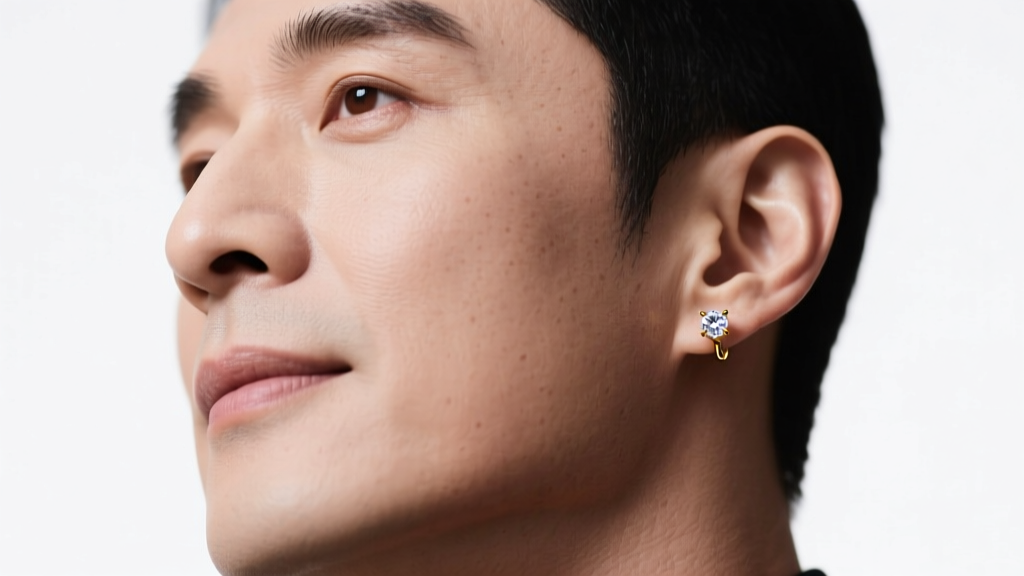
The landscape of men’s jewelry has undergone a massive paradigm shift. Gone are the days when a single earlobe stud was the sole acceptable form of male ear adornment. As we navigate 2026, the boundaries of men's jewelry have fully dissolved, giving way to curated earscapes, minimalist huggies, and bold statement pieces. But before adding to your collection, it is crucial to understand the underlying motivations behind the trend. When researching why do men wear earrings, you quickly realize that the motivation dictates the hardware. Whether you are signaling professional subtlety, honoring cultural heritage, or embracing avant-garde streetwear, your 'why' should determine your 'what'.
The Evolution: Why Do Men Wear Earrings Today?
Historically, men have worn earrings for deeply practical and symbolic reasons. Sailors in the 18th and 19th centuries wore gold hoops as a form of insurance—a valuable metal to pay for a proper Christian burial should they wash ashore. During the Elizabethan era, noblemen like Sir Walter Raleigh wore elaborate pearl drops to signal wealth and courtly status.
Today, the reasons are far more nuanced and deeply personal. In 2026, men wear earrings primarily for three reasons:
- Personal Branding & Aesthetics: Earrings serve as a focal point that frames the jawline and complements modern grooming and haircut trends, particularly fades and textured crops.
- Subculture & Community Signaling: From the heavy gauge stretching in alternative music scenes to the delicate diamond clusters in hip-hop and luxury streetwear, earrings act as a visual handshake within specific communities.
- Gender-Fluid Fashion: The modern menswear movement has discarded rigid gender binaries, allowing men to adopt drop earrings, ear cuffs, and pearls as standard accessories.
The Motive-to-Style Matrix: What to Look For
Matching your earring purchase to your underlying motivation ensures you buy pieces that integrate seamlessly into your lifestyle. Use this decision framework to guide your next purchase.
| Your Motive | Recommended Style | Target Gauge | Ideal Material | Est. Price Range |
|---|---|---|---|---|
| Corporate Subtlety | 2mm-4mm Bezel Studs or Threadless Labrets | 20G or 18G | 14k/18k Solid Gold, ASTM F136 Titanium | $150 - $600 |
| Streetwear / Edge | Chunky Huggies, Pave Hoops, Ear Cuffs | 18G or 16G | Sterling Silver, Rhodium-Plated Brass | $80 - $350 |
| Alternative / Stretched | Tunnels, Plugs, Heavy Stone Weights | 8G to 00G | Borosilicate Glass, Surgical Steel, Wood | $40 - $200 |
| Curated Earscape | Flat-back Threadless Pins, Helix Cuffs | 16G (Cartilage) | Implant-Grade Titanium (ASTM F136) | $90 - $450 |
Technical Specs: Gauges, Metals, and Failure Modes
A common mistake men make when buying earrings is ignoring the technical specifications of the jewelry, leading to discomfort, allergic reactions, or damaged piercings. Here is the deep-dive on what to look for under the hood.
Understanding Gauge Sizes
Gauge refers to the thickness of the post or wire. The higher the number, the thinner the metal. Standard lobe piercings done with a gun are usually 20G (0.8mm), while professional needle piercings are typically 18G (1.0mm) or 16G (1.2mm). Cartilage piercings (helix, tragus, conch) are almost universally 16G. If you are buying high-end jewelry from brands like BVLA or Maria Tasha, you must know your exact gauge, as their threadless systems are precision-machined and will not fit incorrectly sized holes.
Material Grades and the Sweat Factor
Men generally have higher sebum (oil) and sweat production around the ears and neck. This creates a highly corrosive environment for cheap metals. Avoid 'gold-plated brass' or 'gold-vermeil' for daily wear. The galvanic reaction between sweat and base metals will cause rapid tarnishing and the dreaded 'green ear' effect.
Instead, look for these premium benchmarks:
- ASTM F136 Implant-Grade Titanium: The gold standard for sensitive skin. It contains virtually zero nickel and is lightweight enough for cartilage piercings that are prone to migration.
- Solid 14k or 18k Gold: Ensure it is solid, not plated. 14k is slightly harder and more scratch-resistant for active men, while 18k offers a richer yellow hue but is softer.
- Niobium: A highly reactive metal that can be safely anodized to any color without using dyes or plating, making it completely hypoallergenic.
For comprehensive standards on body-safe metals, refer to the Association of Professional Piercers (APP), which strictly outlines acceptable ASTM and ISO standards for jewelry that interacts with human tissue.
Professional vs. Statement: Buying for Your Environment
Your daily environment should heavily influence the mechanics of the earring you buy, not just the aesthetic.
The Corporate Professional
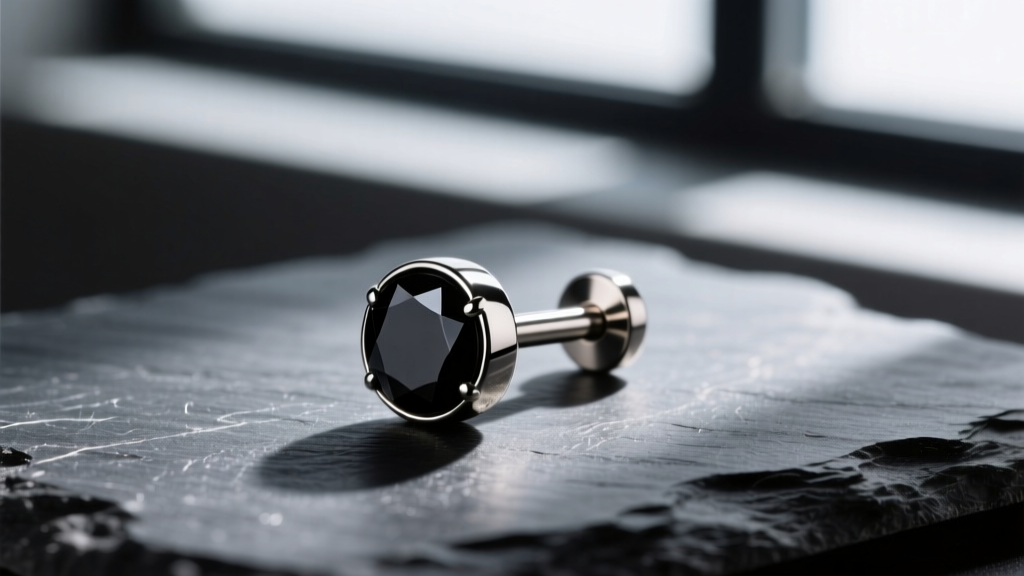
If you work in a conservative environment but want to maintain a sharp, modern edge, opt for threadless push-pin labrets. Unlike traditional 'butterfly' friction backs that can harbor bacteria and dig into your neck when you sleep or wear headphones, threadless flat-backs sit completely flush against the inner lobe. A 3mm bezel-set diamond or a simple matte black onyx end on an 18G titanium shaft is virtually indestructible, comfortable for 24/7 wear, and subtle enough for the boardroom.
The Creative and Streetwear Enthusiast
For those in creative fields, the ear is a canvas. Huggies (small hoops that 'hug' the lobe) with a hinged clicker closure are excellent because they don't catch on hoodie strings or collars. If you are looking at ear cuffs for the helix or conch (which require no piercing), ensure the cuff has an adjustable tension screw rather than a simple squeeze-fit, which will loosen over time and fall off.
Troubleshooting Common Men's Earring Failures
Even experienced collectors run into hardware failures. Here is how to troubleshoot the most common issues men face with earrings.
Failure 1: The Heavy Earring Tear
The Problem: You buy a thick, solid 14k gold hoop (12mm diameter or larger). Within six months, your standard 18G lobe piercing begins to stretch, migrate, and eventually tear.
The Fix: Solid gold is incredibly dense. A thick hoop can easily weigh over 10 grams, which is too much for a standard lobe hole to support against gravity. If you want the look of a chunky hoop, buy hollow-core tubing hoops or look for hoops crafted from lightweight anodized niobium. Alternatively, use silicone O-ring backings on heavy studs to distribute the weight across a wider surface area of the lobe.
Failure 2: Contact Dermatitis and 'The Itch'
The Problem: Your earlobe becomes red, flaky, and intensely itchy after wearing a new pair of 'surgical steel' earrings.
The Fix: The term 'surgical steel' is largely unregulated and often contains high levels of nickel, which is the primary culprit for metal allergies. According to the American Academy of Dermatology (AAD), nickel allergy is one of the most common causes of allergic contact dermatitis. Immediately switch to ASTM F136 Titanium or solid 18k gold, and clean the piercing with sterile saline to allow the micro-tears to heal.

Failure 3: The Lost Back
The Problem: You constantly lose the friction backs to your stud earrings, especially when pulling off shirts or towels.
The Fix: Abandon friction backs entirely. Upgrade your jewelry to a threadless system (where a bent pin creates tension inside the hollow post) or a threaded system (where the end screws into the post, preferably with internal threading so the sharp threads don't tear your piercing hole upon insertion).
Final Verdict: Building a Core Collection
Understanding why do men wear earrings in the modern era reveals that it is no longer about following a fleeting trend, but about establishing a permanent facet of your personal style. To build a bulletproof core collection in 2026, start with a high-quality, flat-back threadless titanium stud for daily, frictionless wear. Add a pair of mid-weight huggies for evenings out, and invest in one solid gold statement piece that reflects your specific subculture or aesthetic. By prioritizing precise gauge sizing, biocompatible metals, and environment-appropriate mechanics, your earrings will last a lifetime without compromising your comfort or your piercings.


