A Beginner's Guide to Women's Earrings Black Styles and Materials
Discover the best women's earrings black styles. Learn about oxidized silver, black titanium, and onyx gems in this beginner guide.


Why Choose Dark Aesthetics? The Appeal of Black Jewelry
When building a versatile jewelry wardrobe, most beginners start with classic yellow gold or bright sterling silver. However, if you have been searching for 'women's earrings black' to find edgy, versatile, and modern pieces, you are tapping into one of the most sophisticated trends in contemporary accessorizing. Black earrings offer a striking contrast that works beautifully across all skin tones, providing a moody, elegant, or fiercely modern vibe depending on the material and cut.
Unlike bright metals that reflect light, black metals and gemstones absorb it, creating a subtle, understated depth. But navigating the world of dark jewelry requires specific knowledge. Not all black metals are created equal, and understanding the difference between a surface treatment and a molecular bond is the key to making a purchase that lasts. In this 2026 guide, we break down the exact metallurgy, gemstone grades, and sizing metrics you need to know before buying your first pair of black earrings.
The Metallurgy of Black Earrings: What You Are Actually Buying
Pure black metals do not exist in nature. Every black metal earring on the market is the result of a specific chemical or physical treatment. Understanding these treatments will save you from premature fading and allergic reactions.
1. Oxidized Sterling Silver (The Vintage Look)
Oxidized silver is standard 925 sterling silver that has been intentionally exposed to a chemical compound called liver of sulfur (potassium sulfide). This triggers a controlled tarnishing process where the copper alloy within the silver reacts to form copper sulfide, creating a dark, blackish-grey patina.
- Durability: Moderate. The oxidation is a surface layer that will naturally wear away on high-friction areas over 1 to 2 years, revealing the bright silver beneath.
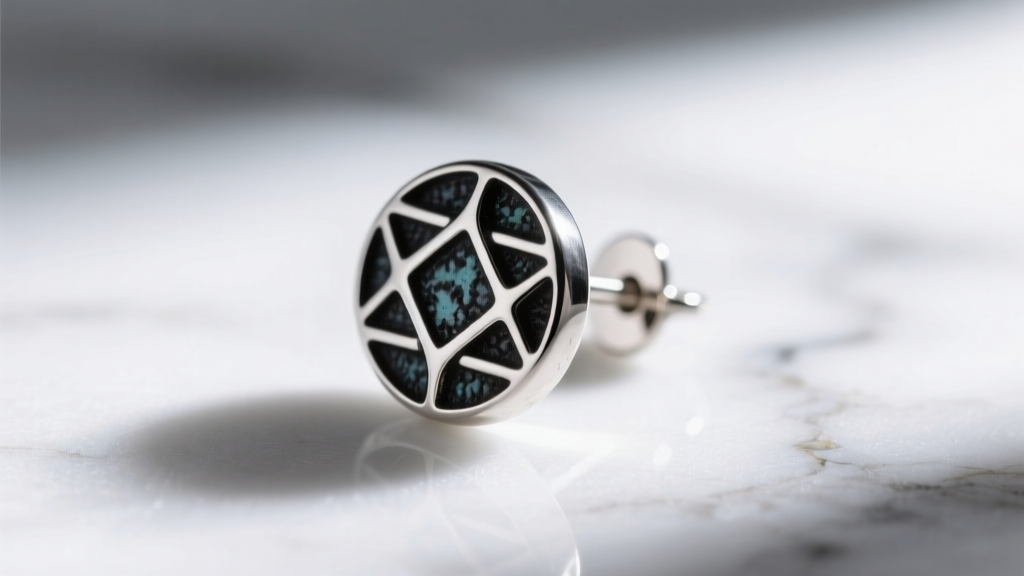
- Best For: Intricate stud earrings and textured dangles where the dark patina highlights the engraved details.
- Price Range: $40 – $120.
2. Black Rhodium Plating (The High-Shine Finish)
Rhodium is a precious metal in the platinum family. To create 'black rhodium,' jewelers mix traditional rhodium with darkening agents or black ruthenium before electroplating it onto a base metal like brass or silver. It provides a brilliant, mirror-like black finish.
The Catch: Black rhodium is notorious for wearing off faster than its silver counterpart. On earrings, which experience less friction than rings, it may last 12 to 18 months. Expect to pay $30 to $50 for professional replating when it inevitably fades.
3. PVD Black Titanium (The Permanent Solution)
For the ultimate beginner-friendly, worry-free option, look for Grade 23 Titanium (Ti-6Al-4V ELI) treated with Physical Vapor Deposition (PVD). In a vacuum chamber, carbon is vaporized and bonded to the titanium at a molecular level, creating a Diamond-Like Carbon (DLC) coating. By 2026, eco-friendly PVD processes have made this the gold standard for dark jewelry.
- Durability: Exceptional. The DLC coating ranks near a 9 on the Mohs hardness scale, making it virtually scratch-proof and completely impervious to water, sweat, and cosmetics.
- Hypoallergenic: 100% nickel-free and biocompatible, making it the absolute best choice for sensitive ears or fresh cartilage piercings.
- Price Range: $60 – $150.
Black Gemstones: Onyx, Spinel, and Beyond
If you prefer the sparkle of a faceted stone over dark metal, you will need to choose your black gemstone carefully. According to the Gemological Institute of America (GIA), the market is flooded with dyed stones, so knowing what to look for is essential.
Black Onyx vs. Black Spinel
Black Onyx is a variety of chalcedony (quartz). It has a Mohs hardness of 7, making it durable enough for earrings but prone to chipping if dropped on tile. Be aware that almost all black onyx on the market is actually grey agate that has been boiled in sugar and treated with sulfuric acid to turn it black. It is highly affordable ($5 to $20 per stone) and offers a smooth, glassy luster.
Black Spinel is the superior, albeit slightly more expensive, choice. With a Mohs hardness of 8 and excellent toughness, it resists scratching far better than onyx. Natural black spinel possesses a mesmerizing, deep brilliance that outshines onyx. As noted by the GIA's spinel research, it is entirely natural and requires no heat or chemical treatments to achieve its dark color. Expect to pay $20 to $50 per carat for a well-cut black spinel.
Material Comparison Chart
| Material | Mohs Hardness | Allergy Risk | Maintenance Level | Expected Lifespan |
|---|---|---|---|---|
| Oxidized Silver | 2.5 - 3 (Metal) | Low (if nickel-free) | High (Avoid chemicals) | Patina fades in 1-2 yrs |
| Black Rhodium | 4.5 - 5.5 | Moderate (Base metal) | High (Requires replating) | 12-18 months |
| PVD Black Titanium | 9 (Coating) | None (Biocompatible) | Very Low | Lifetime |
| Black Onyx | 7 | N/A | Low | Lifetime (Avoid drops) |
| Black Spinel | 8 | N/A | Very Low | Lifetime |
Sizing and Gauges: Getting the Perfect Fit
Buying black earrings isn't just about color; it's about the physical fit of the post or hoop. Wearing the wrong gauge can cause irritation, especially in cartilage piercings.
- 20 Gauge (0.81mm): The standard for most commercial women's stud and dangle earrings. Best for standard, healed earlobe piercings.
- 18 Gauge (1.02mm): Slightly thicker, often used for secure huggie hoops and higher-end designer studs. Provides better stability for heavier black onyx drops.
- 16 Gauge (1.29mm): The standard for cartilage piercings (helix, tragus, conch). If you are buying black titanium hoops for your upper ear, 16G is usually required to prevent the 'cheese-cutter effect' where thin wire migrates through the tissue.
Pro Tip: Pay attention to post length. Standard lobe posts are 10mm to 11mm. If you have thin earlobes, look for 6mm to 8mm posts to prevent the earring back from drooping.
Care and Maintenance: Protecting Your Dark Jewelry
The biggest mistake beginners make with black jewelry is cleaning it the same way they clean bright silver. Here is your actionable care framework:
How to Clean Oxidized Silver
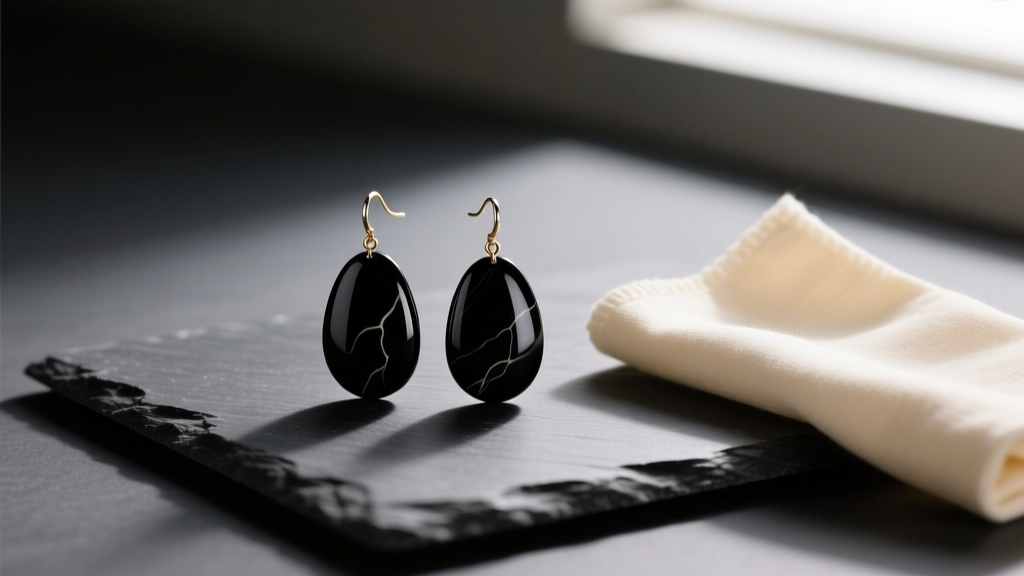
Never use commercial silver dip or ultrasonic cleaners on oxidized silver. These chemicals are designed to strip tarnish, which means they will instantly strip away the intentional black patina you paid for. Instead, use a damp microfiber cloth with a drop of mild, phosphate-free dish soap. Gently rub the high points of the metal to remove skin oils, leaving the dark recesses untouched.
How to Clean PVD Titanium and Black Spinel
Because PVD titanium and black spinel are incredibly hard and chemically inert, they are virtually maintenance-free. You can safely use an ultrasonic jewelry cleaner or a soft toothbrush with warm soapy water to remove lotion and hairspray buildup. For black onyx, avoid ultrasonic cleaners, as the high-frequency vibrations can cause internal fractures in the quartz structure.
Final Thoughts on Styling Black Earrings
Black earrings act as a visual anchor for your outfit. Pair black titanium huggies with a crisp white blouse for a high-contrast, modern office look, or opt for faceted black spinel drops with an evening gown for subtle, gothic elegance. By prioritizing PVD coatings for metals and natural spinel for gemstones, you ensure your dark jewelry collection remains as striking on day 1,000 as it was on day one.


