2026 Gift Guide: Choosing Turquoise Cluster Earrings
Discover the perfect turquoise cluster earrings for every occasion in our 2026 gift guide. Expert tips on stone grades, metals, and styling.

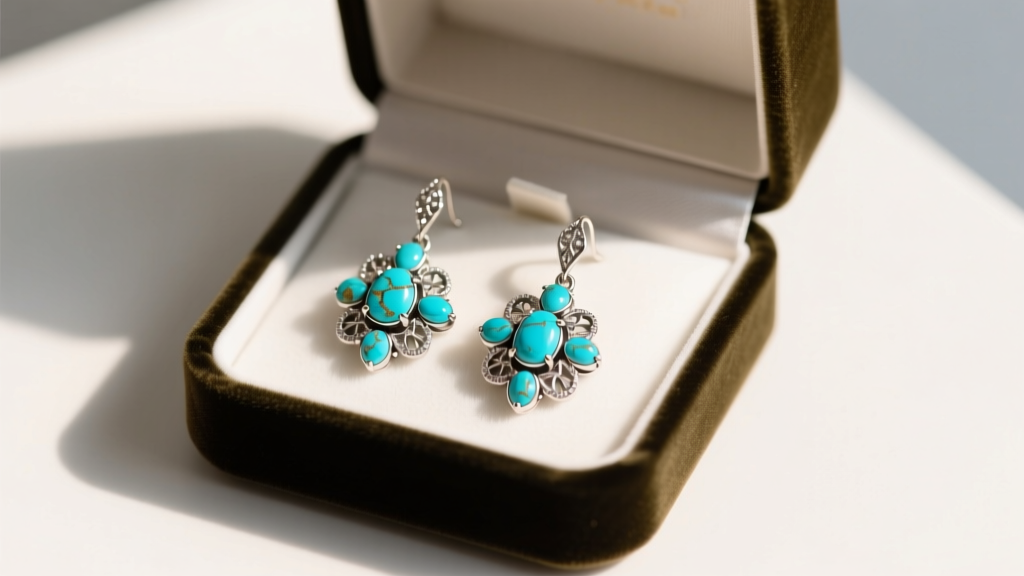
The Renaissance of Turquoise Cluster Earrings in 2026
Gift-giving in 2026 has decisively shifted away from mass-produced luxury toward pieces with narrative depth, artisanal character, and geological authenticity. Among the most sought-after categories this season are turquoise cluster earrings. Unlike single-stone solitaires, cluster settings group multiple cabochons or faceted stones into a unified, high-impact silhouette. They bridge the gap between vintage Southwestern heritage and contemporary maximalism, making them an exceptionally versatile gift. However, buying turquoise requires a nuanced understanding of gemology, structural integrity, and the recipient's lifestyle. This guide provides the technical and aesthetic frameworks necessary to select the perfect pair.
Decoding the Stone: Mine Origins and Matrix Profiles
The value and aesthetic of turquoise are heavily dictated by its mine of origin and the presence of 'matrix'—the host rock webbing that runs through the stone. According to the Gemological Institute of America (GIA), turquoise is a porous, semi-translucent to opaque cryptocrystalline aggregate, meaning its visual profile varies wildly depending on the mineral deposits in its specific geographic vein.
| Turquoise Variety | Color Profile | Matrix Characteristics | Best Occasion / Vibe |
|---|---|---|---|
| Sleeping Beauty | Uniform, vivid sky blue | None to very minimal | Minimalist, Corporate, Everyday Elegance |
| Kingman | Deep blue to blue-green | Intricate black or golden-brown webbing | Statement Evening, Bohemian Chic |
| Royston | Light blue to rich green | Heavy, dramatic brown matrix | Artisan, Vintage, Southwestern |
| Lander Blue | High-contrast spiderweb | Dense black, lace-like patterns | Collector Grade, High-End Anniversary |
When gifting, consider the recipient's existing wardrobe. Sleeping Beauty offers a clean, modern pop of color that pairs seamlessly with neutral office attire, while heavily webbed Royston or Kingman stones appeal to those who favor eclectic, textured aesthetics.
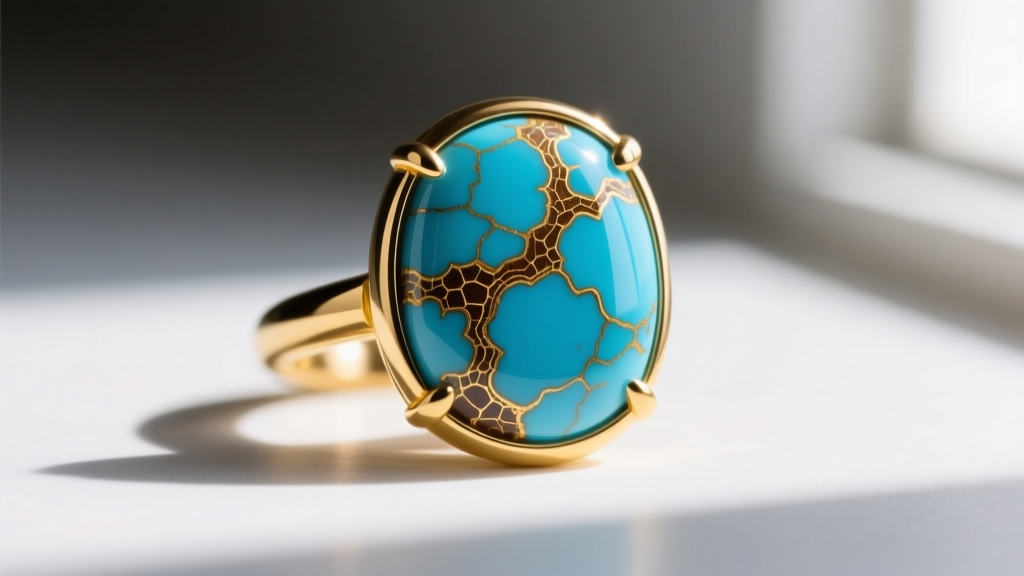
Structural Integrity: Bezel vs. Prong Settings
Turquoise ranks between 5 and 6 on the Mohs hardness scale, making it significantly softer than diamonds or sapphires. Because of this, the setting style in a cluster earring is not merely an aesthetic choice; it is a protective necessity.
Why Bezel Settings Reign Supreme
For turquoise cluster earrings, bezel settings—where a continuous metal rim encircles the stone's girdle—are the gold standard. They protect the fragile edges of the cabochon from chipping upon impact. Prong settings, while allowing more light to enter the stone, leave the perimeter exposed and are generally discouraged for softer, opaque gems unless the piece is intended strictly for occasional, careful wear.
Metal Pairings: Silver, Gold, and Alloys
The metal chosen for the cluster base dramatically alters the earring's visual temperature and price point.
- .925 Sterling Silver: The traditional pairing for turquoise. Oxidized (darkened) silver enhances the rustic, vintage feel of matrix-heavy stones, while highly polished silver offers a crisper, more modern contrast. Expect to pay between $80 and $250 for high-quality silver cluster studs.
- 14k Yellow Gold: Warmer and highly luxurious. Yellow gold complements the green and brown undertones in Royston and Kingman turquoise beautifully. Because 18k and 24k gold are too soft to securely hold the tension of a multi-stone cluster setting, 14k (58.5% pure gold) is the optimal choice for durability.
- 14k White Gold: Often paired with Sleeping Beauty turquoise and small diamond accents for a high-end, contemporary look that mimics the aesthetic of fine sapphire or aquamarine jewelry.
Occasion Matching: A Styling Framework
To ensure your gift is worn rather than stored in a jewelry box, match the earring's silhouette to the recipient's primary lifestyle environments.
The Corporate Minimalist
Opt for compact cluster studs measuring no larger than 12mm in diameter. A tight, geometric arrangement of small (2mm to 3mm) Sleeping Beauty cabochons set in 14k white gold provides a sophisticated nod to color without violating conservative dress codes.
The Bohemian Traveler
Drop or dangle cluster earrings are ideal here. Look for designs that incorporate oxidized sterling silver, perhaps mixing turquoise with small coral or lapis lazuli accents in a cascading, asymmetrical cluster. These pieces thrive in casual, outdoor, or festival environments.
The Evening Glamour
For formal events, seek out chandelier or floral cluster designs in 14k yellow gold. High-grade turquoise paired with micro-pavé diamond halos elevates the stone from casual daywear to black-tie appropriate elegance.
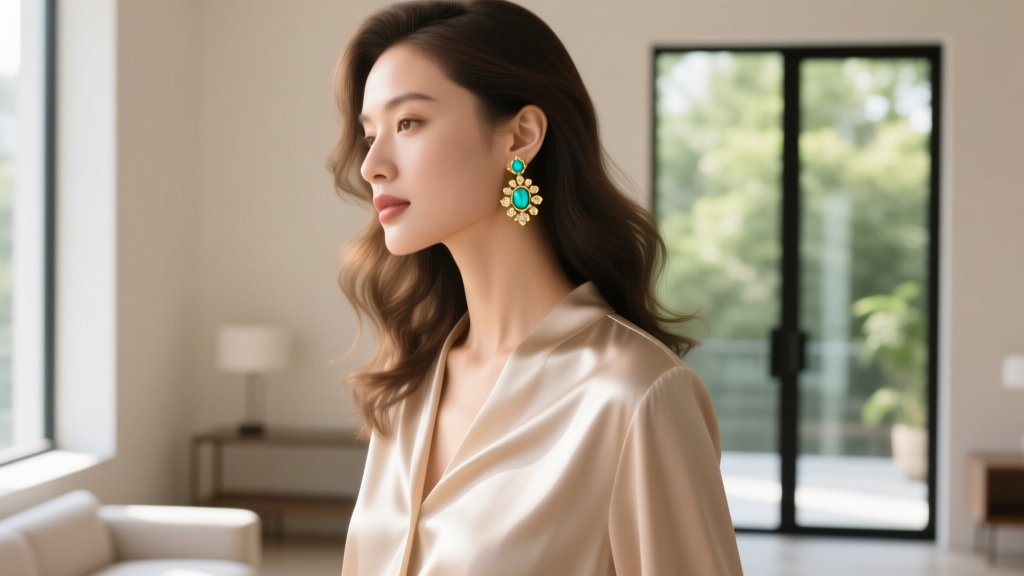
Technical Sizing: Gauge, Weight, and Backings
A common failure point in gifting heavy cluster earrings is neglecting the post gauge and backing mechanics. The International Gem Society (IGS) notes that the density of multi-stone cluster settings can easily exceed 4 grams per earring, which causes standard earlobes to droop uncomfortably.
- Post Gauge: Standard earrings use a 20-gauge (0.8mm) post. For heavier turquoise cluster drops, insist on an 18-gauge (1.0mm) or even 16-gauge (1.2mm) post to provide structural rigidity and prevent the post from bending.
- Backings: Standard friction 'butterfly' backs are insufficient for heavy clusters. Look for earrings equipped with La Pousette (locking) backs or omega clip-backs. These distribute the weight across a wider surface area of the earlobe and feature mechanical locking mechanisms that prevent the loss of a valuable piece.
Authenticity and Treatment Disclosures
As outlined by the American Gem Trade Association (AGTA), any treatments applied to a gemstone must be disclosed. Because natural, untreated turquoise is incredibly rare and prone to discoloration from skin oils and cosmetics, over 90% of the market is 'stabilized'. Stabilization involves infusing the porous stone with a colorless epoxy resin under pressure, which hardens the gem and locks in its color. This is an accepted, permanent industry practice and does not diminish the stone's value, provided it is not dyed. Avoid 'block' turquoise (reconstituted turquoise dust mixed with glue) or dyed howlite/magnesite masquerading as the real thing. Always request a certificate of authenticity or a detailed receipt specifying 'natural stabilized turquoise'.
The Golden Rule of Turquoise Care
When presenting turquoise cluster earrings as a gift, include a specialized care card. Turquoise is highly sensitive to chemicals. It must never be cleaned in an ultrasonic jewelry cleaner, as the high-frequency vibrations can shatter the stone, and the heat can melt the stabilization resin. Steam cleaners are equally destructive. The only safe cleaning method is a gentle wipe with a soft, slightly damp microfiber cloth, followed by immediate drying. Remind the recipient to apply perfumes, hairsprays, and lotions before putting the earrings on to preserve the stone's natural luster for decades to come.


