Diamond Jacket Earrings: 2026 Trend Analysis & Styling Guide
Explore 2026 trends for diamond jacket earrings. Learn technical buying tips, gauge compatibility, lobe-droop fixes, and modular styling frameworks.

The Renaissance of Modular Ear Curation
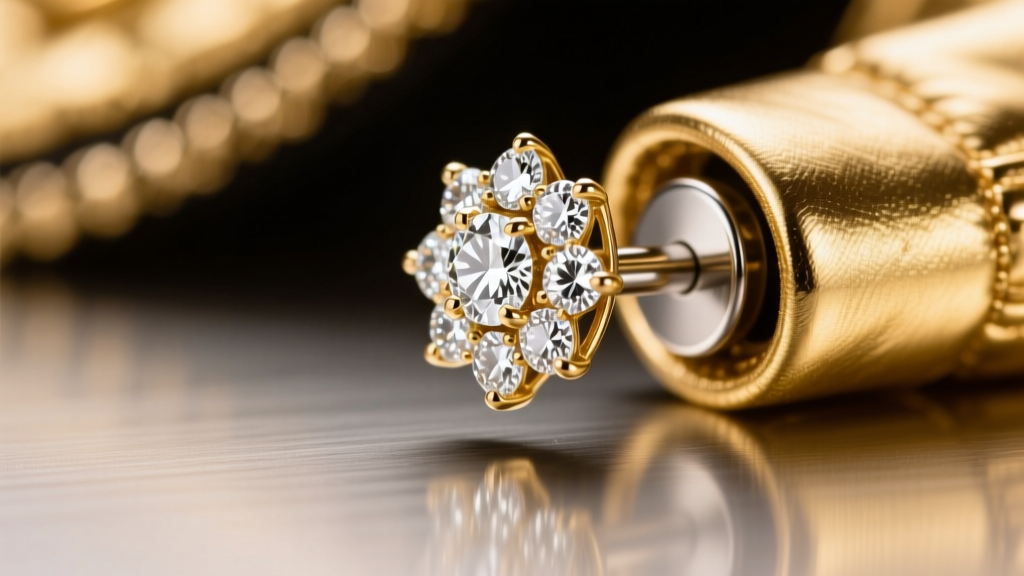
The jewelry landscape of 2026 has decisively moved away from static, single-purpose pieces toward dynamic, interchangeable designs. At the forefront of this movement are diamond jacket earrings—a masterclass in modular styling. Unlike traditional drop earrings that require a dedicated piercing or a fixed silhouette, earring jackets are auxiliary components designed to slide onto the post of an existing stud earring, resting either just below the earlobe or wrapping around the cartilage. This architectural approach to jewelry allows collectors to transform a simple 0.5-carat solitaire into a sprawling, ear-climbing masterpiece in seconds.
As a senior trend analyst for Jewel Style Radar, I have tracked the evolution of the "ear party" into what we now term "Modular Maximalism." Consumers are no longer buying isolated earrings; they are investing in base studs and acquiring multiple diamond jackets to suit different occasions. This guide dissects the technical mechanics, metallurgical requirements, and styling frameworks necessary to master the diamond jacket trend this year.
Anatomy and Mechanics: How Jackets Actually Work
To understand the appeal of diamond jacket earrings, one must first understand their mechanical reliance on the host stud. A standard jacket features a precision-drilled aperture (hole) at its apex. The post of your primary stud earring passes through the earlobe, then through the jacket's aperture, and is finally secured by the earring back. The jacket essentially hangs from the post, utilizing the tension of the earring back against the lobe to stay upright.
The Critical Role of Post Gauge
The most common failure point when purchasing aftermarket diamond jackets is gauge incompatibility. Earring posts are not universally sized. Standard fashion jewelry often utilizes 22-gauge (0.64mm) or 20-gauge (0.81mm) posts, while fine jewelry and body-safe implants typically use 18-gauge (1.02mm) or 16-gauge (1.29mm) posts. If your diamond jacket is drilled for an 18-gauge post, it will not fit over a thicker 16-gauge labret. Conversely, if you place an 18-gauge jacket onto a flimsy 22-gauge post, the aperture will be too loose, causing the jacket to spin, droop, and eventually wear down the soft gold of the host post.
Expert Tip: Always measure your host stud's post thickness with digital calipers before purchasing a third-party diamond jacket. The ideal tolerance between the post and the jacket aperture is between 0.05mm and 0.10mm to allow for smooth sliding without rotational wobble.
2026 Trend Forecast: Asymmetry and Lab-Grown Melee
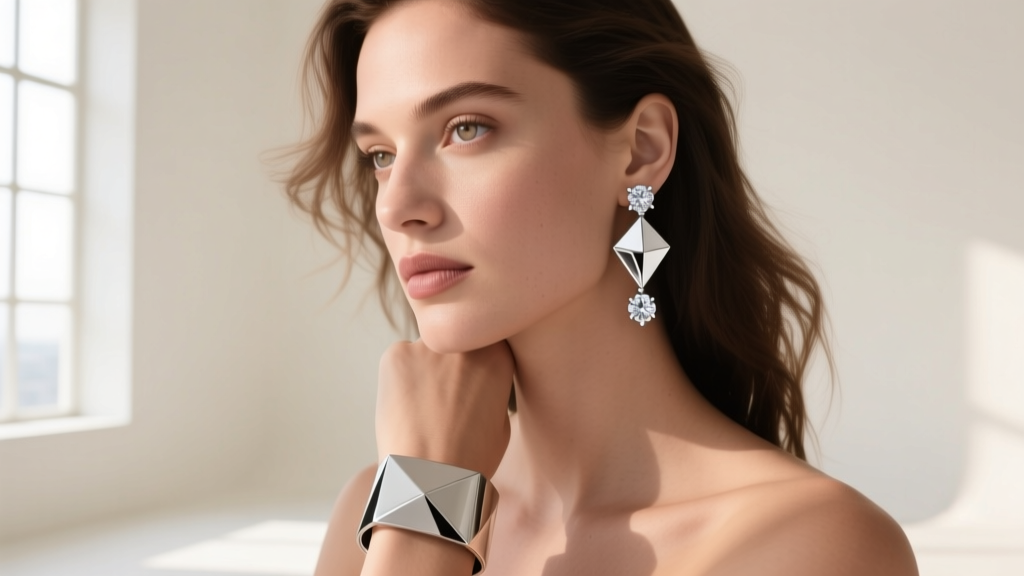
This year's runway shows and high jewelry releases have solidified two major trends regarding diamond jacket earrings. First is the embrace of deliberate asymmetry. Stylists are pairing a heavy, linear diamond jacket on the left ear with a simple, unadorned solitaire on the right. This creates a visual anchor that draws the eye across the face without overwhelming the wearer's features.
Second is the absolute dominance of lab-grown diamonds in the melee sector. Because jackets require dozens of tiny accent stones (melee) to create their intricate geometric or floral halos, the cost of natural melee has historically driven jacket prices into the thousands. In 2026, the use of premium lab-grown melee (typically graded G-H in color and VS in clarity) has allowed designers to create wider, more expansive jacket silhouettes at a 40% lower price point, democratizing the trend.
Technical Buying Guide: Alloys, Settings, and Pricing
When evaluating diamond jacket earrings, the structural integrity of the metal is just as important as the brilliance of the stones. The aperture area undergoes immense friction every time the piece is slid on or off the host post. Therefore, the alloy composition is critical.
Metal Durability and Diamond Grades
- 18k Yellow Gold: Highly desirable for its rich color, but relatively soft. Over time, the aperture of an 18k gold jacket may widen due to friction. Best for occasional wear.
- 14k White Gold (Rhodium Plated): The industry workhorse. The higher copper and zinc content makes 14k gold significantly harder and more resistant to aperture wear. Ideal for daily-wear jackets.
- Platinum 950: The ultimate choice for heirloom jackets. Platinum does not wear away; it merely displaces. A platinum aperture will grip the host post securely for decades.
Regarding the diamonds themselves, jackets rely on "melee"—stones ranging from 0.01 to 0.05 carats. According to the Gemological Institute of America (GIA), melee diamonds are rarely graded with full reports. When buying, look for jewelers who guarantee a minimum of SI1 clarity and G-H color for their melee. Lower grades (like I-J color or I1 clarity) will look milky and dull when clustered in a jacket, ruining the overall light performance.
Market Pricing Matrix
| Jacket Style | Metal Base | Diamond Type | Avg. Carat Weight | 2026 Price Range |
|---|---|---|---|---|
| Small Halo / Curved | 14k Gold | Lab-Grown Melee | 0.25 ctw | $350 - $550 |
| Linear Drop / Geometric | 18k Gold | Natural Melee | 0.50 ctw | $1,200 - $1,800 |
| Ear Cuff / Climber Wrap | Platinum 950 | Lab-Grown Melee | 0.75 ctw | $900 - $1,400 |
Solving the "Lobe Droop" Phenomenon
The most frequent complaint among new adopters of diamond jacket earrings is the "lobe droop." This occurs when the combined weight of the host stud and the diamond jacket exceeds the structural support of the earlobe tissue. The result is an earring that points downward toward the jawline rather than sitting flush and forward-facing.
To combat this, industry experts recommend abandoning standard butterfly friction backs. Instead, utilize silicone O-ring earring backs or flat-disc silicone stoppers. These provide a wider surface area against the back of the earlobe, distributing the weight of the heavy jacket more evenly. For severe droop, switch your host stud to a flat-back labret post (commonly used in cartilage piercings). The flat disc of the labret sits flush against the back of the lobe, providing a rigid, immovable foundation that completely eliminates drooping, even for jackets weighing over 2.5 grams.
Face Shape and Ear Anatomy Considerations
Diamond jacket earrings are not one-size-fits-all; their visual impact changes dramatically depending on facial geometry and ear placement.
Styling Framework by Face Shape
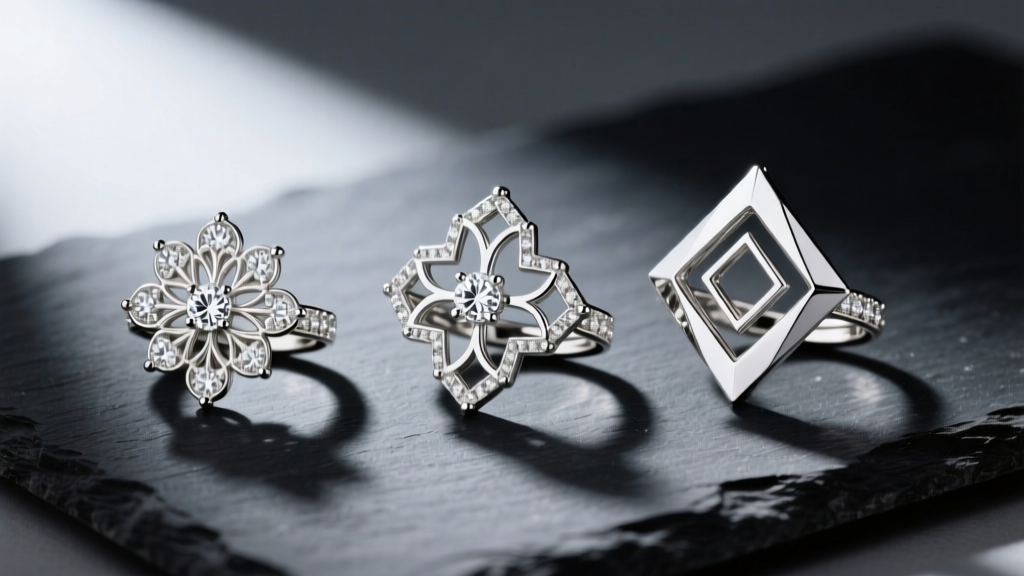
- Round Faces: Avoid wide, circular halo jackets, which will exaggerate facial width. Opt for linear, vertical drop jackets that elongate the face and draw the eye downward.
- Square Faces: Soften a strong jawline with curved, organic diamond jackets. Floral motifs or sweeping, asymmetrical crescent shapes add necessary visual softness.
- Heart-Shaped Faces: Balance a narrower chin with bottom-heavy jackets. Look for designs that feature a small stud connection but flare out into a wider diamond cluster at the bottom.
Additionally, consider your earlobe size. Those with smaller or attached earlobes should avoid heavy, oversized jackets, as the lack of tissue will cause the piece to pivot uncontrollably. Stick to micro-jackets that extend no more than 10mm below the piercing site.
Care, Maintenance, and Failure Modes
Because diamond jacket earrings feature dense clusters of melee stones, they are magnets for skin oils, lotions, and hairspray. When melee diamonds become coated in sebum, they lose their refractive index, appearing grey and lifeless. Clean your jackets weekly using a soft baby toothbrush and a solution of warm water and mild dish soap.
Warning on Ultrasonic Cleaners: While ultrasonic cleaners are excellent for solid diamond solitaires, they can be disastrous for certain diamond jackets. If the jacket utilizes tension settings, or if any of the melee diamonds have been fracture-filled to improve apparent clarity, the high-frequency vibrations of an ultrasonic bath can shatter the stones or rattle them loose from their micro-prongs. Always verify the setting type with your jeweler before utilizing ultrasonic or steam cleaning methods. For long-term storage, keep jackets in individual soft pouches to prevent the micro-prongs from snagging on other jewelry, a common issue noted by JCK Trade Publications in their recent care guides.
By understanding the precise mechanics of gauge compatibility, investing in structurally sound alloys, and leveraging the modular nature of these pieces, you can elevate your ear curation from a simple accessory to a masterful expression of 2026's most enduring jewelry trend.


