How to Style and Fit Gold Spiral Earrings: A Step-by-Step Guide
Learn how to style, fit, and care for gold spiral earrings. Our step-by-step guide covers gauge sizes, 14k vs 18k gold, and cartilage placement.

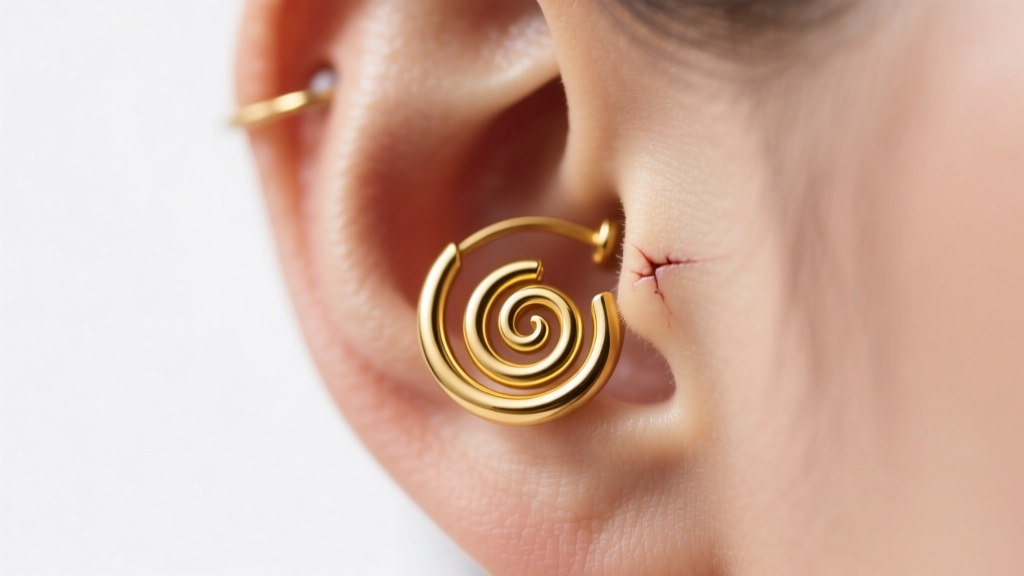
Gold spiral earrings—often referred to as continuous wire hoops, ear wraps, or seamless rings—are a cornerstone of modern ear curation. Unlike clickers or hinged segments that rely on mechanical closures, spirals depend entirely on the natural tension and metallurgical memory of the wire to stay securely in place. When styled correctly, they offer a seamless, floating illusion that elevates any piercing setup. However, choosing the wrong alloy, gauge, or inner diameter can lead to warping, discomfort, or lost jewelry.
This comprehensive, step-by-step guide will teach you how to select, insert, style, and maintain your gold spiral earrings with professional precision, ensuring your curation looks flawless and stays secure throughout 2026 and beyond.
Step 1: Select the Right Gold Alloy for Tension
Not all gold is created equal when it comes to body jewelry that requires structural memory. According to the Gemological Institute of America (GIA), pure 24k gold is far too soft for functional jewelry. Therefore, gold is alloyed with metals like silver, copper, and zinc to increase durability. When shopping for gold spiral earrings, you will primarily encounter 14k and 18k options.
14k Gold vs. 18k Gold for Spirals
- 14k Gold (58.5% Pure Gold): This is the gold standard for continuous spirals. The higher percentage of alloy metals gives 14k gold superior tensile strength and "springback." When you twist a 14k spiral open to insert it, it naturally wants to return to its original circular shape, maintaining the tension required to stay in your piercing.
- 18k Gold (75% Pure Gold): While 18k gold offers a richer, deeper yellow hue and is highly biocompatible, it is significantly softer. An 18k spiral is more prone to permanent deformation if pulled open too wide or snagged on clothing. If you choose 18k, you must be meticulous about your insertion technique.
Expert Tip: Always ensure your gold is nickel-free. The Association of Professional Piercers (APP) strictly recommends nickel-free gold alloys for initial and long-term wear to prevent contact dermatitis.
Step 2: Map Your Gauge and Inner Diameter (ID)
A spiral earring must match both the thickness of your piercing channel (gauge) and the anatomical thickness of the tissue it wraps around (Inner Diameter, or ID). Wearing a spiral with an ID that is too small will pinch the tissue, causing migration or hypertrophic scarring. An ID that is too large will look sloppy and catch on hair.
| Gauge Size | Millimeter (mm) | Best Placement | Typical ID Range |
|---|---|---|---|
| 20g | 0.81mm | Standard Earlobes | 6mm - 8mm |
| 18g | 1.02mm | Upper Lobes, Helix, Nostril | 6mm - 10mm |
| 16g | 1.29mm | Conch, Daith, Septum, Thick Helix | 8mm - 12mm |
| 14g | 1.63mm | Industrial, Thick Conch | 10mm - 14mm |
Brands like BVLA, Anatometal, and Maria Tash typically price solid 14k gold continuous spirals between $45 and $130, depending on the gauge, diameter, and overall gram weight of the wire.
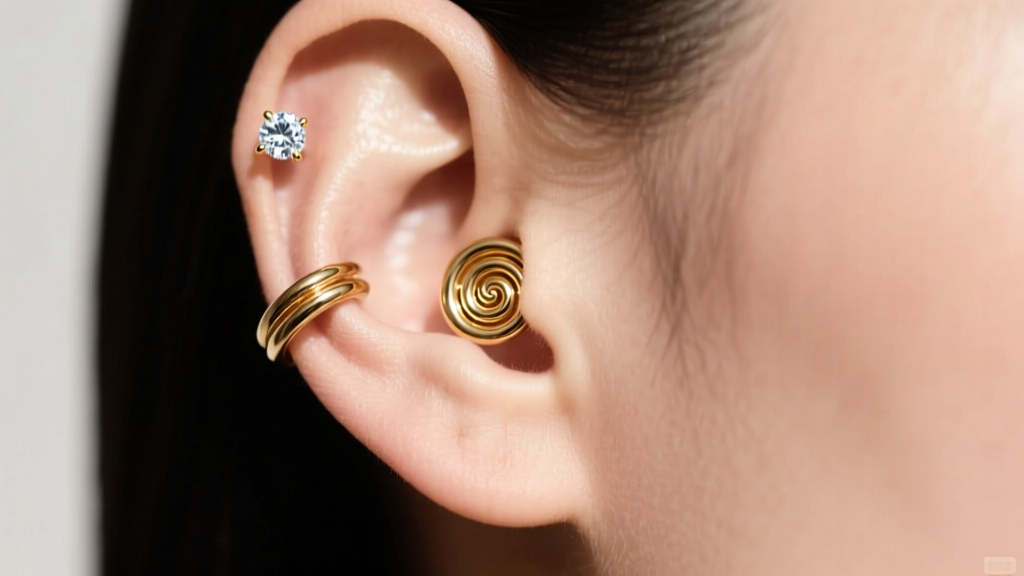
Step 3: The Proper Insertion Technique
The most common mistake people make with gold spiral earrings is pulling the ends apart laterally, like opening a jump ring. This twists the wire out of its circular plane, permanently warping the spiral and ruining its tension. Follow this step-by-step insertion method:
- Cleanse: Wash your hands thoroughly and wipe the earring with a sterile saline solution or 70% isopropyl alcohol.
- The Twist, Don't Pull: Hold the spiral with both hands, one on each side of the opening. Gently twist one end toward you and the other end away from you. This opens a gap while keeping the ring perfectly circular.
- Slide and Align: Slide one end of the wire into the piercing channel. Gently rotate the entire spiral through the tissue until the opposite end meets the exit hole.
- Close the Gap: Twist the ends back into alignment. The ends should sit flush against each other with zero gap. If you feel a "click" or snag when running your fingernail over the seam, the wire is misaligned and needs micro-adjustment.
Step 4: Anatomical Styling and 2026 Curation Trends
Gold spirals are incredibly versatile, but their styling potential depends heavily on their placement. The 2026 ear curation trend heavily favors "negative space" and minimalist continuity, where spirals are used to bridge visual gaps between studs.
The Helix Wrap
For outer helix piercings, an 18g or 16g spiral with a slightly larger ID (8mm-10mm) creates a beautiful "cuff" illusion. Because the helix cartilage is relatively thin, the spiral wraps snugly around the edge of the ear. Pair a yellow gold helix spiral with a white gold or platinum flat-back labret in the flat area of the ear for a striking mixed-metal contrast.
The Conch Orbiter
A conch piercing sits deep in the cup of the ear. Using a large-diameter spiral (10mm-12mm) in the conch allows the wire to orbit the inner ridge of the cartilage. This requires a highly precise measurement; have a professional piercer measure your conch with digital calipers before purchasing a spiral for this placement.
The Lobe Cascade
For standard lobes, stacking multiple 20g spirals of varying diameters (e.g., a 6mm followed by an 8mm in a second-hole piercing) creates a cascading, textured look that catches the light beautifully without the bulk of heavy drop earrings.
Step 5: Maintenance, Cleaning, and Tension Restoration
Over time, daily wear, snagging on towels, and the natural oils from your skin can affect the performance of your gold spiral earrings. Proper maintenance is crucial for longevity.
Routine Cleaning
Once a week, remove your spirals and soak them in a small bowl of warm water mixed with a few drops of mild, fragrance-free dish soap. Use an extra-soft baby toothbrush to gently scrub the seam where the two ends meet, as this is where dead skin cells and sebum accumulate. Rinse thoroughly and dry with a lint-free microfiber cloth.
Restoring Lost Tension
If your spiral begins to slide out easily or the ends no longer meet flush, the metal has lost its tension. You can restore it at home:
- Hold the spiral firmly in both hands.
- Apply a very gentle twisting pressure to slightly overlap the ends (making the circle temporarily smaller than its resting state).
- Release the pressure slowly. The metal's memory will cause it to spring back to its original size, but with renewed outward tension.
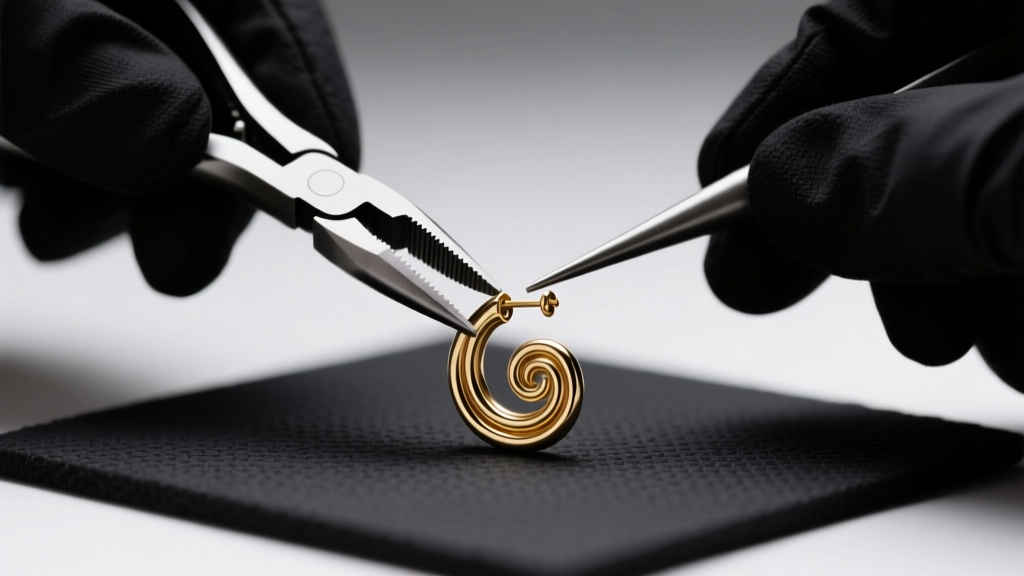
Piercer's Warning: Never use standard hardware store pliers on gold body jewelry. The steel teeth will crush the soft gold wire, leaving permanent gouges that can harbor bacteria and irritate your piercing channel. If a spiral is severely bent, take it to a professional piercer who uses specialized, nylon-jawed jewelry pliers for adjustments.
Final Thoughts on Gold Spiral Earrings
Mastering the use of gold spiral earrings transforms them from a frustrating puzzle into the most elegant, seamless pieces in your jewelry collection. By prioritizing 14k gold for its superior tensile memory, meticulously measuring your gauge and inner diameter, and utilizing the twist-insertion method, you ensure a comfortable, secure fit. Whether you are building a complex cartilage curation or simply upgrading your daily lobe hoops, the continuous line of a well-fitted gold spiral offers a timeless, sophisticated aesthetic that never goes out of style.


