How to Restore and Fix a Tarnished Moontan Golden Earring
Learn how to troubleshoot, clean, and repair your moontan golden earring. Expert tips on fixing bent posts, stopping green skin, and restoring gold plate.

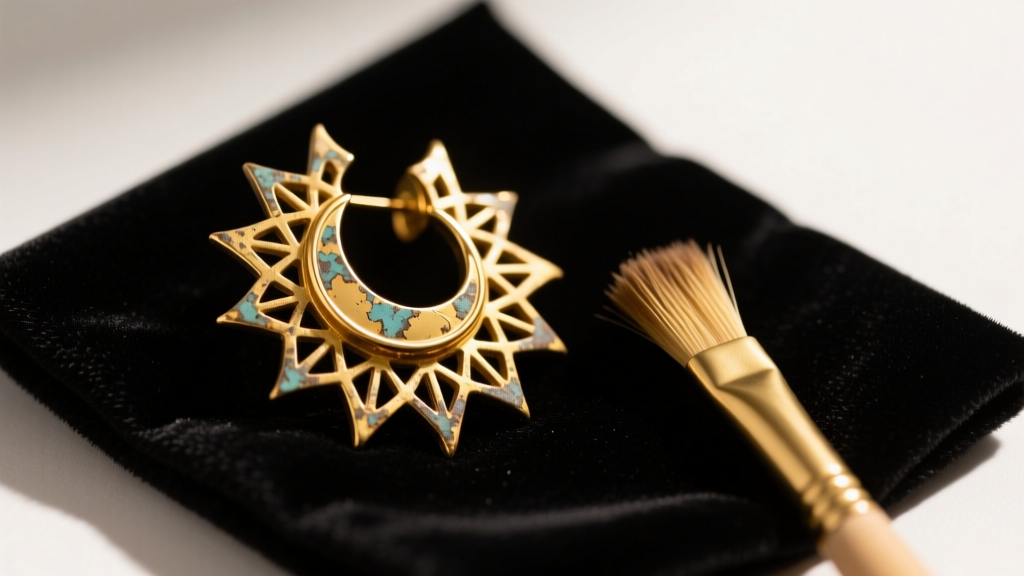
The Anatomy of a Moontan Golden Earring: Why They Tarnish
The quintessential moontan golden earring—beloved for its celestial sunburst and crescent moon motifs—relies on a specific metallurgical foundation that requires careful maintenance. Most vintage and artisan moontan designs are crafted from C26000 cartridge brass, an alloy consisting of 70% copper and 30% zinc. To achieve that signature warm, vintage gold tone, the brass base is typically electroplated with a 14k or 18k gold flash layer measuring between 0.1 and 0.3 microns thick. While beautiful, this micro-thin layer is highly porous and susceptible to wear.
When the gold plating wears thin on the earring post or the back of the celestial charms, the underlying copper is exposed to the environment. According to the Gemological Institute of America (GIA), gold plating under 0.5 microns is considered a "flash" and will eventually wear through with friction and exposure to skin acids. Understanding this anatomy is the first step in troubleshooting the common failures associated with these specific statement pieces.
Troubleshooting Common Moontan Golden Earring Failures
Because of their intricate designs and specific alloy compositions, moontan earrings present a unique set of challenges. Below are the three most frequent issues reported by collectors and daily wearers, along with professional-grade solutions.
1. The "Green Ear" Effect (Oxidation and Contact Dermatitis)
If your moontan golden earring is leaving a green or black smudge on your earlobe, you are experiencing copper oxidation. When the exposed copper in the brass base reacts with the lactic acid, urea, and sodium chloride (salt) in your sweat, it creates copper chloride—a harmless but unsightly green compound. Furthermore, some wearers may experience contact dermatitis if the brass contains trace amounts of nickel. The American Academy of Dermatology (AAD) notes that nickel and copper allergies are among the most common causes of jewelry-related skin reactions.
The Fix: For immediate relief, apply a micro-thin layer of clear polyurethane nail polish or a specialized jewelry barrier coating to the earring post and the part of the charm that touches your skin. Allow it to cure for 24 hours before wearing. For a permanent solution, take the earrings to a local jeweler for a rhodium or 24k gold re-plating, which will seal the brass permanently.
2. Bent or Broken 20-Gauge Brass Posts
Most lightweight moontan dangles and studs utilize a 20-gauge (0.81mm) or 22-gauge (0.64mm) brass post. While brass is highly malleable, it suffers from "work hardening." If you repeatedly bend the post to adjust the earring back, the metal's crystal lattice structure becomes brittle and will eventually snap flush against the base.
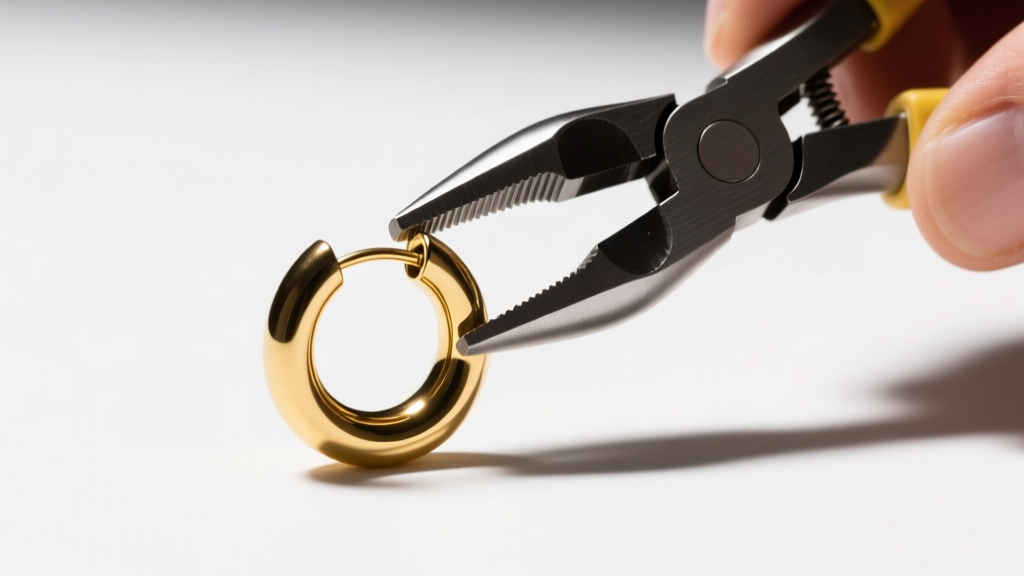
The Fix: Never use standard steel pliers on a gold-plated post, as the teeth will strip the remaining gold and gouge the brass. Instead, use nylon-jaw pliers to gently coax the post back to a 90-degree angle. If the post has already snapped, do not use superglue (cyanoacrylate), which will degrade with skin oils. A jeweler must laser-weld or silver-solder a new 20-gauge sterling silver or brass post onto the base using a lead-free silver solder and a specialized borax flux.
3. Loose Celestial Motif Solder Joints
The intricate sun rays and moon phases on a moontan golden earring are often attached via tiny jump rings or micro-solder joints. Over time, the tension from taking the earrings on and off can cause these jump rings to pull apart, or the solder joints to fracture.
The Fix: Inspect the jump rings with a 10x jeweler's loupe. If the gap has opened, use two pairs of flat-nose pliers to twist the ring closed laterally (never pull the ends apart like a hinge, which weakens the wire). If a soldered charm has detached, it requires a micro-torch and hard silver solder to reattach without melting the delicate surrounding gold plating.
Step-by-Step Restoration Guide for Gold-Plated Brass
Cleaning a moontan golden earring requires a delicate touch. Aggressive polishing will strip the 0.2-micron gold layer right off the brass, leaving you with a dull, yellowish-brown base metal. Follow this safe restoration protocol:
- The Lukewarm Soak: Mix three drops of pH-neutral dish soap (like Dawn) into a bowl of distilled lukewarm water. Avoid tap water, as chlorine and hard minerals can cause micro-pitting in the brass.
- The Agitation: Submerge the earrings for exactly 3 minutes. Use a baby toothbrush (which has ultra-soft bristles) to gently sweep away sebum and dead skin cells from the crevices of the sunburst motifs.
- The Rinse and Dry: Rinse under a gentle stream of distilled water. Immediately pat dry with a lint-free microfiber cloth. Do not air dry, as water spots will etch into the porous gold flash.
Cleaning Agents: What to Use and What to Avoid
| Cleaning Agent | Effect on Moontan Gold Plating | Verdict |
|---|---|---|
| Mild Dish Soap & Distilled Water | Safely removes oils without affecting the gold layer. | Highly Recommended |
| Baking Soda Paste | Highly abrasive; will scratch the gold flash and expose brass. | Avoid Completely |
| Commercial Silver Dips (e.g., Tarn-X) | Contains thiourea and acids that will instantly strip gold plating. | Avoid Completely |
| Ultrasonic Cleaners | High-frequency cavitation can cause micro-flaking of thin gold plate. | Use with Extreme Caution |
| Sunshine Polishing Cloths | Contains micro-abrasives; safe only for solid gold, not plated brass. | Avoid on Plated Areas |
When to Retire vs. Repair: A Cost-Benefit Analysis
Not every damaged moontan golden earring is worth saving. Because these pieces are often fashion or semi-fine jewelry, the cost of professional restoration can sometimes exceed the replacement value. Use this framework to decide your next move:
- Scenario A: Surface Tarnish and Minor Scratches. Action: DIY Clean. Cost: $0. Worth it? Yes.
- Scenario B: Severe Green Skin / Exposed Brass on the Post. Action: Apply a clear polyurethane barrier or replace the post with sterling silver. Cost: $5 (DIY) to $35 (Jeweler). Worth it? Yes, if the piece holds sentimental value or features rare vintage glass stones.
- Scenario C: Completely Worn-Off Gold Plating on the Charms. Action: Professional electroplating. Cost: $60 - $120 per pair. Worth it? Only if the earrings are discontinued, vintage, or irreplaceable. Otherwise, retirement is more economical.
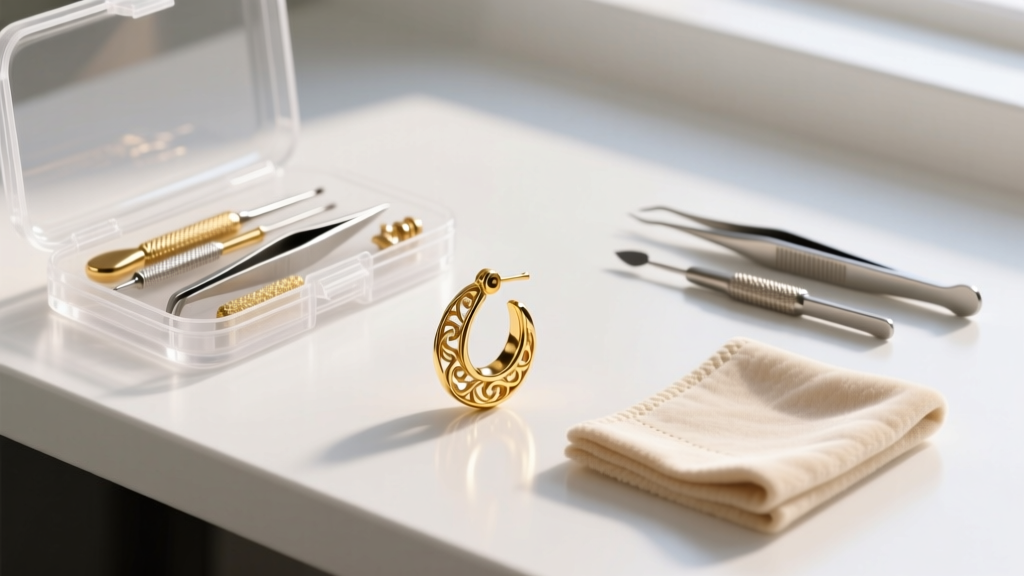
Preventative Maintenance for Long-Term Wear
The secret to preserving a moontan golden earring lies in controlling its environment. Copper oxidation and gold wear are accelerated by moisture, friction, and sulfur in the air. Implement these three rules to extend the life of your celestial jewelry:
1. The "Last On, First Off" Rule: Always put your earrings on after applying perfume, hairspray, and lotions. The alcohol and volatile organic compounds (VOCs) in cosmetics can degrade the gold plating over time. Remove them before showering or exercising to prevent sweat-induced copper chloride formation.
2. Activated Carbon Storage: Store your moontan earrings in an airtight polyethylene ziplock bag alongside a 3M anti-tarnish strip. These strips contain activated carbon and silver scavengers that absorb atmospheric sulfur and moisture, effectively halting the tarnishing process before it begins.
3. Friction Reduction: If you wear the earrings daily, the friction from your hair and clothing will inevitably wear down the gold flash on the highest points of the sunburst motif. Limit wear to special occasions, or embrace the "antiqued" look that naturally occurs as the dark brass begins to show through the high-relief areas, adding a unique, vintage patina to the celestial design.


