Teardrop Crystal Earrings: A Beginner's Guide to Cut and Fit
Discover how to choose, style, and care for teardrop crystal earrings. Learn about crystal cuts, hypoallergenic metals, and face-shape pairing tips.

The Anatomy of Teardrop Crystal Earrings
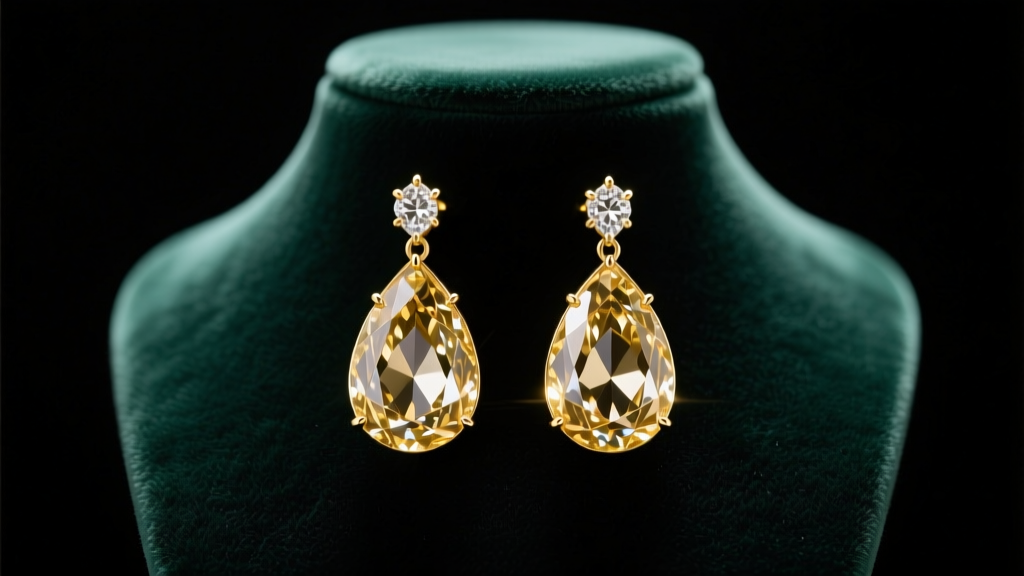
When you begin exploring the world of drop jewelry, teardrop crystal earrings quickly emerge as a timeless staple. But what exactly defines a "teardrop" in gemology? Technically, the true teardrop shape used in dangling earrings is known as a briolette cut. Unlike a standard pear-shaped faceted gem (which is flat on the bottom and typically used for rings or pendants), a briolette is a three-dimensional, fully faceted droplet. This 360-degree faceting is the secret to the kinetic sparkle that makes teardrop crystal earrings so captivating.
Briolettes are generally drilled in one of two ways: top-drilled or side-drilled. Top-drilled crystals hang vertically from a small wire loop, allowing them to swing freely like a pendulum. Side-drilled crystals are threaded horizontally, often resulting in a more rigid, structured dangle. For beginners looking for maximum light refraction and movement, top-drilled teardrop crystals set in a prong or wire-wrapped basket are the superior choice.
Crystal Types: What Are You Actually Buying?
The term "crystal" is frequently misused in fashion jewelry marketing. To make an informed purchase, you must understand the material composition of your teardrop crystal earrings. The refractive index (RI) of the material dictates how much the crystal will bend light and create "fire" (flashes of color). According to the Gemological Institute of America (GIA), different gem materials interact with light in vastly different ways.
| Material Type | Mohs Hardness | Refractive Index | Average Price Range |
|---|---|---|---|
| Swarovski (Advanced Lead-Free Crystal) | 6.0 - 7.0 | 1.52 - 1.54 | $30 - $85 |
| Cubic Zirconia (5A Grade) | 8.0 - 8.5 | 2.15 - 2.18 | $15 - $60 |
| Natural Quartz (Herkimer/Briolette) | 7.0 | 1.54 - 1.55 | $50 - $150 |
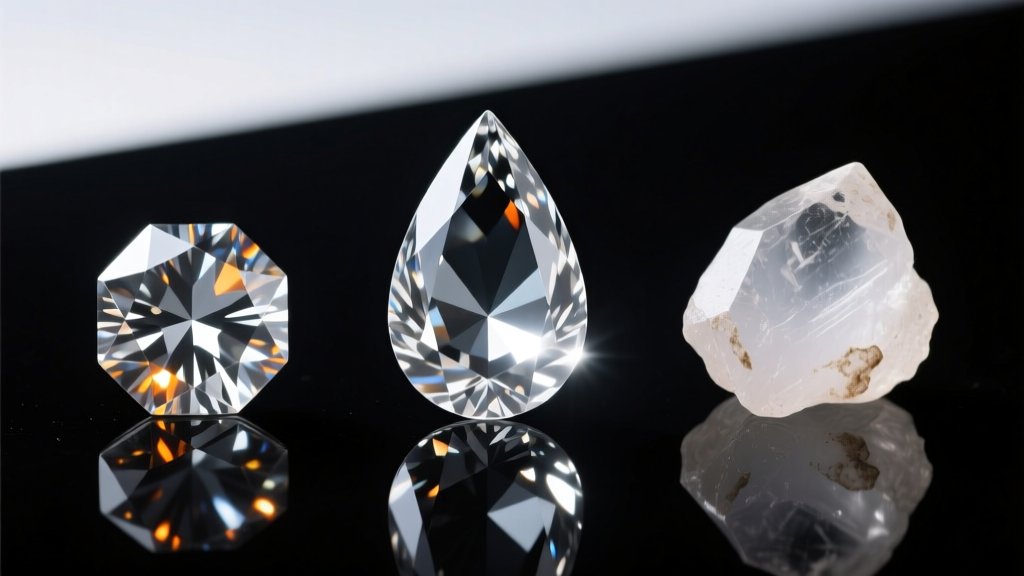
Swarovski offers precision-machine-cut glass crystals with consistent brilliance, though they are softer and prone to scratching over time. Cubic Zirconia (CZ) provides the highest refractive index, mimicking the intense fire of a diamond, but can look overly "glassy" in larger teardrop sizes. Natural Quartz, as detailed in the GIA Quartz Encyclopedia, offers unique, organic inclusions and a more subdued, icy brilliance that appeals to collectors of earth-mined gems.
Matching Teardrop Crystals to Your Face Shape
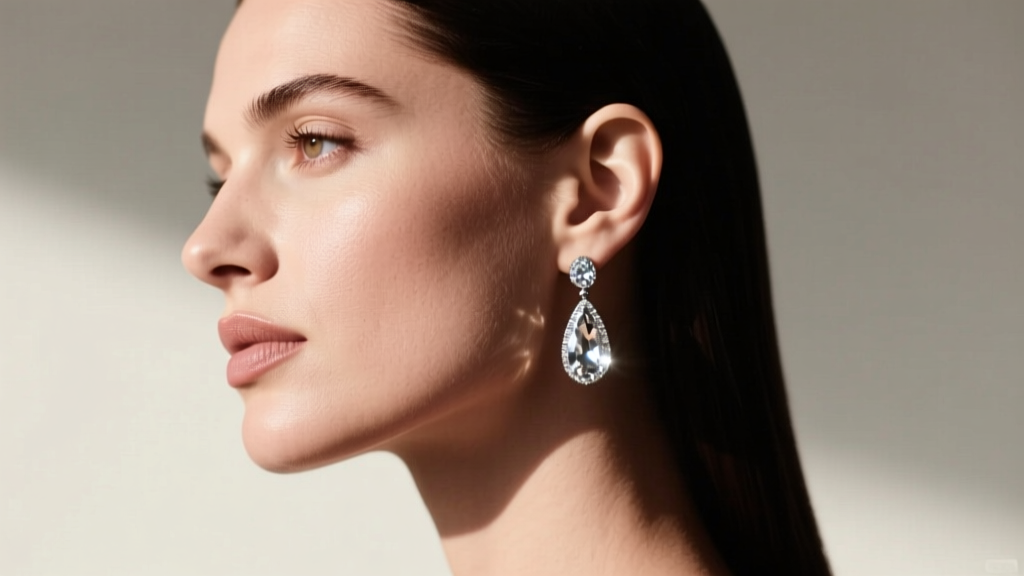
Because teardrop earrings inherently draw the eye downward, they are powerful tools for balancing facial proportions. Selecting the right length and width of the teardrop can dramatically alter how your jawline and cheekbones are perceived.
- Round Faces: Opt for long, slender teardrop crystal earrings (1.5 to 2.5 inches in length). The vertical elongation helps counterbalance the width of the cheeks and creates the illusion of a more defined jawline.
- Oval Faces: You have the most versatility. Medium-length teardrops (1 to 1.5 inches) with a balanced width-to-height ratio will beautifully complement your natural symmetry without over-elongating your features.
- Square Faces: Choose teardrops with softer, rounded bottoms and avoid harsh, geometric angles. A wider, shorter briolette (under 1.25 inches) will soften strong jawlines and add a touch of fluidity to your profile.
- Heart-Shaped Faces: To balance a wider forehead and narrower chin, select teardrop earrings that are slightly wider at the bottom. Chandelier-style teardrops or clusters that add volume near the jawline are highly effective.
Metal Settings, Gauges, and Hypoallergenic Needs
The crystal is only half the equation; the metal post and setting dictate your comfort and the longevity of the piece. For standard lobe piercings, teardrop crystal earrings typically feature either 20-gauge (0.8mm) or 18-gauge (1.0mm) posts. If you are transitioning from standard studs to heavier teardrop drops, an 18-gauge post provides better structural support and prevents the earring from drooping forward.
For those with sensitive ears, the metal grade is non-negotiable. Many affordable earrings use "surgical stainless steel" (often 316L), which still contains trace amounts of nickel. According to the American Academy of Dermatology, nickel is the leading cause of contact dermatitis in jewelry wearers. To avoid allergic reactions, redness, or weeping piercings, always look for posts made from ASTM F136 implant-grade titanium or solid 14k/18k gold. Avoid "silver-plated" earrings entirely, as the underlying brass or copper base metals will quickly cause irritation once the thin plating wears off.
Caring for Your Crystal Drops
Teardrop crystals require specific maintenance to preserve their optical clarity. The most common beginner mistake is using ultrasonic jewelry cleaners. While ultrasonic waves are safe for solid diamonds, they can easily fracture natural quartz briolettes along hidden internal fault lines. Furthermore, the high-frequency vibrations will rapidly degrade the adhesive used in glued CZ or crystal settings, causing the teardrop to detach from its bail.
Expert Cleaning Protocol: Mix one part mild, lotion-free dish soap with ten parts lukewarm distilled water. Soak the earrings for exactly three minutes. Gently agitate the teardrop crystal with a soft-bristled baby toothbrush, focusing on the top drill hole where skin oils accumulate. Rinse with distilled water and dry immediately with an untreated microfiber cloth. Never use silver polishing cloths on crystals, as the embedded abrasives will permanently scratch the facet surfaces.
Final Thoughts on Building Your Collection
Teardrop crystal earrings bridge the gap between everyday elegance and evening glamour. By prioritizing a true briolette cut, selecting a crystal material that matches your desired level of brilliance, and insisting on hypoallergenic titanium or solid gold settings, you ensure your earrings remain a comfortable and dazzling staple in your wardrobe. Start with a versatile medium-length pair in a neutral clear or soft champagne hue, and gradually expand into colored quartz or sapphire-toned crystals as you refine your personal aesthetic.


