Troubleshooting Heavy 10 Carat Diamond Earrings: Expert Fixes
Fix drooping, secure loose posts, and maintain brilliance in heavy 10 carat diamond earrings with our expert structural and lobe-support guide.

The New Era of Heavy Carat Weights
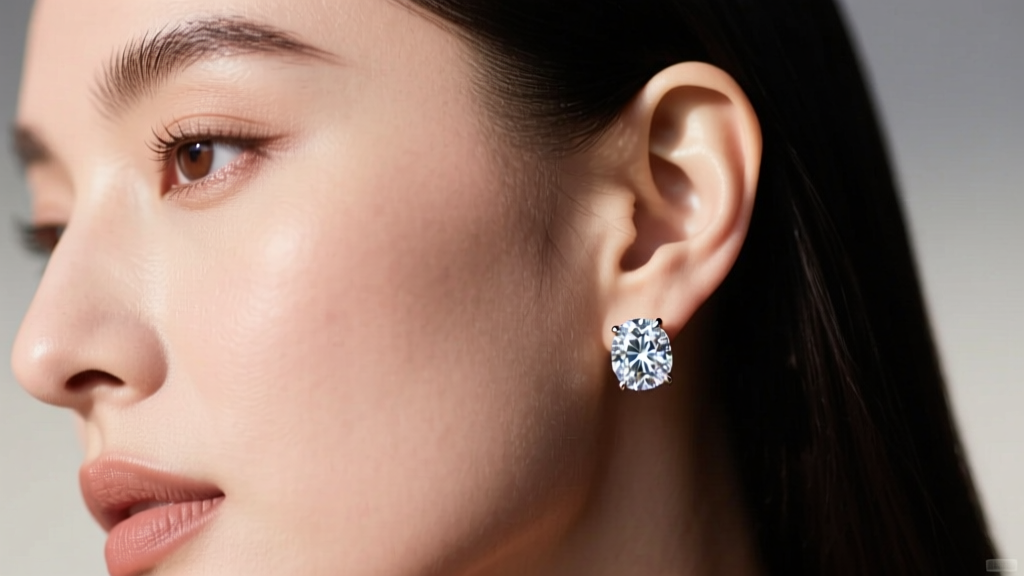
As we navigate the jewelry landscape of 2026, the democratization of large gemstones via advanced lab-grown technology has made 10 carat diamond earrings accessible to a much broader audience. No longer reserved exclusively for red carpets and private vaults, massive stones are now a staple in high-end everyday wardrobes. However, this shift has introduced a widespread structural problem: human earlobes simply were not designed to bear the kinetic load of a 10-carat total weight (TW) or 10-carat per-ear configuration. When you transition from a standard 1-carat stud to a massive 5-carat-per-ear behemoth, you are no longer just wearing jewelry; you are managing a cantilevered physics experiment. This guide dives deep into the mechanical, anatomical, and maintenance troubleshooting required to keep your heavy diamond earrings secure, upright, and brilliant.
The Physics of Droop: Why Your Earlobes Are Losing the Battle
To troubleshoot the infamous "forward tilt," we must first quantify the exact forces at play. A single carat is equivalent to 0.2 grams. Therefore, a 5-carat diamond (totaling 10 carats for the pair) weighs exactly 1.0 gram per stone. However, the diamond is only half the equation. To safely secure a stone of this diameter (approximately 11mm to 12mm across), a jeweler must use a heavy-duty platinum or 18k gold basket setting. This setting alone can weigh between 2.0 and 3.5 grams. Consequently, each earlobe is supporting roughly 3.0 to 4.5 grams of concentrated, forward-pulling mass.
The human earlobe lacks cartilage; it is composed entirely of adipose (fat) tissue, skin, and blood vessels. When a heavy 10 carat diamond earring is inserted, the center of gravity sits approximately 8mm to 12mm away from the piercing hole. This creates a lever effect that stretches the piercing channel downward and forces the diamond to tilt toward the floor, completely destroying the stone's light return and making it look lifeless from the front.
Troubleshooting Lobe Sag: Structural Support Systems
Standard earring backs are entirely useless for heavy stones. To counteract the lever effect, you must artificially reinforce the earlobe or redistribute the weight. Below is a diagnostic breakdown of the most effective support mechanisms available today.
| Support Method | Mechanism of Action | Best For | Drawbacks |
|---|---|---|---|
| Adhesive Lobe Patches (e.g., LobeWonder) | Medical-grade polyurethane stickers applied behind the lobe to prevent stretching. | Occasional wear; prevents piercing elongation. | Adhesive fails with sweat/oils; does not lift already-drooping stones. |
| Silicone Support Discs (15mm+) | Wide, rigid silicone cones that distribute the backing pressure across a 2cm surface area. | Daily wear for 10ct TW (5ct per ear) studs. | Can be visible from behind; traps moisture if not cleaned daily. |
| Custom 3D-Printed Ear Cuffs | A cartilage-hugging cuff attached to the stud post via a hidden chain or rigid bridge. | Extreme weights (10ct+ per ear); compromised earlobes. | Expensive; requires custom molding and specialized bench jewelers. |
When to Seek Surgical Intervention
If your 10 carat diamond earrings point persistently downward even with 18mm silicone discs, your piercing channel may have suffered permanent tissue tearing (often called a "blowout" or elongated fistula). In these cases, cosmetic dermatologists or plastic surgeons can perform a quick in-office earlobe reduction or filler injection (using hyaluronic acid) to plump the lobe and provide a tighter, more supportive matrix for the post.
Securing the Asset: Backing Mechanisms That Actually Work
Losing a 1-carat diamond is a financial hit; losing a 5-carat stone is a catastrophic event. The standard "butterfly" friction back relies on the tension of two small metal loops gripping a notched post. Over time, metal fatigue causes these loops to loosen, and a single snag on a sweater can pull the earring free. For heavy diamond earrings, you must upgrade your security architecture.
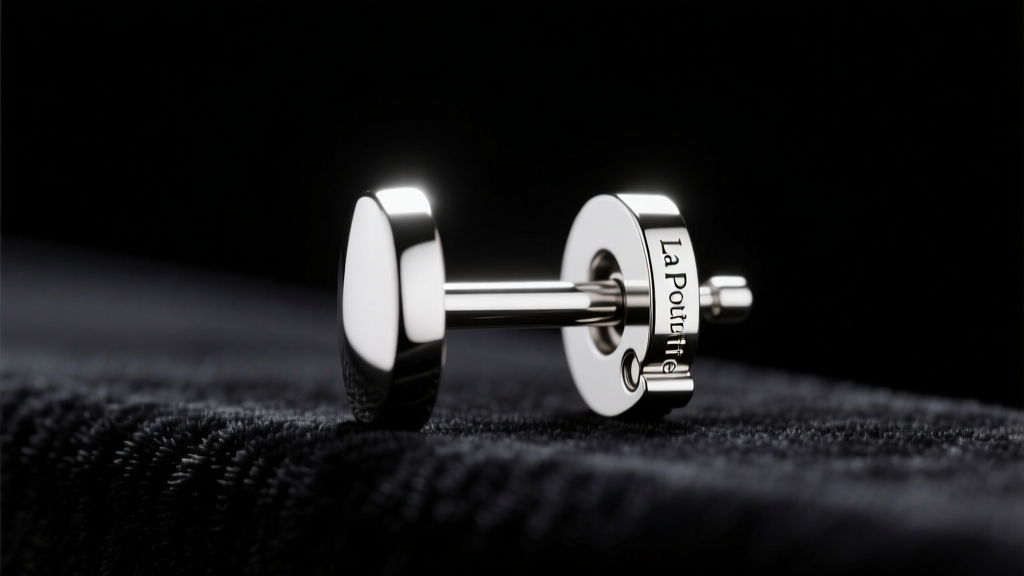
The La Pousette Locking Back
Originally designed for high-end watch clasps, the La Pousette (or "butterfly lock") back features a spring-loaded internal mechanism. When pushed onto the post, two internal metal wings snap into a precision-machined groove on the earring post. To remove it, you must pinch two tiny side tabs simultaneously. This eliminates the risk of accidental snags pulling the earring off.
Precision Screw Backs
Screw backs feature a threaded post (typically M1.0 or M1.2 thread pitch) and a threaded nut. While highly secure, they require careful maintenance. Cross-threading a platinum screw back will strip the threads, rendering the earring unwearable until a jeweler re-taps the post. Always use a jeweler's loupe to ensure the threads are free of debris before securing.
Structural Integrity: Post Gauge and Setting Architecture
The most common point of catastrophic failure in heavy earrings is the post itself snapping or bending under the stone's weight. Standard earring posts are manufactured in 20-gauge (0.81mm) or 18-gauge (1.02mm) thicknesses. These are dangerously inadequate for 10 carat diamond earrings.
Upgrading to 14-Gauge and 12-Gauge Posts
For any diamond exceeding 3 carats per ear, you must demand a 14-gauge (1.63mm) or 12-gauge (2.05mm) post. This requires a thicker piercing, so if your lobes are currently pierced with standard 18g needles, a professional piercer will need to gradually stretch the fistula using a sterilized taper. The increased cross-sectional area of a 14g platinum post provides a 250% increase in shear strength compared to a standard 20g post, completely eliminating the risk of the metal bending under the stone's cantilevered weight.
Basket vs. Martini Settings
While the 3-prong "Martini" setting is popular for 1-carat stones because it minimizes metal visibility, it is structurally negligent for heavy stones. A 5-carat stone requires a 4-prong or 6-prong basket setting with a wide, reinforced base. The basket creates a structural cradle that prevents the diamond's pavilion (the bottom cone of the stone) from rocking side-to-side, which can eventually snap the post at the solder joint.
Maintenance and Optical Troubleshooting
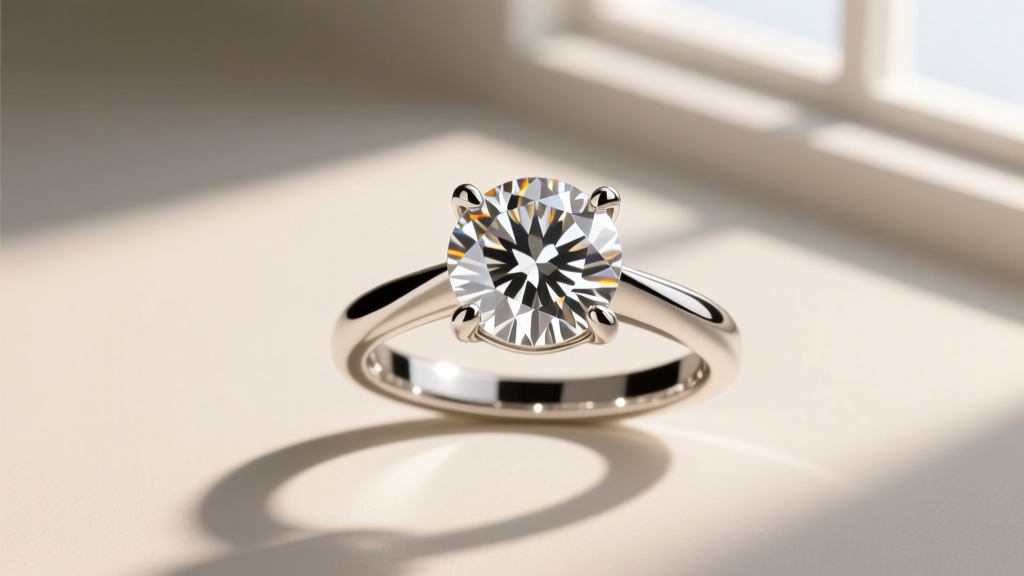
A 10-carat diamond has a massive "table" facet (the flat top of the stone). Because it covers such a wide surface area, it acts as a magnet for sebum, makeup, and environmental oils. Even a microscopically thin layer of oil will cause total internal reflection to fail, making a $50,000 diamond look like cloudy glass.
Safe Cleaning Protocols for Large Stones
According to the Gemological Institute of America (GIA), ultrasonic cleaners are generally safe for untreated diamonds. However, if your large stone has been fracture-filled or laser-drilled—a common treatment for larger, lower-clarity stones—ultrasonic vibrations can boil the acid out of the fractures, leaving white, cloudy lines inside the stone. Always verify your diamond's grading report (from GIA or AGS) before using ultrasonic technology.
For daily maintenance of 10 carat diamond earrings, use a dedicated jewelry degreasing pen or a soft baby toothbrush with a single drop of unscented dish soap and warm distilled water. Focus specifically on the pavilion (the underside of the diamond), as this is where skin oils accumulate and block light from entering the stone.
The 2026 Market Shift: Lab-Grown Considerations
As noted in recent GIA market reports, the surge in lab-grown diamonds has drastically altered the demographic of heavy-carat wearers. Because a 10-carat lab-grown pair is significantly more accessible than its mined counterpart, many new owners are unprepared for the physical maintenance required. Whether your stones were formed in the earth's mantle or a CVD reactor, their physical density, refractive index, and structural demands on your earlobes remain identical. Treat the physical mounting and lobe support with the exact same rigor you would apply to a natural stone, ensuring your investment remains secure, comfortable, and optically flawless for decades to come.


