The Ultimate Beginner Guide to Happy Face Earrings
Explore our beginner guide to happy face earrings. Learn about safe metals, gauge sizes, and styling tips for your favorite smiley jewelry.

The Nostalgia Revival: Why Smiley Jewelry is Trending
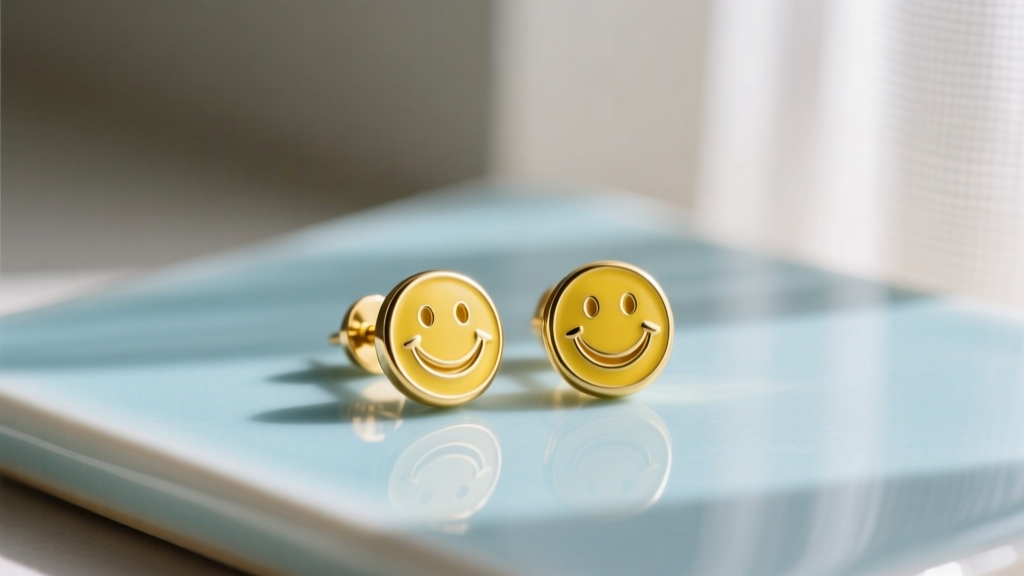
Happy face earrings have transcended their 1970s and 1990s roots to become a permanent staple in modern jewelry collections. Far from being just a childhood novelty, today's smiley face earrings are crafted with precision, featuring high-karat golds, implant-grade metals, and intricate enamel work. For beginners stepping into the world of curated ear styling, these playful pieces offer a perfect entry point. They bridge the gap between whimsical self-expression and sophisticated daily wear. However, navigating the market requires a keen eye for metallurgy and anatomy. In this comprehensive guide, we will break down everything you need to know about selecting, sizing, and styling happy face earrings to ensure your piercings remain healthy and your style remains impeccable.
Decoding the Metals: Avoiding the Dreaded Green Ear
The most critical mistake beginners make when purchasing novelty or motif-based jewelry is prioritizing the design over the base metal. Many fast-fashion happy face earrings are cast from brass or zinc alloys and plated with a microscopic layer of gold or silver. When the plating wears off, the underlying copper reacts with the natural acids and sweat in your skin, resulting in contact dermatitis and the infamous "green ear." To avoid this, you must look for specific, biocompatible material grades.
According to the Association of Professional Piercers (APP), the safest metals for long-term wear in healed piercings are implant-grade titanium and solid 14k or 18k gold. Implant-grade titanium (specifically ASTM F136) is entirely nickel-free and highly resistant to corrosion, making it the gold standard for sensitive ears. "Surgical steel," on the other hand, is a largely unregulated marketing term that can contain up to 10% nickel, a common allergen.
| Metal Type | Pros | Cons | Average Price Range |
|---|---|---|---|
| ASTM F136 Titanium | Hypoallergenic, lightweight, highly durable, affordable. | Lacks the prestige and warm color of solid gold. | $15 - $45 |
| 14k / 18k Solid Gold | Heirloom quality, rich color, holds value, safe for most. | Expensive, softer metal can scratch if not alloyed well. | $85 - $300+ |
| Surgical Steel (316L) | Inexpensive, widely available, shiny finish. | Contains nickel; can cause allergic reactions over time. | $5 - $20 |
| Brass/Alloy (Plated) | Very cheap, allows for mass-produced trendy designs. | Plating chips quickly, causes green skin and infections. | $2 - $12 |
Gauge Sizes and Piercing Placements
Happy face earrings are not one-size-fits-all. The "gauge" refers to the thickness of the earring post or wire, and wearing the wrong gauge can cause irritation, migration, or tearing. Understanding your piercing's gauge is essential before adding a smiley face to your curation.
- 20 Gauge (0.81mm): The standard for most traditional earlobe piercings done with a piercing gun (though needle piercings are highly recommended instead). Most delicate happy face studs are crafted at this size.
- 18 Gauge (1.02mm): A slightly thicker post, common for standard lobe piercings done by professional piercers using a needle. Many high-end 14k gold smiley studs are 18G for added structural integrity.
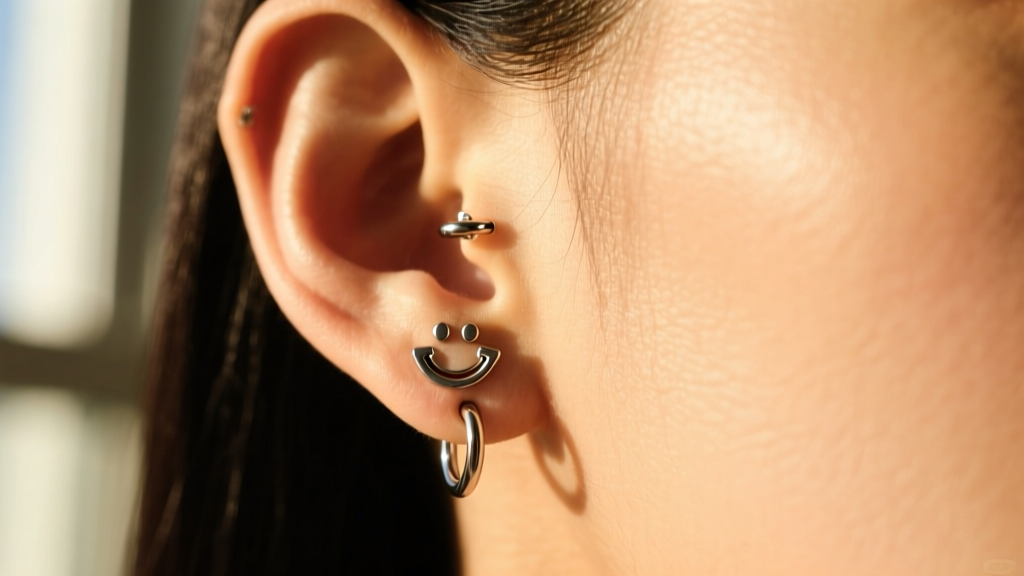
- 16 Gauge (1.29mm): The universal standard for cartilage piercings, including the helix, forward helix, and tragus. If you want a happy face cartilage hoop or a flat-back labret featuring a smiley motif, you will likely need a 16G post or wire.
Always measure your existing jewelry with a digital caliper or consult your professional piercer to confirm your gauge before purchasing. Forcing a 20G post into a 16G cartilage piercing will cause the tissue to shrink around the thinner wire, leading to the "cheese-cutter effect" where the jewelry slowly migrates through the skin.
Enamel vs. Resin: What Makes the Smile?
The vibrant yellow (or alternative colored) face of the earring is typically achieved through either vitreous enamel or cold enamel (epoxy resin). Understanding the difference is crucial for longevity.
Vitreous Enamel is created by fusing powdered glass to a metal substrate at extremely high temperatures (often exceeding 1400°F). The result is a hard, glass-like finish that will not yellow, fade, or degrade over time. High-end jewelers, such as Maria Tash or local artisan goldsmiths, use vitreous enamel for their luxury happy face pieces. However, because it is essentially glass, it can chip or shatter if dropped onto a hard tile floor.
Cold Enamel (Resin) is a two-part epoxy that is painted into the recesses of the metal and left to cure. It is much cheaper to produce and is shatter-resistant, making it common in mid-tier jewelry. The drawback is that resin is porous and susceptible to UV degradation; over a few years of daily sun exposure, white or yellow resin can develop a brownish tint.
Styling Happy Face Earrings for Your Face Shape
While the smiley face is a universally joyful motif, the style of the earring (stud, huggie, dangle) should be chosen to complement your facial geometry. The Gemological Institute of America (GIA) notes that the scale and proportion of jewelry should always balance the wearer's features.
- Round Faces: Opt for happy face dangles or drop earrings. The vertical elongation draws the eye downward, creating the illusion of a longer, more oval face shape. Avoid large, wide smiley hoops that add horizontal volume.
- Square Faces: Soften a strong jawline with curved happy face huggie hoops or medium-sized circular studs. The rounded edges of the jewelry will contrast beautifully with angular facial features.
- Heart-Shaped Faces: Balance a narrower chin with bottom-heavy designs. Teardrop-shaped happy face earrings or chandelier styles with the smiley motif at the base will add visual weight to the lower half of the face.
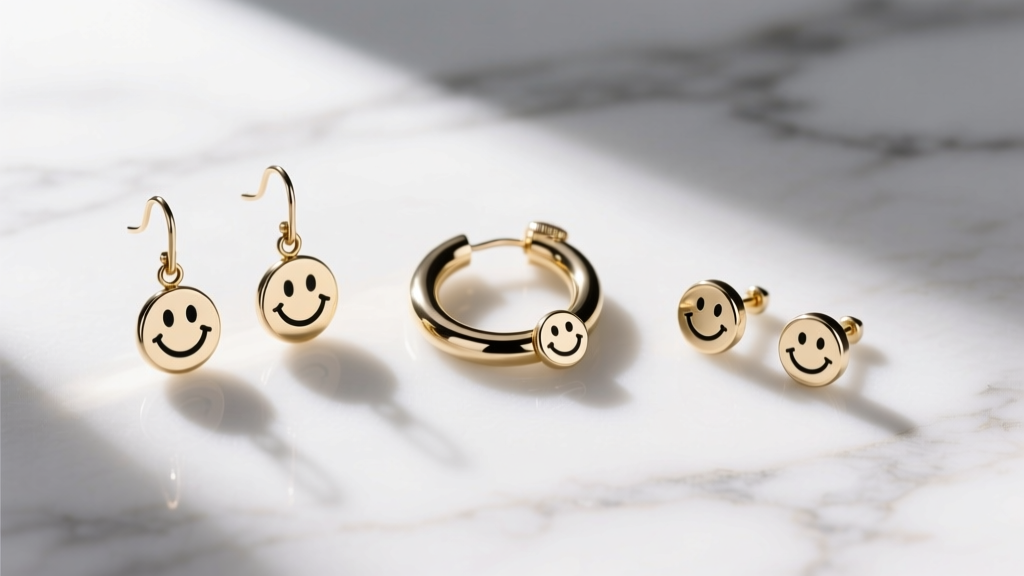
- Oval Faces: You have the most versatility. Classic 5mm to 7mm happy face studs placed in the primary lobe piercing offer a clean, minimalist look that doesn't disrupt your natural proportions.
Daily Care and Maintenance
Because happy face earrings often feature recessed areas where the metal meets the enamel, they are prone to trapping sebum, dead skin cells, and hair products. Neglecting to clean these crevices can lead to localized contact dermatitis or piercing bumps.
Once a week, remove your earrings and soak them in a small bowl of warm water mixed with a few drops of mild, fragrance-free dish soap. Use an extra-soft baby toothbrush to gently agitate the crevices around the smiley face. Rinse thoroughly with distilled water to prevent hard water spots on the gold or titanium, and dry completely with a lint-free microfiber cloth before reinserting them. Never use ultrasonic cleaners on vitreous enamel jewelry, as the high-frequency vibrations can cause microscopic fractures in the glass finish, eventually leading to chipping.
"The key to wearing novelty motifs like the happy face as an adult is grounding them in exceptional materials. A smiley face cast in solid 18k yellow gold with hand-painted vitreous enamel reads as high fashion; the same design in plated brass reads as a party favor. Always invest in the metal first." — Master Jeweler and Piercing Specialist
Final Thoughts on Building Your Collection
Happy face earrings are a joyful, versatile addition to any jewelry wardrobe, provided you approach them with an educated mindset. By prioritizing biocompatible metals like ASTM F136 titanium or solid gold, verifying your exact gauge size, and choosing the correct silhouette for your face shape, you can enjoy your smiley jewelry for decades. Skip the fast-fashion displays and head to a reputable professional piercer or fine jeweler to find a piece that is as safe for your body as it is uplifting for your spirit.