Octagon Earrings: A 2026 Budget & Value Assessment
Analyze the true cost per wear of octagon earrings. We compare material grades, gauge sizes, and construction to help you budget for geometric fine jewelry.

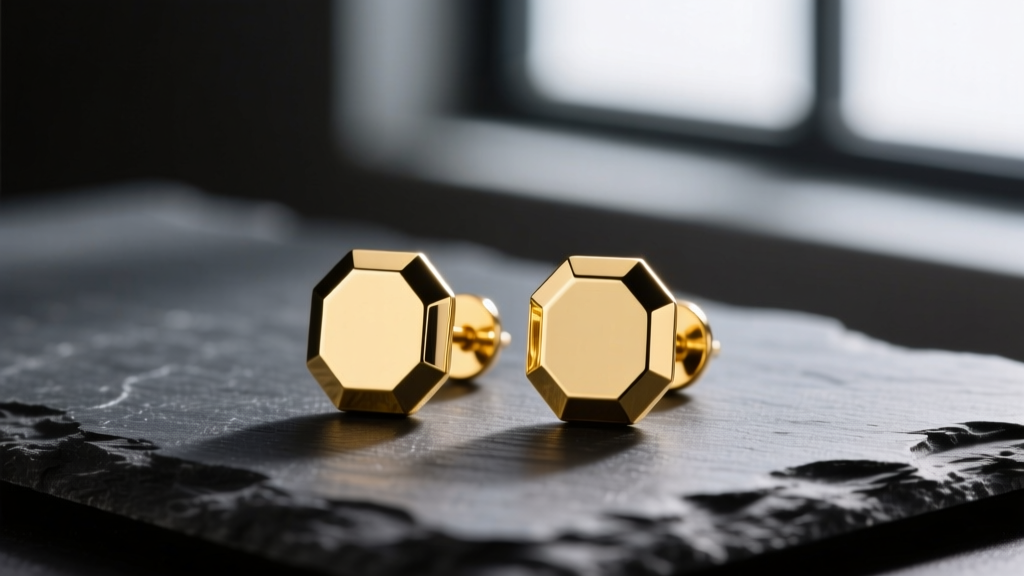
The Geometry of Value: Why Octagon Earrings?
Geometric jewelry has maintained a strong presence in the market, but the octagon earring occupies a highly specific niche between the softness of a circle and the rigidity of a square. As we evaluate jewelry budgets in 2026, the octagon's distinct eight-sided geometry introduces unique manufacturing and wear-and-tear variables that most buyers completely overlook. When assessing the true value of octagon earrings, you cannot simply compare them to round or oval counterparts of the same weight. The sharp vertices, the structural demands of the shape, and the specific hardware required to support geometric drops all play a critical role in determining whether a piece is a lifelong investment or a disposable trend.
The modern revival of the octagon shape draws heavily from 1920s Art Deco architecture, emphasizing clean lines, step-cuts, and symmetrical perfection. However, translating these architectural lines into wearable ear jewelry requires precise engineering. A poorly constructed octagon earring will not only lose its aesthetic appeal quickly but can also cause irritation or damage to the earlobe due to improper weight distribution. In this comprehensive budget and value assessment, we break down the exact material grades, construction methods, and pricing tiers you need to know before investing in geometric earwear.
The Physics of Corner Wear: Why Material Grade Matters
To understand the value proposition of octagon earrings, you must first understand the physics of how jewelry wears down. An octagon features eight distinct vertices (corners). In electroplated jewelry—where a base metal like brass is coated in a microscopic layer of gold or rhodium—the electrical current used in the plating bath naturally concentrates on sharp edges. This phenomenon, known in electrochemistry as the 'dog-bone effect,' means the corners of an octagon earring initially receive a thicker layer of plating than the flat surfaces.
While this might sound beneficial, it is actually a long-term liability. The corners of your earrings are the primary contact points for hair, clothing, phone screens, and skin friction. According to metallurgical standards outlined by the Gemological Institute of America (GIA), gold plating on high-friction edges will wear away exponentially faster than on flat planes. For an octagon earring, this means the eight corners will inevitably reveal the base metal beneath within three to six months of daily wear, long before the center of the earring shows any signs of aging.
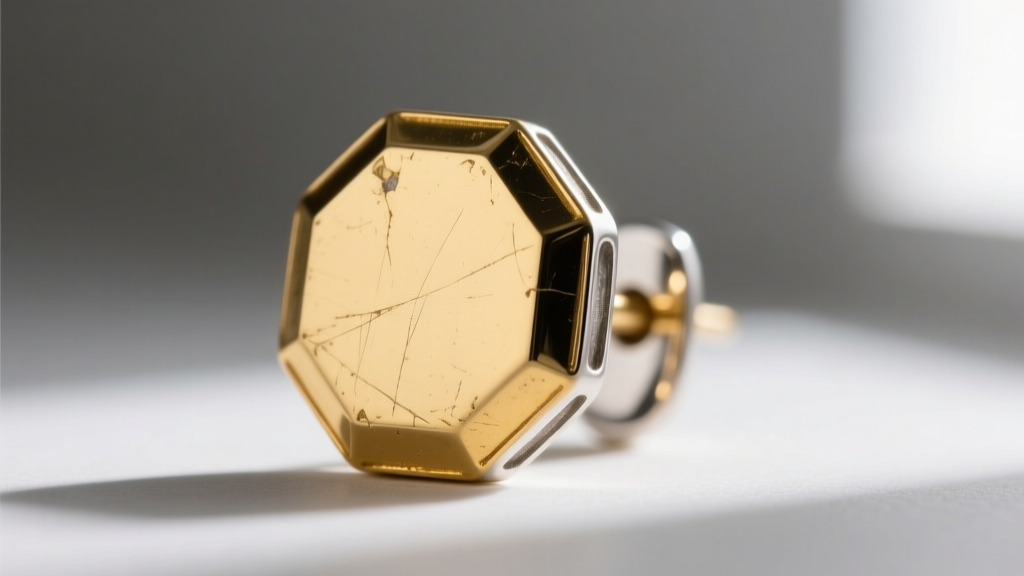
Because of this accelerated corner wear, buying gold-plated brass or copper octagon earrings is generally a poor allocation of your jewelry budget. If you are strictly limited to a sub-$50 budget, opt for solid 925 sterling silver octagons. While silver tarnishes, it can be polished back to a brilliant shine without the risk of exposing a completely different, potentially skin-irritating base metal. For those seeking the warmth of gold, solid 14k or 18k gold is the only material that guarantees the octagon's sharp lines will remain pristine for decades.
Manufacturing Methods: Stamped vs. Cast vs. Machined
The way an octagon earring is manufactured drastically affects its price, durability, and overall value. When shopping, inspect the edges and the profile of the earring to determine which of the following three methods was used:
1. Sheet Metal Stamping (Budget Tier)
In this method, a machine punches an octagon shape out of a flat sheet of metal. This is the cheapest manufacturing method, resulting in earrings that are incredibly lightweight and inexpensive. However, stamped octagons often feature razor-sharp, unfinished edges that can easily snag on knitwear or scratch the side of your neck. Furthermore, because they are entirely flat, they lack the light-reflecting bevels that give geometric jewelry its visual depth.
2. Lost-Wax Casting (Mid to High Tier)
Most fine jewelry octagon earrings are created via lost-wax casting. A 3D wax model is printed or carved, encased in investment plaster, and burned out, leaving a mold into which molten metal is poured. Casting allows for complex, multi-tiered octagonal designs, such as stepped Art Deco motifs or hollowed-out geometric frames. The corners on cast pieces are naturally slightly softened by the surface tension of the liquid metal, which inadvertently helps protect the polish and any applied plating from rapid friction wear.
3. CNC Machining (Luxury Tier)
For ultra-modern, minimalist solid gold or titanium octagon studs, high-end brands use Computer Numerical Control (CNC) machining. A solid block of metal is milled down to exact micrometer tolerances. This results in razor-sharp, mathematically perfect 45-degree internal bevels that catch the light like a mirror. While CNC machined octagon earrings command a premium price due to the time and material waste involved, they offer unparalleled structural integrity and a flawless, architectural finish that casting cannot replicate.
The 2026 Octagon Earring Pricing & Value Matrix
To help you navigate the market, we have compiled a value assessment matrix based on current 2026 pricing for standard 10mm to 15mm octagon stud and drop earrings. This table evaluates the true cost per wear and expected lifespan of various material and construction combinations.
| Material & Construction | Average Price Range | Corner Wear Resistance | Expected Lifespan | Value Verdict |
|---|---|---|---|---|
| Plated Brass (Stamped) | $15 - $45 | Poor | 3 - 6 Months | Low (Disposable Trend) |
| Solid 925 Sterling Silver (Cast) | $40 - $90 | Moderate (Requires Polishing) | 5 - 10 Years | High (Best Entry-Level) |
| Heavy Gold Vermeil (Cast) | $85 - $160 | Moderate to Good | 1 - 3 Years | Moderate (Occasional Wear) |
| Solid 14k Gold (Cast/CNC) | $250 - $600 | Excellent | Lifetime | Exceptional (Investment) |
| Solid 18k Gold (CNC Machined) | $700 - $1,500+ | Superior | Lifetime / Heirloom | High (Luxury Collector) |
Gauge Sizes, Weight Distribution, and Piercing Health
A critical, often ignored factor in the value assessment of geometric earrings is the hardware—specifically the post gauge and the backing mechanism. The octagon shape, particularly in drop or dangle styles, tends to be bottom-heavy. A solid 14k gold octagon drop earring with a 20mm diameter and a 2mm thickness will weigh approximately 4.5 grams per piece.
Standard earring posts are typically 20-gauge (0.81mm thick). While a 20-gauge post is perfectly adequate for lightweight round studs, it lacks the tensile strength to support a 4.5-gram geometric drop. If a heavy octagon drop is snagged on a sweater or a towel, a 20-gauge post will easily bend, warp, or even snap at the solder joint where the post meets the earring body. Repairing a broken post on a cast geometric piece often requires laser welding, which can cost upwards of $45 to $75, instantly destroying the value proposition of a budget-friendly purchase.
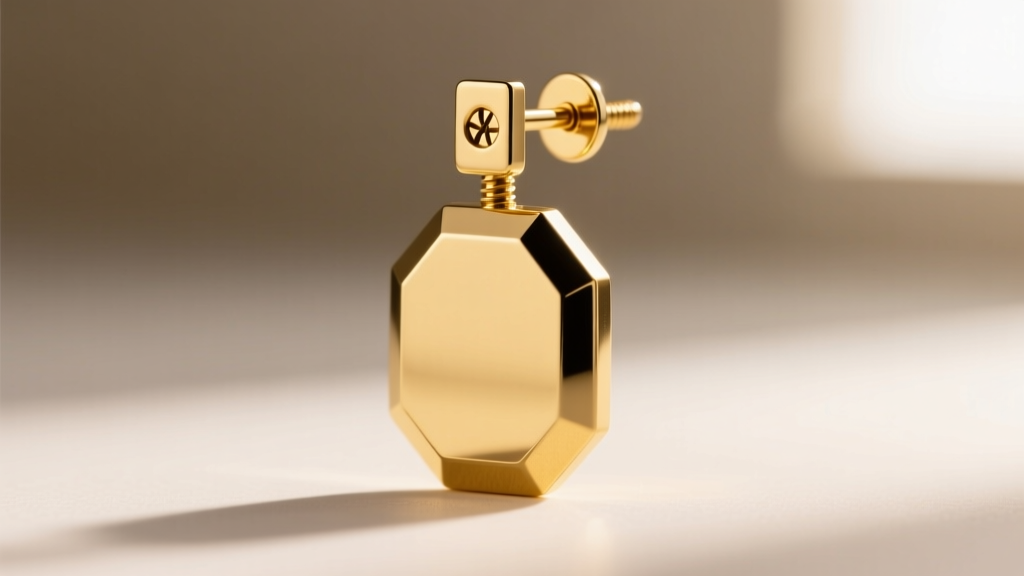
For any octagon drop or dangle earring exceeding 12mm in diameter, you should actively seek out 18-gauge (1.02mm) or even 16-gauge (1.29mm) posts. An 18-gauge post increases the cross-sectional metal area by roughly 58% compared to a 20-gauge post, providing vastly superior structural integrity and preventing the earring from drooping forward in the earlobe. According to piercing and care guidelines from Jewelers of America, matching the post thickness to the weight of the earring is essential for preventing earlobe stretching and elongation over time.
The Hardware Failure Point: Friction Backs vs. Screw Backs
Furthermore, heavy octagon earrings should never rely on standard friction backs (butterfly clutches). The sharp, angular nature of the octagon means the earring will constantly shift and rotate as it catches on hair and collars. This continuous rotational friction slowly pushes standard friction backs down the post, leading to lost earrings. When budgeting for high-value solid gold octagon drops, ensure the design incorporates threaded screw-backs or secure locking ear wires. While screw-backs add roughly $20 to $30 to the manufacturing cost, they are a non-negotiable insurance policy for heavy geometric fine jewelry.
Stone Settings in Octagonal Bezels
Many premium octagon earrings feature gemstones, either as a central focal point or as subtle accent stones set into the vertices. When an octagonal gemstone (such as an Asscher cut or an octagonal step-cut emerald) is used, it is typically secured in a bezel setting. A bezel setting uses a continuous rim of metal pushed over the girdle of the stone to hold it in place.
Creating a flawless bezel for an eight-sided stone requires immense skill. The jeweler must push the metal evenly over eight distinct corners without buckling the metal or leaving gaps where the stone can rattle. In budget-tier earrings, manufacturers use pre-stamped, machine-made bezel cups. These often fail to match the exact angles of the custom-cut stone, resulting in visible gaps at the corners where dirt accumulates and the stone eventually loosens. High-value octagon earrings will feature hand-fabricated or precisely CAD-designed cast bezels that perfectly mirror the stone's geometry. When inspecting a piece, use a jeweler's loupe to check the inside corners of the bezel; tight, gap-free metal contact is a hallmark of true craftsmanship and justifies a higher price point.
Final Verdict: Allocating Your Jewelry Budget
When evaluating octagon earrings, the cheapest option is rarely the most economical in the long run. The inherent geometry of the eight-sided shape demands superior materials and robust hardware to withstand the unique friction and weight distribution it creates. If your budget is under $100, bypass plated metals entirely and invest in solid, cast 925 sterling silver octagons. If you are allocating $250 or more, demand solid 14k gold, 18-gauge posts, and precision-engineered bezels. By understanding the structural realities of geometric jewelry, you can confidently invest in octagon earrings that will maintain their sharp lines, brilliant finishes, and structural integrity for a lifetime.


