A Beginner’s Guide to Styling and Buying Jinu Earrings
Discover everything beginners need to know about Jinu earrings, from material grades and gauge sizes to styling these delicate minimalist staples.

The Rise of the Jinu Aesthetic in Contemporary Jewelry
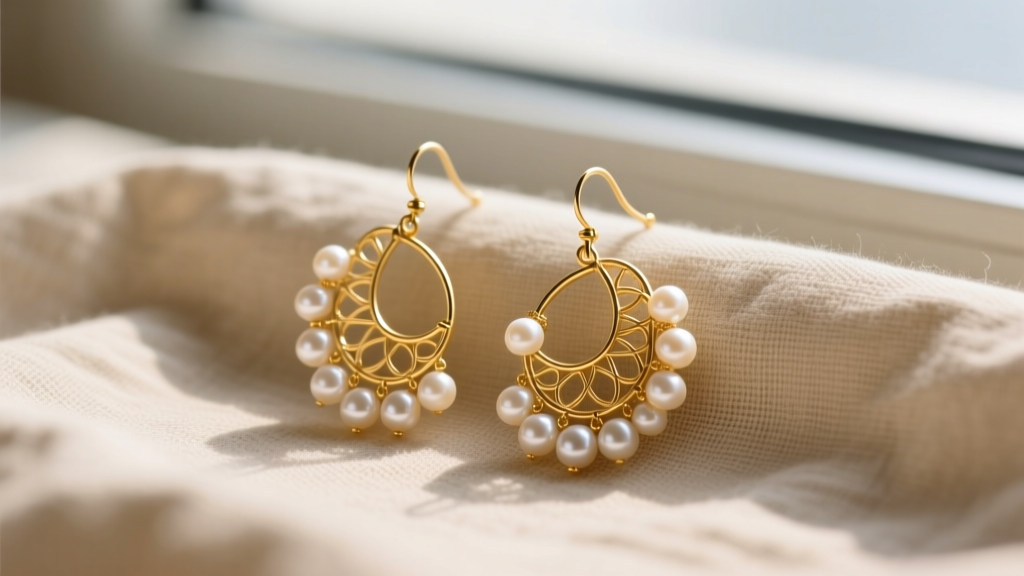
If you have spent any time browsing contemporary jewelry curation accounts or exploring modern K-fashion aesthetics, you have likely encountered the term "Jinu earrings." While originally tied to specific indie designers, the phrase has evolved into a broader category descriptor for a highly specific style of minimalist, delicate jewelry. Jinu earrings are characterized by their ultra-fine wirework, frequent use of asymmetrical designs, subtle geometric shapes, and the integration of small, often baroque freshwater pearls. They are the antithesis of heavy, loud statement pieces, relying instead on quiet elegance and movement.
For beginners, navigating this niche can be surprisingly complex. Because these designs rely on incredibly thin metals and organic gemstones, the margin for error in manufacturing and material selection is razor-thin. A poorly made minimalist earring will bend, tarnish, or cause contact dermatitis within weeks. This guide will break down the exact material specifications, gauge requirements, and styling frameworks you need to understand before investing in your first pair of authentic Jinu-style earrings.
Decoding Materials: What Are You Actually Paying For?
The delicate nature of Jinu earrings means that structural integrity is paramount. You cannot use cheap, soft base metals for ultra-thin wirework without the earring losing its shape. When shopping, you will primarily encounter three material categories. Understanding the difference between them is the most critical step in avoiding overpriced costume jewelry.
The Vermeil vs. Gold-Filled Debate
Many beginners mistakenly believe that "gold vermeil" and "gold-filled" are interchangeable terms. They are not. According to the Jewelers of America, gold vermeil must consist of a sterling silver base coated with a minimum of 2.5 microns of gold (usually 14k or 18k). While beautiful, the thin gold layer can eventually wear away with heavy friction, exposing the silver beneath.
Gold-filled jewelry, on the other hand, involves mechanically bonding a much thicker layer of solid gold (at least 1/20th of the total weight) to a brass core using heat and pressure. For the ultra-thin ear wires commonly found in Jinu earrings, 14k gold-filled wire is often superior to vermeil because it is significantly more resistant to tarnishing and offers a lifespan comparable to solid gold at a fraction of the cost. Solid 14k or 18k gold remains the ultimate choice for those with severe metal sensitivities, though it commands a premium price.
| Material | Base Metal | Gold Layer Thickness | Estimated Price Range | Best For |
|---|---|---|---|---|
| Solid 14k Gold | Gold Alloy | 100% Solid | $120 - $350+ | Lifetime wear, severe allergies |
| 14k Gold-Filled | Jeweler's Brass | ~5% to 10% (Mechanically bonded) | $45 - $95 | Daily wear, high durability |
| Gold Vermeil | Sterling Silver | Min. 2.5 microns (Electroplated) | $60 - $150 | Occasional wear, silver allergies |
| Gold Plated | Brass or Copper | Less than 0.5 microns | $15 - $40 | Avoid for delicate wirework |
Understanding Wire Gauges and Piercing Compatibility
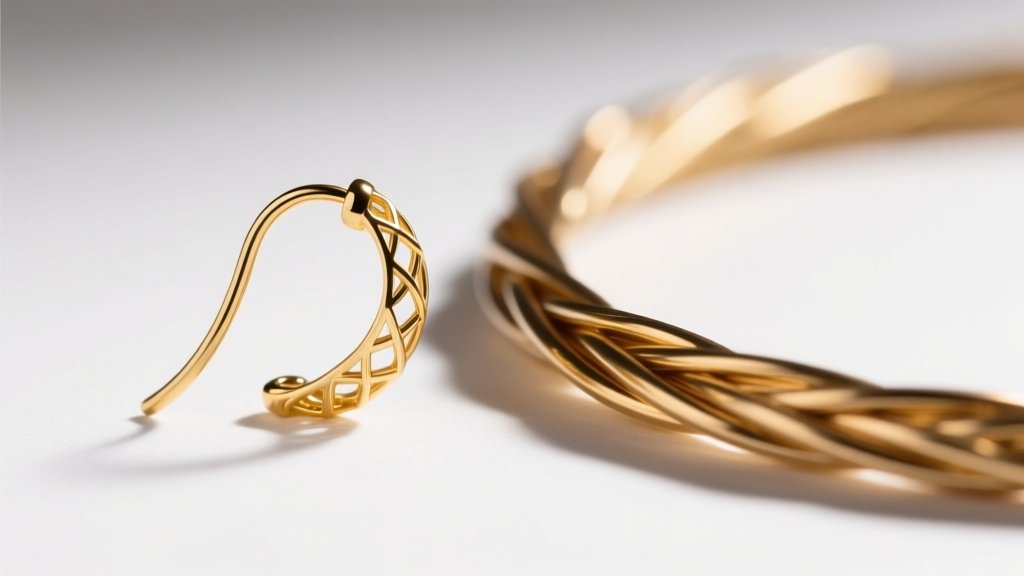
The most overlooked aspect of buying minimalist drop earrings is the wire gauge. The "gauge" refers to the thickness of the metal wire that passes through your piercing. Standard lobe piercings done with a gun are typically 20-gauge (0.81mm) or 18-gauge (1.02mm), while professional needle piercings often start at 16-gauge (1.29mm).
To achieve the signature ethereal look of Jinu earrings, designers frequently use 22-gauge (0.64mm) or even 24-gauge (0.51mm) wires. While these ultra-thin wires slide effortlessly into the ear and look incredibly refined, they present specific mechanical challenges. If a 22-gauge wire is used to support a heavy gemstone or a long, unbalanced geometric drop, the weight distribution can cause the "cheese cutter effect," where the thin wire slowly migrates through the earlobe tissue, causing tearing and discomfort.
The Association of Professional Piercers (APP) recommends that heavier jewelry should always be supported by thicker gauge wires. Fortunately, true Jinu-style earrings are designed to be exceptionally lightweight. When purchasing, always check the product specifications for the gauge size. If you have freshly stretched lobes or larger gauge piercings (like 14g or 12g), a 22g wire will look disproportionately thin and may cause the earring to droop awkwardly. Look for brands that offer customizable wire thicknesses or stick to styles that utilize structural loops to distribute weight evenly.
Face Shape Frameworks for Delicate Drop Styles
Because Jinu earrings rely on negative space and fine lines rather than sheer volume, styling them requires a strategic approach to facial geometry. The goal is to create visual harmony without overwhelming your features.
Round and Heart-Shaped Faces
If you have a round or heart-shaped face, your objective is to elongate your features and add subtle angularity. Avoid short, circular hoops or wide cluster studs, which will emphasize the width of your cheeks. Instead, opt for elongated Jinu drop earrings featuring vertical wire drops, linear baroque pearls, or sharp geometric terminations. A 1.5-inch to 2-inch vertical drop will draw the eye downward, creating a flattering, lengthening illusion.
Square and Angular Faces
For strong jawlines and square face shapes, the goal is to soften harsh angles. Look for Jinu earrings that incorporate organic curves, asymmetrical wire loops, and smooth, unblemished freshwater pearls. The natural, imperfect curvature of a baroque pearl suspended from a curved gold wire provides a necessary visual contrast to sharp bone structure. Avoid harsh, linear geometric drops, as they will only mirror and exaggerate the angularity of your jaw.
Preserving Porous Gemstones and Delicate Wires
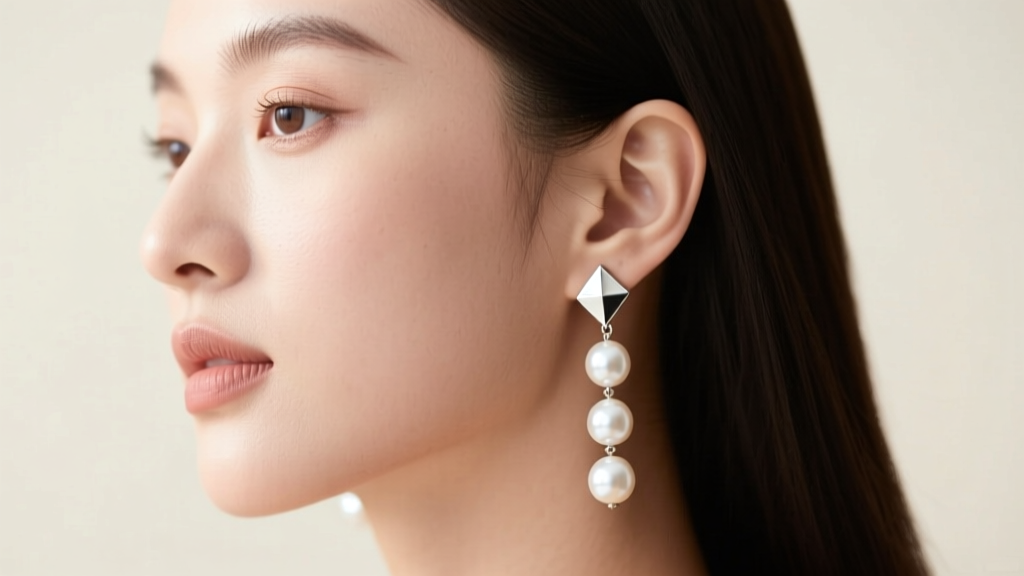
The inclusion of freshwater pearls is a hallmark of the Jinu aesthetic, but it also introduces a significant care requirement. Unlike diamonds or sapphires, pearls are organic gemstones. On the Mohs scale of mineral hardness, pearls rank between 2.5 and 4.5, making them incredibly susceptible to scratching, chemical degradation, and dehydration.
The Gemological Institute of America (GIA) explicitly warns against exposing pearls to everyday cosmetics, perfumes, and hairsprays. The acids and alcohols in these products can dissolve the pearl's nacre over time, stripping away its luster and leaving a dull, chalky surface. To protect your investment, adopt the "last on, first off" rule: put your Jinu earrings on only after your makeup, perfume, and hair products have fully dried, and remove them immediately upon returning home.
Furthermore, never use ultrasonic jewelry cleaners or harsh chemical dips on pearl-accented wirework. The high-frequency vibrations can fracture the pearl or loosen the delicate adhesive used to set the gemstone into the wire cup. Instead, gently wipe the pearls with a soft, lint-free microfiber cloth after each wear to remove natural skin oils, and store them in a breathable fabric pouch. Avoid airtight plastic bags, as pearls require a slight amount of ambient moisture to prevent cracking.
Final Thoughts on Building Your Curated Ear
Transitioning into the world of fine, minimalist jewelry is an exercise in appreciating subtlety. Jinu earrings offer a masterclass in how delicate materials and thoughtful design can make a profound impact without relying on mass or flash. By prioritizing high-quality materials like 14k gold-filled or solid gold, paying close attention to wire gauge compatibility, and adhering to strict care protocols for organic gemstones, you can build a curated ear that is both structurally sound and effortlessly elegant. Take your time to research independent jewelers who are transparent about their metal sourcing and manufacturing processes, and your minimalist collection will stand the test of time.


