Styling Earrings Daily: Essential Care & Cleaning Tips
Learn essential care, cleaning, and maintenance tips for styling earrings daily. Keep your studs, hoops, and cuffs tarnish-free and skin-safe.

The Intersection of Daily Wear and Jewelry Longevity
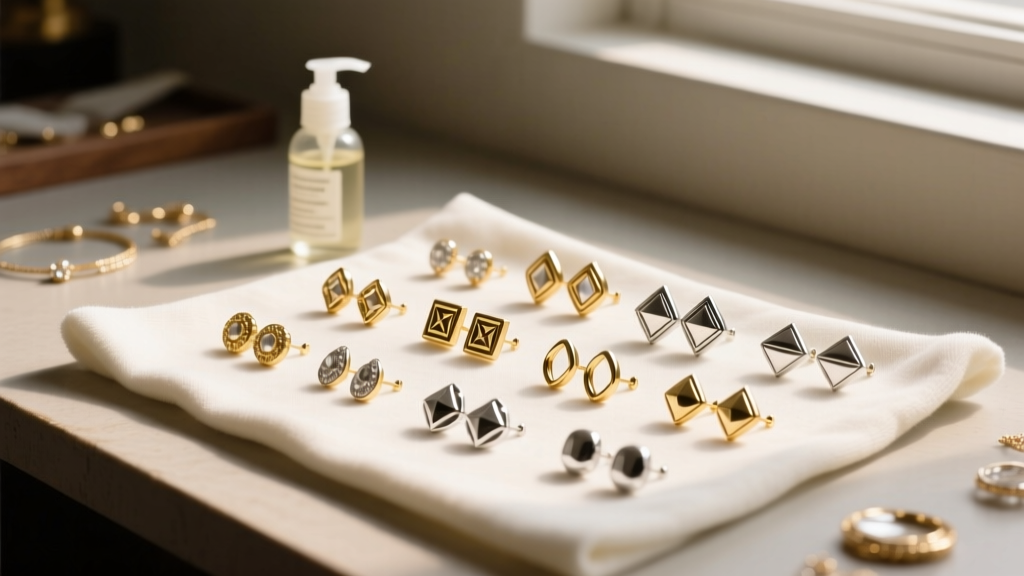
When it comes to styling earrings for everyday wear, the focus is predominantly on aesthetics—matching metals to skin undertones, balancing hoop proportions with face shapes, or curating the perfect stacked lobe. However, the true longevity and brilliance of your curated ear rely heavily on rigorous care and maintenance. Daily exposure to environmental pollutants, skincare products, and natural body chemistry accelerates metal degradation and dulls gemstones. Understanding the metallurgical and chemical realities of your jewelry is the first step in preserving your collection.
The Chemistry of Tarnish: Why Your Metals Degrade
Tarnish is not dirt; it is a chemical reaction. Sterling silver (925), a staple in many earring collections, is highly susceptible to hydrogen sulfide in the air, which triggers a surface-level oxidation process resulting in black silver sulfide. Pure 24k gold does not tarnish, but the alloy metals mixed into 14k (58.5% gold) and 18k (75% gold) to provide structural integrity—such as copper and zinc—can oxidize when exposed to moisture and acidic skin pH levels.
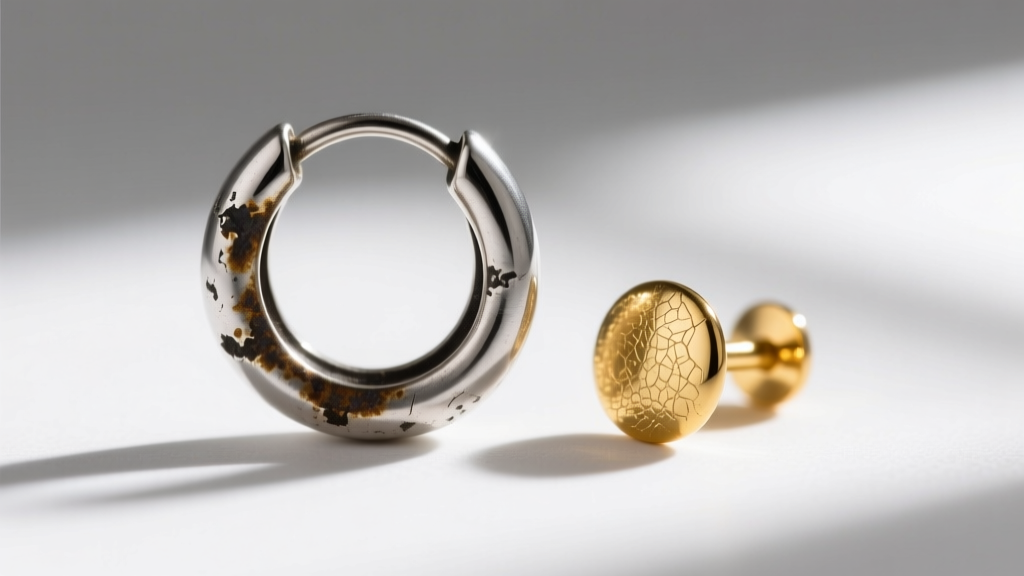
Furthermore, the cosmetics we use daily are silent destroyers of jewelry finishes. Hairsprays, perfumes, and lotions contain volatile organic compounds and alcohols that can strip the rhodium plating off white gold earrings and degrade the porous surfaces of organic gems. According to the Gemological Institute of America (GIA), chemicals found in everyday cosmetics can permanently etch the nacre of pearls, destroying their luster.
Material-Specific Cleaning Protocols
There is no universal jewelry cleaner. Using the wrong chemical agent can result in catastrophic, irreversible damage to specific materials. Below is a decision framework for safely cleaning the most common earring materials.
| Material | Safe Cleaning Agent | Ultrasonic Safe? | Steam Safe? |
|---|---|---|---|
| 14k/18k Solid Gold | Mild dish soap & warm water | Yes (mostly) | Yes |
| Sterling Silver (925) | Specialized silver dip or polishing cloth | No (can pit) | No |
| Gold Vermeil / Plated | Damp microfiber cloth only | Never | Never |
| Pearls, Opals, Emeralds | Dry or barely damp soft cloth | Never | Never |
| Diamonds & Sapphires | Ammonia-based cleaners or soapy water | Yes | Yes |
The Danger of Ultrasonic Cleaners
While ultrasonic cleaners are excellent for dislodging sebum and dirt from the pavilions of diamonds, they operate using high-frequency sound waves that create microscopic cavitation bubbles. For hard stones like diamonds and sapphires, this is safe. However, emeralds are almost universally fracture-filled with cedar oil or resins to improve clarity. The vibrations and heat of an ultrasonic cleaner will boil out this oil or shatter the stone entirely. Similarly, opals contain up to 20% water; ultrasonic vibrations can cause internal crazing (cracking).
Caring for Gold Vermeil
Gold vermeil requires a minimum of 2.5 microns of gold plated over a sterling silver base. Unlike solid gold, vermeil cannot be aggressively polished. Abrasive pastes or stiff-bristled brushes will strip the gold layer, exposing the silver beneath and requiring a complete re-plating by a jeweler. Stick to gentle wiping with a clean, dry microfiber cloth after every wear to remove skin oils.
Structural Maintenance: Posts, Gauges, and Clasps
Beyond surface cleanliness, the mechanical integrity of your earrings dictates their safety and comfort. The hardware that secures your jewelry is subject to immense physical stress.
Understanding Wire Gauges and Work Hardening
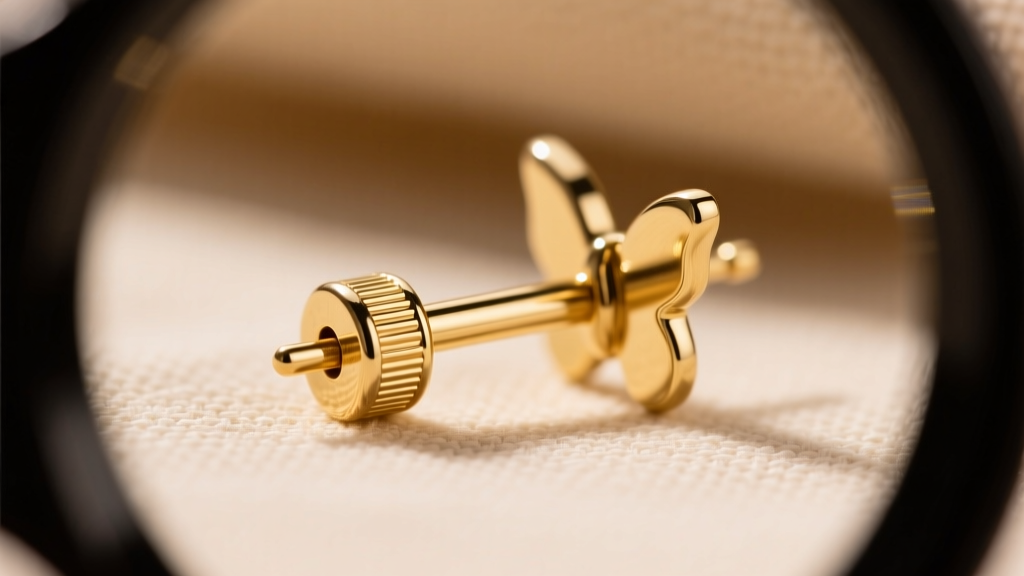
Standard lobe piercings typically accommodate 20-gauge (0.81mm) or 18-gauge (1.02mm) posts, while cartilage piercings often require 16-gauge (1.29mm) or 14-gauge (1.63mm) jewelry. When inserting a 20-gauge post, many people bend the wire to secure the butterfly back. Metals undergo "work hardening" when repeatedly bent; the crystalline lattice structure becomes rigid and brittle, eventually leading to a clean snap. Always push posts straight through the earlobe and secure the backing without bending the wire.
Hygiene and the Butterfly Back
The butterfly friction back is a notorious trap for dead skin cells, sebum, and hair products. This buildup, colloquially known as "ear cheese," not only emits an unpleasant odor but can also harbor bacteria that lead to localized infections or exacerbate contact dermatitis. The Mayo Clinic notes that trapped moisture and debris can accelerate the leaching of trace nickel from alloyed metals, triggering allergic reactions even in those with mild sensitivities. Soak your earring backs in 70% isopropyl alcohol for five minutes weekly, using a soft interdental brush to clear the microscopic crevices.
Hinge Tension in Hoops and Huggies
Huggies and clicker hoops rely on a tiny tension hinge and a snap closure. Over time, the metal fatigues, and the closure becomes loose, risking the loss of the earring. To maintain tension, gently squeeze the sides of the hoop inward by a fraction of a millimeter every few months. If the clicker no longer produces an audible "snap," the internal latch is likely worn down and requires professional jeweler repair.
Safe Storage Solutions for Curated Ear Sets
How you store your earrings when not styling them is just as critical as how you clean them. Tossing multiple pieces into a single communal jewelry box guarantees micro-scratches. Diamonds, ranking a 10 on the Mohs hardness scale, will easily scratch the surface of 18k gold (which ranks around 2.5 to 3) and softer gemstones like turquoise or lapis lazuli.
Pro Tip: Always store sterling silver earrings in individual anti-tarnish ziplock bags with a small strip of activated carbon or anti-tarnish paper. This absorbs the ambient hydrogen sulfide and moisture, keeping your silver bright for months without the need for chemical polishing.
For those who frequently rotate through a large collection of studs and ear cuffs, a multi-compartment travel case lined with treated flannel is an excellent investment. Ensure that ear cuffs, which rely on precise tension to grip the cartilage, are stored in rigid compartments where they cannot be accidentally crushed or bent out of their original shape.
Final Thoughts on Daily Maintenance
Mastering the art of styling earrings is only half the equation; preserving their structural and aesthetic integrity ensures they remain a staple in your rotation for decades. By adopting material-specific cleaning protocols, respecting the mechanical limits of jewelry gauges, and implementing proper storage techniques, you protect both your investment and your skin health. For further reading on gemstone-specific care, consult the GIA's Diamond Care Guide to ensure your most brilliant pieces continue to catch the light perfectly.


