The Beginner's Guide to Choosing and Styling Squared Earrings
Discover how to choose, style, and wear squared earrings. This beginner-friendly guide covers face shapes, metal grades, gauge sizes, and pricing.

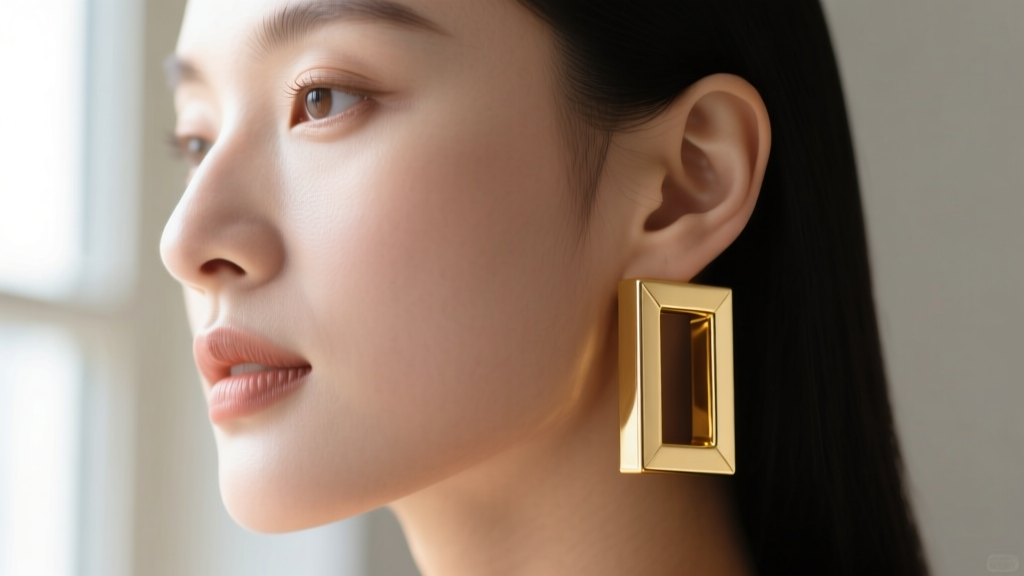
Geometric jewelry has completely transformed the modern accessory landscape, and at the forefront of this structural renaissance are squared earrings. Moving away from the traditional circular hoops and simple round studs, squared earrings offer a bold, architectural edge that instantly elevates any outfit. However, for beginners, navigating the world of angular jewelry can be surprisingly complex. From understanding how sharp corners interact with your face shape to selecting the correct gauge size for your specific piercing, there is a learning curve.
This comprehensive guide will break down everything you need to know about choosing, styling, and caring for squared earrings, ensuring your first foray into geometric jewelry is both stylish and comfortable.
What Exactly Are Squared Earrings?
When most people hear the term, they immediately picture a simple square stud. However, the category of squared earrings encompasses a wide variety of silhouettes that utilize 90-degree angles and straight lines. The geometry can be applied to the overall outline of the earring or the cross-section of the wire itself.
The Core Silhouettes
- Square Studs: The most入门 (beginner-friendly) option. These sit flush against the earlobe and can range from tiny 4mm geometric accents to large, bold 15mm statement squares.
- Square Tube Hoops: Unlike flat wire hoops, these are crafted from hollow or solid square tubing. The result is a hoop that is circular in its path but features a flat, squared surface that catches the light beautifully.
- Square Huggies: Small, thick hoops that 'hug' the earlobe or helix. Square huggies often feature a hinged closure and provide a chunky, modern look without the dangling weight of larger hoops.
- Square Drops and Dangles: These feature a square focal point (like a gemstone or enamel block) suspended from the ear wire, introducing movement while maintaining a structured, Art Deco-inspired aesthetic.
The Face Shape Matrix: Styling Angular Jewelry
The golden rule of jewelry styling is to either contrast your face shape to create balance or echo it to emphasize your natural bone structure. Because squared earrings are inherently angular and structured, they interact with facial features in very specific ways.
| Face Shape | Recommended Squared Style | Why It Works |
|---|---|---|
| Round | Long Square Drop Earrings | The elongated vertical lines and sharp 90-degree corners provide a striking, flattering contrast to soft, curved facial features, creating the illusion of length. |
| Oval | Square Tube Hoops or Studs | Oval faces are universally balanced. Medium-sized square hoops add a touch of modern width without disrupting the natural harmony of your proportions. |
| Square | Rounded-Square Studs or Curved Drops | Wearing ultra-sharp, large square dangles can over-emphasize a strong jawline. Opt for smaller studs or squares with slightly softened, beveled edges to complement rather than compete. |
| Heart | Bottom-Heavy Square Dangles | Heart-shaped faces are wider at the forehead and narrow at the chin. Square drops that are wider at the bottom help add visual weight to the lower half of the face. |
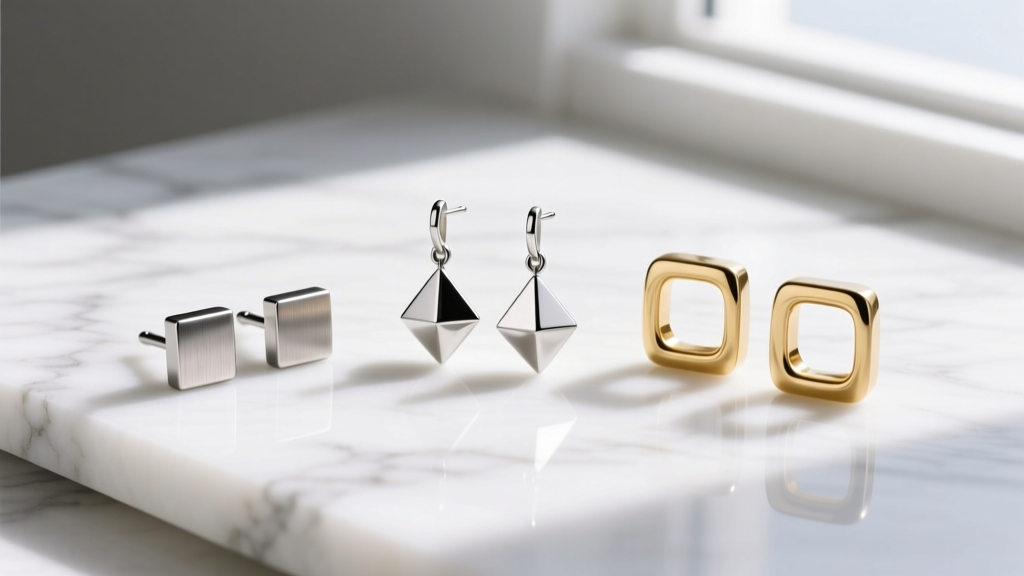
Metallurgy 101: Choosing the Right Material
Because squared earrings often feature flat surfaces and sharp corners, the metal you choose dictates not only the aesthetic but also the longevity and comfort of the piece. Angular designs are more prone to showing scratches on their flat planes, making metal hardness a crucial factor.
Hypoallergenic Metals for Sensitive Ears
If you are buying squared earrings for a fresh piercing or have a known metal sensitivity, you must avoid fashion alloys that contain nickel. According to the Association of Professional Piercers (APP), the safest metals for prolonged skin contact are:
- Implant-Grade Titanium (ASTM F-136): The absolute gold standard for sensitive ears. It is lightweight, completely nickel-free, and highly resistant to corrosion. Titanium square studs are ideal for everyday wear.
- 14k or 18k Solid Gold: Yellow, white, or rose gold. Ensure it is solid, not plated. The Gemological Institute of America (GIA) notes that gold alloys below 14k may contain higher levels of irritating base metals like copper or zinc.
- Niobium: A highly reactive metal that is anodized to create vibrant colors without using dyes or plating. Excellent for geometric cartilage pieces.
Expert Tip: Avoid sterling silver for unhealed piercings or 24/7 wear. Silver tarnishes quickly, and the flat surfaces of squared earrings will show oxidation much faster than rounded designs.
Decoding Gauge Sizes and Threading
Beginners often overlook the thickness of the earring post (the gauge) and how it attaches to the decorative end (the threading). Getting this wrong can lead to torn piercings or lost jewelry.
- 20 Gauge (0.81mm): The standard for most commercial fashion earrings and delicate square studs. Best for healed, standard lobe piercings.
- 18 Gauge (1.02mm): Slightly thicker, offering more durability for the straight posts of geometric drop earrings.
- 16 Gauge (1.29mm): The standard for cartilage piercings (helix, tragus, conch). If you are putting a square huggie in your cartilage, ensure it is 16g to prevent the 'cheese-cutter effect' where thin wire migrates through the tissue.
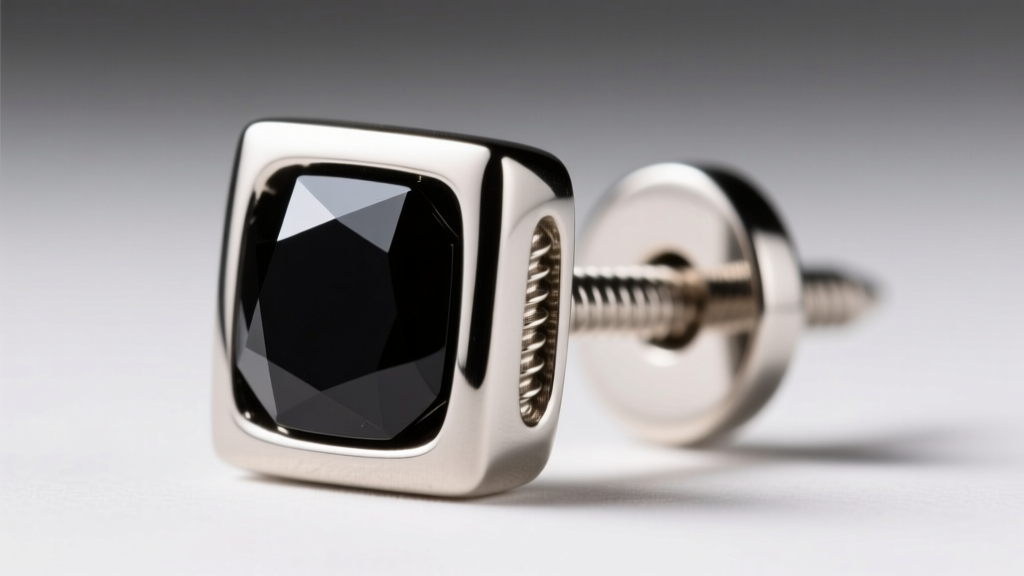
Crucial Threading Advice: Always look for internally threaded or threadless push-pin squared earrings. Externally threaded jewelry (where the screw is on the post) acts like a file, tearing the delicate fistula of your piercing every time you insert or remove it.
Price Tiers: What Should You Expect to Spend?
Because squared earrings require precise cutting, soldering, and polishing to achieve perfect 90-degree angles, they can sometimes cost slightly more to manufacture than simple cast circular hoops. Here is a realistic pricing breakdown for 2026:
- Fashion & Costume ($20 - $60): Typically made from brass or stainless steel with gold plating or enamel. Great for testing out the geometric trend, but the plating on the sharp corners will eventually wear off.
- Demi-Fine ($80 - $250): The sweet spot for most buyers. Expect sterling silver with thick 2-micron gold vermeil, or solid 10k/14k gold. Brands in this tier often use high-quality cubic zirconia or semi-precious stones in their square drop designs.
- Fine Jewelry ($500 - $2,000+): Solid 18k gold or platinum, featuring precision-cut diamonds or sapphires. Square tube hoops in solid 18k gold are a significant investment but will last a lifetime without losing their structural integrity.
3 Common Beginner Mistakes to Avoid
- Sleeping in Square Hoops: Unlike circular hoops that can rotate smoothly, the sharp corners of square hoops and huggies will catch on your pillowcases and hair. Always remove angular jewelry before bed to prevent tearing your earlobe.
- Ignoring the Weight Distribution: A large, solid gold square drop earring can be surprisingly heavy. If your lobes are naturally thin or stretched, opt for hollow tube constructions or acrylic/resin geometric inlays to reduce the physical burden on your piercing.
- Polishing with Abrasives: When cleaning tarnished silver squared earrings, avoid harsh polishing cloths on the flat surfaces. Aggressive rubbing can create micro-scratches that are highly visible on flat, geometric planes. Use a gentle liquid dip or a soft microfiber cloth instead.
Final Thoughts
Squared earrings are a phenomenal way to inject modern, architectural flair into your jewelry collection. By understanding how angular silhouettes interact with your unique face shape, prioritizing biocompatible metals like ASTM F-136 titanium, and paying close attention to gauge sizes and threading, you can confidently build a geometric jewelry wardrobe that is as comfortable as it is striking. Start with a simple pair of internally threaded square studs, and let your collection grow from there.


