How to Fix Drooping Pear Stud Earrings: A Troubleshooting Guide
Discover why your pear stud earrings droop or spin. Learn expert troubleshooting tips on post gauges, locking backings, and lobe support solutions.

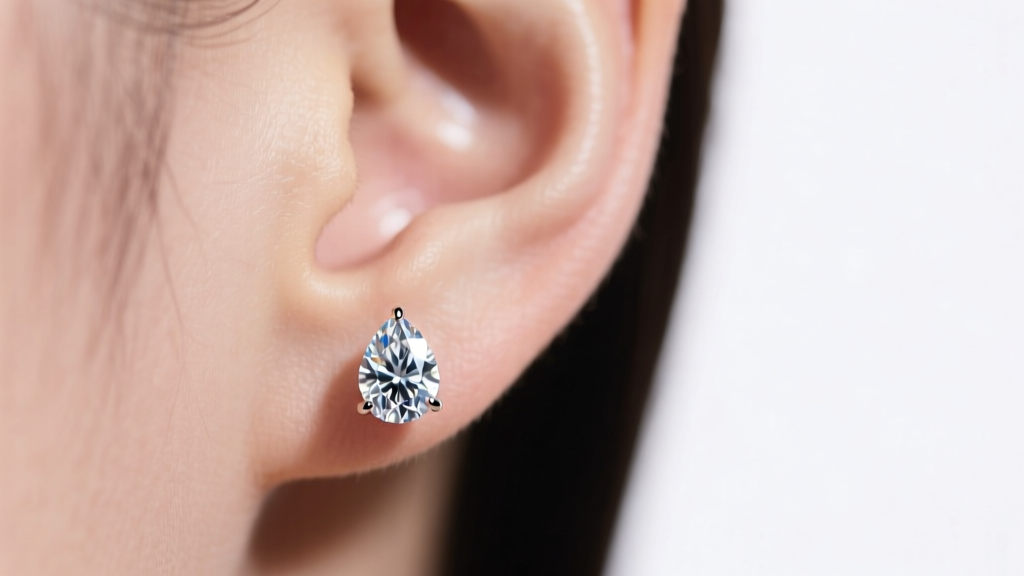
Pear stud earrings are a staple of fine jewelry, offering a sophisticated, elongated silhouette that flatters the jawline and neck. However, they are also notoriously difficult to wear. Unlike round brilliant or princess-cut studs, the asymmetric teardrop shape of a pear gemstone creates an uneven center of gravity. If you have ever looked in the mirror only to find your beautiful pear stud earrings pointing downward, spinning sideways, or painfully pulling on your earlobe, you are not alone.
As jewelry manufacturing standards evolve through 2026, the gap between delicate aesthetics and structural engineering remains a common pain point for collectors and everyday wearers alike. This comprehensive troubleshooting guide breaks down the exact physics, hardware failures, and anatomical challenges of wearing pear-shaped studs, providing actionable, jeweler-approved solutions to keep your stones perfectly upright.
The Physics of Pear Stud Earrings: Why They Droop
To solve the problem, we must first understand the mechanics of the droop. A pear-cut gemstone features a rounded "head" and a tapered "point." In most standard mountings, the majority of the carat weight is concentrated in the rounded head. When a jeweler solders the earring post to the setting, they must find the exact planar center of gravity.
If the post is soldered even a millimeter too high (toward the rounded head), the heavier bottom point will act as a pendulum, dragging the earring downward. Conversely, if the post is placed too close to the point, the earring will flip upside down. Furthermore, the depth of the stone plays a massive role. According to the Gemological Institute of America (GIA), ideal pear cut diamonds often have depth percentages between 58% and 62%. However, many commercial stones are cut "deep" to retain carat weight, resulting in a thicker pavilion. This hidden weight sits below the post, exacerbating the downward tilt and causing severe drooping on softer earlobes.
Troubleshooting Matrix: Diagnosing Your Earring Failure
Before replacing your earrings entirely, diagnose the specific failure mode using the matrix below. Identifying the exact symptom will dictate whether you need a hardware upgrade, a setting adjustment, or lobe support.
| Symptom | Root Cause | Hardware / Structural Solution |
|---|---|---|
| Point droops downward | Post soldered too high; heavy pavilion depth | Re-solder post lower; add a 12mm jumbo silicone backing |
| Earring flips upside down | Post soldered too close to the tapered point | Reposition post toward the rounded head; use a flat friction disc |
| Spinning on the horizontal axis | Post gauge too thin; ear piercing stretched | Upgrade to an 18-gauge (1.02mm) or 16-gauge (1.29mm) post |
| Backing constantly falls off | Standard butterfly clutch lacks torque grip | Switch to La Pousette locking backs or silicone O-rings |
| Sharp pain / Lobe tearing | "Cheese-cutter" effect from heavy carat weight | Apply adhesive earlobe support patches (e.g., LobeWonder) |
Upgrading the Hardware: Posts, Gauges, and Backings
The most common reason pear stud earrings fail to sit flush against the ear is inadequate hardware. Most commercial fine jewelry is fitted with standard 20-gauge (0.81mm) or 19-gauge (0.91mm) posts. While sufficient for a lightweight 0.50-carat round diamond, a 20-gauge post will physically bend under the torque of a 1.25-carat or larger pear stone.
The Metallurgy of Earring Posts
Not all metals resist bending equally. On the Vickers hardness scale, 18k yellow gold is relatively soft (approx. 120 HV), making it highly susceptible to bending when supporting a heavy, asymmetrical stone. If your pear studs are crafted in 18k gold, upgrading the post to 14k white gold (approx. 160 HV) or platinum will provide the necessary structural rigidity without sacrificing the aesthetic of the front-facing setting.
Choosing the Right Backing
Standard "butterfly" friction backs rely on a small groove on the post to stay in place. The asymmetrical weight of a pear stone creates constant rotational torque, which slowly widens the friction clutch until it slides off. To combat this, consult a jeweler about sourcing specialized findings. Major jewelry suppliers like Stuller offer heavy-duty locking mechanisms designed specifically for high-carat studs:
- La Pousette Backs: These feature a mechanical locking clutch that snaps securely over a specialized grooved post. They cost between $40 and $75 per pair in 14k gold but are the gold standard for securing heavy pear studs.
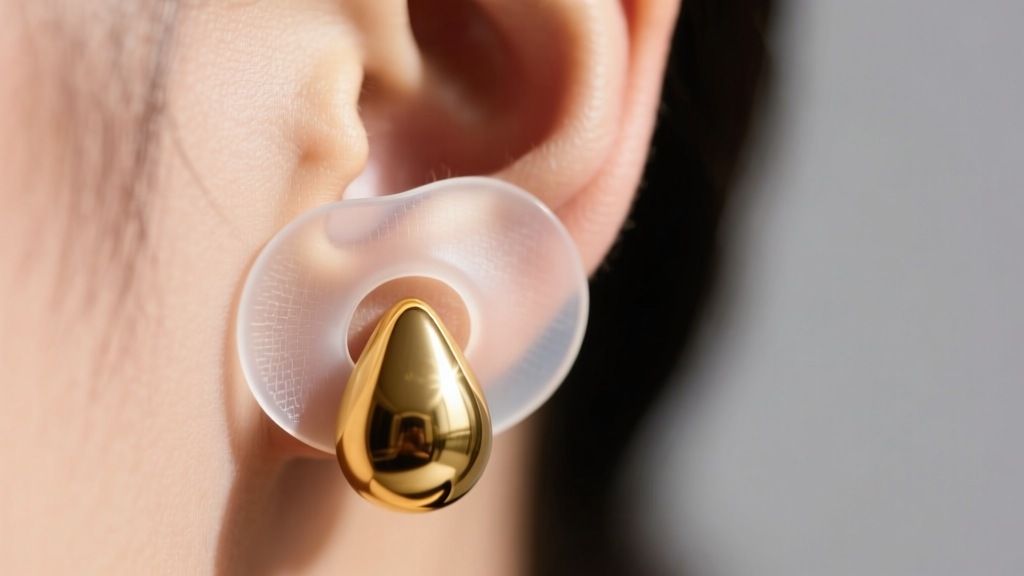
- Jumbo Silicone Discs: Measuring 10mm to 14mm in diameter, these flat discs distribute the weight of the stone across a wider surface area of the earlobe, acting as a structural shelf that prevents the earring from tilting downward. They are an inexpensive ($5–$10) and immediate fix.
- Screw Backs: While secure, threaded posts require precise alignment and can be frustrating to use daily. They are better suited for sleeper earrings rather than heavy, frequently removed pear studs.
Stone Setting and Mounting Adjustments
If upgrading your backings and post gauges does not solve the drooping issue, the problem lies in the setting itself. Pear stud earrings are typically mounted in one of two ways: the peg setting or the basket setting.
The Danger of Peg Settings
In a peg setting, a single metal rod is soldered or glued to the flat culet (bottom) of the gemstone. This offers zero lateral support. When you touch or adjust a pear stud in a peg setting, the entire stone pivots on a single axis. For pear shapes, peg settings should be strictly avoided unless the stone is under 0.75 carats.
The Superiority of 4-Prong Basket Settings
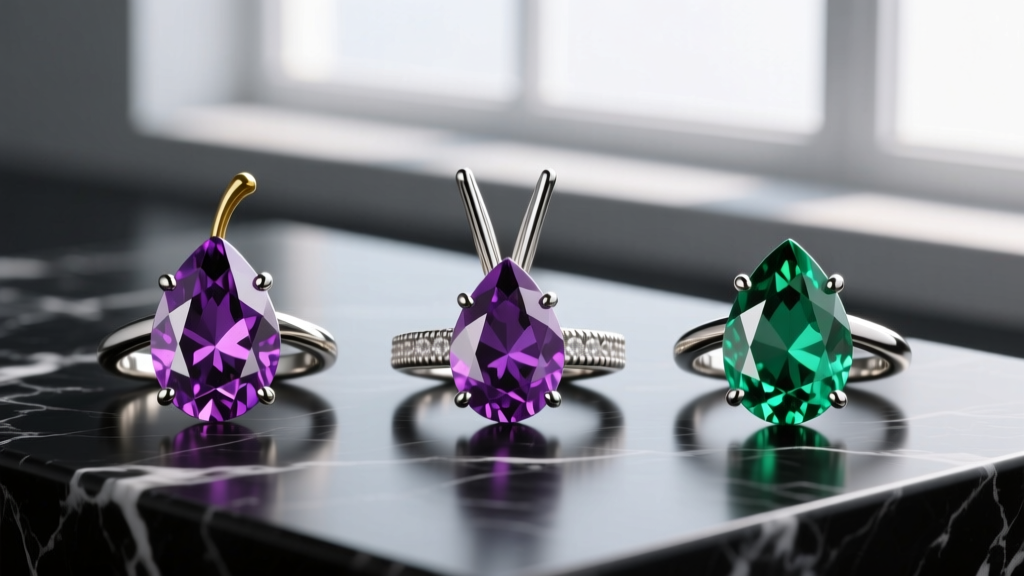
A basket setting cradles the stone in a metal framework with prongs wrapping around the girdle. For pear shapes, a 4-prong basket (with one prong securing the delicate point and three securing the rounded head) provides a wider base of contact against the earlobe. This wider footprint acts as a kickstand, drastically reducing the tilt angle. If your current earrings feature a 3-prong V-tip setting that is digging into your ear or causing the stone to pivot, a master jeweler can often laser-weld a secondary support strut to the base of the basket to widen the contact patch.
Lobe Support and Piercing Health
Even with perfect hardware and an ideal center of gravity, gravity itself is unforgiving. Pear stud earrings exceeding 1.50 carats (which can weigh upwards of 0.6 grams depending on the stone's density and metal weight) place concentrated stress on the earlobe fistula. Over time, this causes the "cheese-cutter effect," where the earring post slowly migrates downward through the tissue, resulting in a stretched, painful, or torn piercing.
Preventative Lobe Support
To preserve the health of your piercings while wearing heavy pear studs, you must artificially reinforce the earlobe tissue. In 2026, the most effective non-surgical solutions include:
- Adhesive Support Patches: Brands like LobeWonder or BlingWraps produce clear, medical-grade silicone patches with a central slit. You slide the earring post through the patch before securing the backing. The patch acts as a splint, distributing the downward drag across the entire back of the earlobe rather than just the piercing hole.
- Earlobe Splints / Clips: Small, decorative gold or silver chains that connect the earring to the upper cartilage (like an ear cuff) can physically lift the weight off the lower lobe. This is a highly effective, fashionable workaround for vintage or exceptionally heavy pear drops.
When to See a Professional
If your earlobe piercing has already stretched to the point where the post is visible through the bottom edge of the skin, stop wearing heavy pear studs immediately. The tissue will not heal on its own under tension. Consult a board-certified dermatologist or plastic surgeon for a minor in-office earlobe repair (lobuloplasty), which typically takes 20 minutes per ear and allows for re-piercing after a 6-to-8-week healing period.
Final Thoughts on Pear Stud Maintenance
Pear stud earrings require more engineering forethought than any other diamond shape. By understanding the interplay between the stone's center of gravity, the metallurgical hardness of the post, and the structural integrity of your earlobe, you can transform a frustrating, drooping earring into a flawless, upright statement piece. Invest in La Pousette backings, utilize jumbo silicone discs for immediate lift, and never compromise on post gauge thickness when dealing with heavy, asymmetrical gemstones.


