How to Authenticate Antique Garnet Earrings: Expert Guide
Discover expert techniques for authenticating antique garnet earrings, from identifying foil-backed settings to testing Victorian gold alloys.

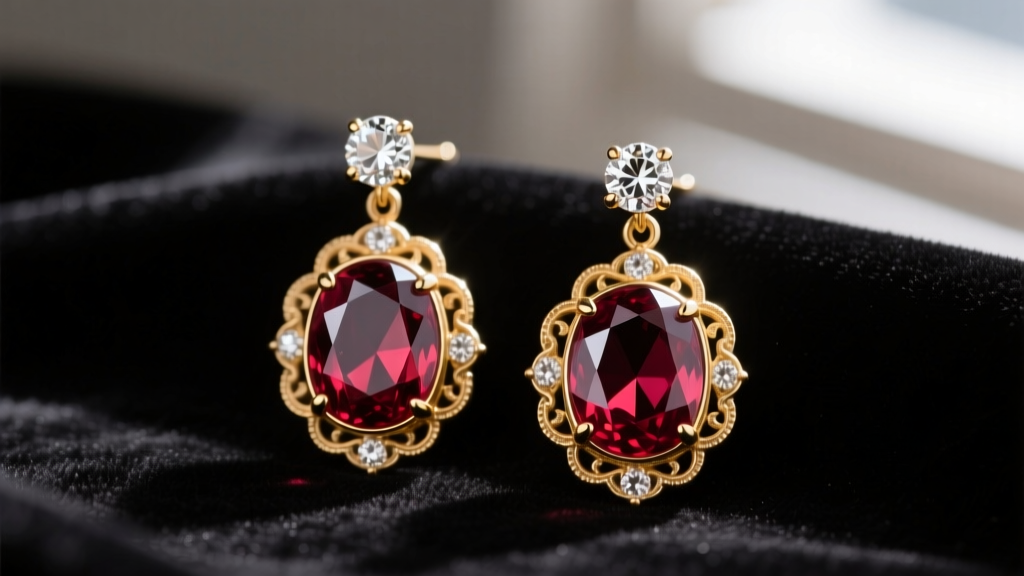
Collecting and wearing antique garnet earrings offers a tangible connection to 19th-century lapidary arts. However, the market is saturated with modern reproductions, synthetic simulants, and heavily altered pieces that compromise both historical integrity and structural safety. For serious collectors and jewelers, authenticating these pieces requires moving beyond basic visual appraisal. You must understand the metallurgical standards of the Victorian era, the gemological distinctions between garnet species, and the mechanical failure modes of antique settings.
The Metallurgy of Victorian and Edwardian Ear Wires
To authenticate antique garnet earrings, you must first examine the precious metal alloys and the specific ear wire constructions used between 1837 and 1910. The UK Hallmarking Act of 1854 introduced 15k, 12k, and 9k gold as legal standards. Consequently, genuine mid-to-late Victorian British earrings are frequently crafted in 15k yellow gold (62.5% pure gold), an alloy that offers a distinct warm, rich hue that differs markedly from modern 14k or 18k formulations.
The 'Bloom' Finish and Surface Textures
Victorian jewelers frequently employed a technique known as bloom finishing to give gold a matte, velvety appearance. This was achieved by boiling the finished piece in a mild acid bath, which stripped away surface copper and silver, leaving a microscopic layer of pure 24k gold. When evaluating antique garnet earrings, look for this soft, non-reflective texture in the recesses of the metalwork. Modern cast reproductions typically lack this finish, presenting a uniformly polished or artificially sandblasted surface that fails to replicate the depth of genuine acid-etched bloom.
Gauge Sizes and the Shepherd Hook Evolution
Original Victorian ear wires were predominantly 'shepherd hooks' or simple kidney wires, typically drawn to 22-gauge or 20-gauge thicknesses. While historically accurate, these thin wires are often inadequate for supporting the weight of heavy garnet cabochons or clustered drop designs on modern earlobes. Furthermore, early screw-back mechanisms (patented in 1894) featured thick, blunt posts that can cause discomfort. Identifying the wire type and gauge provides immediate clues regarding the piece's era and its need for modern structural intervention.
Gemological Profiling: Pyrope vs. Almandine Garnets
The term 'garnet' refers to a complex silicate mineral group, not a single gemstone. In the context of antique jewelry, you will almost exclusively encounter two species: Pyrope and Almandine. Misidentifying these species is a common error among novice appraisers.
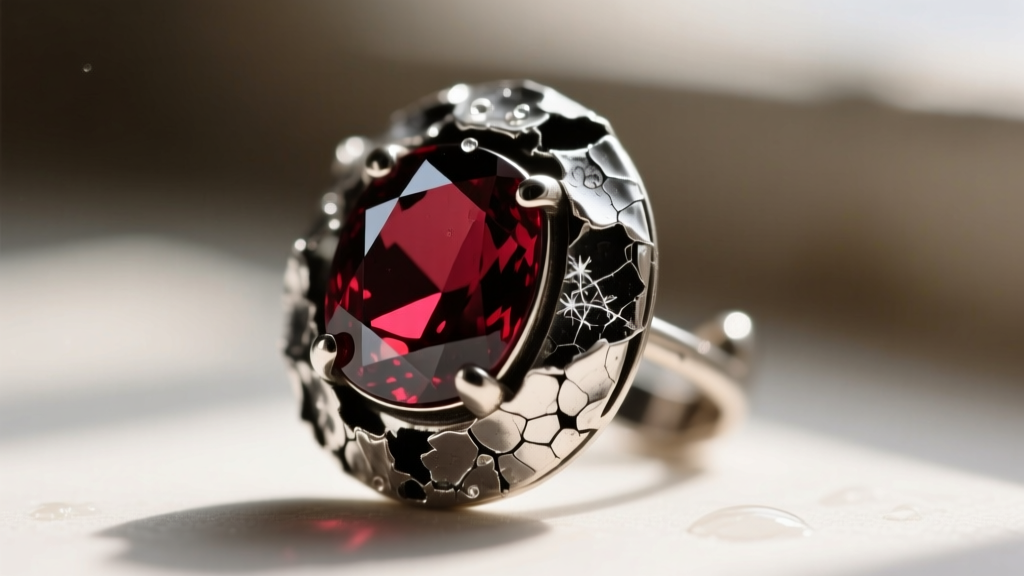
Bohemian Pyrope: The Rose-Cut Cluster
Pyrope garnets (magnesium aluminum silicate) were heavily mined in Bohemia (modern-day Czech Republic) during the 19th century. These stones are characterized by their vivid, blood-red color and high transparency. Because Bohemian pyropes were rarely found in large sizes, jewelers set them in dense, raspberry-like clusters using rose-cut faceting. These clusters were almost always set in silver or low-karat gold, utilizing gypsy or bead settings rather than prongs.
Almandine: The Foil-Backed Cabochon
Almandine garnets (iron aluminum silicate) are darker, often exhibiting deep purplish-red or brownish-red hues. Due to their darker tone, almandines were frequently cut as cabochons (known as 'carbuncles') or faceted with shallow pavilions and backed with reflective metal foil to enhance their brilliance. According to the Gemological Institute of America (GIA), almandine possesses a higher refractive index and specific gravity than pyrope, making it noticeably heavier and more brilliant when properly illuminated.
| Property | Pyrope (Bohemian) | Almandine (Carbuncle) |
|---|---|---|
| Chemical Formula | Mg3Al2(SiO4)3 | Fe3Al2(SiO4)3 |
| Refractive Index (RI) | 1.714 - 1.742 | 1.760 - 1.820 |
| Specific Gravity (SG) | 3.58 - 3.78 | 3.90 - 4.25 |
| Typical Antique Cut | Rose-cut clusters | Faceted or Cabochon |
| Setting Style | Bead / Gypsy set | Foil-backed closed-back |
Foil-Backed Settings and Closed-Back Failure Modes
One of the most critical aspects of evaluating antique garnet earrings is understanding the mechanics and vulnerabilities of foil-backed settings. Before the advent of modern brilliant-cut faceting, jewelers placed thin sheets of silver, gold, or tinted foil behind the gemstone to reflect light back through the crown, artificially boosting the stone's brilliance and color saturation.
Moisture Intrusion and Foil Oxidation
To protect the delicate foil, these earrings were constructed with closed-back settings. However, over 150 years, the microscopic seams where the bezel meets the backplate inevitably compromise. Moisture, skin oils, and atmospheric sulfur penetrate the setting. If the foil is silver-based, it will oxidize into black silver sulfide. When you examine a pair of Victorian almandine earrings and the stones appear 'dead,' dark, or cloudy, you are likely looking at degraded foil rather than a poor-quality gemstone.
The Ultrasonic Cleaner Hazard
Critical Warning: Never place closed-back antique garnet earrings in an ultrasonic cleaner. The high-frequency cavitation will force water through microscopic bezel gaps, instantly destroying the antique foil. Furthermore, garnets frequently contain liquid inclusions and internal stress fractures; the thermal shock and vibration of an ultrasonic bath can cause the stone to shatter internally. According to conservation guidelines from the Victoria and Albert Museum, antique foil-backed jewelry must only be cleaned mechanically with dry, soft brushes and specialized micro-fiber cloths.
Modern Wearability: Converting Wires and Structural Upgrades
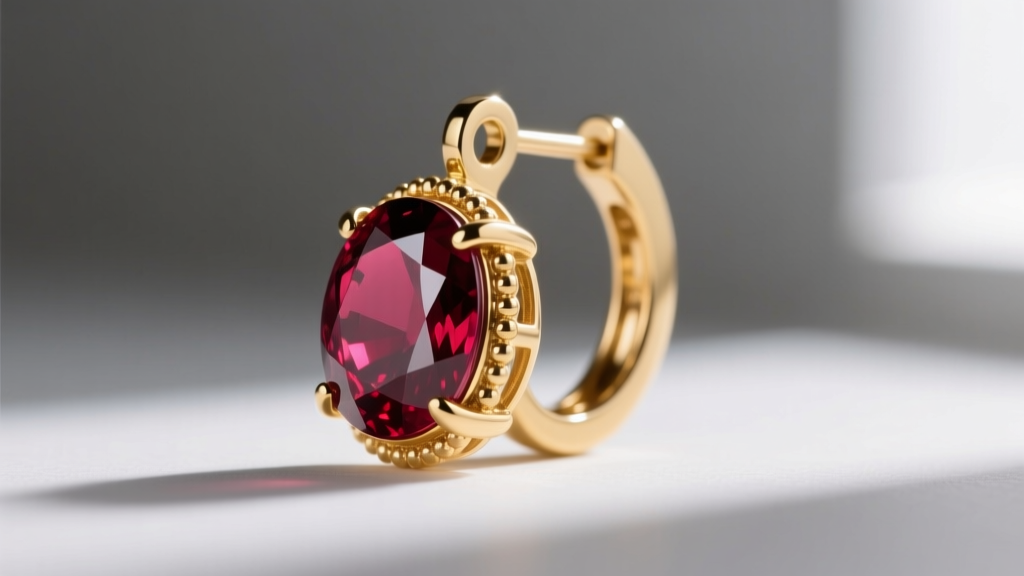
While preserving historical integrity is paramount, antique earrings must be wearable. The original 22-gauge shepherd hooks are prone to bending and frequently slip out of the earlobe, risking the loss of irreplaceable artifacts. Upgrading the ear wires is a standard bench practice, but it requires precise metallurgical execution.
Laser Welding vs. Torch Soldering
When attaching modern 18-gauge or 16-gauge leverbacks to support the weight of heavy garnet drops, the method of attachment is critical. Traditional torch soldering requires heating the entire earring to the flow point of the solder (often between 1,200°F and 1,400°F). This ambient heat can easily boil the moisture inside liquid inclusions, causing the garnet to fracture, or melt the internal foil backing.
In 2026, expert jewelers exclusively use laser welding for these conversions. A laser welder delivers a highly focused, micro-second pulse of heat that fuses the new 18k or 15k wire to the antique jump ring without transferring thermal energy to the gemstone or the foil backing. This ensures the structural integrity of the earring is upgraded for daily wear without compromising the 19th-century lapidary work.
Market Valuation and Provenance Tracking
The valuation of antique garnet earrings hinges on three pillars: originality, condition, and provenance. Pieces that retain their original bloom finish, un-degraded foil, and unaltered bezels command a significant premium. When evaluating a potential acquisition, use a 10x triplet loupe to inspect the bezel edges for modern solder marks or re-tipping, which indicate the stones have been replaced or reset.
Finally, always look for maker's marks or British hallmarks inside the ear wire loops or on the back of the drop. While many Victorian pieces were unstamped due to the era's lax regulations regarding small items, finding a verified assay mark from the London, Birmingham, or Chester assay offices provides definitive proof of age and significantly anchors the piece's market value in today's highly scrutinized antique jewelry sector.


